


The once-feared existential threat to Canada’s economy from US protectionism seems to have receded in both mind and matter. As the next stage of bilateral talks eventually gets underway, recent trade data indicates that the bilateral trade balance has widened in favour of Canada.
Canada’s overall trade picture revealed a trade balance in the second quarter of this year, largely on the strength of the persistent bilateral trade surplus with its southern neighbour.
Multilaterally, Canada’s trade balance was restored to positive territory, as Canadian companies continue to seek new business in non-US markets. Shifting from long-standing customers in the US to new ones in Europe and Asia is not a simple matter and, at best, will take years to achieve.
The important story is what is taking place on the bilateral trade scene. The US remains Canada's dominant trade partner, and the bilateral merchandise trade surplus has been widening. Canada's merchandise trade surplus with the US reached C$7.8 billion, before widening further to C $9.5 billion this spring. Thanks to a surge in international energy prices, the surplus rose, despite the drag from falling sales in the heavily tariffed industries such as steel, aluminum, and forest products.
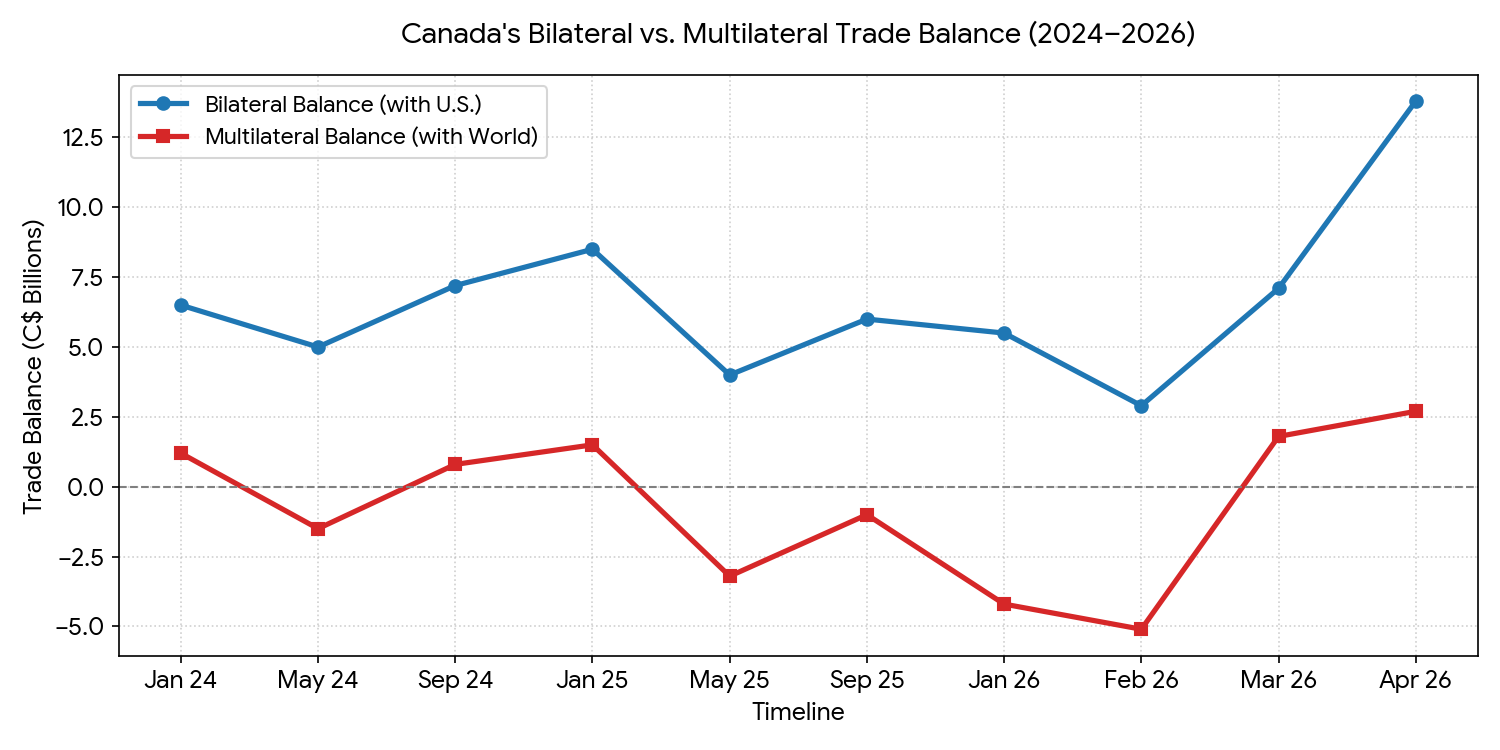
More specifically, the bilateral figures show energy revenues increased by 10% as Canada supplies about 20% of the US's oil needs. After a rough first quarter, the Canadian car production and cross-border sales recovered by 6%. On the negative side, specific exports such as steel are down by 49%, aluminum is down 11%, and forest products are down 19%.
What allows Canada to continue to rack up bilateral trade balances is the simple fact that it is broadly exempt from the US global assault on trade. The free-trade agreement, CUSMA, keeps the effective tariffs on US imports of Canadian goods to less than 5%.
CUSMA is up for negotiation starting now. Although Trump has issued his usual barrage of threats to tear up the agreement, government officials and business leaders on either side of the border know full well that a new agreement will emerge. Too much is at stake in the US, with many key Republican states relying on cross-border business. The auto sector is so heavily embedded with cross-border production facilities essential to efficient manufacturing. And, of course, there is the heavy US reliance on Canadian oil exports. Yes, Mr. President, you do need what Canada has to sell.


Comments
Log in or sign up to join the conversation.