
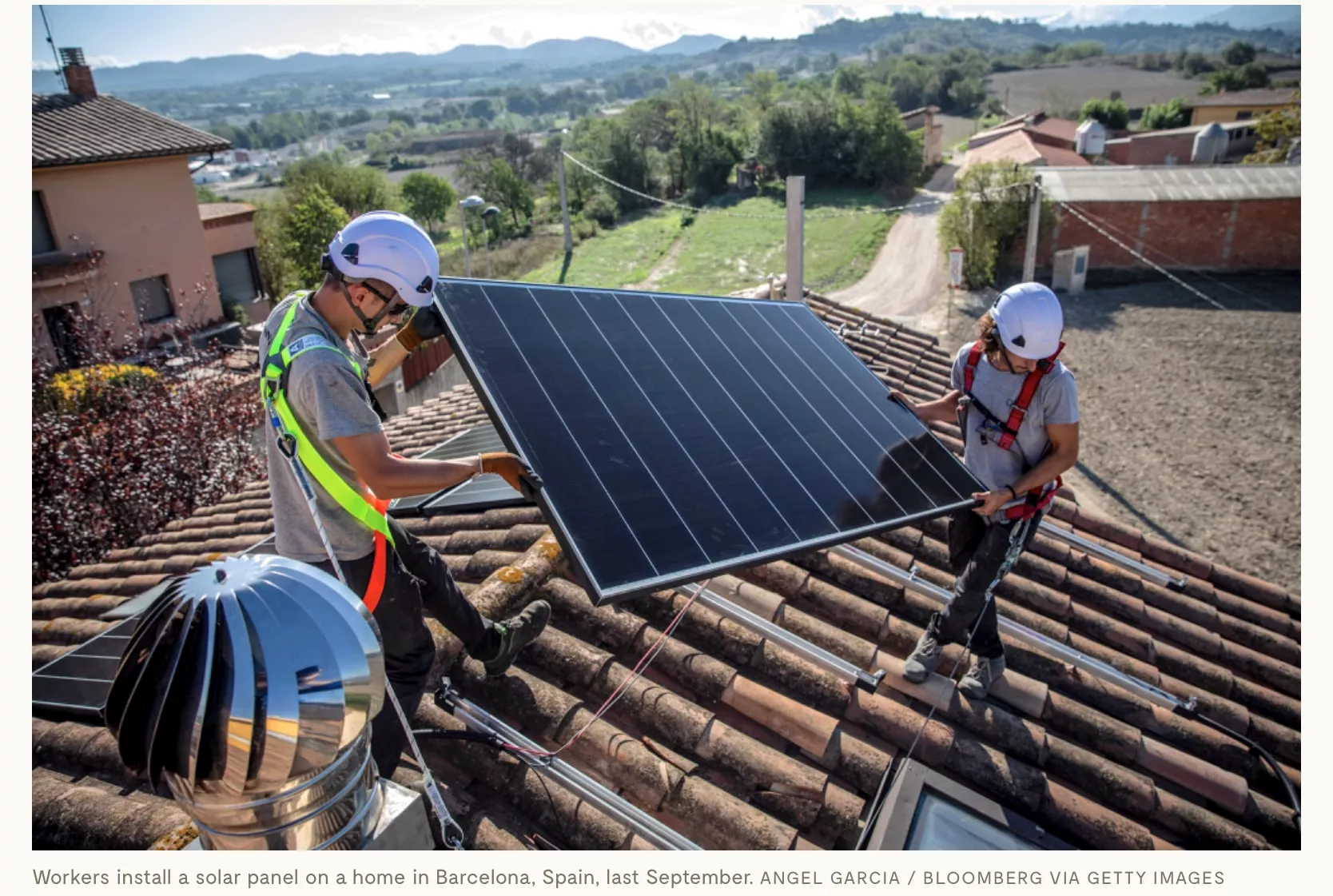
The key to Europe's success was its extensive use of solar photovoltaics and wind farms, whose combined generation increased by 15% in 2022 over the previous year, offsetting the harmful burning of coal and, for the first time, combining electricity produced by both gas and nuclear power.
The greatest boost came from wind power, which is expected to be the main source of electricity in Europe in the future. In 2022, onshore and offshore wind farms produced enough electricity to meet the needs of the European Union and the United Kingdom, which is approximately equal to the output of 255 medium-sized nuclear reactors. Germany, Sweden, Finland, and France, the continent's wind energy powerhouses, are generating more additional wind capacity than ever before.
In contrast to the growth of new wind farms, residential heat pumps, rooftop solar, and electric vehicles—clean technology that can be rapidly implemented by individuals and businesses—broke records and depleted warehouses. Solar cells and e-cars can both be purchased online.
According to the international energy think tank Ember, these investments contributed to a 24 percent rise in solar generation across the EU.
Installing heat pumps requires more work, but that sales of this machinery increased by almost 38% in 2022 compared to 2021.
The only things preventing all three technologies from developing even further were limited supplies and a lack of skilled workers.
The EU, a body that rarely misses the chance to profit from a crisis, launched an ambitious update to the Green Deal that would hasten the world's shift to a green economy by drastically reducing its reliance on Russian fossil fuels by 2027. The EU is anticipated to advance binding efficiency measures later this month, increase its renewable energy goal from 40 to 45 percent of total output, and commit to investing an additional 210 billion euros in new energy infrastructure.
The International Energy Agency cautions that if Chinese demand picks up and temperatures drop, the EU may experience a natural gas shortage of nearly 30 billion cubic meters next winter. According to the EU, in order to meet its own emissions goals, renewable energy generation must nearly double by 2030. Europe may start to yearn for the pleasant winter of 2022–2023 if it doesn't press even harder in the areas of clean energy expansion, smart grid rollout, adoption of electric vehicles, building retrofits, and increasing energy storage capacity.