

Key Market Outlook(s) and Pick(s)
On Monday, I joined my good friend Lou Basenese on his podcast “The Big Skinny” to discuss two of our favorite stocks for 2026, PayPal (PYPL) and Dentsply Sirona (XRAY). Thanks to Lou for having me on:
On Tuesday, I joined Henry Yin on Channel News Asia to discuss market rotation, the mid-term cycle, oil, the Fed, and more. Thanks to Henry for having me on:
Dentsply Sirona Update

(Click on image to enlarge)


Dentsply Sirona (XRAY) is a new position for us, built over the last several trading sessions at a blended cost basis of $11.37. XRAY marks our third name in the healthcare space, increasing exposure to a sector we believe is well positioned for a catch-up trade in 2026 as regulatory headwinds ease, positioning and record underperformance mean revert, and the sector catches a bid from historical midterm cycle outperformance. We discussed this broader healthcare theme in more detail in our recent Pfizer (PFE) write-up a few weeks ago:
We first went public with our Dentsply Sirona thesis during a Fox Business appearance on December 26, 2025, at the 1:50 mark:
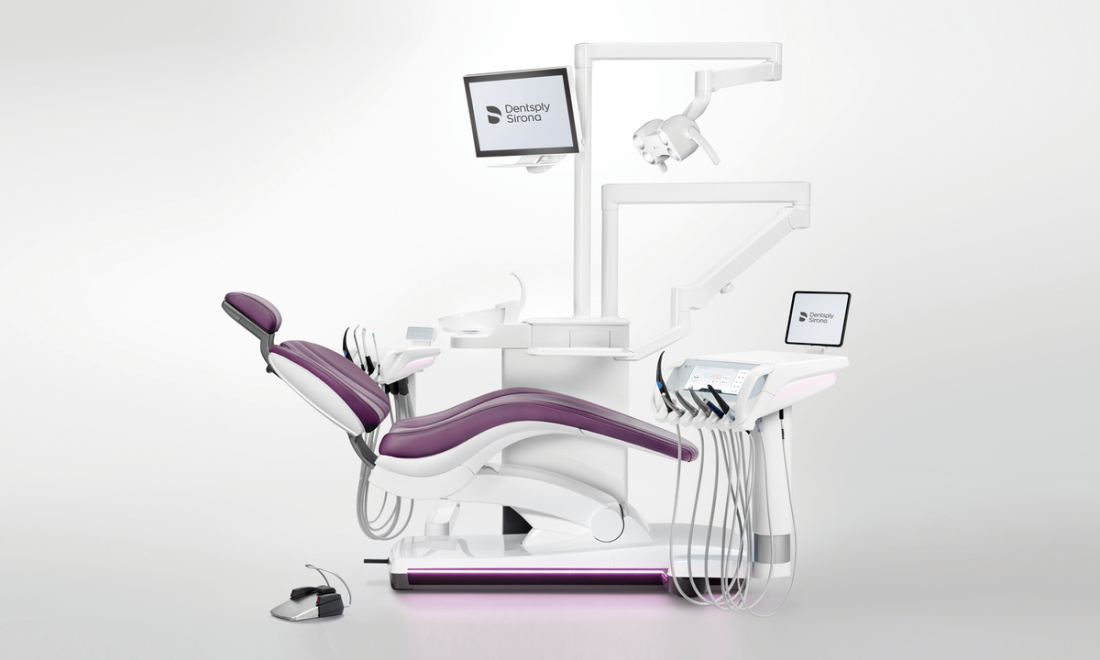
Born from the 2016 $14.5B merger of equals between Dentsply International (founded in 1899) and Sirona Dental Systems (founded in 1877), XRAY is the world’s largest diversified manufacturer of dental equipment and supplies, spanning consumables, lab products, orthodontics, implants, and premium technologies. Nearly two thirds of sales are generated outside the U.S., with a heavy concentration in Europe at ~40% of revenue, positioning XRAY as a key beneficiary of our view on multinationals benefitting from a weaker dollar environment.
The dental industry is highly cyclical and is now inflecting out of a multi-year trough. Europe has faced an extended dental recession that is finally lifting, while the U.S. continues to face lingering headwinds, with patient visits below pre-COVID levels and dental spending growth of ~10% over the past five years versus ~20% for healthcare overall.
No company has felt the pain more than XRAY, with shares down over 80% from 2021 peaks as the market continues to confuse cyclical drawdowns with permanent impairment.
(Click on image to enlarge)


Nearly 30% of XRAY’s sales come from higher-ticket CAD/CAM and equipment offerings, tilting the mix toward premium products and elective procedures. This leaves Dentsply more exposed to cyclical drawdowns than peers focused on stable consumables and routine care, as dentists defer financed purchases of big-ticket items like CEREC systems ($100,000+) amid elevated interest rates, amplifying near-term headwinds.

That said, long-term fundamentals for the $30B+ global dental supplies and equipment market remain highly attractive, driven by powerful secular tailwinds: aging populations requiring more restorative care, rising demand for aesthetic treatments, a broader shift toward preventive dentistry, and the clear advantages of single-visit chairside workflows. XRAY stands as a clear leader in this space, and with chairside CAD/CAM adoption still early stage (<20% adopted by U.S. dentists), there remains a long runway for CEREC and related digital solutions to continue gaining share from traditional lab-based methods.
Not all of XRAY’s recent weakness stems solely from the cyclical downturn. Prior management also grappled with self-inflicted missteps, most notably the 2021 acquisition of Byte. Dentsply paid ~$1B (nearly 6x sales) for the margin-dilutive, direct-to-consumer clear aligner business at the very peak of the aligner cycle. While Byte initially became one of Dentsply’s fastest-growing products, the deal ultimately unraveled after the company suspended DTC sales and marketing following discussions with the FDA, resulting in significant write-downs and impairment charges.
Management has undertaken significant heavy lifting over the past few years to course-correct and stabilize the business: achieving nearly $300M in run-rate cost savings, reducing global headcount by 8–10%, executing a ~60% SKU rationalization to focus on the <15% of products generating ~90% of revenue, reducing the manufacturing footprint by 15–25%, and consolidating from 14 ERP systems to a single platform by the end of 2026.
While these efforts represented the tough but necessary medicine needed to reset the business, the focus on cost cutting came at the expense of customer relationships, distributor engagement, and commercial execution. Top-line growth has remained under pressure, effectively bringing the business to what we view as the 10-yard line of the turnaround and setting the stage for a fresh set of eyes at the CEO level to come in and spike the ball.
That final push comes with the appointment of Dan Scavilla, named CEO effective August 1, 2025 after joining the board earlier in the year. Scavilla is a proven operator with a track record that speaks for itself, most recently serving as CEO of Globus Medical, a leading spine technology company. During his decade-long tenure at GMED, where he first served as CFO, then CCO, and ultimately CEO, the stock became a 4x bagger. Scavilla also orchestrated the 2023 $3 billion NuVasive acquisition (the largest deal in company history) and successfully integrated the business to create the #2 spine player. Prior to Globus, he spent 28 years in leadership roles across various businesses at Johnson & Johnson.
(Click on image to enlarge)

Here’s a great interview from a few months ago with CEO Dan Scavilla and Max Milz, VP of Connected Technology Solutions, covering Scavilla’s background, the XRAY turnaround, and the long-term vision.
We view Scavilla as a major catalyst in the XRAY turnaround, bringing an integration skill set and a roll-up-your-sleeves commercial mindset the company has been missing, especially given lingering questions around synergies between Dentsply and Sirona and the value still to be unlocked. He has quickly recruited proven talent, including Aldo Denti from J&J as Chief Commercial Officer and Dustin Shields from Globus as Chief Transformation Officer.
Scavilla has outlined clear early priorities: a return-to-growth plan centered on fixing the U.S. business through expanded dealer partnerships, restructured commercial operations, and ramping R&D from ~4% to 7% of sales to strengthen the product portfolio. He has personally re-engaged major dealers such as Henry Schein and Patterson, marking a sharp pivot from prior management’s approach, all aimed at restoring profitable growth.
(Click on image to enlarge)

With much of the margin work already completed, combined with ongoing savings and integration benefits, we see a path to SG&A closer to 30%, in line with peers, and gross margins returning to the historical mid-50% range. As the top line accelerates and operating leverage kicks in, we expect XRAY to move back toward low-20% EBITDA margins, with free cash flow returning to historical levels of $400M+ as the turnaround plays out.
As we often say, we favor businesses with multiple outs, and XRAY offers several. One of the most underappreciated is the Wellspect segment, a leading provider of bladder and bowel care products. This high-margin business accounts for ~8% of sales and generates ~40% of free cash flow while consistently posting mid-single-digit growth. Management made the right decision to retain the business following a strategic review, recognizing untapped late-stage investments and the risk that a spin would undervalue the asset. We see Wellspect as providing essential dry powder to fund the dental recovery, plus meaningful optionality down the road (potentially worth more than half of the current market cap if ever separated).
Despite this setup, the market remains stubbornly pessimistic on the turnaround, pricing XRAY like it’s getting taken out on a stretcher. The stock trades at just over 7x forward earnings (60% discount to historical averages) and ~0.6x sales (75% discount), the cheapest valuation in decades.
(Click on image to enlarge)


Investors are paid to wait with a 5.7% dividend yield. If management ever needed additional flexibility, which we do not expect, suspending the dividend would free up ~$120M of incremental free cash flow, providing yet another out for the turnaround.
(Click on image to enlarge)

The dividend is supported by a solid balance sheet, with net leverage of ~3.1x and the bulk of long-term debt maturing in 2030 and beyond. As deleveraging continues through the recovery, management has a ~$1.2B share repurchase authorization at their disposal to retire more cheap shares.
(Click on image to enlarge)

This setup has all the hallmarks of a classic Turnaround Tom special. An industry leader with a long operating history, emerging from a cyclical trough, with self-help largely complete, a proven new management team focused on growth, and a valuation that prices in permanent impairment. We’re happy to sit tight and get paid to wait for what we see as the potential for a triple over the next several years as growth returns, earnings normalize, and multiples re-rate from left-for-dead levels.
Here’s a more detailed look at the business and turnaround strategy from a prior Investor Day:
(Click on image to enlarge)


Q3 Earnings Breakdown
(Click on image to enlarge)


10 Key Points
1) Net sales in Q3 were $904M, down 5% as reported and 8% in constant currency. FX was a $28M tailwind during the quarter, a key part of our view on multinationals benefitting from a weaker dollar environment. Roughly 5.5% of the decline was driven by the Q3 2024 Byte impact and ERP pre-buy, both one-time headwinds.
2) Adjusted gross margins of 52.6% declined from 55.3% last year as sales mix and tariff impacts, an ~$80M annualized headwind, weighed on results. Despite this, adjusted EBITDA margins expanded 50 bps to 18.4% as cost cuts and lower OpEx began to show through.
3) Management announced a Return to Growth action plan, a four-pillar strategy aimed at improving performance and positioning the company for sustained, profitable growth over the next 24 months. The top priority is reigniting the U.S. business through improved commercial execution, streamlined operations, and reduced complexity, with expectations for sequential improvement throughout 2026.
4) As part of the turnaround, management is making leadership changes as new CEO Dan Scavilla builds out his team. XRAY announced the departure of CFO Matt Garth, who joined in May and was “not the right fit”. Scavilla appointed Aldo Denti as Chief Commercial Officer, a former colleague from J&J with 25 years of experience across medical devices and consumer health. Dustin Shields was also named Chief Transformation Officer, joining from Globus Medical and tasked with overseeing day-to-day execution of the Return to Growth plan.
5) Management announced that the Wellspect segment, which had previously been under strategic review, will be retained and play a key role in achieving the company’s financial goals. We agree with this decision. The high-margin business continues to be a bright spot in the portfolio, posting 9.3% constant-currency growth and 15.6% reported growth, with volumes higher across all three regions.
6) A key piece of new CEO Dan Scavilla’s strategy is expanding the network of U.S. dealer partners in CTS to accelerate market penetration and improve dealer relationships, marking a clear pivot from prior management’s approach to distributors. Scavilla has already begun re-engaging with dealers, personally speaking with the CEOs of Henry Schein and Patterson, and expects these partnerships to be firmly in place next year in a way that is mutually beneficial.
7) Management announced plans to accelerate R&D investment to improve the health of the commercial engine, pulling forward millions of dollars into Q4 and targeting annual R&D spending of 6–7% of sales versus a historical average of ~4%.
8) Operating cash flow in Q3 totaled $79M versus $141M last year as unfavorable working capital movements weighed on results. Adjusted free cash flow was $40M compared to $98M in the prior-year period, with conversion declining to 54% from 97%. Cash and cash equivalents remained solid at $363M at quarter-end.
9) The U.S. business remained under pressure in Q3 as the dental slump continued, with sales declining 22.2% driven by weakness across Essential Dental Solutions, CAD/CAM, Imaging, and Implants, partially offset by strong performance in treatment centers and healthcare (Wellspect). The decline includes a 12.5% impact from Byte and the ERP pre-buy, and excluding these non-recurring headwinds, sales were down 9.7%.
10) Management reduced full-year guidance, now expecting a 4–5% sales decline in constant currency versus the prior 2–4% decline, while maintaining reported sales of $3.6–$3.7B compared to FY2024 revenue of $3.79B. Adjusted EBITDA margins are now expected to be >18%, down from >19% but up from 16.6% in FY2024, with adjusted EPS guided to $1.60 versus $1.67 in FY2024 and the prior $1.80–$2.00 range.
Earnings Call Highlights


Morningstar Analyst Note


General Market
The CNN “Fear and Greed Index” ticked up to 53 this week from 49 last week. You can learn how this indicator is calculated and how it works here: (Video Explanation)

The NAAIM (National Association of Active Investment Managers Index) (Video Explanation) ticked down to 92.93% this week from 100.70% equity exposure last week.
(Click on image to enlarge)

More By This Author:
“Turnaround On The Menu” Stock Market (And Sentiment Results)
“Setting Up The Second Act” Stock Market (And Sentiment Results)…
“Lifting Off And Looking Good” Stock Market (And Sentiment Results)



Comments
Log in or sign up to join the conversation.