


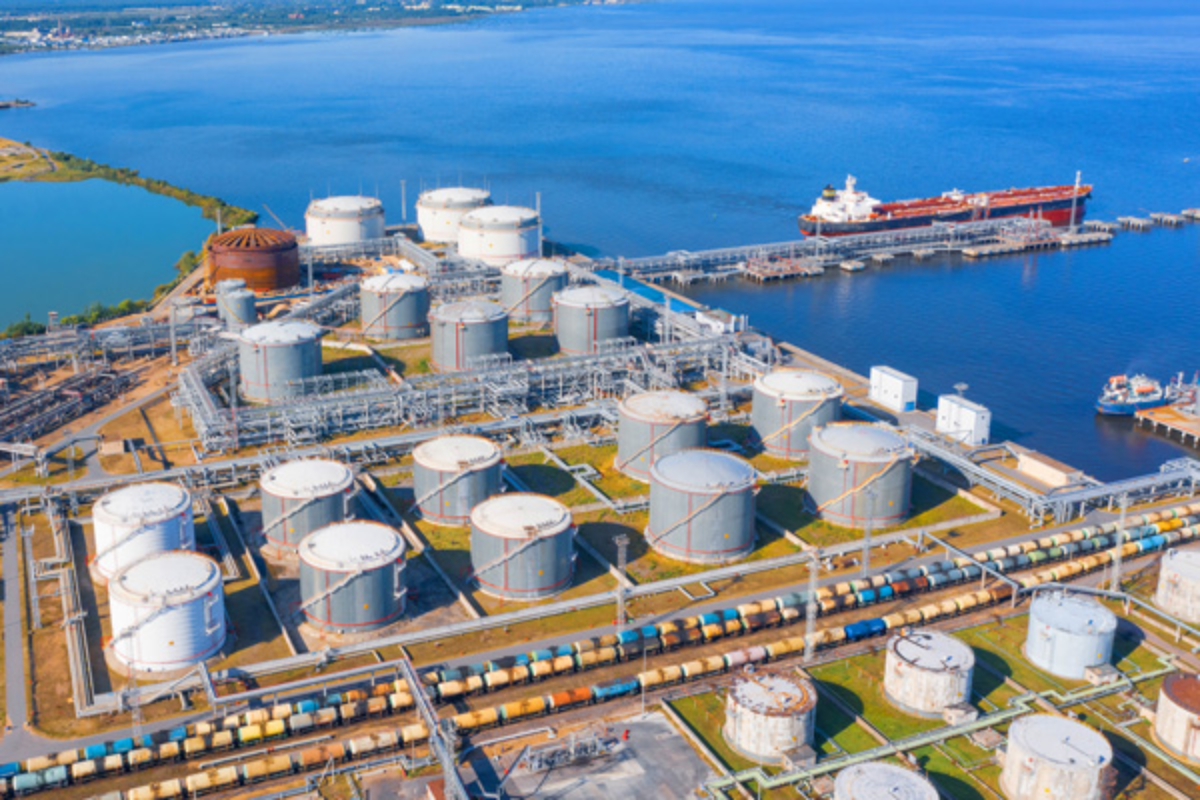
Image Source: Pexels
What happened in Venezuela on January 3 may turn out to be the most consequential energy and geopolitical event of the decade.
In a swift, coordinated operation that stunned the world, U.S. forces captured Venezuela’s longtime socialist dictator, Nicolás Maduro.
Nearly just as swiftly, President Donald Trump declared that the U.S. will not only rebuild the country’s devastated oil infrastructure but also control all crude exports indefinitely.
To some, this might sound like neo-colonialism. But to investors, it could be an opportunity.
The U.S. Reasserts Its Sphere of Influence
As I talked about in a previous post, what we’re seeing unfold is the rebirth of the Monroe Doctrine, the 200-year-old idea that the U.S. is the dominant force in the Western Hemisphere and that European powers shouldn’t interfere.
The 21st-century iteration of the Monroe Doctrine—nicknamed the Trump Corollary, or the “Donroe Doctrine”—is similarly meant as a warning to China and Russia that Latin America’s vast resources, including oil, is off-limits.
In Trump’s own words, “We’re going to be using [Venezuela’s] oil, and we’re going to be taking oil.”
The administration has already announced it will market and sell 30 to 50 million barrels of Venezuelan oil, with proceeds controlled directly by Trump. Energy Secretary Chris Wright went further, confirming that the U.S. will be selling Venezuelan oil “indefinitely,” starting with backed-up storage barrels and expanding future production.
China is Venezuela’s largest oil customer, buying 80% of the exports, and Latin America’s largest trading partner since 2020. It’s invested heavily across the region, in ports, telecom, power grids and more. With 37 port projects under its belt and $13 billion in credit lines pledged to the region, Beijing may not give up Latin America so easily.

Venezuela: Rich in Resources but… Uninvestable?
Some investors still don’t realize just how resource-rich Venezuela is.
The country holds over 300 billion barrels of proven oil reserves, more than any other nation on the planet. That’s nearly one-fifth of the world’s total reserves.
And yet today, Venezuela accounts for just 1% of global oil production.
Thanks to decades of socialism, corruption and mismanagement, Venezuela’s oil infrastructure has crumbled. Output has plummeted from between 7 and 8 million barrels a day to under 1 million barrels today.

Why Reviving Venezuela’s Oil Won’t Be Cheap or Easy
With Maduro out and Washington in charge, there’s renewed optimism in Venezuela’s oil industry… but also massive capital requirements. Energy consultancy firm Rystad estimates it will take as much as $110 billion in capex spending just to restore Venezuelan output to where it was 15 years ago.
That dollar amount is twice what all U.S. oil majors spent globally in 2024 alone, according to a CLSA report to investors.
This may be why Trump said the government would reimburse oil companies for getting the country’s oil operations “up and running” again.
“A tremendous amount of money will have to be spent, and the oil companies will spend it, and then they’ll get reimbursed by us or through revenue,” the president told NBC News.
ExxonMobil XOM, for one, is hesitant to operate in a country that has twice seized its assets. During a recent roundtable between the Trump administration and oil executives, CEO Darren Woods told the president that he believed Venezuela was “univestable” short of significant changes to the country’s legal system and hydrocarbon laws.
Trump, calling Woods’s concerns “cute,” said he would be inclined to block Exxon from doing business in Venezuela.
Even if the money shows up, there’s still the problem of manpower. Tens of thousands of skilled engineers and geologists have not only fled Venezuela but stripped and/or stole equipment, vehicles and copper wiring from the country’s state-run oil company, Petróleos de Venezuela. Much of Venezuela’s oil is ultra-heavy crude, requiring special treatment and naphtha blending to be transported.
Defense and Energy Stocks Catch a Bid
Despite these hurdles, markets rallied hard on the news of Maduro’s removal. The best performing Dow Jones stock on Monday, January 5, was Chevron CVX, surging as much as 10% in intraday trading but ending the day up around 5%.

Chevron—currently the only U.S. major operating in Venezuela, exporting about 140,000 barrels a day—is reportedly negotiating with the U.S. for an expanded license to export more Venezuelan crude, and not just to U.S. refineries but to thirty-party buyers.
European defense contractors also jumped on Monday, including Rheinmetall (+9.06%), Leonardo (+6.41%), BAE Systems (+5.10%) and Thales (+4.80%).
U.S. defense names followed suit: Northrop Grumman NOC (+4.38%), General Dynamics GD (+3.54%), Lockheed LMT (+2.92%).
Final Takeaways
Venezuela’s return to oil markets will likely increase global supply, putting downward pressure on crude prices: Bloomberg’s Mike McGlone sees West Texas Intermediate (WTI) trading in the $42 to $65-per-barrel range this year.
That may be bad for OPEC, but good for U.S. consumers and refiners, not to mention airlines and cargo ships.
From an investment point of view, I urge investors look at energy selectively. Names like Chevron may benefit from Venezuela’s reopening.
I also think investors should consider staying overweight defense, for obvious reasons, especially when combined with news that a military takeover of Greenland isn’t off the table. What’s more, Trump is actively pushing for the 2027 U.S. military budget to be raised to a mind-boggling $1.5 trillion.
And of course, as always, I recommend a 10% weighting in gold, split evenly between physical bullion and high-quality gold mining names.
More By This Author:
Silver Surged 145 Percent In 2025 As Commodities Reasserted Themselves
The Top 5 Most Read Market Ideas Of 2025
The Diesel Shock No One Is Talking About


Comments
Log in or sign up to join the conversation.