

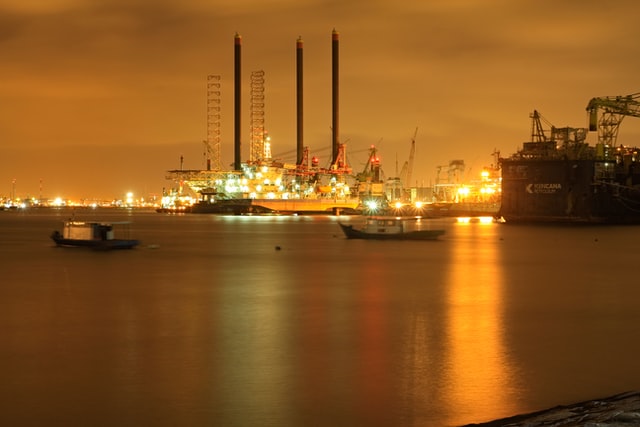
Photo by Timothy Newman on Unsplash
Last week, President Donald Trump ordered a blockade of oil tankers entering and leaving Venezuela, dramatically escalating U.S. pressure on the Maduro regime. The U.S. has already seized a Venezuelan oil tanker, and in a Truth Social post last Tuesday, Trump insinuated that U.S. forces would leave the South Americans country when it returned “all of the Oil, Land, and other Assets that they previously stole from us.”
Stephen Miller, Trump’s top policy advisor, went further on X, accusing Venezuela of the “largest recorded theft of American wealth and property.”
Before last week, U.S. involvement in the country was being framed as part of a broader war on drugs, fentanyl specifically.
The Trump administration has told Congress that the U.S. is engaged in an “armed conflict” with drug cartels and has charged Venezuelan President Nicolás Maduro with supporting “narco-terrorism.” There have been 25 boat strikes near Venezuela, killing at least 95 people.
But the uncomfortable truth is that Venezuela is not a source of fentanyl, the synthetic opioid responsible for killing over a quarter of a million Americans since 2021. According to the State Department and the Drug Enforcement Administration (DEA), Venezuela is primarily a transit country for cocaine.
Fentanyl, by contrast, is overwhelmingly produced in Mexico using precursor chemicals sourced from China and India, and it enters the U.S. mostly through legal ports of entry… and mostly by Americans. In 2024, four out of five (80%) convicted drug traffickers were U.S. citizens, according to an analysis of government data by the libertarian Cato Institute.
So if this isn’t really about fentanyl, investors should be asking: Why Venezuela, and why now? The answer, I believe, has far less to do with drugs and more to do with energy and power.
The “Donroe” Doctrine
Earlier this month, the Trump administration formally revived the Monroe Doctrine, the 19th-century idea that the Western Hemisphere is off-limits to foreign powers.
In its 21-century incarnation, which the administration calls the Trump Corollary—others are referring to it as the “Donroe” Doctrine—the policy emphasizes U.S. dominance in the Americas and rejects the influence of globalization.
Viewed through that lens, Venezuela makes some sense. The country has significant mineral resources. It sits atop the largest proven oil reserves in the world, estimated at 303 billion barrels, over 6.5 times more than the U.S. has.

And after years of U.S. sanctions, Maduro has leaned hard into relationships with China, Russia and Iran to stay afloat. Most Venezuelan crude oil now flows to China at steep discounts, often through secretive shipping agreements designed to skirt sanctions.
According to one Venezuela expert, the idea of a resource-rich country in the Americas trading with China and Russia “doesn’t really fit into Trump’s view of the world.”
Diesel: The Lifeblood of the Global Economy
That brings us to oil and diesel.
Venezuela’s crude is famously heavy and sour, meaning it’s thick, high in sulfur and difficult to process. Over the decades, complex refineries, especially in the U.S., have been engineered specifically to handle this kind of oil.
This matters because heavy crude is disproportionately important for diesel production, and diesel is the lifeblood of the global economy. It powers trucks, ships, mining equipment, agriculture and other industries.
When diesel prices have spiked, inflation has quickly followed suit. After Russia invaded Ukraine in early 2022, disruptions to heavy crude and refined product flows sent diesel prices soaring, contributing to higher food and consumer prices across the globe.

For now, Venezuela insists that oil exports are proceeding normally, but if trade is disrupted, the impact wouldn’t be limited to Venezuela or even South America. It would ripple through the global economy.
Is a Diesel Shock Being Underpriced?
Oil prices are down sharply this year. Brent Crude is off more than 20% year-to-date, weighed down by slowing demand in China and oversupply fears.

Middle distillate inventories, including diesel, remain historically tight in many regions, according to the International Energy Agency (IEA).
I’m not predicting an immediate oil price spike, but I do believe diesel-driven inflation risk is being underpriced. And when governments underestimate inflation risks, they tend to react late and overcorrect. That’s rarely been good for markets.
That’s why I think diversification into real assets remains attractive, even when oil prices are falling.
Diversifying with Gold
As I’ve pointed out many times, gold has historically performed well during periods of uncertainty and inflation risk.
According to the World Gold Council (WGC), the precious metal has now risen for five consecutive weeks, closing last week at a new record high above $4,300 an ounce. Year-to-date, it’s up roughly 67%, dramatically outperforming most major asset classes, including stocks, bonds and commodities.
As for the drivers, monetary policy is turning more supportive. Historically, periods of rate cuts and balance sheet expansion have been constructive for gold.
The U.S. dollar is also weakening. A softer dollar has traditionally been one of gold’s most reliable tailwinds.
Finally, geopolitical risk remains high, and not just in Venezuela. The WGC highlights continues tensions involving Russia and Ukraine, the Middle East, and rising instability across multiple regions.
This is why I continue to recommend a 10% allocation to gold, split between physical bullion and high-quality gold mining companies. Remember to rebalance at least on an annual basis.
More By This Author:
Copper Rally Is Accelerating As AI Data Centers Push Global Supply Toward Crisis Levels
Americans Spent A Record $11.8 Billion On Black Friday Despite Economic Worries
Why The U.S.-China AI Arms Race Is Entering A Critical New Phase


Comments
Log in or sign up to join the conversation.