


Housing affordability is a popular slogan among politicians, as they look for scapegoats to explain why young families in the US and Canada continue to struggle to “ afford” single-family homes. Yet the largest single cost component in housing is mortgage rates, and these rates are under considerable pressure to rise, largely because of geopolitical events driving up bond yields. Blame it on the Iranian war, as mortgage rates are most likely to rise in the coming months.
A common misconception is that central banks have a direct influence on mortgage rates, and politicians easily urge the central bank to cut rates to help with the affordability problem. However, central banks have much less of a direct influence on mortgages, certainly not with respect to long-term mortgages.
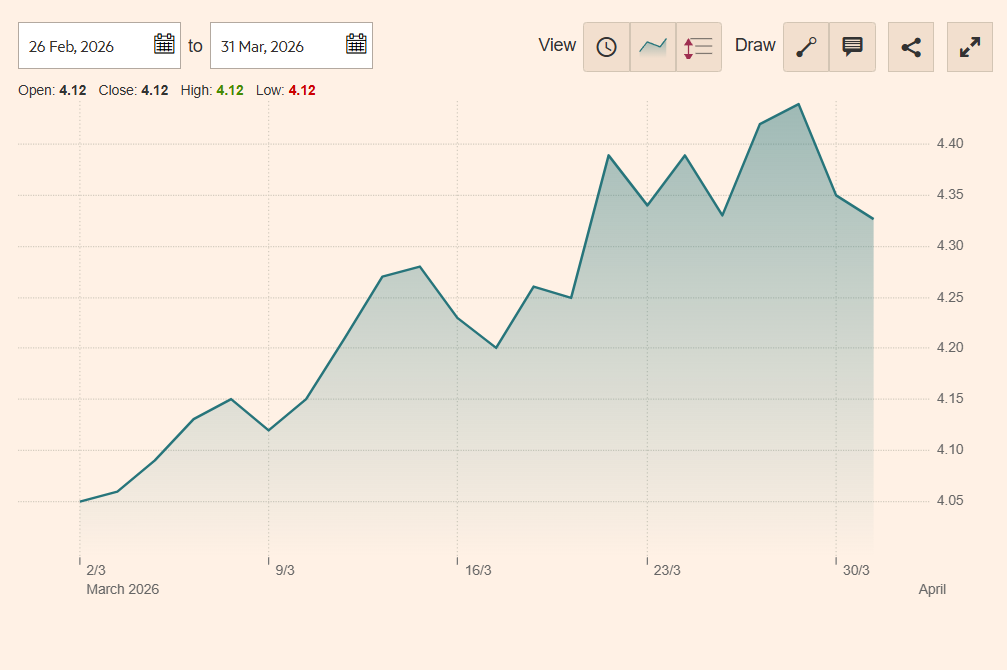
In the US, mortgage rates are determined by the bond market, which in turn is a reflection of inflation and growth in the broader economy. Today, the average 30-year fixed rate is approximately 6.30%, which is currently 2 percentage points above the bellweather 10 -year Treasury bond. Long-term rates have taken on a life of their own, as investors demand higher yields as the higher energy prices ripple through the economy. Without any change in the Fed funds rate, the 10-year bond is more than 30 basis points above the pre-war level. The Fed does not directly control the mortgage rates. Rather, its rate decisions are a reflection of its views on the current and future interest rates, which, in turn, are reflected in the bond market. The US secondary mortgage market, MBSs, reflects similar concerns for inflation and growth.
US Ten-Year Bond Yield Since the Start of the Iranian War
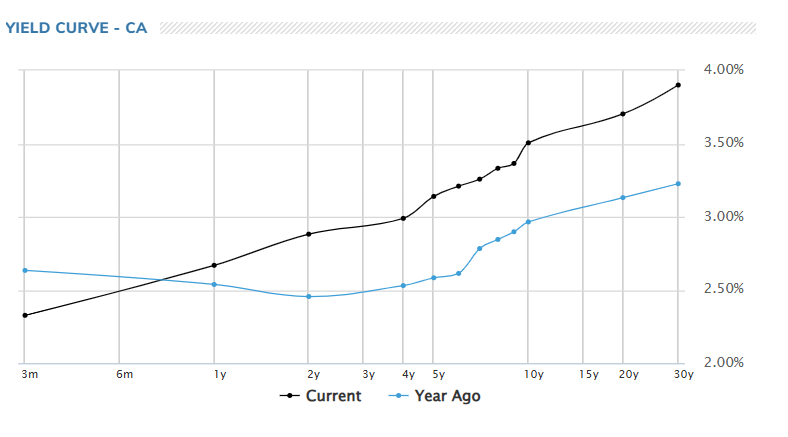
Canada’s mortgage market operates in a relatively similar fashion. The most popular mortgage rate is the 5-year fixed rate. The commercial banks offset their mortgage loans by selling bonds, and higher yields are then passed on to the mortgage borrower. Normally, the banks add a 1.5% to 2% spread over the 5-year government bond yield. Those yields, in turn, reflect market sentiment towards inflation, growth, and geopolitical risks. Today’s Canadian 5-year bond yield has moved up sharply to 3.1%, putting the 5-year mortgage rate at 5%.
Canada’s Yield Curve Shift
What do we know about the medium-term outlook for mortgage rates? Every prospective homeowner is dealing with the uncertainty of the rate should a buying opportunity suddenly arise. Will today's rate remain so, and for how long?
Borrowing costs are on a tear in the US Treasury market. Since the war’s beginning, worldwide investors have been selling Treasuries, especially the 2-year note, which is the most sensitive to interest rate expectations. The 2-year note has surged a full 50bps over the past month. The 10-year bond has moved up by 44bp. Investors are nervous about holding US Treasuries. The futures market is not pricing in any rate cut until the end of 2027. And, some are pricing in significant odds that the Fed will be forced to raise rates in response to inflationary pressures later this year. Prior to the war, the market was betting that the Fed would make two or three cuts this year
The bond markets in both countries are not anticipating any rate cut this year. As long as the energy markets continue to experience daily price volatility, interest rates will be threatened. Mortgage rates will be caught up in these changes in the long-term bond yields.



Comments
Log in or sign up to join the conversation.