

Photo by Shutter Speed on Unsplash
Bond markets are on the move, as investors start to price in a new round of inflation expectations flowing out of the Iranian war and the instability in the region as whole.
Long considered as the smartest investors in the room, bond traders are taking precautions regarding the outbreak of inflation and are pricing in rate increases by the central banks. Before the outbreak of war in the Middle East, traders were expecting rate cuts, as many as two before year’s end. The last 25 days have changed all that.
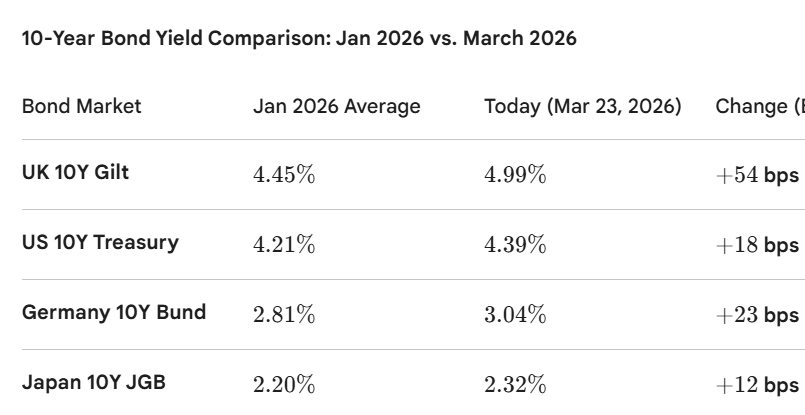
Since the start of year, 10-yr bond yields have really moved up, particularly strong moves for the Gilts and Bund, reflecting the sharp increases in energy costs in Europe in response to the disruption in tanker flows through the Straits of Hormuz. Investors going out that far into the future require a risk premium normally, but, in this instance, the geopolitical risks dictate significantly higher premiums.
Recent statements from major central banks were relatively reassuring , in the sense that no action was taken to change the existing bank rates. The Federal Reserve noted that domestic conditions, job performance and inflation, were in line with expectations and that the bankers saw no reason to move rates in either direction. Japan is the exception, having come off nearly two decades of negative interest rates and now aggressively increasing rates to reflect a rise in inflation. The relative complacency of the central bankers in their statements since the outbreak of the Iranian war belies a deeper concern among bond traders. The traders know there is an elephant in the room, namely energy-induced inflation, that threatens this complacency.
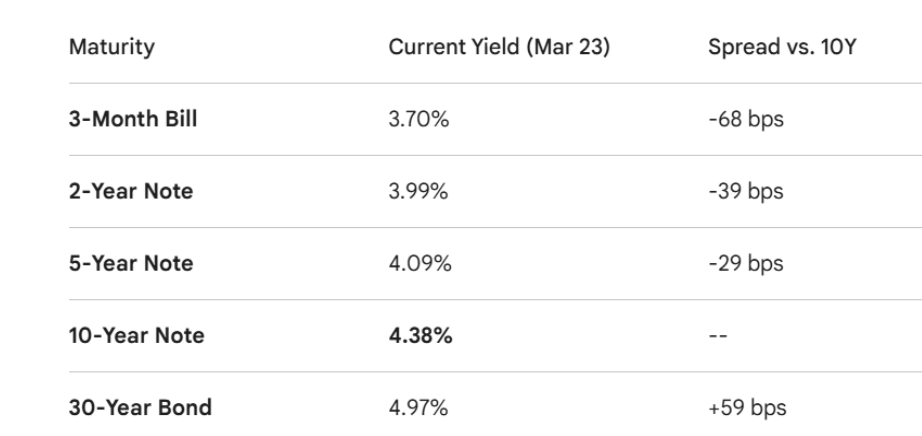
The bond market displays a “ bear steepening” curve—-where long term rates move up much faster than short-term rates. The “steepening” reflects the need for greater protection from inflation expectations due to geopolitical risks, especially in the energy markets. So, the 10y-2yr spread ( +39bp) has opened up considerably as investors demand a higher premium to offset the risk. It was just the opposite about a year ago when the curve was “ inverted”, and long rates were below short rates. In other words, the bond market is expecting rates to be “ higher for longer “ should the energy markets continue to be battered by the Iranian war.
So, for the time being, central bankers are watching, waiting and more than a bit nervous when it comes to changing course. The bond market has done much of the heavy lifting already, as it has moved up long-dated rates, steepened the curve, without any assistance from central bankers. This may be enough to re-set the market for an increase in rates going forward.


Comments
Log in or sign up to join the conversation.