

It all started last week when the US and Japan announced a coordinated foreign exchange intervention to support the yen, after the yen hit a 40-year low last month. The intervention was not surprising, since the yen has been steadily depreciating over the past year, as the US-Japanese interest gap widened, encouraging bets against the yen to continue to weaken. Moreover, the interest-rate differential may well widen further should the Fed decide to raise rates to tame US inflationary pressures. US Treasury Secretary Scott Bessent and Japanese Finance Minister Katayama each said they wouldn’t hesitate to intervene again if necessary.
The Japanese economy has been operating in its own world of ultra-low interest rates for decades and excessive government debt. Moreover, the widening Japanese trade deficit continues to pressure the yen. Macro-economists have long wondered how long these conditions would prevail before there would be a run on the yen. No currency is immune to the effects of trade imbalances and widening interest differentials indefinitely.
Barry Eichengreen argues that the forces behind the US intervention go well beyond stabilizing the yen. He maintains that the US is “ worried that selling dollar securities to prop up the yen would put additional strain on the long end of the US Treasury market.” His argument rests on the fear that the US Treasuries would be unloaded in sufficient quantities to increase yields, especially at the longer end, thus making US monetary policy more restrictive without any change in official Fed policy. The Trump administration has openly declared it was looking to the Fed to lower interest rates.
What caught the currency markets off guard was that the US used euros, instead of dollars, from its stabilization fund, to intervene. In this way, it would avoid a flood of additional Treasuries to hit the market. What Eichengreen is arguing is that “ the dollar’s status as a reserve currency is not what it used to be”. Put another way, the US dollar is losing some of its reserve strength, and selling US Treasuries would only exacerbate the situation.
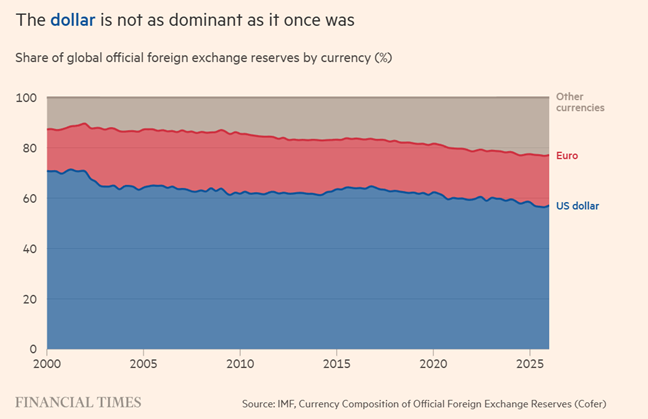
In sum, Eichengreen reveals that the Trump administration is very hesitant to have central banks sell their dollar reserves in a losing effort to support a weakening currency. With the US dollar losing more of its reserve currency dominance, the ability of the US to intervene successfully is limited. Those nations will need to look to other currencies to step in. The Chinese yuan, for example, is clearly on the sidelines, waiting to be called to go on the field, something the Trump administration will try to prevent.


Comments
Log in or sign up to join the conversation.