Why GE HealthCare Wants To Own More Of The Business Behind A PET Scan

GE HealthCare is acquiring SOFIE Biosciences for $945 million to vertically integrate its PET scan tracer production.

Source: Unsplash

What GE HealthCare is buying

Yesterday, GE HealthCare agreed to buy SOFIE Biosciences from Trilantic North America for $945 million in cash. SOFIE makes radioactive medicines used in PET scans, which help doctors see activity inside the body.

The proposed acquisition includes a U.S. network of 15 contract manufacturing sites operating 21 cyclotrons. These particle accelerators produce radioactive isotopes used in the medicines. GE HealthCare expects the deal to close in the first half of 2027, subject to regulatory approvals and other conditions. SOFIE would join its Pharmaceutical Diagnostics segment.

PET stands for positron emission tomography. A patient receives a radioactive diagnostic drug called a tracer, and the scanner detects signals associated with that tracer to build an image. Having the scanner ready is only part of the job. The right dose also has to reach the patient in time.

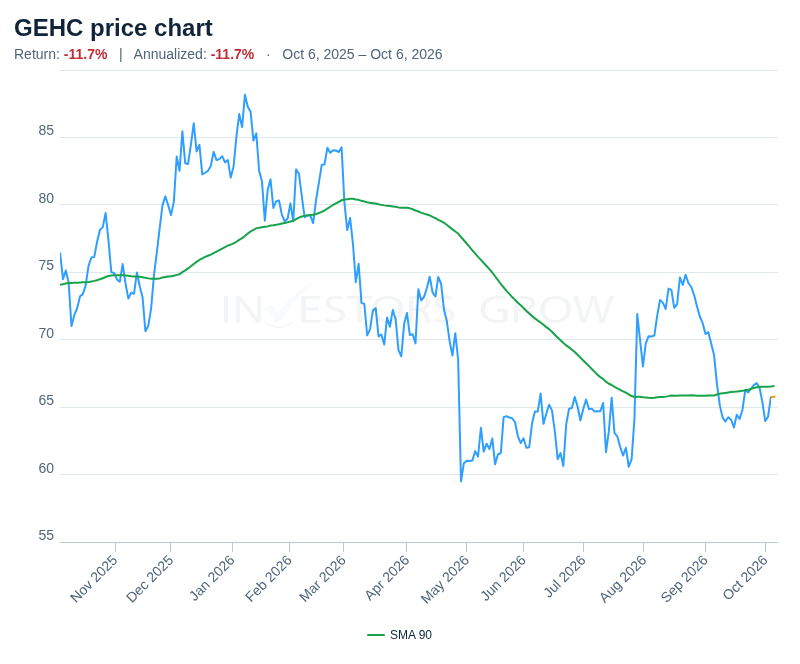
GE HealthCare Technologies Inc. (GEHC) share-price movement in USD over the displayed October 6, 2025–October 6, 2026 range.

Why delivery time matters

SOFIE already manufactures GE HealthCare’s Flyrcado, a tracer used to image blood flow to the heart. It contains fluorine 18, whose radioactive activity falls by half about every 110 minutes. That is its physical half life. It measures radioactive decay, while the usable life of a dose also depends on the activity needed at injection and the product’s labeling.

Production, drug preparation, quality controls and transportation have to fit around when the dose will be used. Travel consumes part of that window. PET drugs are typically administered within minutes to hours after preparation.

That makes the location of qualified manufacturing facilities part of the business model. More dependable supply could help imaging centers schedule scans and serve more patients. For the manufacturer, that could mean more doses sold and better use of its facilities. Those are potential benefits of the network, rather than results already demonstrated by this acquisition.

Why buy a supplier you already use?

GE HealthCare already gets Flyrcado from SOFIE. The purchase would give it control of that existing network, rather than automatically add new manufacturing capacity to the industry.

Ownership could give GE HealthCare more say over investment and production planning. It would also bring in a business that manufactures medicines for other companies. Management says SOFIE will continue serving those customers after closing, while GE HealthCare will keep working with other manufacturers.

That outside business matters. A contract manufacturer gets paid to make someone else’s medicine. It can earn money from that work without owning the drug. Manufacturing revenue and the drug’s full selling price are different things.

GE HealthCare would also take on responsibility for running and investing in the network. Keeping outside customers would be an early test of the arrangement: those customers would still need dependable service after their manufacturer changes owners.

Does the business justify the price?

Management expects the acquisition to improve revenue growth, adjusted EBIT margin and adjusted earnings per share in the first full year of ownership. EBIT means earnings before interest and taxes; its margin measures those earnings relative to revenue. Both adjusted profit measures are non GAAP, meaning they incorporate company adjustments to standard accounting results. The announcement does not quantify the expected improvement.

Higher earnings per share would be useful, but investors also need to consider what GE HealthCare is paying to get them. How much additional cash can SOFIE generate after operating costs, financing costs and the spending needed to maintain and expand the network?

The announcement does not provide SOFIE’s standalone revenue, profit or cash flow. Those figures, along with its investment needs, are essential to judging the $945 million price. We can understand why GE HealthCare wants the business while leaving the question of whether it is a good deal open.

What would make the deal convincing?

After any closing, useful evidence would include more doses delivered, more reliable service, outside customers staying and stronger cash generation without a disproportionate increase in spending. Those results would help show whether owning SOFIE improves on simply buying its manufacturing services.

Demand matters just as much as delivery. A busier network could spread facility and staffing costs across more doses. An underused one would leave the owner carrying those costs while waiting for business. Imaging centers also need suitable equipment and trained staff to perform scans.

The distinction for investors is between gaining control and earning a return. GE HealthCare could gain more control over an important part of its imaging business. Whether that control is worth $945 million depends on the additional cash the business can generate relative to the purchase price, continuing investment and risks.

STOCKS IN THIS ARTICLE

Comments