

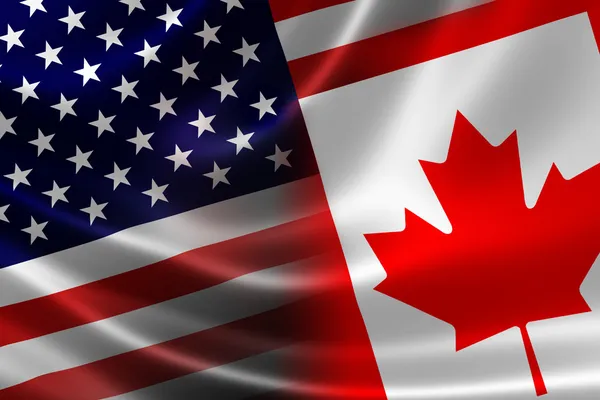
President Trump did not expect Canada to walk out yesterday when Canada suspended bilateral trade negotiations. The President has not experienced such defiance in talks with other nations. Perhaps, he did not take Canada’s Prime Minister, Mark Carney seriously when Carney said “no deal is better than a bad deal”.
Yesterday, after a summer of negotiations, trade talks between Canada broke down, resulting in the US imposing 50% tariffs on $20billion worth of Canadian exports. The Canadian Prime Minister, Mark Carney, subsequently, announced that Canada will match US tariffs “dollar for dollar”. Canada is prepared to continue to go toe-to-toe with President Trump on these outstanding trade issues.
To put this current dispute into perspective, Canada exports US$ 400 billion annually to the US and is the US largest trading partner, overtaking China last year. Bilaterally, Canada maintains a trade surplus of US$ 100 billion annually. The US relies significantly on Canadian oil and gas imports, automotive products and agricultural products, all of which already faced US tariffs.
The current dispute involves just $US20 billion sales into the US and represents only 5% of the total amounts of goods Canada currently sells to its neighbour to the south. On yet a broader measure, these tariffs will have no impact on the Canadian economy.
Observers on both sides of the border were led to believe that a decision by the President to extend the deadline for a deal by an additional three days was a positive sign that progress was being made and it was just a matter of nailing down some outstanding matters, requiring a little more time. Media reports had the US easing up considerably on the tariffs affecting steel and aluminum; in turn, Carney requested that the provincial liquor boards be prepared to return US spirits back onto the shelves.
For the moment, both sides are playing the blame game. US Trade Representative Jamieson Greer said that Canada introduced last minute demands that could not be agreed to. On the Canadian side, Carney cited that the US last-minute changes "were unfair,uneconomic and called into question the reliability of any deal”. This takes the prospects of a deal further away than ever before.
Politically, the Carney position has widespread support throughout the country. The issues remaining to be resolved are: Canada wants tariffs removed on its exports of steel,aluminum,and softwood lumber; the US objects to some provinces refusing to sell US alcohol and other spirits and removal of the Canada’s restrictions affecting US access to its dairy market.
The Prime Minister wasted no time, announcing today that Canada will levy dollar-for-dollar tariffs on US goods including steel, paper products, electronics and appliances. US tariffs go into effect immediately, and Canada’s tariffs on the Tuesday after Labour Day. The Prime Minister was very explicit, at a press conference when he said about the US: "they asked too much and they offered too little”. This best sums up Trump’s negotiating strategy, and why he has been unable to strike and deal with either Canada and Mexico.
Trump may well have painted the US into a corner. To get tougher and up the tariffs yet again will not bring the Canadians to the table, and only harm the American consumer. Remember the most important exports to the US are in the most vital areas of energy and an integrated auto industry, neither of which would benefit from a further escalation in US tariffs.
Looking back at the last year and half, the Canadian economy did not suffer measurably from the US tariffs. Growth and employment has been acceptable, major industries, such as oil exports have benefitted from price increases worldwide, and over 85% of all Canadian exports enter the US duty-free. If no agreement is reached, say in 6 months or a year, the US will continue to pay for tariffs of their own making.


Comments
Log in or sign up to join the conversation.