

Summary
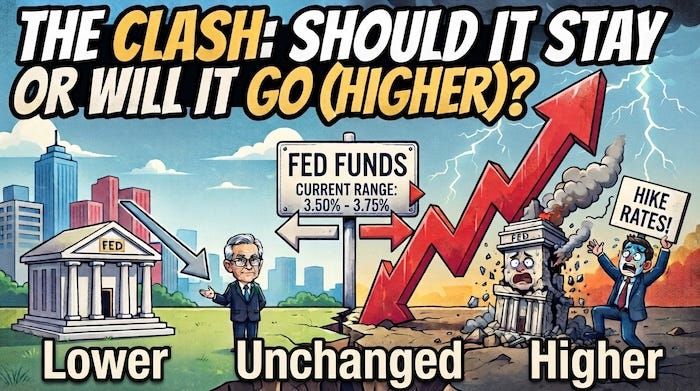
On Wednesday, September 16th, the Federal Open Market Committee (FOMC) will announce its interest rate decision. Our view, shared by most analysts, is that the data increasingly supports a rate hike, not a hold. Given the fiscal backdrop we’ve been writing about for months (debt, deficits, and inflation), the effects of a hike won’t stop at the fed funds rate; they will ripple unevenly across the entire Treasury yield curve, with real consequences for mortgage rates, which have gone above 7% for a 30-year fixed rate.
Here’s the case, broken down.
Where Rates Stand Today
The Fed has held its benchmark rate at 3.50%–3.75% since the last cuts in late 2025,
The FOMC infighting has been building:
April 29, 2026 (Powell’s final meeting as chair): 8-4 — the most dissents since October 1992. Three regional presidents objected to the statement’s “easing bias” language, while Governor Stephen Miran dissented in the opposite direction, preferring a cut,
June 17, 2026 (Warsh’s first meeting as chair): 12-0, unanimous, looking like consensus had returned…but, hold on,
July 29, 2026: 9-3 — Hammack, Kashkari, and Logan again dissented, this time hawkish, seeking an immediate quarter-point hike,
The Fed’s own median projection (the “dot plot”) has been drifting hawkish, meaning a higher fed funds rate, with the year-end 2026 fed funds projection rising from 3.4% in March to 3.8% by June
What does all of this jargon actually mean? That a rate hike seems to be in the cards.
The Inflation Case
Headline CPI has run above the Fed’s 2% target for five and a half years,
August Producer Price Index (a leading indicator for consumer inflation): headline PPI up 5.4% year-over-year, hotter than the consensus forecast,
Core PPI for August: +0.2% monthly, roughly in line, but off an already-elevated base,
Friday’s CPI report (the last inflation read before the FOMC meets) showed headline inflation at 3.4% annually, well above target
Fed Governor Christopher Waller said on September 3rd that it “may be appropriate” to raise the policy rate at the September meeting
The Employment Case for a Hike
August jobs report: 162,000 jobs added, well above expectations,
Unemployment held steady at 4.1%, indicating a resilient labor market, not a weakening one,
The Fed’s July minutes describe the labor market as having “changed little,” with “job gains keeping pace with the workforce” and “solid growth in economic activity” continuing,
When inflation is elevated, and the labor market shows no sign of cracking, the Fed has historically had far more room to tighten without fear of triggering a recession.
The Market Is Already Leaning This Way
Markets had been pricing in a 66% chance of a 25 basis point hike at the September 15–16 meeting
That probability has been rising, as each new data point (the August jobs report, the hot PPI print, Waller’s comments) has been released. The markets now predict a 90% chance of a hike.
Why This Matters More Than Usual…Debt And Deficits!
We’ve spent months speaking about a specific risk: that America’s debt (over $40 trillion) and deficits (north of $2 trillion annually) could erode confidence among Treasury buyers and push borrowing costs higher regardless of what the Fed does (The Point Of No Return For Lower Interest Rates? What It Means For Property Buyers),
A fed funds rate hike creates a real question about how rates along the yield curve will react.
The Short End (2-Year and Under)
Moves almost mechanically with Fed policy
A hike here will push short-term yields up along with the fed funds rate
The Long End (10-Year and 30-Year)
The traditional view: a hike signals inflation-fighting credibility, stabilizing inflation expectations, potentially keeping long yields stable,
The U.S. is fiscally irresponsible view: a hike raises the government’s own borrowing costs on its existing debt, which:
Increases interest expense (already running at $1.27 trillion annually)
Widens the deficit further, unless spending cuts are in the cards,
Increases the supply of Treasury debt that needs to be absorbed by the market,
Potentially, a hike could be seen as creating fiscal stress, not just as monetary discipline, pushing long yields up and not down,
A foreign playbook to consider. This is currently playing out in Japan, where rate normalization has meant rising, not falling, long-term bond yields, because the country’s debt level is competing with monetary credibility (Japan’s 10-Year Bond Yield Over 2% WAS A Big Deal! Now, We’re Approaching 3%!).
What Do We Predict May Happen?
Most probable outcome: a bear steepener, a bond market phenomenon we have discussed before (The Yield Curve is Steepening, And The ‘Smart Money’ in the Bond Market Is Sounding The Alarm On Inflation And Debt!), where long-term yields rise faster than short-term yields due to inflation concerns, increased risk premium, and massive issuance due to massive deficits,
If the credibility effect wins, the curve could flatten,
If the fiscal-stress effect wins — which we think is increasingly likely given the current debt trajectory, long yields could rise faster than short yields.
What It Means for Mortgage Rates
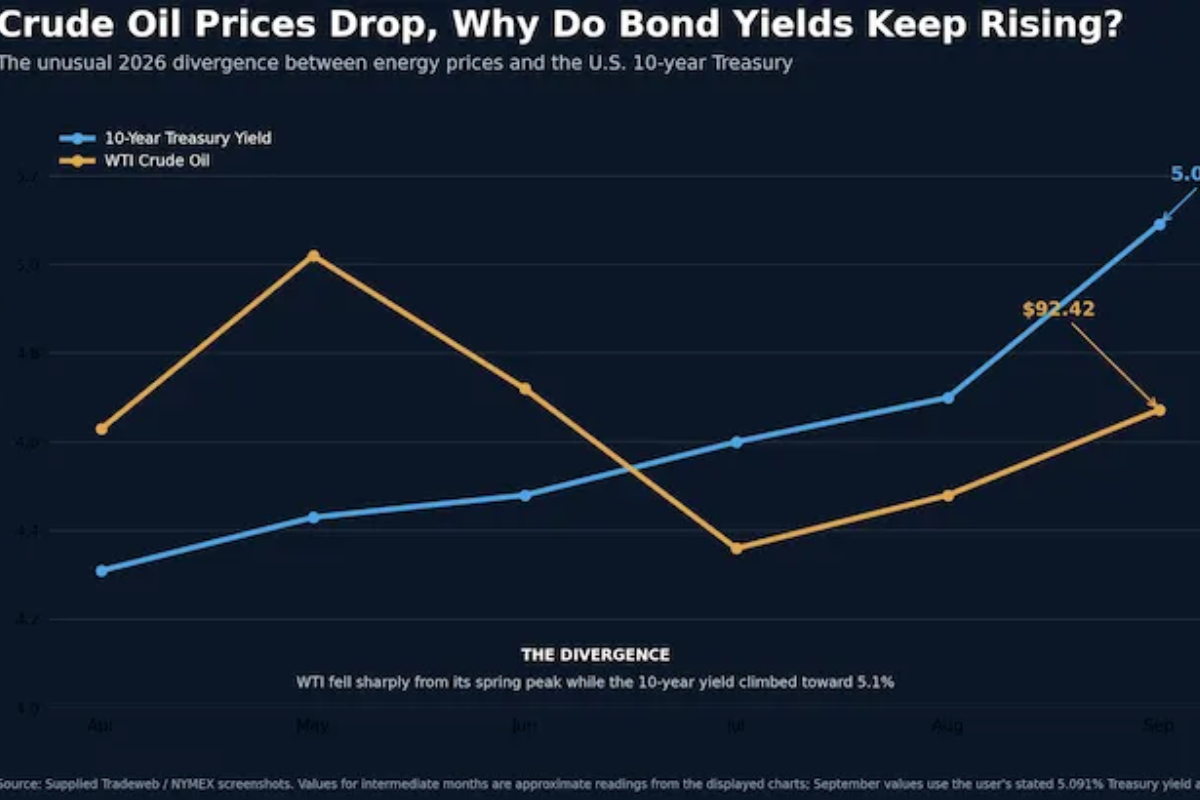
Mortgage rates track the 10-year Treasury, not the fed funds rate,
A Fed hike does not guarantee higher mortgage rates, and it does not guarantee lower ones either; it depends entirely on which of the two long-end forces above dominates. It also depends on the mortgage spread, which tends to reflect lenders' risk appetite (The Mortgage Spread, And Why 30-Year Mortgage Rates Could Be 7.50%!).
Given the fiscal condition of the U.S., we think the bond supply/confidence effect is more likely to dominate than it would have been a decade ago, which means a hike could push mortgage rates up more than would typically be expected.
So What Can We Expect?
Inflation is still elevated,
Employment is resilient, not weakening,
Fed speak has turned much more hawkish,
The market is betting on a hike, to a 90% level,
And of course the fiscal condition of the country complicates the long end of the curve in ways that could work against, not for, borrowers hoping a hike might ease mortgage rates.

Comments
Log in or sign up to join the conversation.