


Beating the proverbial dead horse, interest rates are moving higher at an alarming pace, and we know from history that when this occurs, bad things can happen all around the economy!
While some may be tired of what seems like our obsessive attention to the 10-year Treasury bond yield, we will continue our laser focus because of its significant importance to the real estate market, consumer finance, companies raising massive amounts of capital, and more.
In late 2025, the 10-year yield was in the 4.0% range, about 4.40% in Spring 2026, above 4.50% during the summer, and since the end of August, when the yield was about 4.75%, today we have now reached levels not seen in over 20 years, at 5.26%!
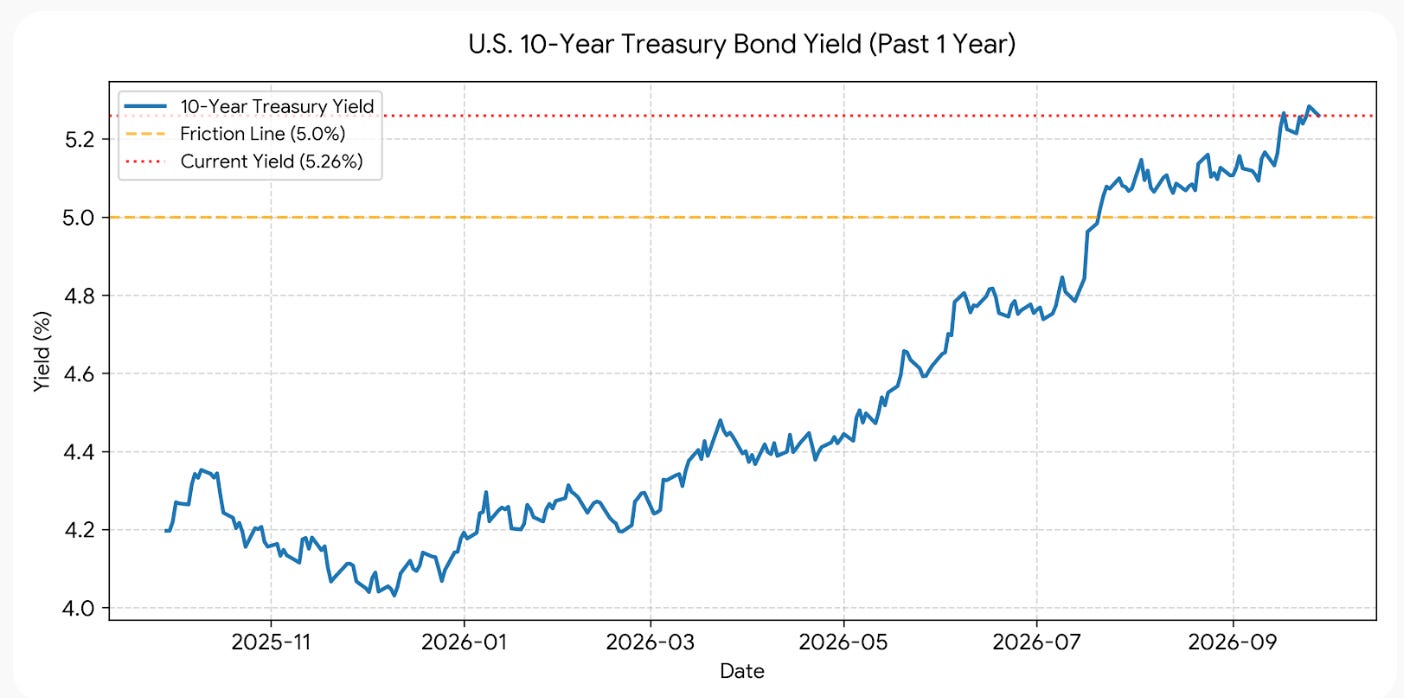
At What Point Do Bond Yields Cause Some Aspect Of The Economy To Crack, Potentially Leading To A Snowball Effect Across Multiple Sectors?
While this is a critical question for my company, as a title insurance provider dependent on a well-functioning commercial and residential real estate market, the reality is that this question and the ultimate answer will impact everyone, including individuals, companies, local stores, retirees, investors…well, you get the message.
So, polling economists who have an opinion about the impact of the 10-year Treasury yield, we broke it down into three distinct yield levels that could have varying degrees of impact…
1. The Consensus Yield Thresholds
Economists generally view the 10-year Treasury yield through three distinct zones of pressure:
The 4.5% to 5.0% Zone (The Friction Line): This is widely regarded as the initial “discomfort zone” for asset-backed lending and housing. When the 10-year sustains itself here, 30-year fixed mortgage rates comfortably clear 6.5% to 7%+, materially cooling housing turnover, reducing buyer purchasing power, and pressuring corporate profit margins due to higher corporate borrowing costs.
The 5.2% to 5.5% Zone (The Breaking Point / Critical Stress): Historically and structurally, this range acts as a major gravitational pull. Crossing above 5.2% places intense pressure on equity valuations (via compressed price-to-earnings multiples as future cash flows are discounted at higher risk-free rates) and triggers sharp refinancing stress for commercial real estate (CRE) and leveraged corporate debt.
The 6.0%+ Zone (The Red Alert / Systemic Crisis): Most macro models view a sustained march toward 6% as a near-guarantee of broad economic contraction, severe corporate layoffs, and forced liquidations, because the cost of capital outstrips the median return on invested capital (ROIC) for a vast swathe of corporate America.
At 5.26%, we are, according to economists, in a critical stress zone. Think about the U.S. government alone and the massive amount of debt it has to refinance.
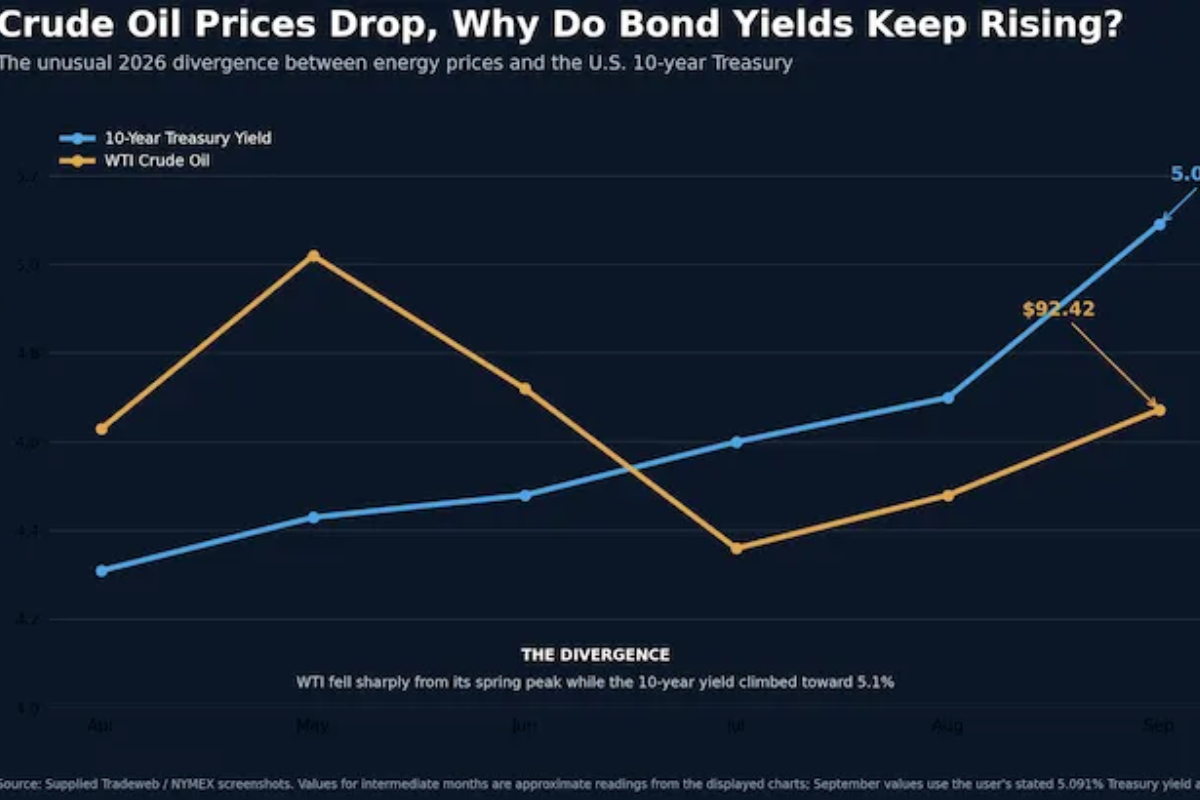
With $40+ trillion in debt, our government must constantly attract bond buyers, and at some point, as we discussed earlier (Crude Oil Prices Have Fallen, So Why Are Bond Yields Surpassing 2007 Highs?), it will require higher returns to step in.
Bond Yield Velocity
A slow, orderly rise in the 10-year yield driven by strong productivity growth and healthy economic expansion can be absorbed relatively well by markets over several quarters.
A rapid spike brought on by issues other than a booming economy, say a 50 to 75 basis point vertical move over a span of just 60 to 90 days, will act as an economic shock absorber failure. It instantly breaks the underwriting math for real estate transactions, freezes secondary debt markets, creates massive unrealized losses on institutional balance sheets, and triggers rapid deleveraging in risk assets.
Will This Work Out Well For Us?
This interest-rate situation bears very close watching.
Unfortunately, it seems that the powers that be in Washington and beyond are more interested in the mid-term elections and the 2028 presidential election.
In other words, it seems their eyes are far from on the ball!
For our financial well-being, let’s hope the United States doesn't strike out looking.
Comments
Log in or sign up to join the conversation.