
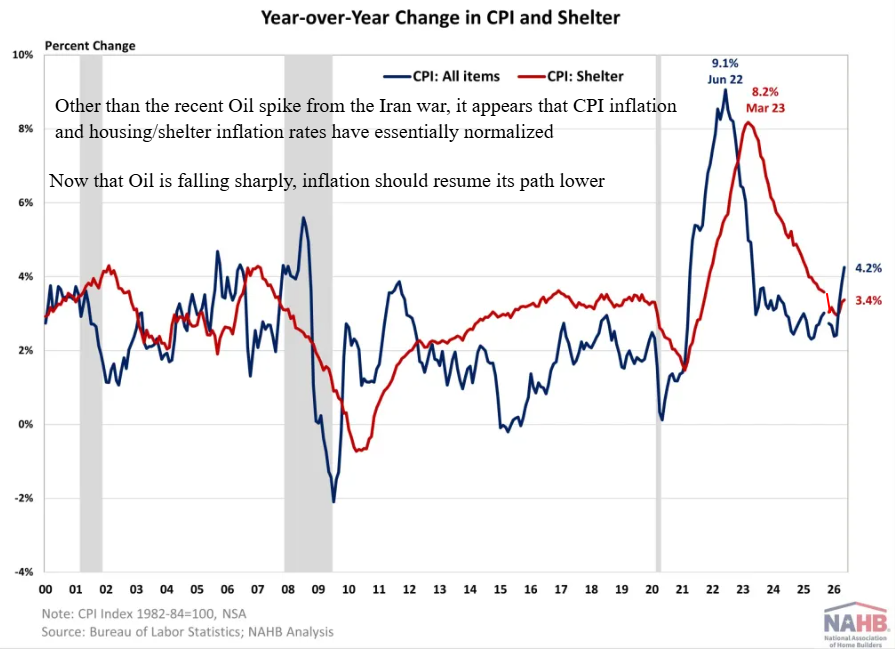
Market participants have increasingly fixed their gaze on a small section of the investment stage. Today, investors remain transfixed by artificial intelligence, semiconductor valuations, and every diplomatic rumor drifting from the Persian Gulf. Meanwhile, the most consequential development for the American economy may be occurring in plain sight—at the neighborhood gas station. The dust-up with Iran propelled headline CPI inflation from 2.4% to 4.2%, and sent Trump’s swing voters to the basement as average gasoline prices spiked from $2.92 to $4.56 a gallon.
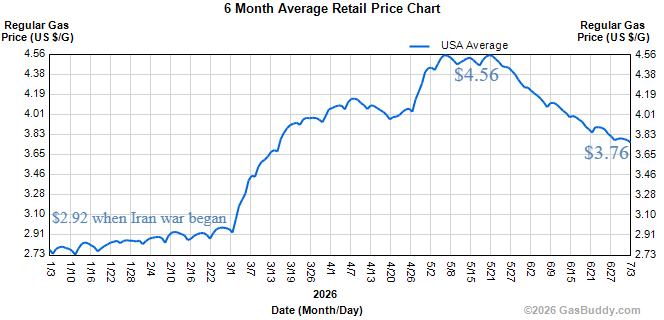
Although, regardless of the alleged tanking of Trump’s poll numbers from this inflationary tax on consumers, voter sentiment is comparable to Obama and Bush at this juncture in their second term.
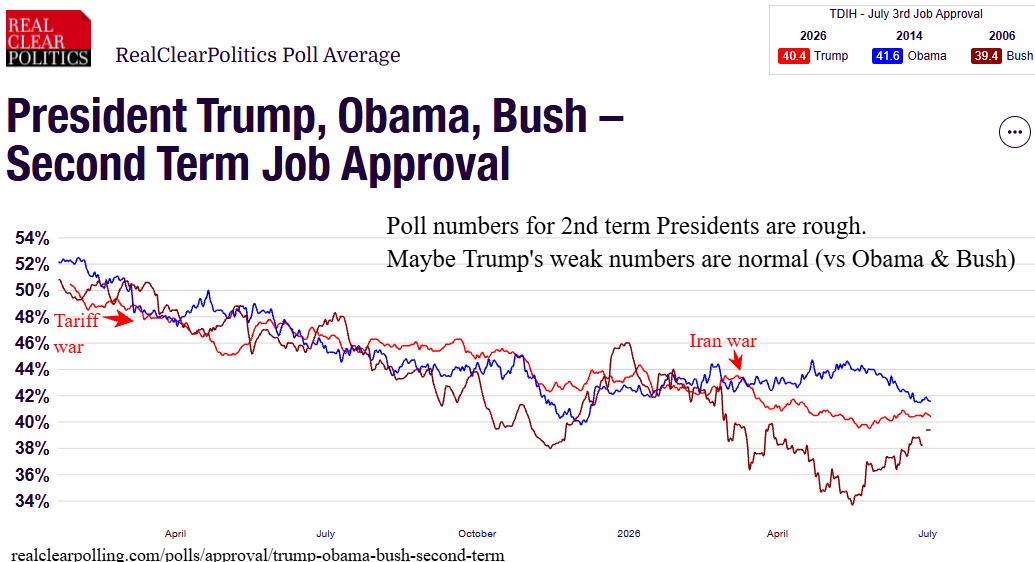
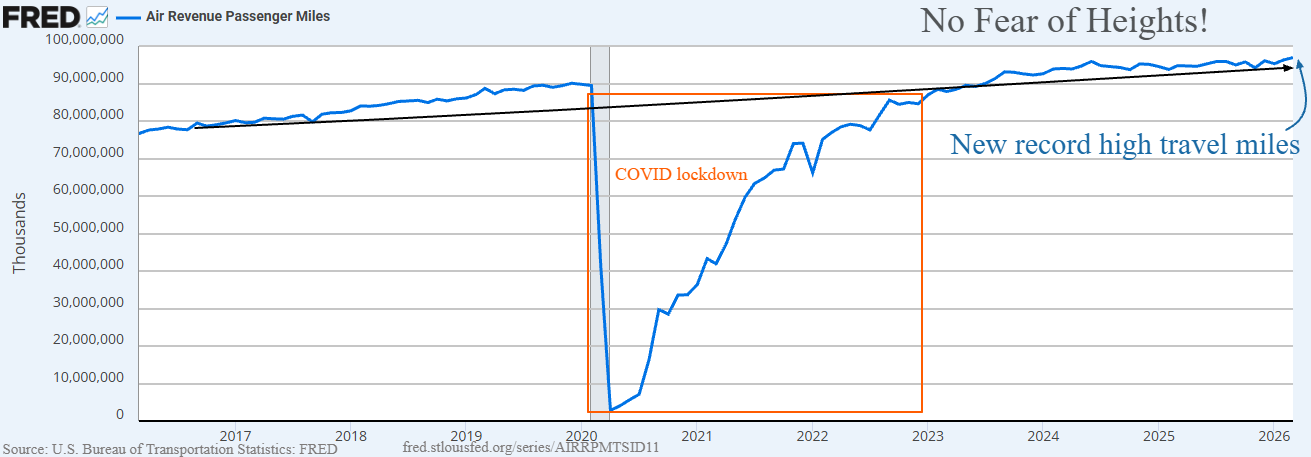
Despite the elusive peace in the Middle East, Oil prices have quietly retreated nearly 40% from their May highs. Average gasoline prices have fallen roughly 70 cents per gallon, placing approximately $7.5 billion back into consumers’ pockets each month compared with only a few weeks ago. The savings do not end there. Jet fuel prices have fallen nearly 35% from their peak (only 10 to 20% above pre-war norm), offering welcome relief to airlines after months of elevated operating costs. Airline stocks are flying high as investors price in improving profitability, and while carriers rarely rush to lower fares, competition eventually has a way of returning a meaningful portion of those savings to travelers. Consumers, for their part, appear undeterred. They continue filling highways, airports, marinas, hotels, and vacation destinations with little evidence that their appetite for travel has diminished.
While Iran continues to keep the Persian Gulf essentially closed and the global fuel shortages persist, investors are pricing in the future flows from an eventual peace deal rather than the current shutdown. Instead of going through the Strait of Hormuz, seven million barrels can make it to the Red Sea via pipelines. We would not be surprised to hear announcements from Saudi’s and others that they are going to increase their pipeline capacity, bypassing Iran. The feared 20% loss of global Oil is now closer to 5 to 7%, factoring in alternative transit lines, increased production outside of the Middle East, and demand destruction. As for Natural Gas, which is increasingly important to rapidly growing energy needs globally, Qatar, as the world’s leading LNG exporter, has been almost shut down. However, global supplies are expected to exceed pre-Iran war volumes due mostly to offsetting increases in US exports. The world is still vulnerable to Iranian mischief, but investors see that the inflationary supply–demand imbalance is not as bad as feared.

Energy has always occupied a curious place in economics. Every dollar not spent on gasoline is available for restaurants, home improvement, apparel, entertainment, travel, or investing. Falling energy prices function as a broad-based tax cut without congressional debate or campaign speeches. This welcome tailwind arrives atop an economy that continues to confound the perennial pessimists. The unemployment rate remains just 4.2%, a level historically associated with an economy operating near full employment. Wage growth of roughly 3.5% now closely mirrors the Federal Reserve’s preferred Core PCE inflation measure of 3.4% while remaining well above the Fed’s long-run 2% inflation objective. More importantly, wages have consistently exceeded core inflation since 2022, steadily restoring purchasing power that many feared had been permanently impaired during this renewed inflation surge.
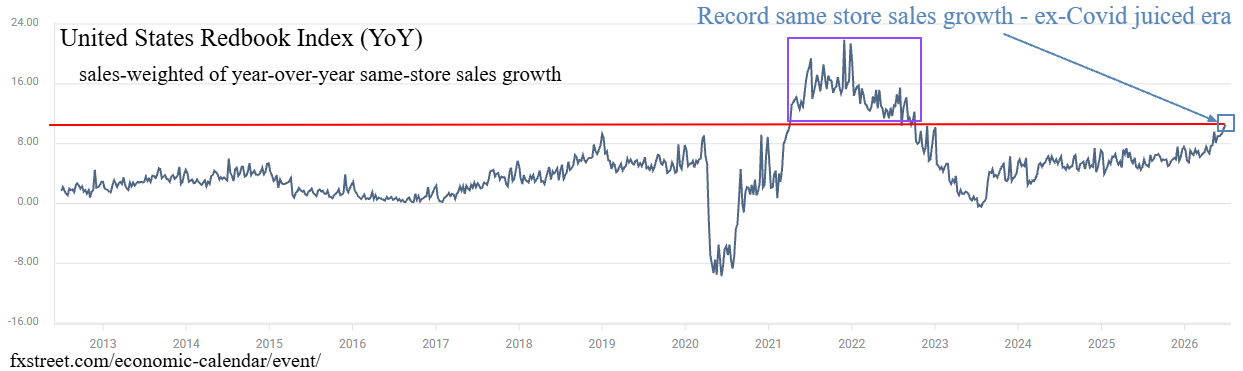
Consumers have responded exactly as economists would predict: by continuing to spend. And if inflation falls in the months ahead as we expect, then consumer confidence will grow. Retail same-store sales continue advancing at an annual pace exceeding 10%, among the strongest sustained rates ever recorded outside the extraordinary fiscal/monetary stimulus of the COVID era in 2021-2022.
Airlines continue reporting healthy demand. Hotels maintain elevated occupancy. Consumers have repeatedly demonstrated that they are both willing and able to spend.
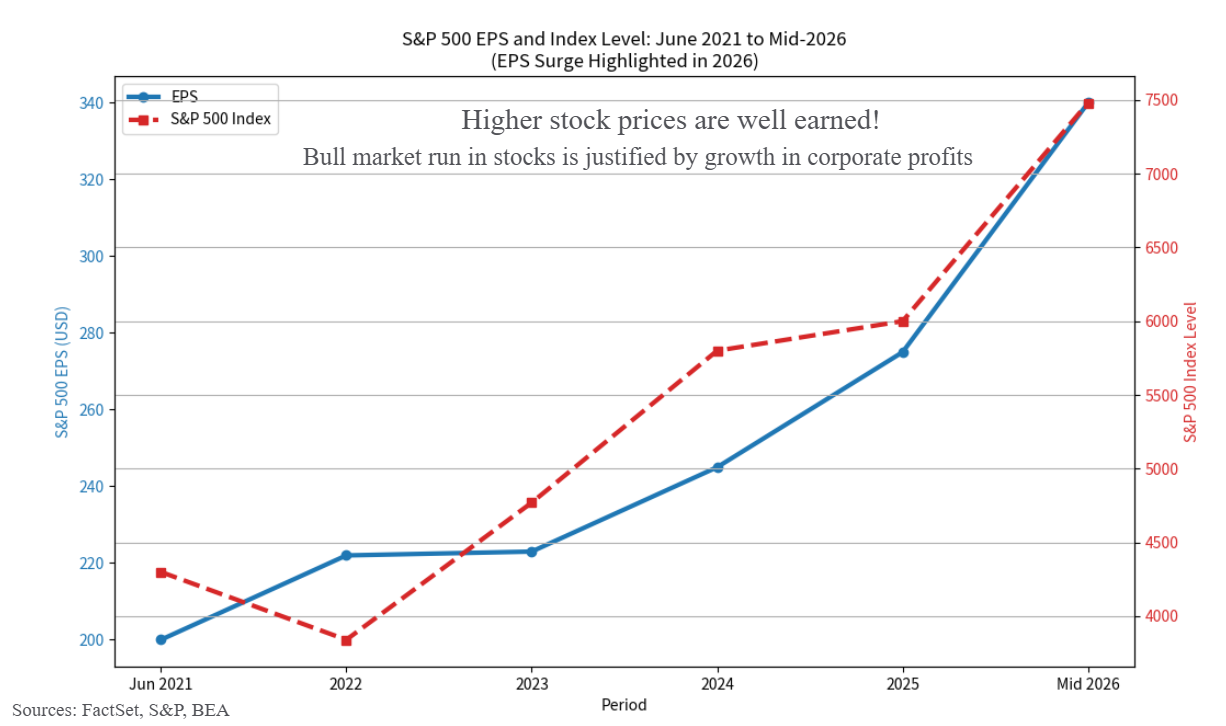
Corporate America has been an equally willing participant. Despite repeated forecasts of slowing profits, earnings have continued to surprise to the upside. Profit margins remain historically healthy, productivity gains from technology continue to emerge, and businesses have shown an impressive ability to protect profitability even as labor costs have risen. Healthy earnings ultimately translate to higher dividends, stock buybacks, capital investment, and rising equity values. Maybe Nvidia (NVDA) will take the hint and use their free cash flow that is growing from $100 billion annually to almost $200 billion in 2026, to buy back their stock. Hopefully, the President is merely jawboning by threatening a Democrat talking point to block stock buybacks.
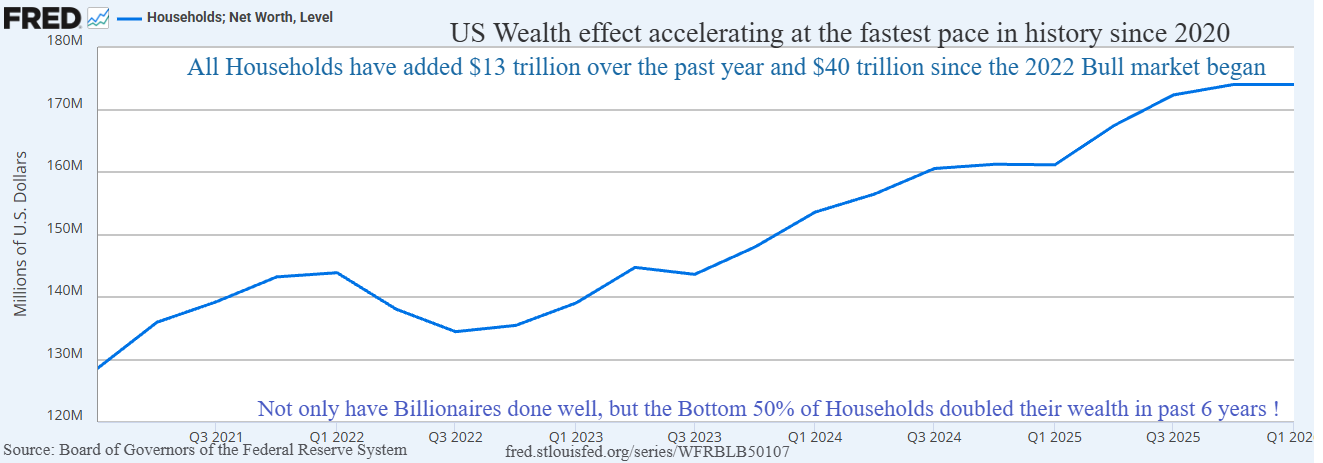
The result of this AI-led earnings bonanza in the corporate sector has resulted in an extraordinary expansion in household wealth. American household net worth has increased by approximately $13 trillion over the past year, reaching new record highs. Since the rise of Nvidia and ChatGPT, which launched this Bull market in 2022, household net worth has risen by about $40 trillion. Rising home values, appreciating equity markets, and expanding retirement accounts have strengthened household balance sheets even as consumers continued spending. Wealth itself becomes a source of confidence, encouraging investment, entrepreneurship, and consumption.
Consumer credit, meanwhile, remains healthier than many headlines suggest. Aggregate delinquency rates remain manageable by historical standards, household debt-service burdens remain well contained, and the banking system is well capitalized. Contrary to fashionable narratives, there is little evidence of broad financial stress among American households. The 20% of increasingly troubled car loans that are sub-prime are a concern should the economy drive into a ditch, but the 80% of auto loans in the hands of Prime borrowers are feeling fine, as are credit card and mortgage borrowers.
Perhaps the most underappreciated development, however, is not where inflation stands today—but where it appears to be headed. The inflationary impulses that unnerved markets this spring—the tariff-related price adjustments and the energy shock following the effective closure of the Strait of Hormuz—appear to have peaked during May. Both forces are now moving into reverse. If current trends persist, headline CPI and PCE inflation, recently running above 4%, could decline toward the 3.0% to 3.2% range by year-end. Should tanker traffic through the Strait resume something approaching normal commercial flows, inflation beginning with a “2” is no longer difficult to envision.
Such a shift would alter far more than inflation statistics. Today, financial markets and many Federal Reserve officials continue to assume that persistent inflation will require additional interest-rate increases. Yet inflation is inherently a forward-looking process. If energy continues falling and tariff effects fade into the rearview mirror, today’s discussion of additional tightening could gradually give way to tomorrow’s discussion of eventual easing. Markets rarely wait for the Federal Reserve to act. They begin discounting what they believe the Federal Reserve will eventually do. The difference between debating the next rate hike and merely anticipating the first rate cut changes equity valuations, lowers financing costs, supports housing, and encourages capital investment.
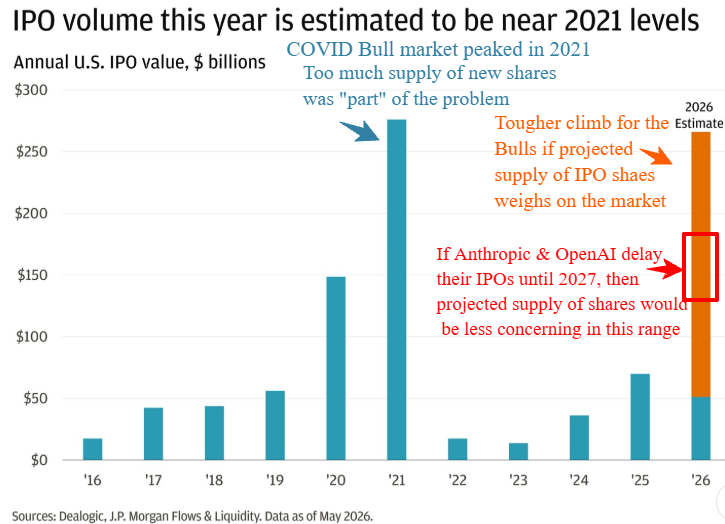
None of this suggests that markets should rise uninterrupted. The pending wave of large initial public offerings, combined with election-year uncertainty and extraordinary gains already achieved by AI leaders, may keep semiconductor shares and technology-heavy indices digesting those advances for some time.
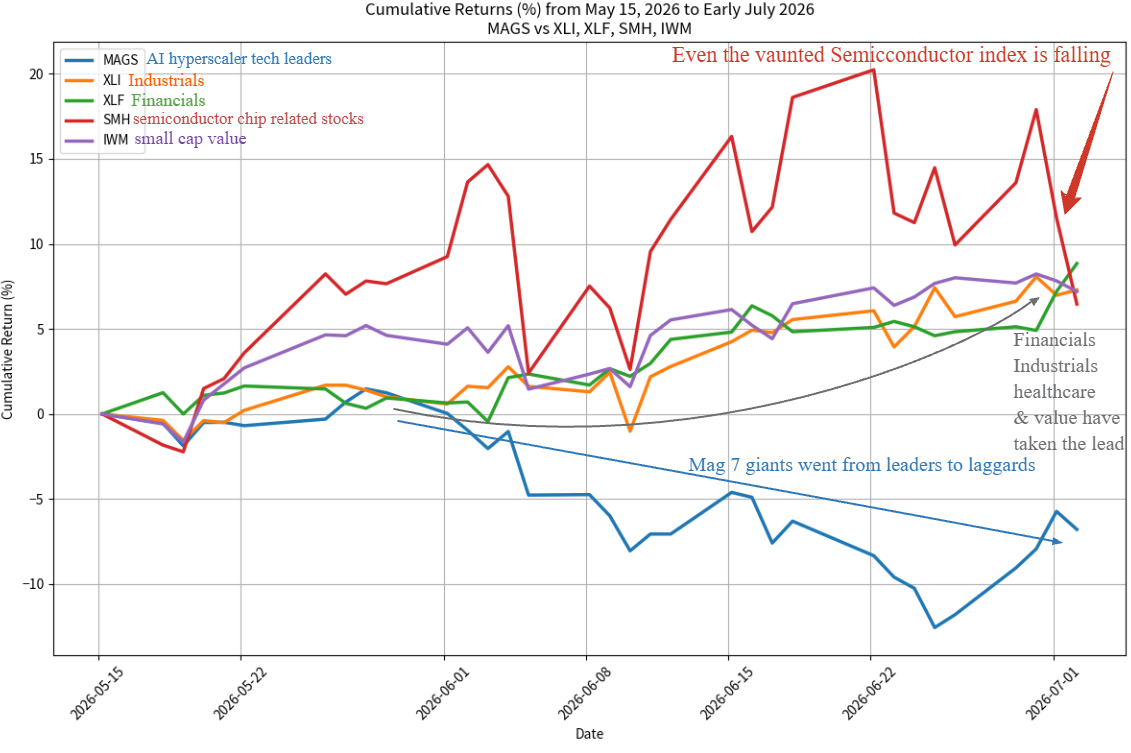
Indeed, the semiconductor sector is currently experiencing a volatility attack that was overdue. This is precisely the kind of consolidation that often extends rather than terminates secular bull markets. Leadership had become extraordinarily concentrated, rewarding a relatively small collection of AI infrastructure companies with historic gains. Yet that pause increasingly resembles rotation rather than deterioration. The market’s bench players have finally been called into the game. Financials. Industrials. Investment banks. Healthcare. Biotechnology. Transportation. Airlines. Materials. Regional banks. Capital equipment manufacturers. Small-cap growth. Select value companies. These sectors increasingly reflect the characteristics of an economy entering a broader phase of expansion rather than one dependent upon only one extraordinary segment of technology. Bull markets rarely end because leadership broadens.
Lower energy prices, moderating inflation, improving real wages, resilient consumer spending, record household wealth, and eventually the prospect of declining interest rates create what could become an unusually constructive backdrop as we move toward the final quarter of the year. Such an environment would represent an intoxicating cocktail—not only for consumers and corporations, but perhaps for investors and even voters. The primary caveats remain: will oil flows in the Middle East avoid further shortfalls; will the GOP retain the Senate to further the pace of the AI buildout; will token demand and supply for compute continue to be tight?
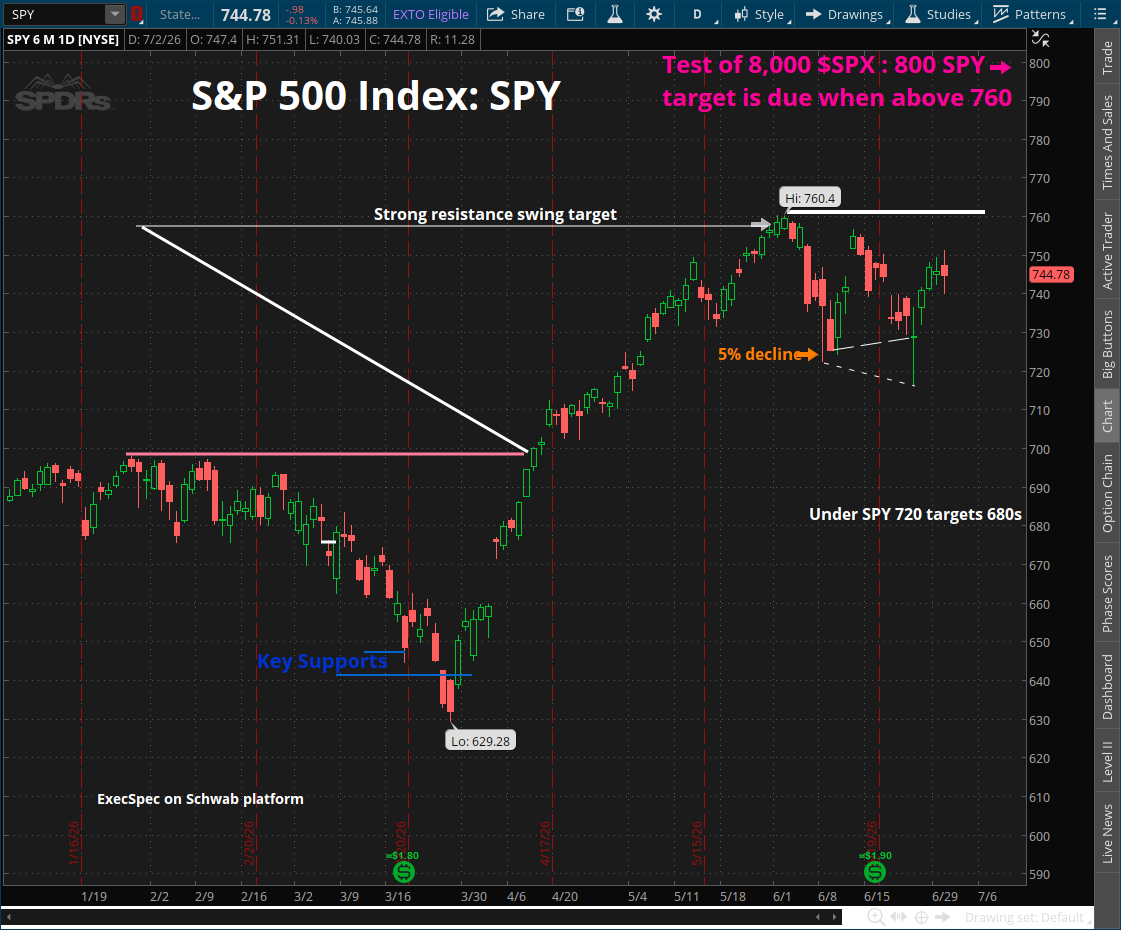
Our long-standing objective for the S&P 500 (SPY) remains a test of 8,000 by late 2026 or early 2027, with about a 10% downside risk in the interim. Whether that destination is reached precisely on schedule is less important than understanding the journey. The defining investment story may no longer be how much higher semiconductor stocks can climb. It may instead become how many more sectors decide to join the advance and how cheap filling your car is at the pump. That quiet broadening, more than any chip sector earnings report or geopolitical headline, may prove to be the real story of the next leg of this bull market.
Comments
Log in or sign up to join the conversation.