
The Federal Reserve’s July 28–29 meeting is unlikely to produce an interest-rate increase. The more consequential question is whether Fed Chair Kevin Warsh will telegraph a September hike—or remind investors that threatening to tighten monetary policy is easy, but considerably harder to actually do it. Current market probability pricing puts the chance of a July rate increase at roughly one-third, while estimates for a September move is approximately 81%. A recent Reuters survey found that most economists still expect the Fed to remain on hold through year-end.
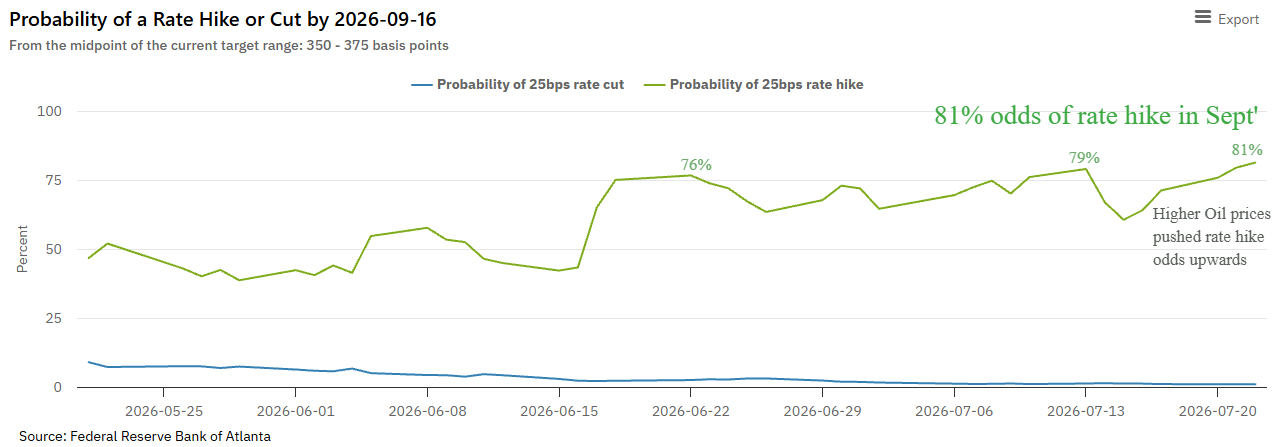
This binary wager: hike or no hike, downplays the Fed’s more complicated problem. It does not want to raise rates on the heels of falling Oil and a peaceful Middle East only to discover that inflation is on the retreat again. A “one-and-done” hike would provide little practical restraint while creating considerable confusion. If the Fed raises rates, it will want enough evidence to believe that a sequence of increases—or at least a sustained period of more restrictive policy—may be necessary. That requires more than an oil-price flare-up. It requires evidence that inflation is broadening, becoming embedded in wages and services, and resisting the restraint already imposed by financial markets.
Dallas Fed President Lorie Logan has argued that rates may need to move “modestly higher” because inflation remains too persistent. Her concern is legitimate. But the committee must determine whether recent price pressures represent a durable inflationary process or the delayed residue of tariffs, energy disruptions and other supply shocks that higher Treasury yields and bank borrowing rates cannot repair.
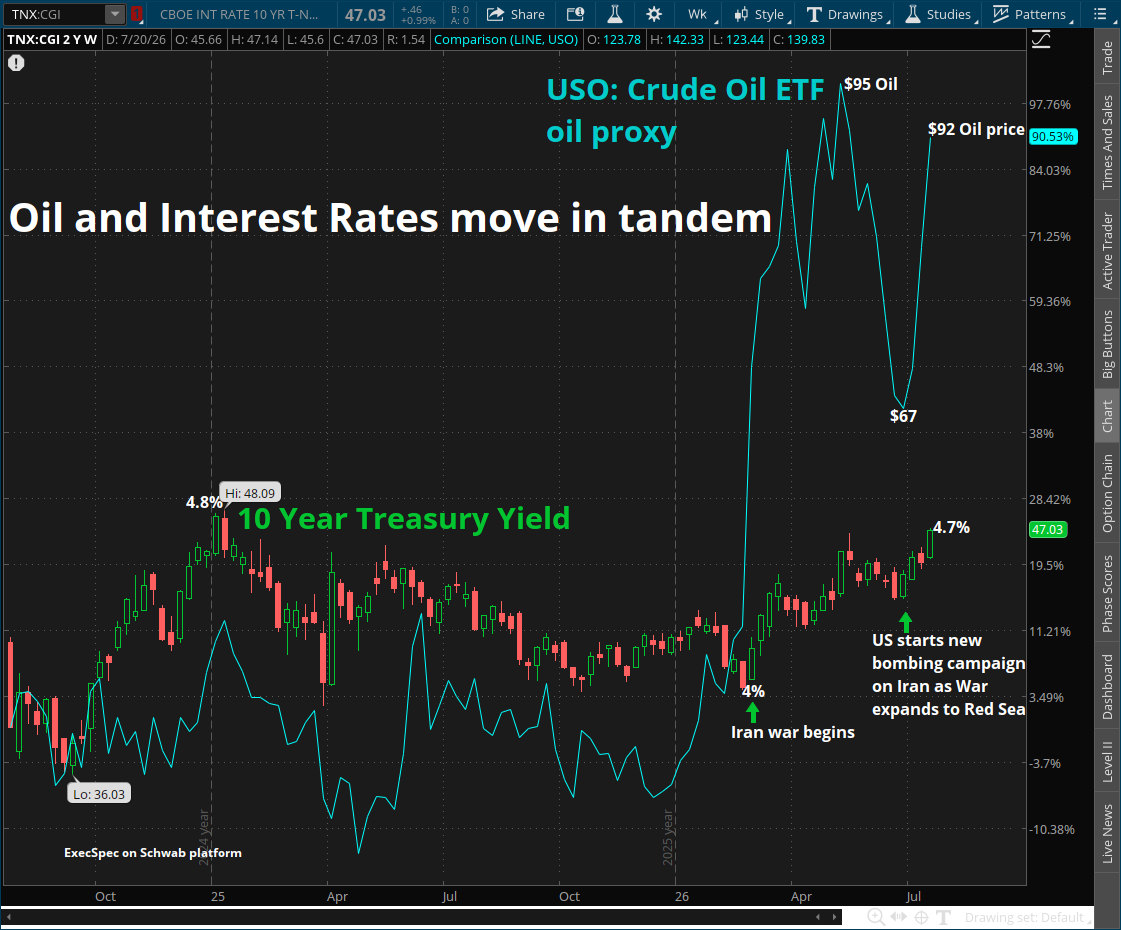
The second obstacle to a rate increase is that the free market has already tightened monetary conditions. The 10-year Treasury yield has risen roughly half a percentage point since the beginning of the year and recently approached an 18-month high. With the yield at 4.7%, the cost of mortgages at one year highs (6.76%), corporate borrowing and investment capital has increased even though the Fed has not moved its overnight target rate. In effect, the bond market has administered part of the medicine before the central bank has written the prescription. That distinction matters. The federal-funds rate is important, but the economy borrows farther out on the yield curve. Homebuyers do not finance houses overnight, corporations rarely build factories with one-day loans, and equity valuations remain acutely sensitive to longer-term discount rates. When the 10-year yield climbs, the financial system tightens whether the Fed announces a hike or merely sits on its hands.
Since the war with Iran began in late February, free market interest rates have been tethered to Oil prices. This raises the old transitory debate. Should peace return to the Middle East this year, then Oil and inflation will fall and interest rates will follow. Currently the war is expanding to the Red Sea, as we warned a couple of months ago, pushing Oil and interest rates higher. The central bank must therefore decide whether another increase would reinforce a necessary adjustment—or pile official restraint on top of tightening the market has already imposed.
An Election-Year Tightrope
The calendar presents another hurdle. September’s FOMC meeting arrives less than two months before the November elections. The Federal Reserve is independent and cannot allow an election calendar to dictate policy. Yet independence does warrant a sensitivity to appearances. A rate increase – or decrease – immediately before an election would be interpreted politically, whether or not politics played any role in the decision. Chairman Warsh, appointed by President Trump but now responsible for defending the Fed’s credibility, is likely to be sensitive to this predicament. He cannot appear reluctant to fight inflation because of an election. Nor will he want the institution accused of changing borrowing costs at the most politically combustible moment of the year without overwhelming economic justification. The bar is high. If the Fed is going to hike near an election, it will want the inflation data to make the decision appear less like a choice than an obligation. Last month’s sharp reduction in the inflation rate does not yet support tighter monetary policy, even though Oil is rebounding sharply this month. Post election is another story. Should Oil push above $100 again with a significant uptick in inflation, then a Fed rate hike on December 8th becomes a much higher odds bet.
The Market’s Eight-Week Churn
Stocks, meanwhile, have behaved much better than the anxious headlines would suggest. The broad market has moved largely sideways for eight weeks, digesting the enormous April and May advance led by semiconductor and AI-related shares. The leaders are now the laggards and last year’s losers continue to race ahead. Depending on the index, the summer pullback has generally amounted to only 2% to 6%, while several economically important industries and market subgroups and their soldiers have continued reaching record highs, while the generals rested. Banks, Financials and small cap value indices pushed to new record highs as recently as last week while the S&P and Nasdaq majors. That is not the behavior of a market fearing recession. It is the behavior of a market reconciling excellent business profits and a durable economy with the headwind of less accommodating borrowing costs.
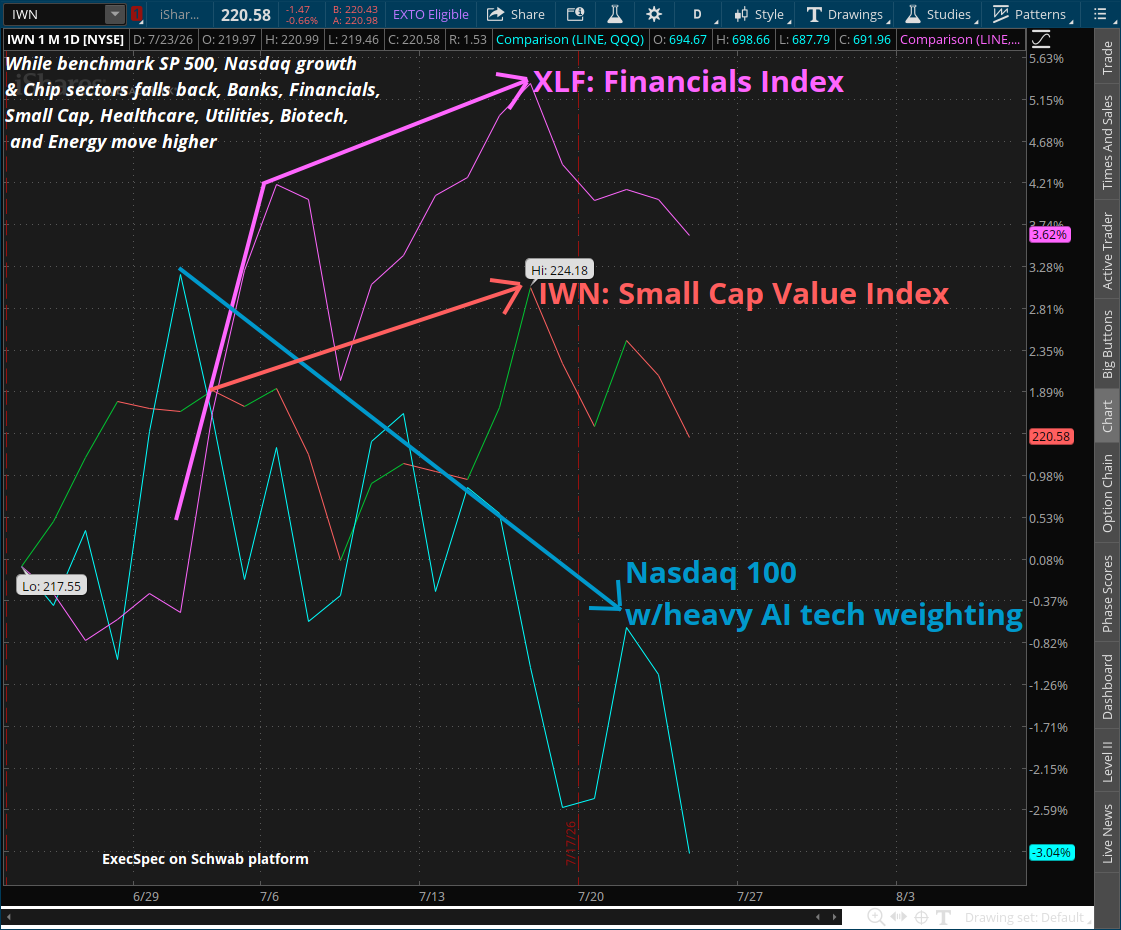
The conspicuous exception has been the AI complex, particularly semiconductor shares. Some former market leaders, such as the memory chip index, have fallen 40% in only a few weeks—a frightening Bear when viewed from the top but rather less revolutionary when measured against the spectacular 210% climb in the 2 months that preceded it. In a sector traveling at light speed, such a drop may be less a bear market than an unusually large inhale.
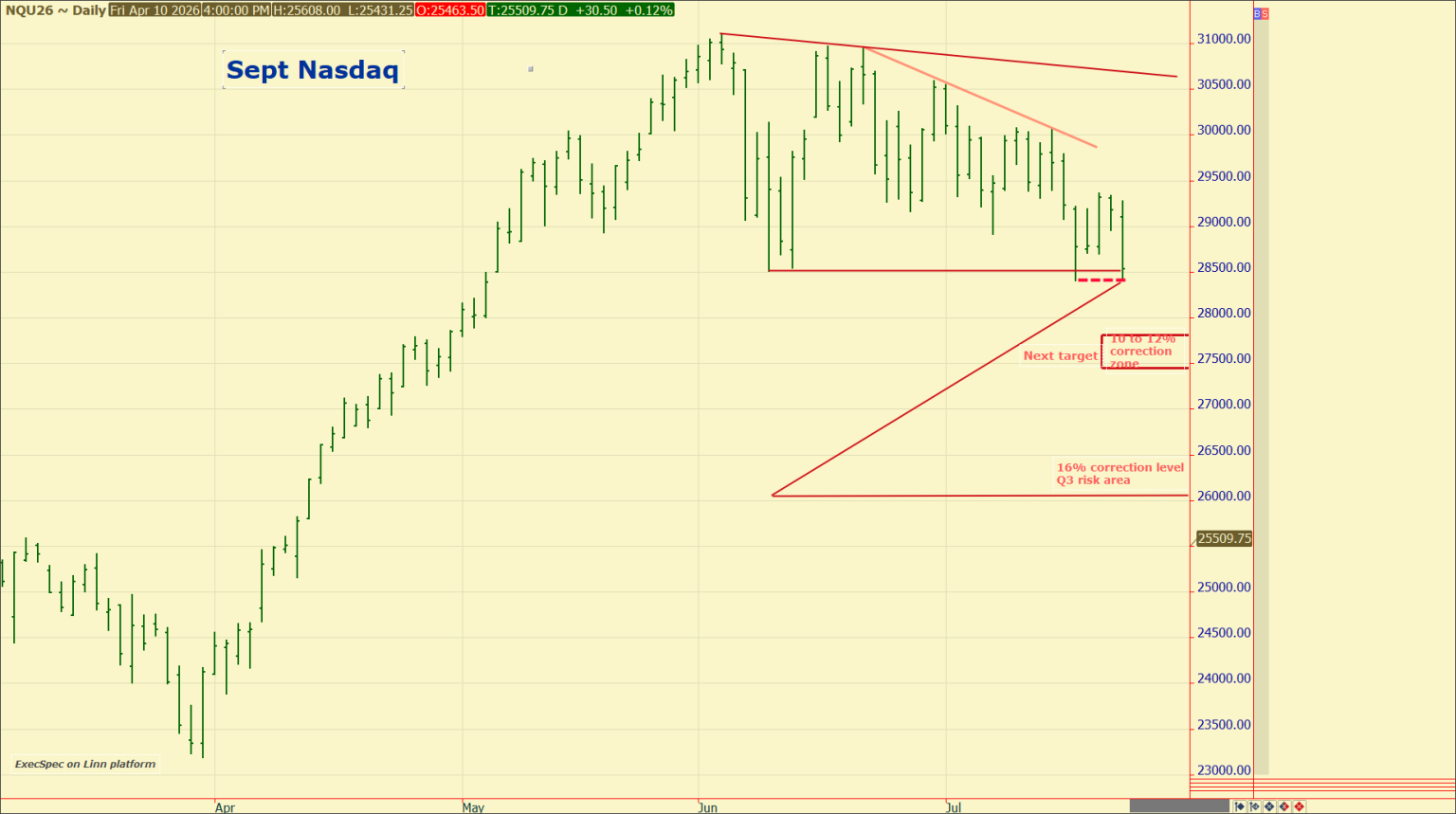
We warned in late May that the summer would bring tougher sledding after the spring surge. Eight weeks of sideways movement, modest index declines and violent corrections in the market’s most overextended corner are consistent with that forecast. So far, the consolidation has been more impressive than ominous. Most indices are holding strong with neutral investor sentiment surveys, while former market outperformance in the tech heavy Nasdaq 100 Index is down 8% testing 11 week lows, on the verge of a breakdown.
August and September Is Where the Ice Becomes Thinner
We continue to expect this sideways period to persist for most stock market sectors, but the risk profile should become less forgiving as July rolls into August. Any new test of the summer lows at this stage of the consolidation could convert a routine pullback into a late Summer scare. Under that scenario, the S&P 500 could fall 9% to 10% from its peak—and possibly more if rising Treasury yields, election uncertainty and further liquidation in AI shares arrive together.
Conversely, a breakout to new S&P 500 highs over 7620 could ignite a momentum-driven run above 8,000. Yet we continue to believe that a durable move beyond 8,000 is more likely postponed and requires a fresh post-election impulse rather than a late-summer burst of enthusiasm.
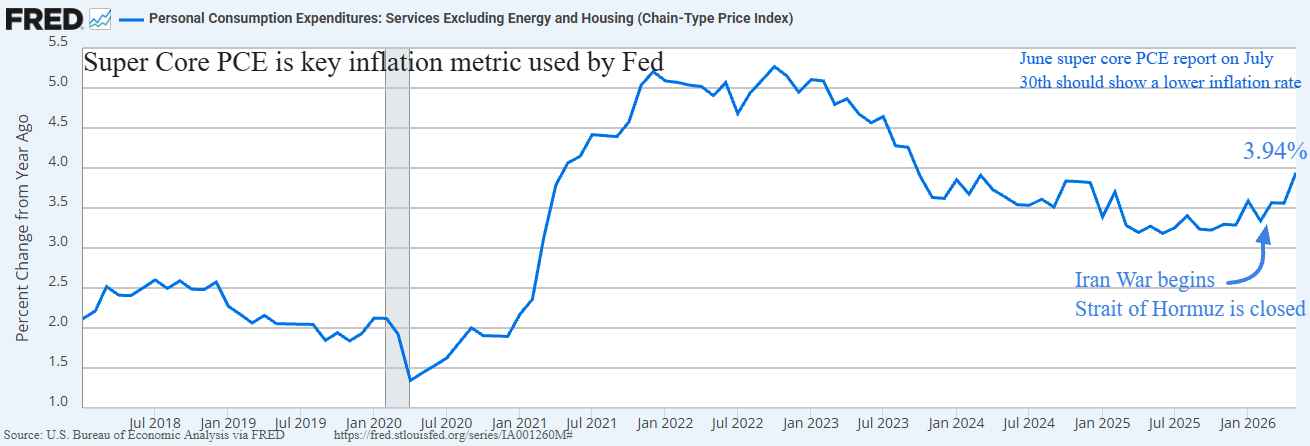
For now, the Fed is waiting for sufficient evidence to justify a series of hikes, the bond market has already tightened without permission, and stocks are consolidating rather than capitulating. The Fed rate hike decision day on July 29th also arrives one day before the Fed’s preferred core and super core PCE inflation gage is reported for June. It’s very likely that core PCE inflation will fall from 3.4% and add yet another reason for the Fed to avoid alarming investors. July’s meeting should produce no change in rates, but Chairman Warsh’s language could determine whether September is viewed as a genuine policy crossroads—or simply the next date on Wall Street’s ever-moving calendar.
Comments
Log in or sign up to join the conversation.