

It’s time for a weekend precious metals update ahead of Wednesday’s highly anticipated Fed meeting, at which rates are expected to be raised by 25 basis points, or 0.25%. Financial markets across the board are largely on standby ahead of the meeting, which is likely to be one of the strongest market-moving catalysts in recent months.
Particular attention will be paid to Fed Chair Kevin Warsh’s press conference following the announcement, which the financial world will scrutinize closely for any signs of hawkish sentiment and indications of further rate hikes at the final two FOMC meetings of 2026, scheduled for late October and early December.
The Fed will also release its updated “dot plot,” showing where individual FOMC participants expect interest rates to be heading, providing another important clue about the path of rates through the remainder of 2026 and beyond.
In addition to the ongoing back-and-forth surrounding the Iran war, which has mostly been heading in a worse direction, and the heavy anticipation surrounding the September 16 Fed announcement, the past couple of weeks have featured an unusually large number of highly anticipated risk events that have created tremendous uncertainty.
These included the annual Jackson Hole Fed conference on August 28th, followed by the three-day Labor Day weekend in the U.S., which marked the official end of summer for the financial world and had many investors concerned about a potential Iran war-related flare-up over the long weekend.
Then came three major U.S. labor market reports during the first week of September, starting with the July Job Openings and Labor Turnover Survey (JOLTS), which showed 7.271 million job openings, below the market expectation of 7.3 million. Similarly, the ADP August private payrolls report showed a gain of just 38,000 jobs, down from 46,000 in July and below the estimate of 47,000, marking the slowest month since January.
After the first two weak jobs reports, though they are of lesser importance, all eyes turned to the September 4th U.S. employment report for August. Unlike the first two reports, this one came in much stronger than expected, showing 162,000 jobs added versus expectations of just 53,000, with the significant upside surprise further increasing rate hike expectations.
Then, over the past week, we had two major U.S. inflation reports: the Producer Price Index (PPI) on Thursday and the Consumer Price Index (CPI) on Friday. Both came in line with expectations but are still running hotter than the Fed would like, essentially solidifying a 25-basis-point rate hike at this week’s Fed meeting, with the odds now at 86.5% according to CME’s FedWatch tool.
The betting market Polymarket shows the steady rise in 2026 rate hike expectations since the war began:
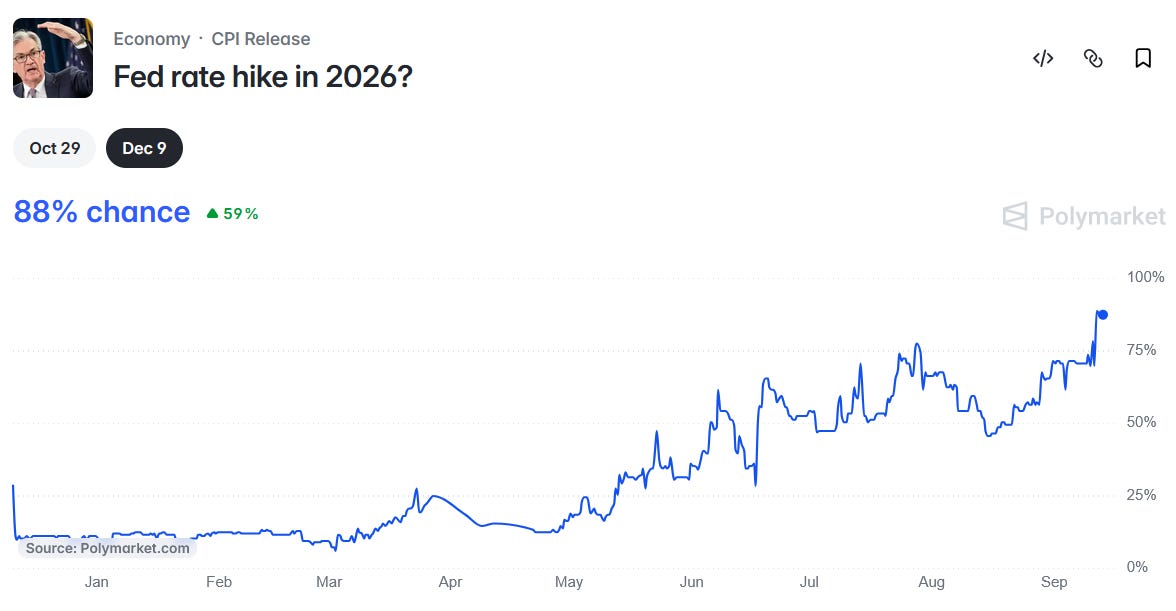
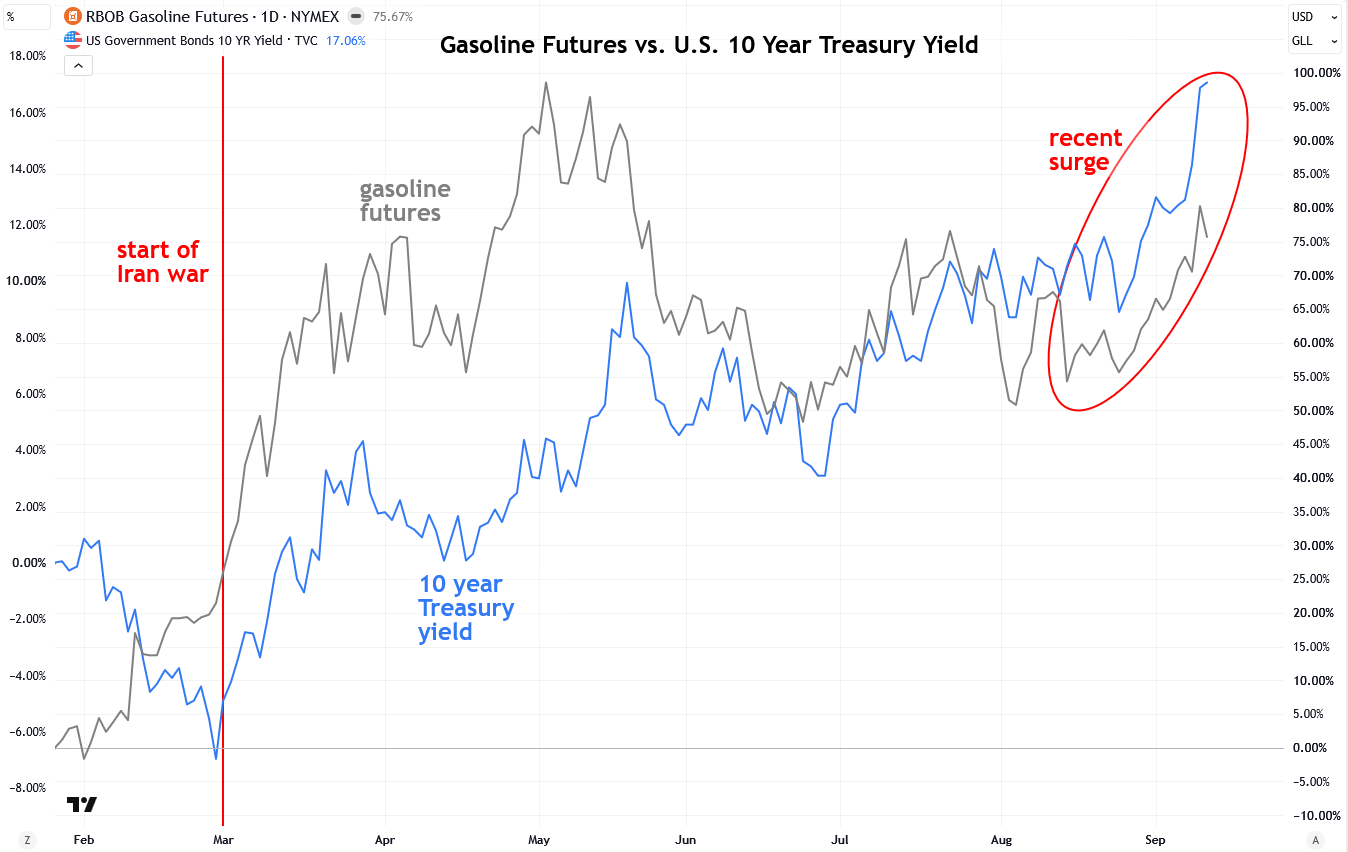
The combination of Fed Chair Kevin Warsh’s hawkish (i.e., “tough on inflation”) Jackson Hole speech, the hot August U.S. nonfarm payrolls report, the past week’s two U.S. inflation reports, and crude oil surging 25% to roughly $100 per barrel over the past two weeks, with gasoline and heating oil/diesel spiking similarly, has sent the 10-year and 30-year U.S. Treasury yields soaring to two-decade highs of 4.97% and 5.356%, respectively.
The latest surge in Treasury yields is causing deep concern among U.S. leadership and, as I explained in a recent report, will ultimately lead to full-blown global yield curve control, which will prove highly bullish for precious metals and commodities.
With the enormous amount of uncertainty over the past two weeks, investors and traders have been far less willing to make any major commitments until much of the acute uncertainty passes after this week’s Fed meeting.
This uncertainty has resulted in unusually low trading volume and thin trading conditions, with financial markets, particularly interest rate-sensitive commodities, slashing and chopping up and down with every new data release. These conditions have made the markets enormously frustrating to read and breakouts extremely difficult to get on board with, as most have failed, even in areas such as technology, healthcare, and biotech.


Comments
Log in or sign up to join the conversation.