What 7% Mortgages Do To Housing Profits - Lennar

Lennar reported a sharp profit decline as expensive mortgage rate buydowns to stimulate demand hit the bottom line.

Source: DepositPhotos

The prevailing story was that large homebuilders could outrun high borrowing costs by using their massive balance sheets to buy down mortgage rates. That strategy worked well to maintain sales volume while pricing out smaller competitors. Lennar just reported a profit drop that tests this exact model. The central puzzle is whether volume can be sustained without destroying margins. With the Federal Reserve pushing its benchmark rate higher and builder sentiment plunging, investors have to decide if the cost of keeping buyer traffic alive is getting too high.

Main Note

THE LIMITS OF RATE BUYDOWNS

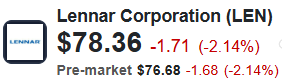
Lennar (LEN) Quote

Verdict: Lennar is proving that large builders cannot simply buy their way out of a tight macro environment forever. The cost to stimulate demand is starting to bite into core profitability.

What happened

Lennar reported third quarter earnings of $1.19 per share. That is down roughly half from $2.29 a year ago. Revenue fell 9% to $8.05 billion, and new home orders dropped 9%. To move inventory, the company had to cut average selling prices to $372,000. Shares fell roughly 3% in late trading.

This represents a direct collision between buyer affordability and corporate profitability right as borrowing costs grind higher.

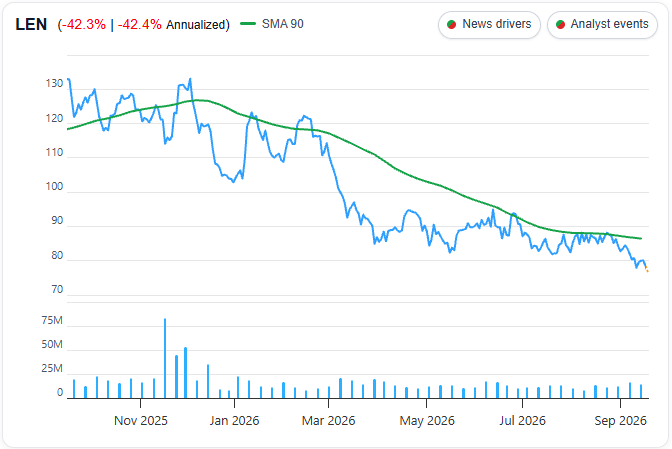
Lennar (LEN) 1 Year Chart

Lennar (LEN) 1 Year Chart

Why it matters

Builders have been paying to make monthly mortgage payments more affordable, and that still takes a bite out of profits. Lennar’s home sales gross margin was 15.8%, below 17.5% a year ago and just short of its roughly 16% target. But it improved from 15.6% last quarter, while sales incentives eased from about 12.9% to 12%. The squeeze is real, but these figures do not show that incentive costs are accelerating.

What changed in the thesis

The clearest change is in the outlook. Lennar cut its full year delivery target to 80,000 to 81,000 homes, down from 82,000 to 83,000. Third quarter deliveries still landed within the company’s forecast, although new orders fell slightly short. That makes this a weaker sales outlook, not a complete breakdown in execution. The concern is how much profit Lennar will have to give up to reach even that lower target.

What the market may be missing

The odd part is that the company is operating faster than ever. Lennar pushed its build cycle time down to a record low of 116 days. That speed reduces the carrying cost of inventory. It helps defend cash flow even when unit margins compress.

Valuation and expectations

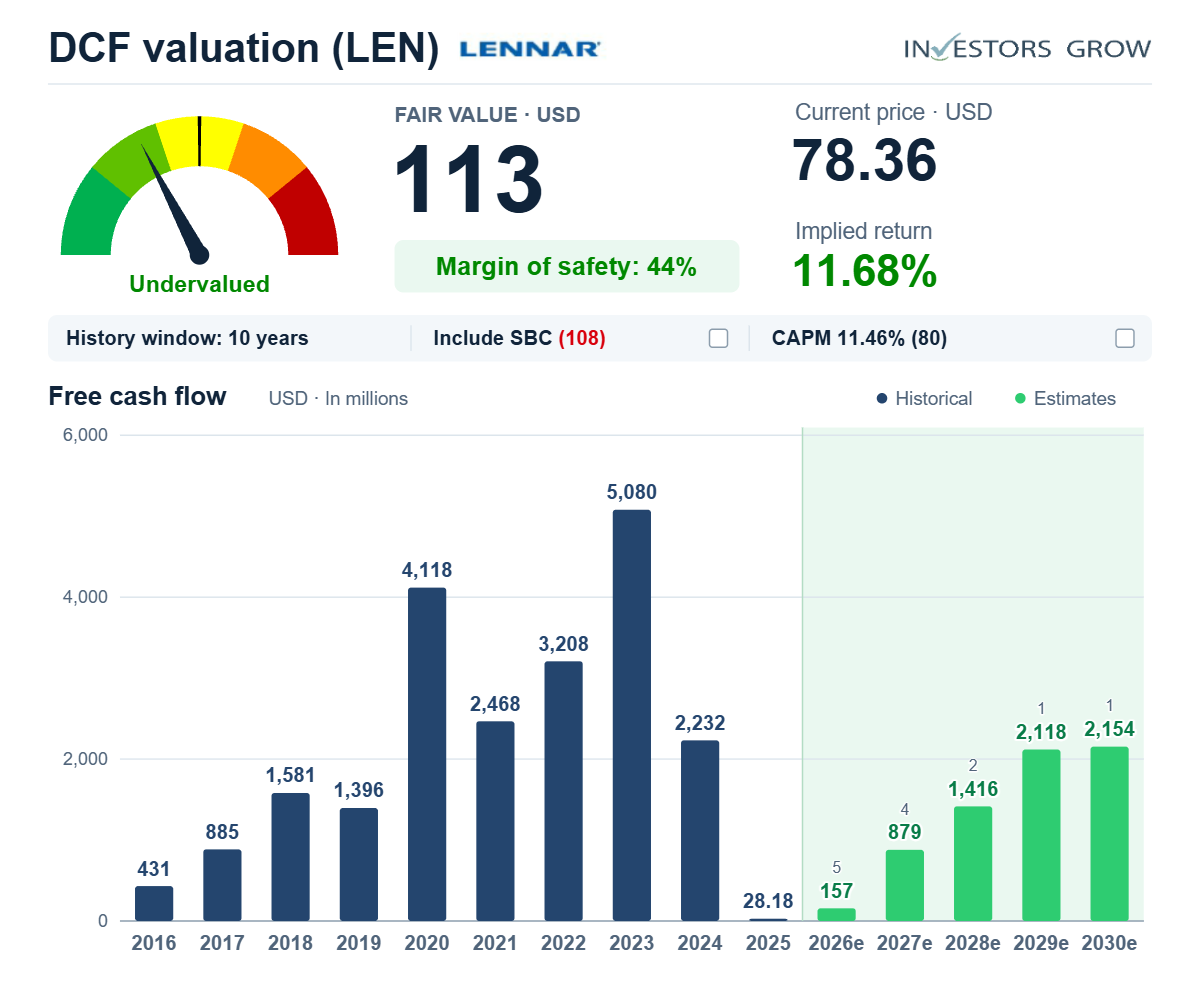
A weaker earnings outlook makes the price investors pay more important. It does not automatically mean the stock has to fall again, because some of that weakness may already be reflected in the shares. For long term investors, the question is what Lennar can earn through a full housing cycle and whether today’s price leaves enough room for another disappointment. Lower mortgage rates would help, but the investment case should not depend entirely on rates coming to the rescue.

Lennar (LEN) DCF

Lennar (LEN) DCF

Bottom line

The report is a warning about how much profit Lennar can keep while defending sales. It is not proof that rate buydowns have stopped working. For long term investors, the next test is whether the company can deliver on its reduced outlook without sacrificing more margin or weakening its balance sheet.

Pre Market Pulse

  • Lennar shares traded roughly 3% lower after hours following the third quarter report.

  • The Federal Reserve raised its target rate by 25 basis points to a range of 3.75% to 4.00%.

  • The NAHB index of builder sentiment dropped to a twelve month low of 32.

Why it matters this morning

These data points hit at the exact same time. The combination of a hawkish central bank and plummeting builder confidence reinforces the margin squeeze Lennar just reported.

Peer Read Through

D.R. Horton (DHI)

Highly exposed to the same entry level and move up buyer affordability pressures. If Lennar is cutting prices to stimulate traffic, Horton will likely face the same margin squeeze.

KB Home (KBH)

Scheduled to report next week. This will be the next immediate test of whether order declines are a company specific problem or a sector wide reality.

Toll Brothers (TOL)

Tends to serve wealthier buyers who often pay in cash. This demographic might provide a slight buffer against the worst of the mortgage rate shock.

Group takeaway

The entire builder group has traded on the assumption that scale protects margins. The Lennar report suggests scale only delays the pain of structurally higher borrowing costs.

What to Watch

  • Today’s housing starts and building permits report at 8:30 AM ET, especially the single family figures.

  • Lennar’s earnings call today at 11:00 AM ET for more detail on buyer demand, incentives and the reduced delivery outlook.

  • KB Home earnings after the close on Tuesday, September 22, for another view of orders, cancellations and margins.

  • Whether Lennar can deliver fourth quarter home sales gross margins within its 15.5% to 16% forecast range.

  • Mortgage applications for home purchases, rather than the headline total that also includes refinancing.

  • The 10 year Treasury yield and actual mortgage rates. Both matter for affordability, but mortgage rates do not move in lockstep with Treasury yields

Bottom line

The story has shifted from volume defense to margin defense. The next few weeks of data will show just how expensive that defense will be.

STOCKS IN THIS ARTICLE

Also Mentions:

Comments