Why Amazon Wants The Emmy's Without A Subscription Paywall

Amazon secured a six-year deal to stream the Emmy Awards for free starting in 2027.

Source: DepositPhotos

On October 6, 2026, Amazon (AMZN) and the Television Academy announced a six year agreement making Prime Video the exclusive global home of the Emmy Awards, beginning with the September 2027 ceremony. Viewers will be able to watch live without a subscription.

The Academy required free access from prospective partners. The ceremony was already available free on broadcast television, and the Academy wanted to preserve that access in its new home.

The agreement replaces the annual rotation among four US broadcast networks. The Academy says a continuing partner will let it build from year to year instead of restarting planning with a different broadcaster. Amazon gets a recurring event that could bring more people into its entertainment business.

Viewers bring something advertisers want

Viewers can pay for entertainment with a subscription. Advertisers can pay to reach those viewers. Prime Video already operates both businesses, which helps explain why Amazon would accept an event without a subscription requirement.

If the Emmys carry advertising or sponsorships, Amazon could earn revenue without charging viewers to watch. How many people tune in, how long they stay and what advertisers will pay to reach them would help determine that revenue.

The announcement does not spell out the ceremony’s advertising arrangements. Amazon has an existing business it can draw on, but the event’s commercial format remains an important detail.

Another studio’s winner could still bring Amazon business

Prime Video is also a storefront. Alongside its own programming, it offers subscriptions to other streaming services, rentals and purchases. Hosting the Emmys could help people discover something they want to watch next.

Imagine a viewer hearing about a series during the ceremony, then subscribing through Prime Video to a service that carries it. Another studio made the winning show, but Amazon helped connect the viewer with a paid subscription.

Mike Hopkins, head of Prime Video and Amazon MGM Studios, has pointed to that subscription business as part of the agreement’s rationale. Amazon wants to be a place where people find and pay for entertainment, including programs it did not make.

The free ceremony could bring people through the door. Their subsequent choices would determine whether Amazon gains additional business. Programs promoted during the ceremony may still require separate payment, and viewing options vary by title and country.

Getting viewers to follow is the first hurdle

The announcement describes access in more than 240 countries and territories. That is a distribution footprint. The audience still has to show up.

Awards shows have faced declining audiences. Free access removes a payment barrier, but viewers need to find the ceremony and want to watch it. Moving from a familiar television channel to a streaming app adds a practical challenge. The Academy has acknowledged that getting viewers to follow the move was a concern.

Even a strong audience would leave another question: how much business did the event actually add? An existing customer might watch the Emmys and then buy exactly what they would have bought anyway. An advertiser might shift spending from another Amazon placement.

The useful distinction is between generating additional business and simply moving activity around Amazon’s own platform.

The return depends on what is left after costs

The announcement does not disclose financial terms. It gives investors no confirmed rights fee, production and promotion budget, or expected revenue for the agreement.

The test is whether additional advertising, subscriptions and transactions leave enough money after their associated costs to cover the event’s expenses. A busy storefront can generate plenty of sales and still earn too little to justify what it paid to attract customers.

Concrete advertising plans would help clarify the revenue opportunity. After the September 2027 ceremony, audience results could show whether viewers followed the move. Those comparisons will need care: a worldwide count of everyone who briefly opened the stream would measure something different from the average US audience watching a broadcast. Geography, viewing window and the definition of a viewer would need to match.

Evidence that the event leads viewers to spend more through Prime Video would strengthen the case. Until then, the agreement helps explain Amazon’s strategy: use a free event to attract people to a business with several ways to earn money. Whether that produces an attractive return depends on spending and costs that remain unknown.

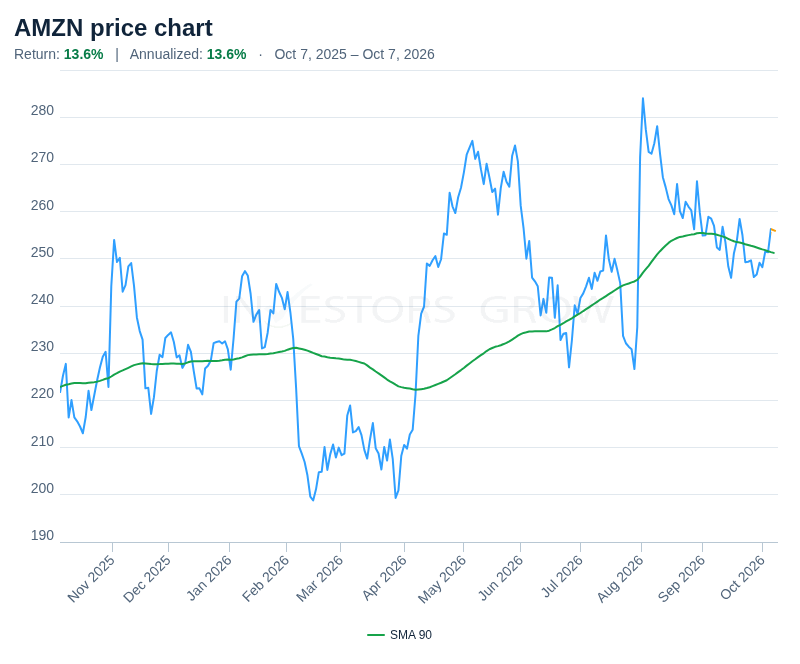
Amazon.com, Inc. (AMZN) share-price movement from October 7, 2025 to October 7, 2026, in US dollars, with a 90-day simple moving average.

STOCKS IN THIS ARTICLE

Comments