Siemens: Record Orders, Now Comes The Work

Siemens posted record quarterly orders of €34.8 billion, driven by surging rail and infrastructure demand.

Source: DepositPhotos

Orders jumped 58%. Revenue rose 11%.

Siemens AG booked a record €34.8 billion of quarterly orders, driven by rail and infrastructure demand, according to its preliminary results released today. Revenue reached €23.7 billion. The figures cover its fiscal fourth quarter, July through September 2026. Both growth rates compare with the same quarter last year on a reported basis.

The surge strengthens Siemens' future sales prospects. But orders, revenue, profit and cash measure different things. Customers committed to more business than Siemens recorded as sales during the quarter. What matters next is how profitably the company can deliver that work and how much money it needs along the way.

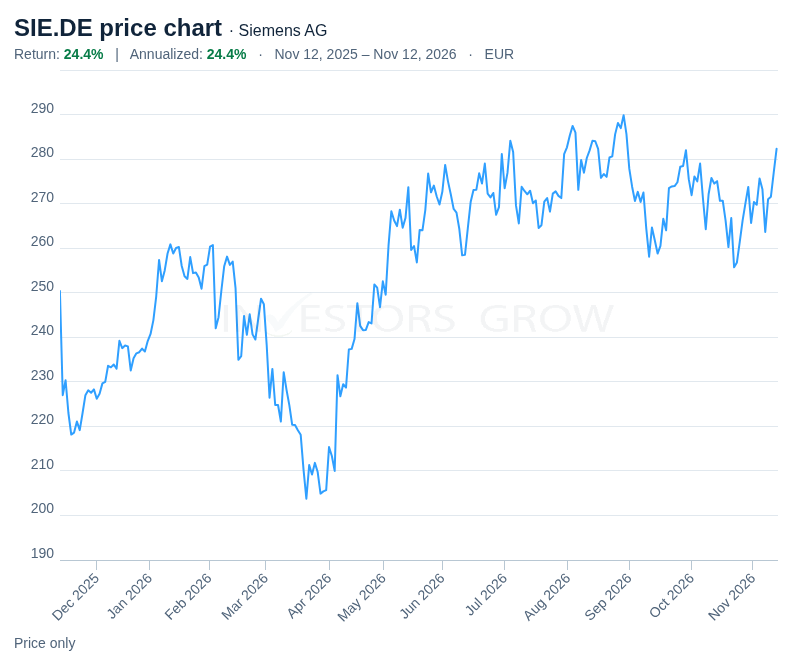
Siemens AG (SIE) one year stock price chart in EUR.

One train order can mean years of work

The gap is clearest in Mobility, Siemens' rail business. It booked €10.7 billion of orders against €3.5 billion of quarterly revenue. One win was a €2.4 billion German high speed train order that includes full maintenance.

An order records business booked with a customer. Revenue reflects Siemens fulfilling its obligations under the contract. A deal covering trains and maintenance can enter the order book long before all the trains are built and the maintenance is performed.

At fiscal year end, Mobility reported a €65 billion backlog, meaning orders still awaiting execution. That included €22 billion in Customer Services. Some of the opportunity lies in building trains; some lies in maintaining them over time.

Large contracts also make quarterly bookings uneven. A quieter quarter after this one could simply reflect the timing of awards. Delivery progress and the remaining workload would help distinguish that from weakening demand.

Sales follow progress. Profit depends on cost.

Siemens can recognize revenue on some projects before final delivery. Its fiscal 2025 accounting policies explain that, for construction type contracts, it measures progress by comparing costs incurred with the estimated total cost of the work. Revenue can appear gradually as the project advances.

Those estimates matter. Engineering, components, factory time and maintenance all cost money. If completing the work becomes more expensive without a matching increase in the contract price, Siemens has less profit left over.

Maintenance extends the customer relationship, but also commits Siemens to future work. The value of that business depends on whether the company priced it well and can perform it efficiently.

The customer can help fund the work

Cash does not always wait for delivery. Customers can pay part of a contract in advance, helping Siemens finance the work before it has earned all the revenue.

In its results presentation, management said advance payments materially reduced Mobility's operating working capital. In plain English, those payments reduced the amount of Siemens' own money tied up in running the business.

That is useful financing. But the cash arrives with production and service costs still to come. An advance can improve cash generation now while the revenue and profit emerge as Siemens performs the work.

Some later cash spending would therefore be normal. The concern would be spending more than expected or repeatedly falling behind on delivery.

Infrastructure growth comes with a profit caveat

Smart Infrastructure is already turning stronger demand into higher sales. Siemens reported large data center awards in its electrical products and electrification businesses, particularly in the US and Europe. These businesses supply electrical equipment customers need for their facilities.

The division's quarterly revenue rose 16% on a reported basis. Its segment profit margin increased to 20.3% from 18.7% a year earlier. That margin measures how much revenue remains as profit under Siemens' segment profit definition.

Higher output can spread factory and organizational costs across more sales. Siemens cited those scale benefits and structural improvements, but also disclosed that US tariff refunds contributed 50 basis points to the quarter's margin. Investors should not automatically carry that refund benefit into their expectations for future quarters.

Continued growth depends on getting equipment to customers as capacity expands. Customer construction delays could push out deliveries, while production bottlenecks could make those deliveries more expensive.

What would show the orders are paying off?

Management forecasts Mobility revenue growth of 6% to 8% for fiscal 2027 on a comparable basis, excluding currency translation and changes in the business portfolio. It expects a segment profit margin of 8% to 10%. Those forecasts provide a more useful yardstick than assuming an exceptional quarter of orders will repeat.

Revenue growth with healthy project margins would show the backlog becoming profitable business. Repeated delays, rising cost estimates or guidance cuts would weaken that case. For Smart Infrastructure, strong profitability without another tariff refund benefit would offer better evidence of lasting improvement.

The record orders strengthen Siemens' future sales prospects. The next results need to show what the company earns as it works through them.

STOCKS IN THIS ARTICLE

Also Mentions:

Comments