

As what was first considered a lower-probability, then a high-probability action, the FOMC left its benchmark rate at 3.75% to 4.00% unchanged this afternoon.
“Is the economy running too hot? Is the economy running too strong? That isn’t the judgment of most of my colleagues,” Federal Reserve Chairman Kevin Warsh said. “Economic growth is higher, but that doesn’t tell me that economic growth is somehow causing inflation, making our job harder.”
The Fed’s goal “isn’t to throw sand in the gears of the economy and throw people out of work,” he added.
Following today’s decision, CME FedWatch placed the odds of a hold at 21.6%, with a quarter-point hike in December at 78.4%. The Fed raised rates on September 16, for the first time in 3 years, as oil prices rose above $100 and inflation held above 3%.
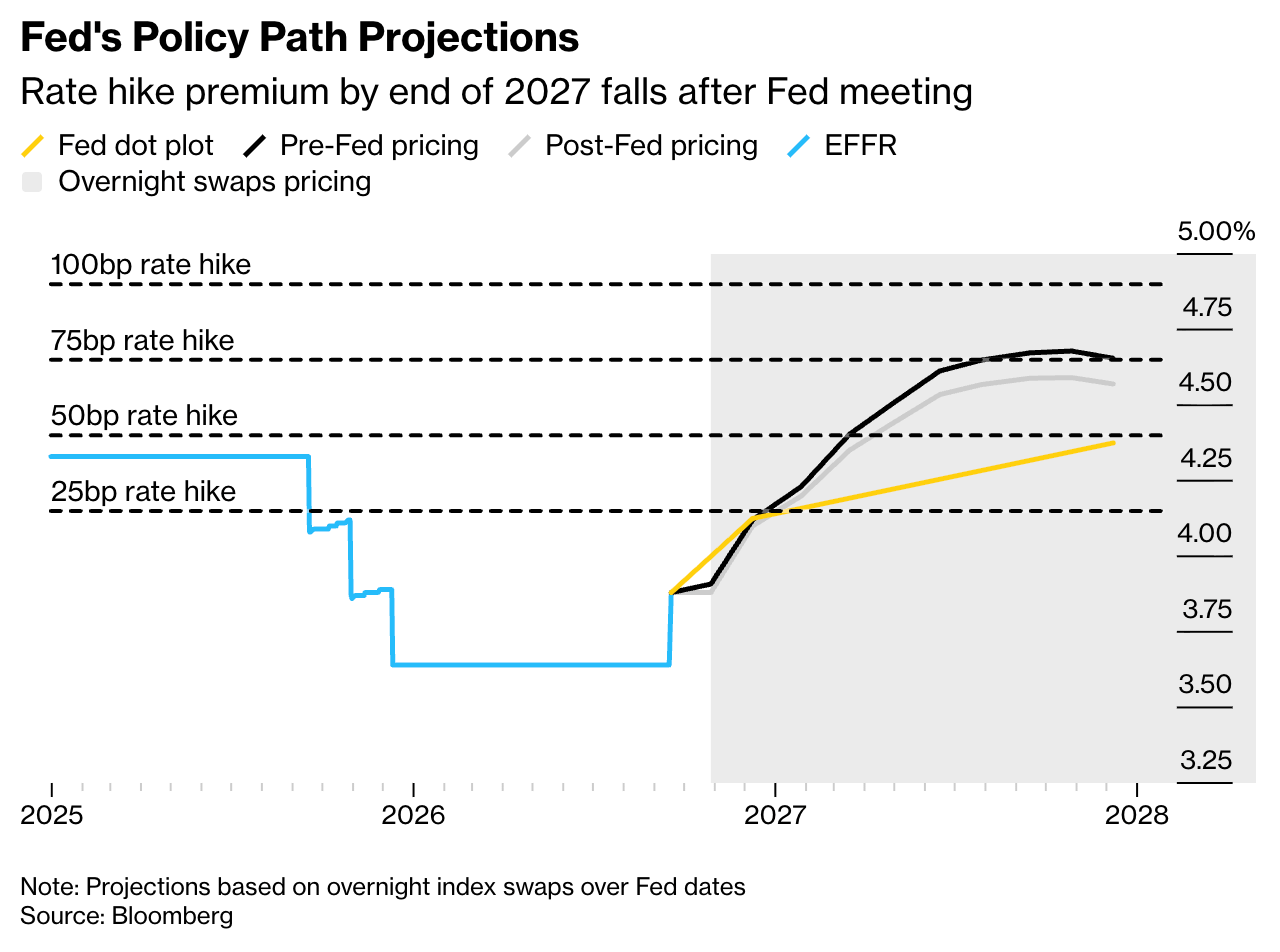
But on October 16, at the IMF and World Bank meetings in Bangkok, Warsh had refused to tip the Fed’s next move. “I don’t prejudge meetings. I don’t believe in saying now what I might do at the meetings that we have in the balance of this year,” he told the IMF’s Managing Director Kristalina Georgieva, characterizing his Fed as embarking on a new chapter that no longer broadcasts its decisions.
The newly appointed leader of the Fed also praised the worldwide wave of rate increases as a synchronous tightening with no free riders, though as we keep noting here, whether it’s one or a group of central banks tightening policy, they can’t manifest the supply of anything real.
Indeed, what those rate hikes cannot do is affect the underlying factors driving prices, such as war and geopolitics, or the distortion these create in overall inflation figures. As we detailed, U.S. gas prices jumped 9.1% in September, which accounted for half the monthly rise in the index.
Consumer prices rose 3.7% over the year, up from 3.4% in August. Core inflation, which strips out food and energy, rose just 2.6%, barely above the 2.4% to 2.5% of July and August, two months during which the Fed held rates steady.
The overriding inflationary pressure remains due to escalating conflict with Iran, Houthi strikes on Saudi targets and vessel attacks in the Persian Gulf, which took Brent crude to a five-month high near $115 a barrel.
That is why, in yet another attempt to tame rampant oil prices amid escalating tensions with Iran, the White House invoked the Defense Production Act on October 22, less than two weeks before the midterms.
It pledged up to $150 million in federal money to restart a shut U.S. refinery and expand refining capacity, pushing more diesel and gasoline into the market, which the Energy Department expects to add millions of gallons a day.
The same week, for the same reason, the administration moved to ease sanctions on Russian oil and weighed letting previously blocked tankers carry Russian, Iranian and Venezuelan crude again, both actions aimed at putting more barrels on the market and easing prices. That is the physical situation at the underlying core of today’s meeting. Washington is trying to work the supply side of the equation, so the Fed doesn’t have to tighten so much that the U.S. cannot afford to make its debt more expensive.
Debt Is the Ceiling on How Far the Fed Can Go
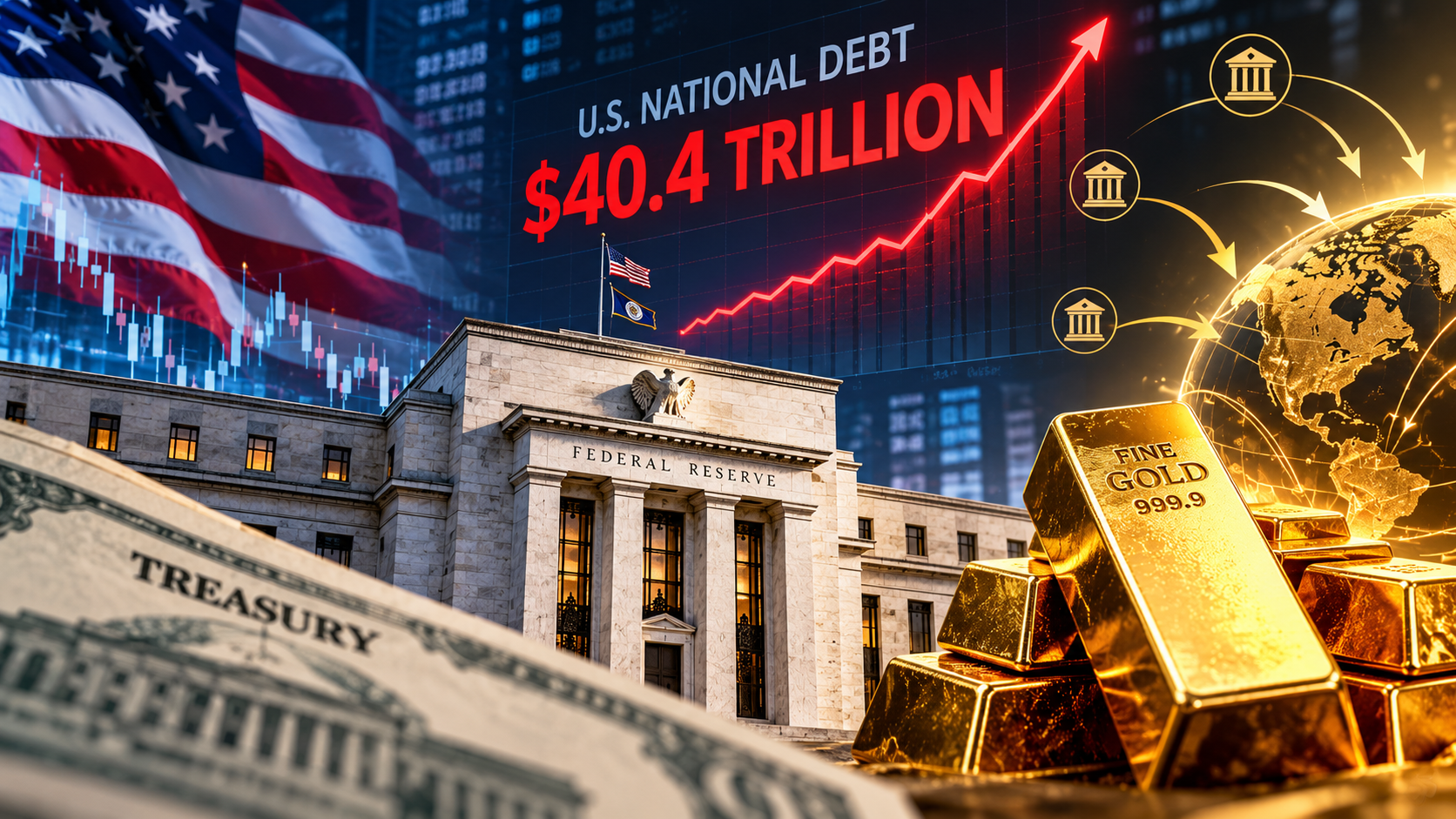
Meanwhile, U.S. debt crossed the $40 trillion mark in August and is now $40.4 trillion, climbing by more than $2 trillion a year. Net interest on that debt will reach $1.05 trillion in fiscal 2026, more than the $965 billion the government allocated to spend on defense.
Higher rates also increase the service cost of the new Treasuries the U.S. Treasury Department issues every month to refinance its existing notes and bonds, regardless of oil price inflation.
The Treasury has even begun buying back some of its own outstanding bonds to keep the market liquid as it issues ever more of them. The same pressure to manage domestic debt is building worldwide, with public debt on pace to pass 100% of global GDP for the first time since World War II, straining budgets around the globe and stoking civil unrest.
Central Banks Added 63 Tonnes of Gold in September
Central banks can’t control the debt their nations produce, nor the ever-rising cost of servicing it, while also trying to fight a supply-side inflation they can’t impact.
What they can do is accumulate more of the one asset that is no one else’s debt, and they are. Central banks bought about 63 tonnes of gold in September, their most in a single month since November 2024 on provisional World Gold Council data, and China added gold to its reserves for a 23rd straight month.
Collectively, central banks purchased more than 1,000 tonnes of gold in each year from 2022 to 2024, then 863 tonnes in 2025, a slower pace but still far above the few hundred a year of the prior decade.
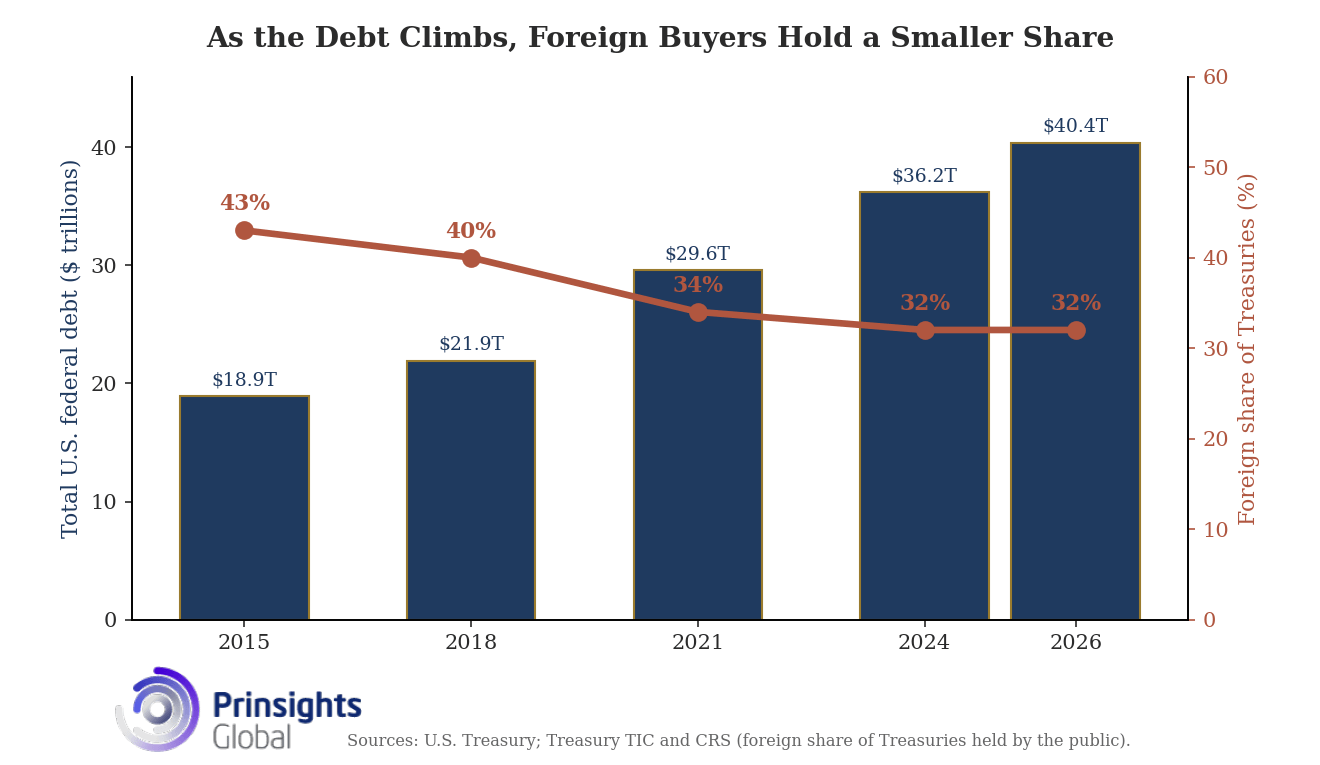
Gold passed the euro last year to become the second-largest reserve asset in the world, behind only the dollar, while foreign holders have slipped to about 32% of the Treasury market from more than 40% a decade ago. The official sector is moving out of debt and into the one asset no government can print.
Even so, gold prices have fallen recently into the low $4,000s. The market narrative is that the Fed’s rate hikes, or the potential for them, raise Treasury yields, sending investment money toward higher-yielding debt and away from gold, which pays no coupon. As we’ve pointed out, wealth preservation and asset appreciation have historically outperformed Treasury yields.
As such, pockets of demand have grown even as those yields have risen. Gold is near $4,066 now, down from above $4,200 earlier this month. But investors poured a record $31 billion into gold-backed ETFs in the third quarter, $10 billion of it in September, and their holdings reached a record 4,256 tonnes. The buying grew while the price fell.
Bottom line
The Fed can set the price of money, but it cannot produce a barrel of oil, shrink a $40.4 trillion debt, or stop central banks trading Treasuries for gold. Gold’s slide this month came even as central banks and ETF investors kept buying the metal, and mostly in paper fabrications of the gold market, not in gold leaving vaults.
Fewer than 1% of COMEX gold futures ever settle in real metal, so a price set largely in the paper market can fall even while physical demand holds.
Comments
Log in or sign up to join the conversation.