

The US dollar has extended its gains this morning, even if oil prices finished lower for the fifth consecutive day yesterday. Oil prices have bounced back in the first half of today’s session, causing a bit of pressure on currencies that rely on energy imports such as the euro, pound, Swiss franc, and Japanese yen. But it was the dollar that was exerting the most pressure, amid hawkish Fed speak. Meanwhile, European indices and precious metals were also under a bit of pressure amid the strength of the dollar.
Earlier this week, risk appetite had improved amid the recent falls in oil prices, but things have started to roll over a bit in the equities space in Europe, despite the release of firmer PMI data this morning. Donald Trump’s speech at the UN that a deal could be possible after the election and Iran’s response to those claims seem to have poured cold water on any hopes of an imminent deal. Barring any surprises in the US-Iran situation in the coming days, the US dollar could remain supported on any short-term dips, underpinning pairs such as the dollar Swiss franc and dollar yen, and undermining the euro dollar.
Dollar regains poise as oil tries to stabilise after recent falls
The US dollar turned higher following Trump’s speech and has extended those gains today. This is despite the recent decline in crude oil prices and an overall positive risk sentiment. If oil prices now stop falling further, then pairs like the USD/EUR, USD/CHF and USD/JPY should all continue to find good support on the dips, thanks largely to growing expectations that the interest rate differential between the US and the rest of the world including Switzerland, the eurozone and Japan, would expand further.
Even when oil was falling in the last few days, the dollar was proving surprisingly resilient. Normally, a sharp decline in crude would ease inflation expectations and take some pressure off US rates, weighing on the dollar. This time, hawkish Fed rhetoric is getting in the way. We heard from Chicago Fed President Austan Goolsbee earlier this week, warning that supply shocks, strong spending and AI-related investment could keep inflation sticky. Similar worries have also been highlighted by other hawkish Fed officials, arguing that the road back to the 2% target may not be painless. This increases the risk of gradual tightening to be front-loaded, which could further widen the interest rate differential between the US and countries where inflation is more subdued, like Switzerland, or where the policy is still not as restrictive as it is in the US – such as Japan.
Key levels to watch on USD/JPY
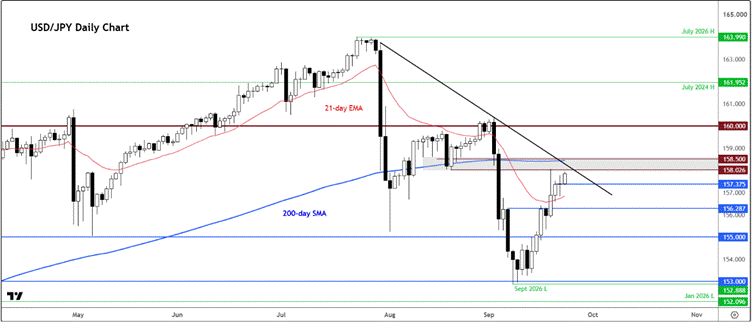
The USD/JPY has now made back most of the losses from earlier this month, threatening to resume its rally as it hovers near a bearish trend line and key resistance in the 158.00-158.50 region. Here we also have the 200-day average converging, making it a significant technical zone. A breakout above here would therefore be a bullish technical development, in which case the pair could quickly ascend towards the summer highs again, with 160.00 becoming the initial upside target. Support, meanwhile, is now seen around 157.35ish, 156.30ish, and then 155.00.
In short, the path of least resistance is to the upside for the USD/JPY amid the ongoing dollar rally.



Comments
Log in or sign up to join the conversation.