


The dollar was back on the front foot after a brief pause, with EUR/USD, gold and silver all slipping as bond yields and crude oil both pushed higher. There is not much on the calendar today until the release of the September FOMC meeting minutes. At that meeting, the Fed’s dot plot and Chairman Kevin Warsh’s press conference already tilted hawkish, so the minutes are unlikely to deliver much of a dovish surprise. At the same time, recent US data have been soft. So, the bar for another meaningful leg higher in reaction to the FOMC minutes for the dollar is high. The greenback is more likely to find continued support if oil prices push further higher after yesterday’s impressive recovery from a 3% decline earlier in the day.
Brent crude regains ground above $100
As before, oil prices remain the key swing factor. Brent is back above $100 a barrel as concerns over the Strait of Hormuz persist, keeping pressure on bond markets and limiting the scope for a sustained dollar pullback. Until something changes drastically, I can’t see oil prices falling back meaningfully any time soon, despite reports that the flows through the Strait have improved in recent weeks. So much oil has been lost that it will take a significant amount of time to return to pre-war levels. Let’s not forget that those depleted global oil inventories will need to be filled and soon. This will keep demand for oil high at the time when supply is restricted. Crude oil, therefore, have to rise to a new equilibrium price soon, if there is no meaningful shift in the supply curve. At the very least, expect oil prices to remain elevated for a while yet and this should keep inflation and stagflation concerns high. While oil flows may have improved, the risk of further disruption has not gone away. With little evidence of an imminent deal, elevated energy prices remain a constraint on any meaningful recovery in bonds and, by extension, on a sustained decline in the dollar. This should keep the euro tilted to the downside until something changes.
FOMC minutes coming up later
The main macro event on the US economic calendar is tonight’s release of the September FOMC minutes, which will be watched closely by the FX markets. Investors will be looking for clues on the Fed’s reaction function, particularly what kind of inflation outcome would be enough to justify another rate hike this year. Any discussion around the dovish dissent will also attract attention.
But the minutes may struggle to deliver the dovish surprise some dollar bears are hoping for. Reall that the dot plot showed four policymakers expecting two further hikes this year, compared with just two expecting no additional tightening.
At the same time, the data since the September meeting have been relatively soft and markets already have pushed their expectations to a December hike from October. That means the bar for the minutes to generate another significant dollar rally is also high.
France is not out of the woods
French sovereign spreads may have narrowed a bit in recent days, helped mainly by the broader improvement in global bond sentiment, although Marine Le Pen’s pledge to bring France’s budget deficit down sharply to 3.7% of GDP next year also provided some support. But don’t expect that to be the end of it. For indeed, it is too early to call this a meaningful turning point for French assets.
Le Pen is clearly trying to position herself as a more market-friendly candidate, but the credibility of the fiscal adjustment remains the sticking point. The proposed €140 billion of savings look ambitious to say the least and it will be seen how it will be delivered.
That makes it difficult to see yesterday’s narrowing in spreads as the beginning of a sustained French bond recovery.
EUR/USD technical analysis
From a technical analysis point of view, the EUR/USD had broken key weekly support around the 1.1360 area, so the bias remains tilted to the downside. The pair found some support around the 127.2% extension of the last upswing at 1.1220 earlier this week, but the selling has now resumed after the pair was unable to break above 1.1260 short-term resistance.
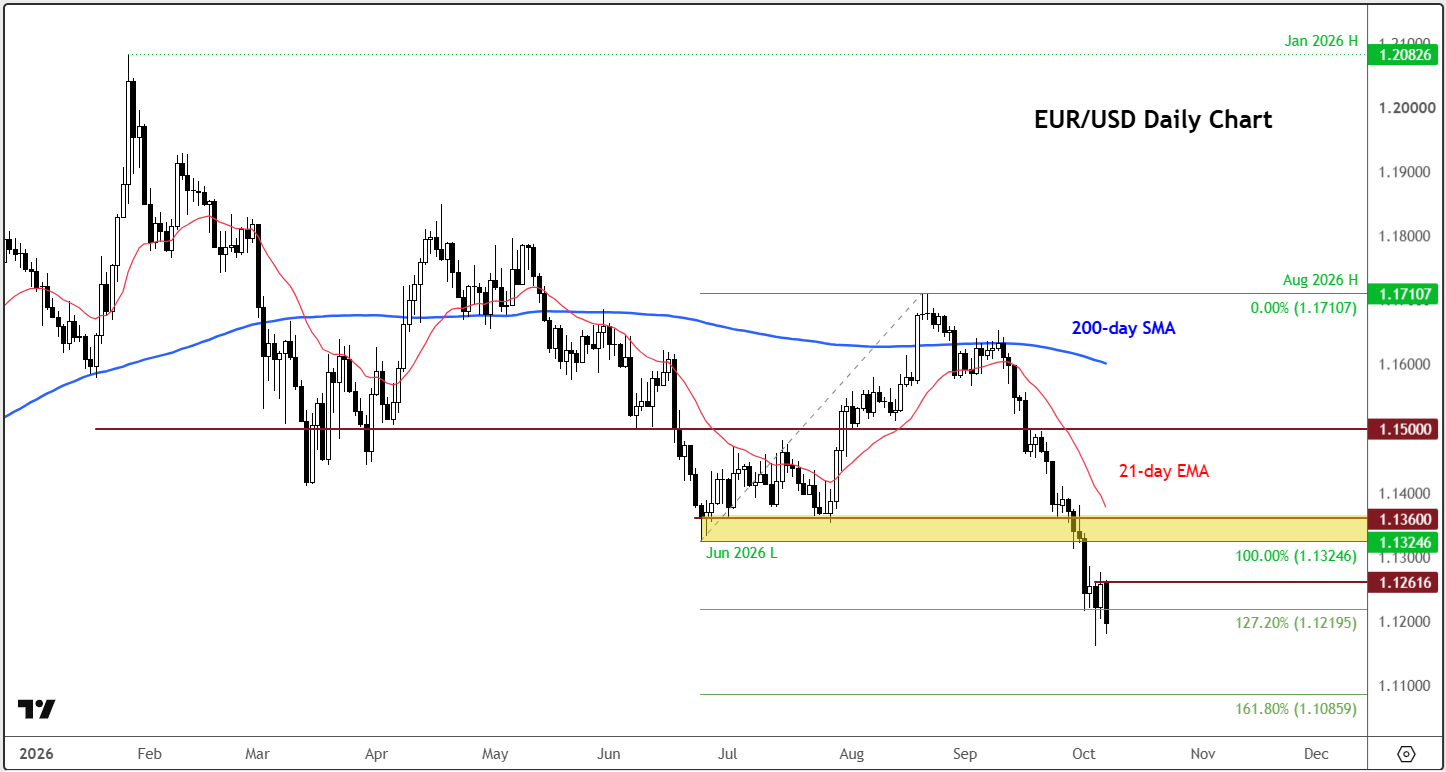
The next major downside area I am watching comes in around 1.1085, the 161.8% Fibonacci extension. Below that, the 1.1000 handle could be the next stop.


Comments
Log in or sign up to join the conversation.