


U.S. Treasury Secretary, Scott Bessent’s recent intervention in the US Treasury market is unlike any he experienced in his former life as a currency trader. He is taking on the $40tn US government that is beset by a protracted conflict with Iran; a war that is adding to greater government expenditures and higher consumer inflation. The US Treasury is banking on this intervention to lower rates without collateral damage to the dollar or to US inflation. Bond market vigilantes are reacting to this unprecedented move in bidding up the yields of long-date bonds. And, at the same time the US dollar is falling, worsening the inflation prospects and adding to prospects of future increases in interest rates.
Long term rates hit a 20 year high earlier this week as traders have come to realize that oil prices are going to be at risk because there is no sign that the Iranian conflict is coming to an end. As the US government deficit continues to rise, the Treasury secretary felt compelled to keep a bond market revolt in check, lest rates become unmoored. Principally, his aim was to stem the tide in the sell-off of 10-year and 30-year Treasuries. These bond yields can spark increases in mortgage and corporate bond yields, especially as the midterm elections are not far off.
On Wednesday, the Treasury Secretary sprung into action, announcing that they are doubling the government's purchase or “buyback” of long-date bonds yields. He also hinted that the US Treasury has a big toolkit” at its disposal should it be needed. The Treasury did not announce how it plans to fund the purchases. Unlike the Federal Reserve the Treasury does not have a balance sheet to deploy. The only real way to pay for its long-term debt purchases is to raise money by selling shorter-term debt (less than 3-year terms). But that results in short-term debt becoming more expensive. However, the Secretary tries to slice it, the total debt remains intact.
Initially, the long-dated bond yields fell, but that was short-lived; rates have reverted to their recent highs. While yields on the 30-year bond edged down on Wednesday’s announcement, by Thursday afternoon most of that improvement had evaporated. Yields on the benchmark 10-year bond, which dictate the price of longer-term loans across the US economy, have reversed. Too little, too late is the best way to describe what happened.
The effort to intervene in the bond market has not been without collateral damage elsewhere. In the past 5 days, the USD has dropped rapidly. The US dollar fell sharply after Wednesday’s announcement and the dollar index is now down around 1 % on the day. This has forced traders to seek protection in buying other assets , such as gold, currencies and even cryptocurrencies. Overall, a declining USD will result in higher import costs and an overall rise in the inflation rate, and subsequently in higher short-term borrowing costs.
US Dollar Index
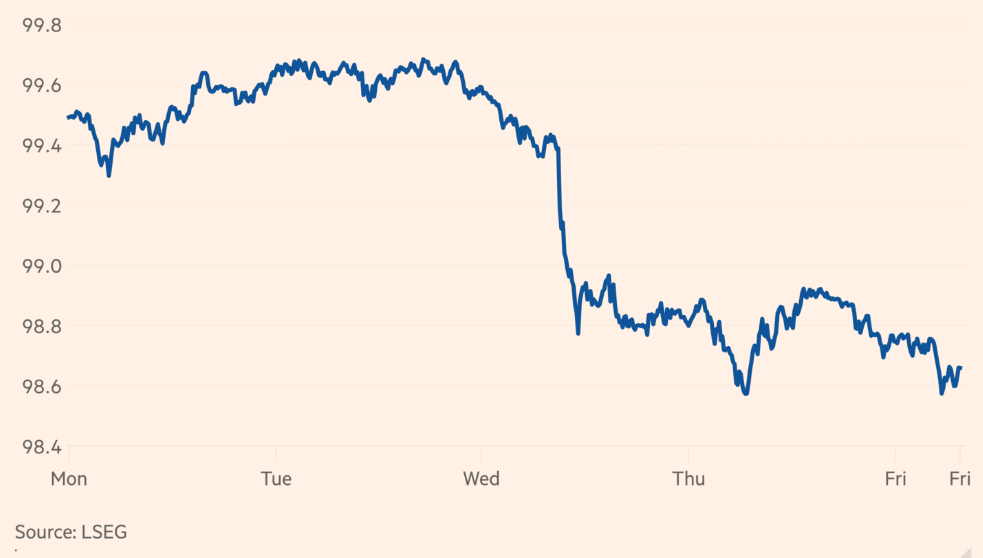
From today’s vantage point, the whole exercise of trying to manipulate the bond market to lower rates seems futile. As with so many other policies adopted by the Trump Administration, the marketplace dictates the outcomes, not the wishes of the Secretary of Treasury.


Comments
Log in or sign up to join the conversation.