

A USMCA trade deal breakdown with Canada is increasingly likely.
Carney Walks a Political Tightrope
Canada retaliated against Trump’s tariffs by pulling US liquor from store shelves. It’s not that easy to restore but a trade breakdown may hinge on that, however silly it sounds.
Bloomberg reports Carney Walks a Political Tightrope as US Trade Talks Approach Deadline
A year ago, after a meeting with Canada’s provincial leaders, Prime Minister Mark Carney made a pledge that he has since repeated many times.
“Canada will not accept a bad deal,” he said about trade negotiations with President Donald Trump’s administration.
That promise is being put to the test as never before. Canadian trade officials have spent days camped out in Washington as they try to reach a pact to avert a punishing array of new tariffs threatened by the White House.
Trump and his officials have demanded Carney act on a lengthy list of trade irritants or the US will move forward on Aug. 19 with 50% duties on about $20 billion worth of Canadian products, including milk, plywood, hockey sticks and beer.
The framework of a potential deal would see the US back away from the 50% tariffs and reduce certain Section 232 tariffs on Canada. The 232 levies are the ones Trump has put on foreign-made steel, aluminum, autos and lumber — all industries with integrated supply chains between the US and Canada.
In exchange, Canada would remove some of its retaliatory measures and make other concessions, such as returning US booze to store shelves and widening access to its dairy market, the people said.
One item under discussion would be lowering the US auto tariff, which is currently set for Canada and Mexico at 25% of the value of the non-US content, the people said. Trump’s previous deals with auto-exporting nations Japan and South Korea have cut the auto tariff to 15%.
Roughly half of the value of a typical Canadian-made vehicle is from US components. So a 15% headline rate may mean an effective 7.5% tariff, depending on the model. To get such a deal, Canada would have to roll back its retaliatory tariffs on US-manufactured cars and trucks.
Carney, 61, and his team have optimistically seen next week’s deadline as an opportunity to finally get the comprehensive tariff-reduction deal with Trump they’ve been seeking for more than a year. But the prime minister has limited room to maneuver.
The liquor bans, imposed by provincial governments after Trump’s initial round of tariffs in early 2025, have done major harm to US exporters of wine, whiskey and other products. Canadian imports of American alcoholic beverages plunged 81% in a year, according to the White House.
Carney can try to persuade provincial leaders on booze, but he can’t order them to. And each province has its own grievances with the US.
Many business executives don’t want Carney to grant concessions too easily. A KPMG survey of hundreds of business leaders found about 70% said the Canadian government should take a tough stance in negotiations, using any leverage it has available with the country’s most important trading relationship on the line.
“If we are not tough, what’s the alternative? We’re going to concede and give everything that they’ve asked for without getting anything in return?” asked Joy Nott, a partner in KPMG’s trade and customs practice in Canada. “That would be seen as more negative.”
In recent days, Canadian officials have warned Greer that they can’t accept a deal that forces concessions without getting any movement on Section 232 tariffs, according to people briefed on the negotiations. Such a move would be impossible given the Canadian public mood, they said.
Polls show that, too. A recent Abacus Data poll found 69% of residents in Ontario and 72% in British Columbia want to keep the US alcohol restrictions in place.
Carney Not In Control of Liquor Bans
Carney is not in control of liquor bans. Even if he was, the political atmosphere is poison.
You can put US liquor on Canadian shelves, but you cannot make anyone buy it.
This, Trump brought on himself.
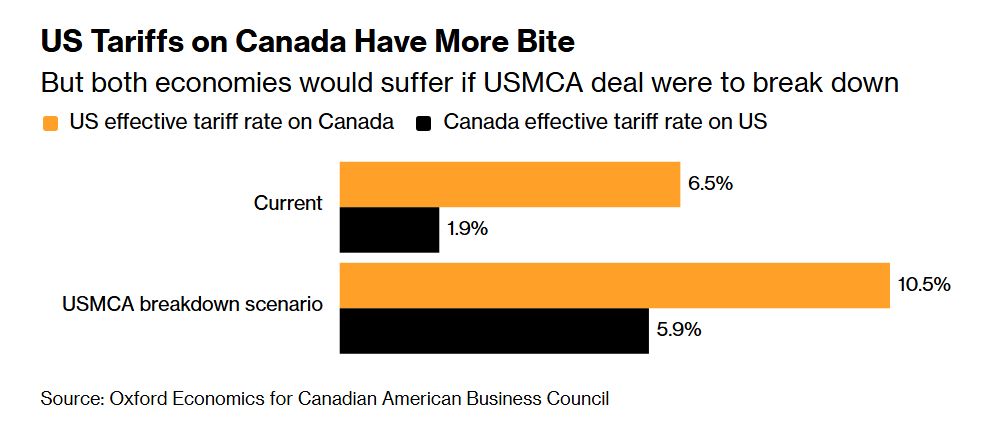
An overall rise in tariffs from 6.5 percent to 10.5 percent, with the effective rate jumping from 1.9 percent to 5.9 percent would be a big deal.
Yes, this would hurt Canada more than the US. But the correct action would be to remove tariffs totally.
The World’s Dumbest Tariff Has Been Revealed
Trump’s inane push to manufacture everything in the US despite natural production advantages elsewhere raises US prices and costs US jobs.
Trump is too stupid economically to see that.
Canada has much cheaper electricity rates than the US because of abundant hydropower. That translates directly to aluminum and steel production.
CATO comments The World’s Dumbest Tariff Has Been Revealed
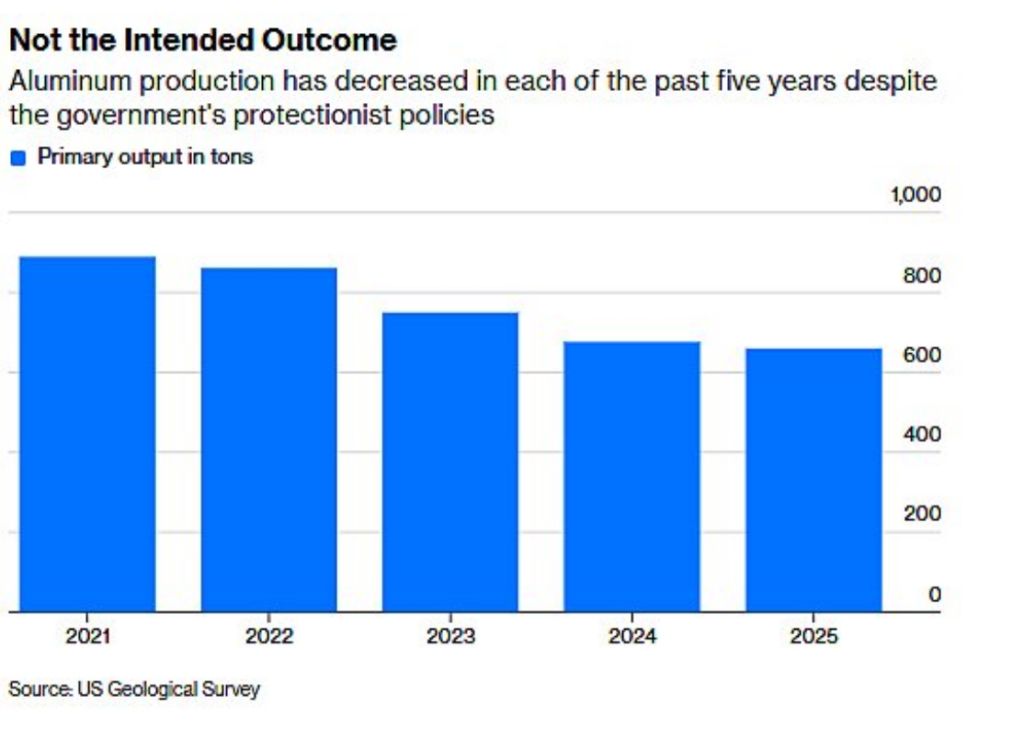
Aluminum protectionism has been a confounding own-goal.
According to the US Geological Survey, imports constituted approximately 60% of domestic consumption last year, even with high tariffs. This dependence does not reflect “unfair trade” but deep structural realities. Aluminum production is extremely electricity-intensive, and US power prices – along with fierce competition for electricity from AI and other high-value industries – have made smelting uneconomical relative to regions with abundant power and access to the core inputs bauxite and alumina.
In just the last few years, primary aluminum smelters in Washington, Missouri, and Kentucky have each shut down, and production has declined. Now, only four smelters are in operation, just two at full capacity. And this contraction occurred despite tariff protection expressly intended to boost output.
Taxes, regulations, and permitting burdens add to the headwinds, as do the cost and complexity of bringing a modern smelter online. Thus, the one new US facility under development in power-rich Oklahoma won’t start until 2030 at the earliest. Until then, and likely well beyond, America will continue to depend on imports to keep store shelves stocked and factories running – and tariffs will continue to impose major costs.
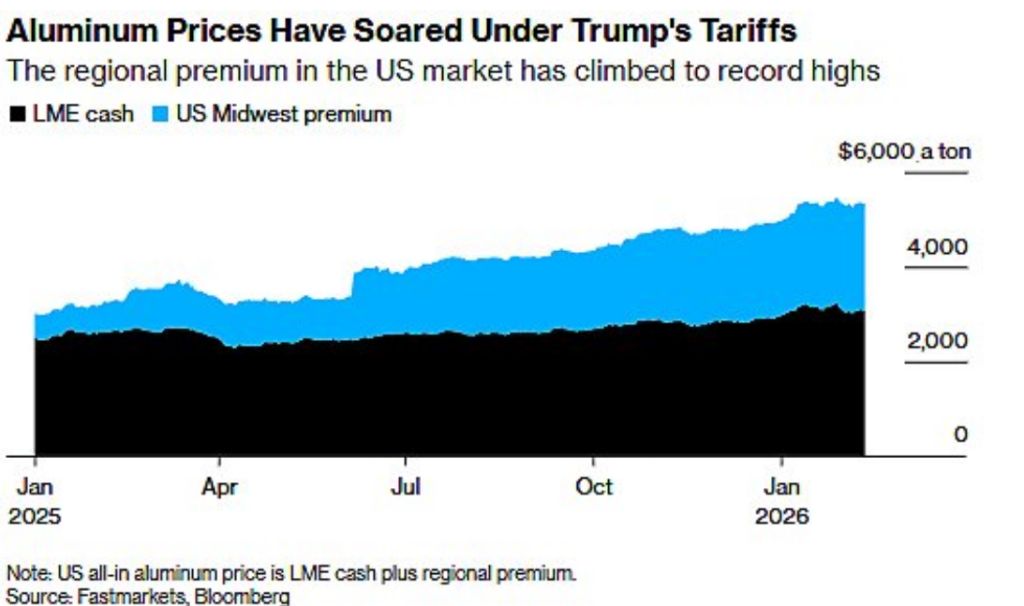
Most obviously, the tariff wall has caused domestic aluminum prices to skyrocket, rising much faster than global prices did last year, Bloomberg News reported in early February. The “Midwest premium” – the surcharge American buyers pay above the London Metal Exchange (LME) benchmark – more than doubled after the 50% tariffs took effect, and producers have since applied another surcharge on top of that.
Aluminum Prices Soared
Comparative Advantage Trashed
Making matters worse, an easy solution to the aluminum shortfall lies next door – or, at least, it did. Canada has long been America’s largest aluminum supplier, thanks to abundant hydroelectricity that gives its producers a decisive cost and environmental advantage. Canadian aluminum is also deeply integrated into US defense supply chains because the nation is a close ally that was officially made part of America’s Defense Industrial Base in 1993. With Canada specializing in primary smelting and the US focused on downstream fabrication and manufacturing, bilateral trade and investment flourished. Today, Pittsburgh-based Alcoa Corp. owns three Canadian smelters that collectively churn out almost 30% of the nation’s total output.
Comparative advantage was working exactly as advertised – until we blew it up
It would be ridiculous if a feud over meaningless liquor blew up the entire USMCA agreement.
However, Trump is so petty that outcome could easily happen.
He has poisoned the best trading relationship in the world and all he has to show for it is higher prices and more global animosity.
I have warned about this for over a year.
People said tariff-related inflation was transitory. I disagreed then and more emphatically now.
Here’s the issue.
The impact of continually insane economic policy is not transitory. Trump keeps doubling down in the worst possible ways on tariffs and the war in Iran.
Related Posts
January 24, 2026: Trump Threatens 100 Percent Tariff on Canada If it Makes a Deal with China
King Deal now decides who can make a deal with whom.
February 24, 2026: Fact Check on Trump’s Claim “Canada Ripped Us Off”. What’s the Real Story?
In a rambling Speech, Trump signals out Canada.



Comments
Log in or sign up to join the conversation.