


Image Source: Unsplash
Canadians now see that the “emperor wears no clothes”, as the President is steadily walking back from a tariff policy once threatening to bring the Canadian economy to its knees. In recent days, a series of somewhat related developments, Americans have told the White House that Trump’s bilateral trade policies are more harmful to themselves than to Canadians. And with the U.S. midterm elections not so far in the distance, the U.S. government is up against the wall in trying to maintain its initial aggressive stance.
Let's startwith an overall assessment of the impact of tariffs on the American economy. The St Louis Federal Reserve study concluded that "tariff measures are already exerting measurable upward pressure on consumer prices. The rise in prices beginning in early 2025 coincides closely with tariff developments”
Harvard research recently found that U.S.tariffs on imports are mostly borne by U.S. firms and U.S. consumers. Something already known by consumers and a host of businesses since day-one .
Turning to Canada, summary of major sectors currently subject to tariffs today:
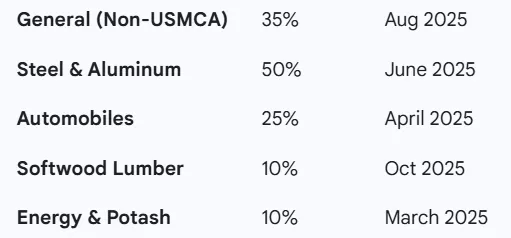
All things considered, 85% of all Canadian exports to the U.S. enter duty-free under CUSMA, a free trade agreement with its origins in the 1980s. However, the most egregious set of tariffs exist on steel and, especially aluminum. Canada supplies roughly 10% of steel consumed and nearly 25% of all foreign steel imported. Canada provides nearly 60% of all aluminum consumed in the U.S. With no immediate alternative source, the 50% price hike is shared by the importer and U.S. manufacturers.
The Financial Times reports that U.S. trade officials are finally recognizing that tariffs on essential metal products are hurting manufacturers and ultimately consumers. The North American auto industry, for example, reported that it paid more $5 billion in tariffs, reducing last quarter’s profit. There is only so much that producers can absorb before being forced to raise prices. Aluminum especially hits the consumers directly in food and drink products, and household affordability issues are on everyone’s mind.
What are the prospects for CUSMA as negotiations get underway later this year? Trump generally comes out swinging with statements to the effect that the U.S. should ditch Canada and go only for a special deal with Mexico (he may well think the opposite with respect to Mexico). We have seen this type of performance from him before in the last go around on CUSMA’s renewal in 2016-19. Meanwhile we can expect Trump to rail against Canadian unfairness, but Canadians will take no notice. We have all seen that showmanshipbefore. Meanwhile, Congress with representatives in states that do considerable business with Canada are lining up to remove the bilateral tariffs.Republicans broke with the President joining Democrats in the House of Representatives in voting to overturn Trump’s tariffs on Canada, last week. Despite the fact that Trump will most likely veto the bill should it pass Congress, voter anxiety about the impact of tariffs on businesses and consumers has now become a major issue in the nextmidterms.The political risks are too high in key states to continue thisassault on Canada.
More By This Author:
Time To Examine If Tariffs Have Worked For The U.S.U.S. Twin Deficits Come Home To Roost
Canada’s Carney Signals A New Era In World Trade



Comments
Log in or sign up to join the conversation.