


Image Source: Pexels
For many decades, the US ran twin deficits, one at the Federal government level and the other on international trade. This past week both these deficits grabbed financial headlines when the trade deficit rose, the US dollar sank, US debt worries resurfaced and long term interest rates rose. The nexus involving trade, the US dollar and interest rates has always been front and centre in economic policy making.
President Trump came into office vowing that he will use tariffs to change the string of the nation’s trade deficits. But a year into office, and more than a half year of the highest tariffs since the Great Depression, that deficit persists. The White House predicted that the new world of tariffs would hamper China’s powerful export machine. Although China’s trade surplus with the US shrunk in 2025, China racked up the largest trade surplus in history . Chinese exports to the US fell by 20% in 2025, China more than made up that loss with a surge in exports to the rest of the world. The US is no longer the indispensable market for Chinese exports.
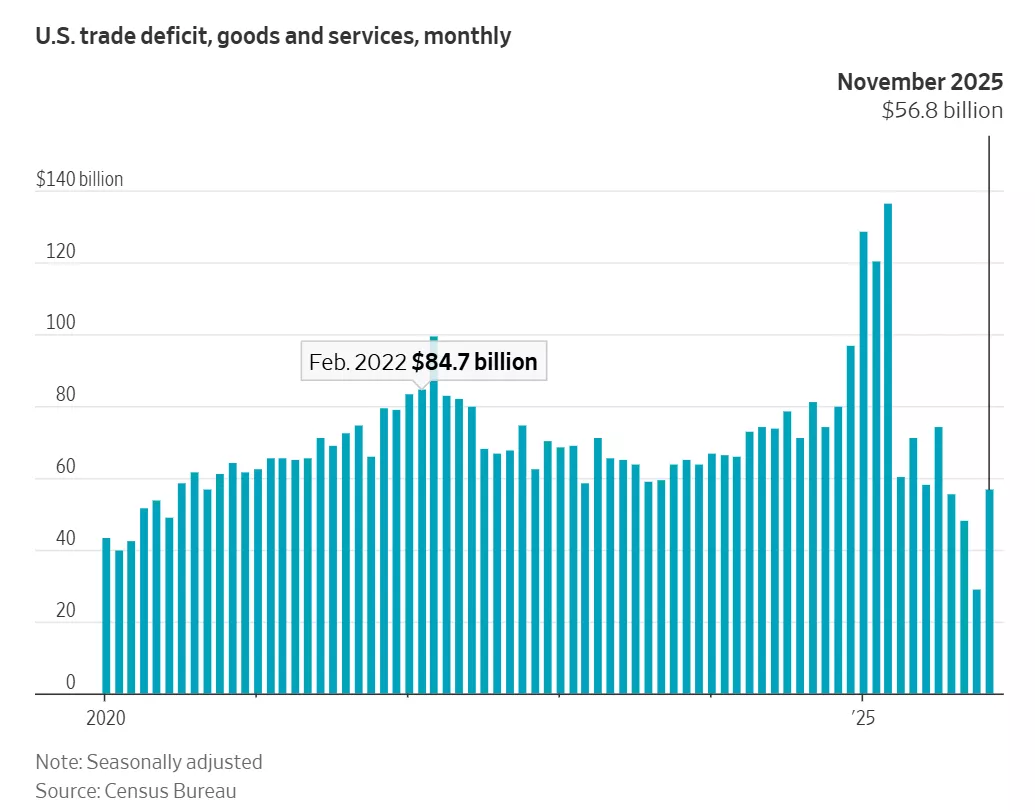
Trade deficits must be paid for with U.S. dollars which are made available by the US government floating more credit instruments into an already heavily saturated US debt market.
The US ratio of debt- to- GDP remained well under 50% until the financial crisis of 2008, after which the ratio surged towards 100%, aided by spending to combat Covid-19. Projections from the Congressional Budget Office clearly point to levels exceeding 150% of GDP by 2050. Granted, these projections are based upon a continuation of debt issuance in excess of economic growth. Much depends on future government fiscal policies.
US Debt Hitting Record Levels
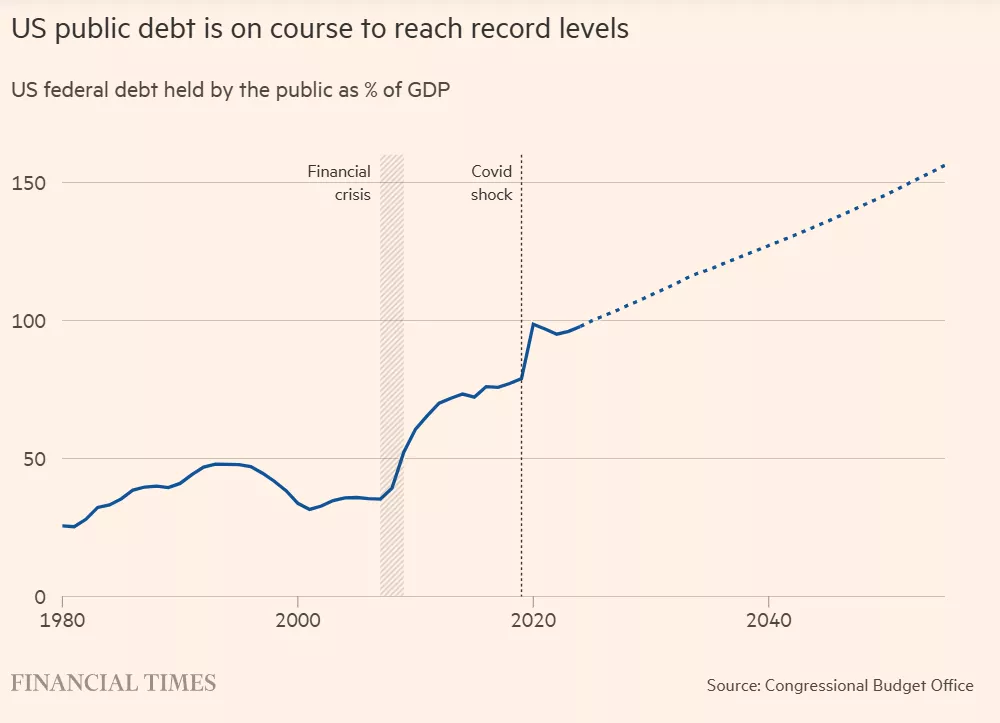
Nonetheless, the bond market has taken full notice of these trends ; interest rates have risen and remain elevated to accommodate the risks implied in holding US debt. In 2020, Fed funds rate was as low as 0.5% and today the rate stands at 3.5%. The bellwether US 10yr bond yield was less than 1% in 2020 and now is trading at 4.25%. While the current yield does represent a degree of inflation protection, the bond holders are demanding additional yield in response to the flooding of US debt to fund the twin deficits.
Concurrent with an expansion of US debt levels and rising interest rates is the decline in the US dollar. Over the past 12 months, the dollar hasfallen by 13%. China, once owning over $3 trillion of US debt, has been selling steadily over the past year, and it owns just under $700 billion. The percentage held by foreigners has fallen from 35% in 2020 to 30% in 2024. This unloading adds directly to the higher cost of borrowing and to the decline in the value of the US dollar. Overall, US federal debt has increased some 40% over the past five years. Admittedly,the US economy has grown at about the same amount so the debt-to-GDP ratio remains constant.
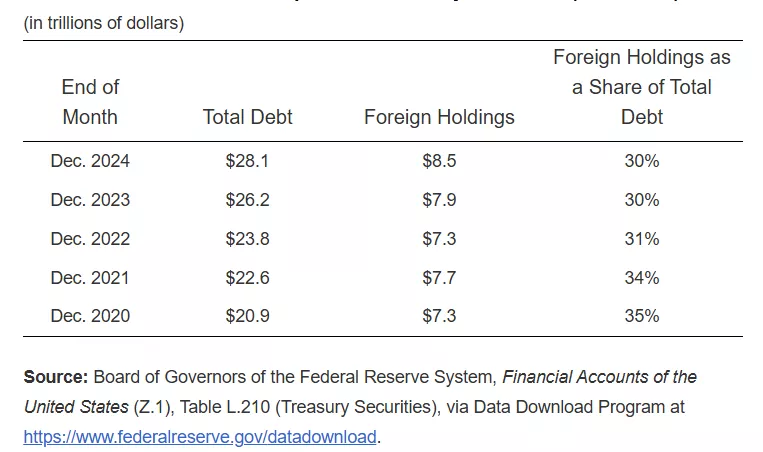
Nonetheless, there is a pervasive sense that US federal ( plus state and local) debt are reaching levels that have turned the heads of many bond traders. Hence, the weakness in the US dollar and the relatively high US interest rates. Given today's geopolitical risks originating from US foreign policy,the more pressing issue is how much tolerance exists within the markets to absorb more US dollar debt without an incentive for higher yields .
More By This Author:
Canada’s Carney Signals A New Era In World TradeCanada Starts To Diversify Trade Away From The U.S.
Challenge To Israel's Two Speed Economy

Comments
Log in or sign up to join the conversation.