

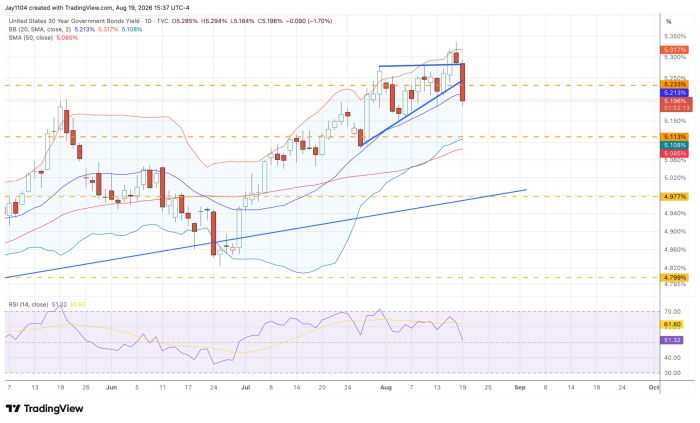
Rates fell sharply on the day after the Treasury said it would double the size of its bond purchases to $4 billion from $2 billion for 10-, 20-, and 30-year Treasuries. The bond purchases send a pretty clear signal that things in the off-the-run market were very illiquid and that we were likely seeing bid-ask spreads widen. Off-the-run Treasuries are anything that is not the most current issue, and they tend to have lower liquidity and trading volume to start with.
It could be due to the absence of buyers for those issues; it is hard for me to say. But clearly, for the Treasury to do this just two weeks after the quarterly refunding announcement would suggest to me that something changed materially over that time, and the sell-off in the rates may be a bit of a liquidity issue.
Is the sell-off in bonds over? Probably not. Could the 30-year yield fall to 5.1% in the interim? Sure. It is also not QE in any way, shape, or form. The Treasury will have to issue debt at the front of the curve to finance the purchases on the back of the curve.
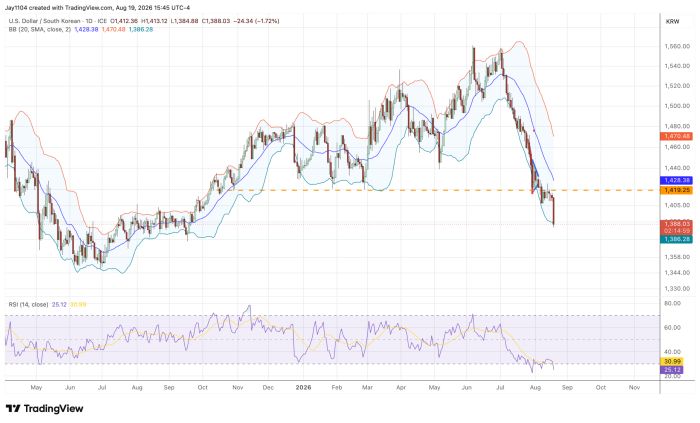
The dollar did not respond well to today’s news, and the KRW was already stronger on the day. Following the news, that strength only grew, with the USD/KRW dropping by 1.7% on the day. It is clearly oversold, trading below its lower Bollinger Band and with an RSI below 30. So I would think it either bounces back to the 20-day moving average or consolidates sideways.
This is probably not good for either the KOSPI or the AI trade in general.
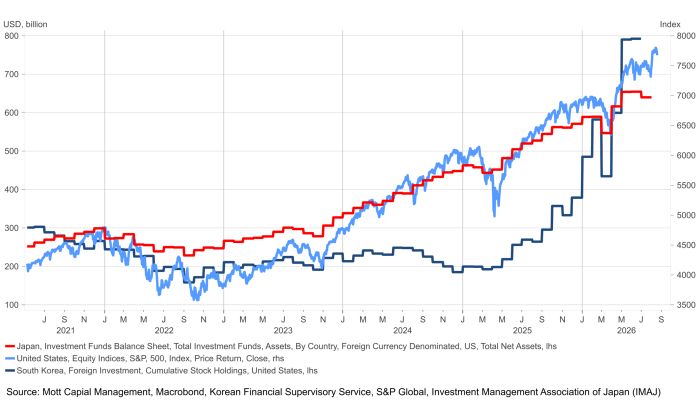
A tremendous amount of money from Korea has been put into the market since the April 2025 sell-off, and the stronger KRW is likely a reflection of outflows from US-dollar assets back into Korea.
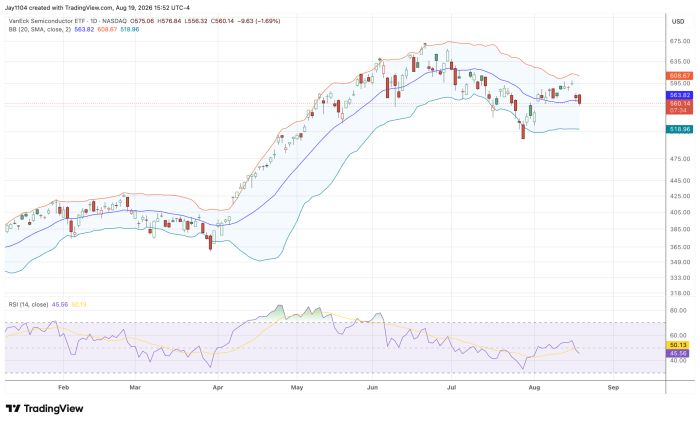
The S&P 500 was largely supported by options positioning today, which was really no different from yesterday. The same can be said of the SMH, with the put wall at $560 holding.
But the issue for the SMH is all the open call positions at higher prices, particularly around $600, that will start to melt if the SMH can’t begin to climb. Once the put wall at $560 is chewed up, we could see the SMH decline much more sharply, especially if the strong won reflects Korean liquidity leaving U.S. markets.
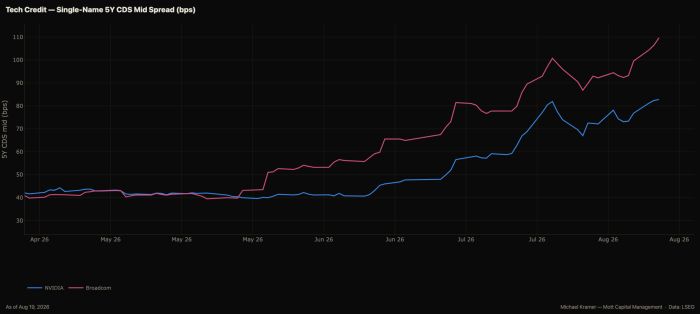
Finally, credit spreads continued to widen for Broadcom (AVGO) and Nvidia (NVDA). When combined with the whole KRW situation, it just continues to suggest to me that the semis are vulnerable to a steeper pullback.
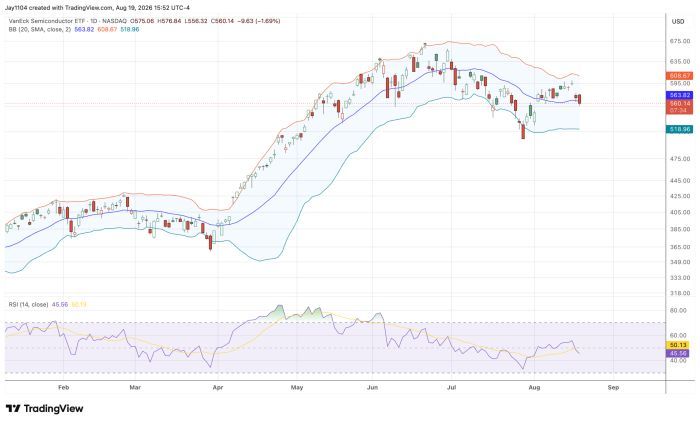
The S&P 500 was largely supported by options positioning today, which was really no different from yesterday. The same can be said of the SMH, with the put wall at $560 holding.
But the issue for the SMH is all the open call positions at higher prices, particularly around $600, that will start to melt if the SMH can’t begin to climb. Once the put wall at $560 is chewed up, we could see the SMH decline much more sharply, especially if the strong won reflects Korean liquidity leaving U.S. markets.
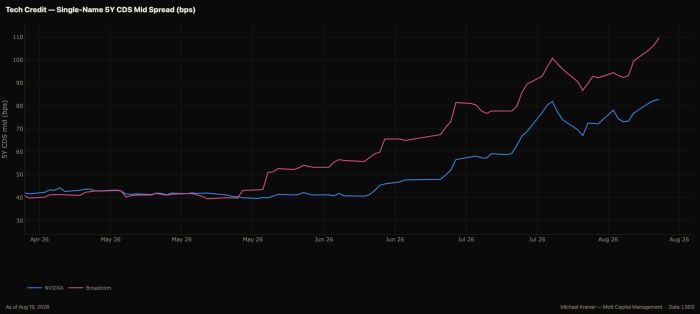
Finally, credit spreads continued to widen for Broadcom and Nvidia. When combined with the whole KRW situation, it just continues to suggest to me that the semis are vulnerable to a steeper pullback.



Comments
Log in or sign up to join the conversation.