

Image Source: Unsplash
By now, we all have had our fill of debates about the merits of Trump’s tariff policy, so it is a good time to examine whether the tariffs have altered international trade flows in favour of the US. Have imports dropped, exports increased, deficits fallen ? What has changed over the past year?
To begin with, the relative standing of the major trading nations has not changed. China continues to dominate trade activity, closely followed by the US and Germany. Nothing has changed in relative standings . China continues to dominate world trade, recording a world record current account surplus of over $ 1.2 trillion in 2025. China has, in addition,diverted trade to third-countries, such as Vietnam, which ultimately find their way as US imports. The US trade deficit has deceased ever so lightly.
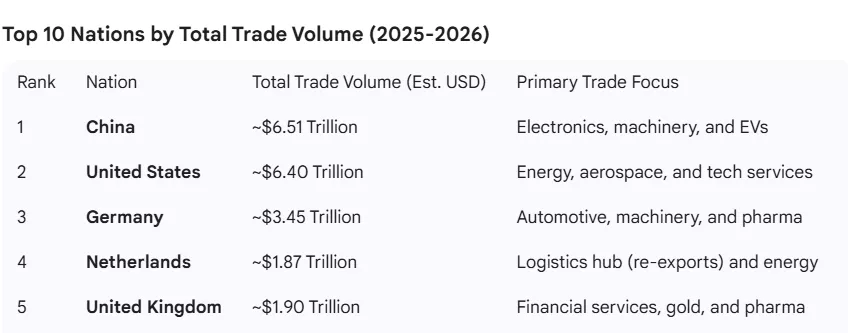
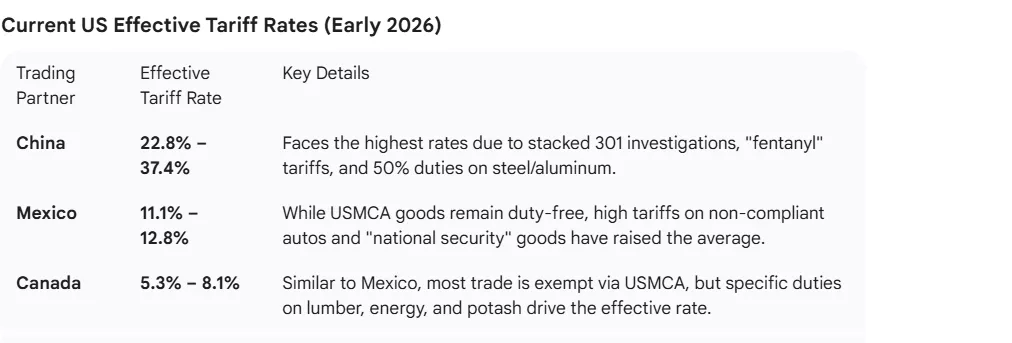
For all the talk about how he loves tariffs, President Trump has not really placed onerous tariffs on the US most important trading partners. Tariffs on Chinese imports averaged 25% ;Mexico and Canada tariffs average around 6%, since more that 85% of North American trade is covered under the CUSMA, a free trade agreement created in the late 1980s. While the overall tariff rate remains relatively low, specific industries such as steel and aluminum have been hit with a tariff rate of 50%. Canadian steel used to provide about 25% of US imports and aluminum about 55% of US imports. Both have suffered some market losses, but at the same time US manufacturers, especially in autos, have had to absorb much higher prices.
(Click on image to enlarge)
Viewed differently, trade strategies have developed into a more regional setting. Canada, for example, is working to break down trade barriers among its 10 provinces . It is clearly stated Canadian policy to seek partners in Asia and the EU to lessen its dependence on the US. China, India and the EU are definitely on Canada’s radar to develop new markets. China has been successfully able to expand its export reach with Asia and most recently in South America.
US Tariffs and Revenues
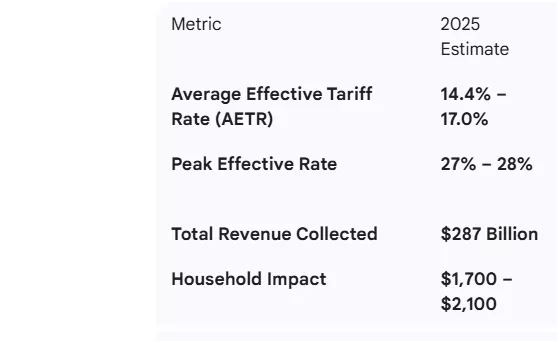
Source : US Treasury
Stepping back , universally the introduction of US tariffs has had very limited impact on international trade. Under the WTO rules, a country providing a trade concession to one trading partner must extend the same treatment to all, commonly referred to as the Most-Favoured-Nation clause. The US has abandoned that rule. That principle, however, continues to be practiced in over 75% of global trade. So the multilateral system has not been totally broken. Actual tariffs collected globally, run between 2%-6%, a condition that has been in effect for many decades
Summing up, the US remains the highest tariff nation with really nothing to show for that pain. Manufacturing jobs continue to decline and employment has slowed down considerably in the grips of such uncertainity. US consumer prices remain relatively high, providing little room for a more stimulative monetary policy, so championed by Trump; inflation is now a growing concern in domestic politics. Finally,there are lots of promises from Trump officials that new investment from overseas manufacturers is on its way, but we have not seen any signs that this is true.
More By This Author:
U.S. Twin Deficits Come Home To Roost
Canada’s Carney Signals A New Era In World Trade
Canada Starts To Diversify Trade Away From The U.S.



Comments
Log in or sign up to join the conversation.