

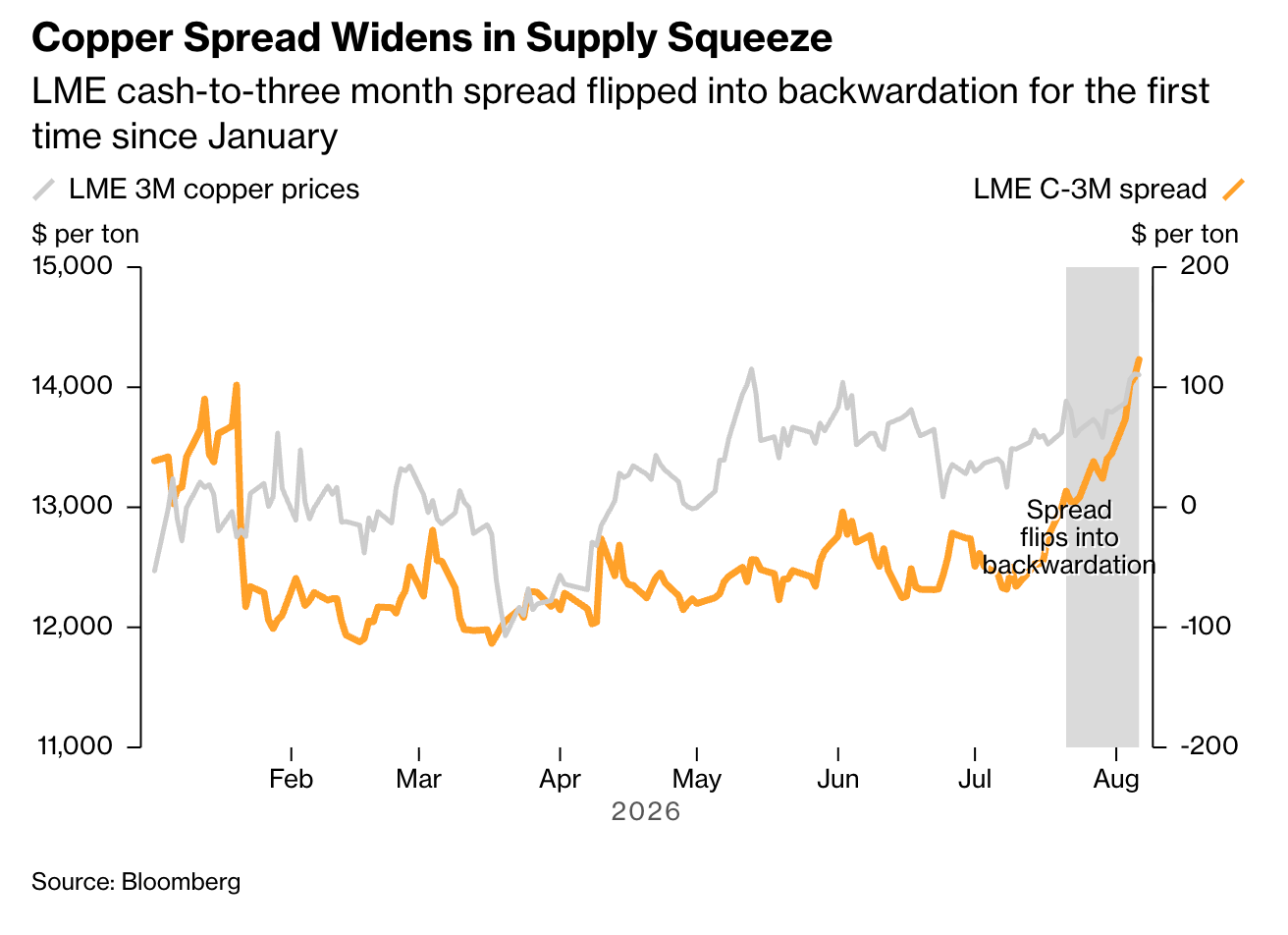
Copper just hit a new record high, fast approaching our 2026 forecast of $7 per pound. The COMEX copper futures contract closed last night at around $6.66 a pound, while copper in London held near $14,100 a tonne.
This supply shortage is structural, driven by a combination of declining ore grades and limited mine output. Copper is a necessary metal for utility power grids, electric vehicles, data centers and modern weapons. That’s why the U.S. and other governments are increasingly placing it on their critical or strategic minerals lists – making it a national security imperative.
And there’s no substitute for copper at scale.
The outlook for copper supply is showing more scarcity no matter where you look. For instance, Chile, the world’s largest copper producer, keeps mining lower ore grades. What does that mean? It means that when mines extract massive amounts of rock, they are widening the net so that it can now contain a smaller concentration of the metal or mineral they’re targeting – and in this case, copper.
That’s why the latest financial forecasts also matter. You see, Morgan Stanley projected that refined copper should run a 600,000 tonne deficit in 2026, the widest gap in more than twenty years.
Countries engaged in key components of the copper supply chain are increasingly trying to maintain their grip over it.
Below, we detail the key ways the world’s major players are locking up their part of the copper supply chain.
The Democratic Republic of Congo Slammed the Door
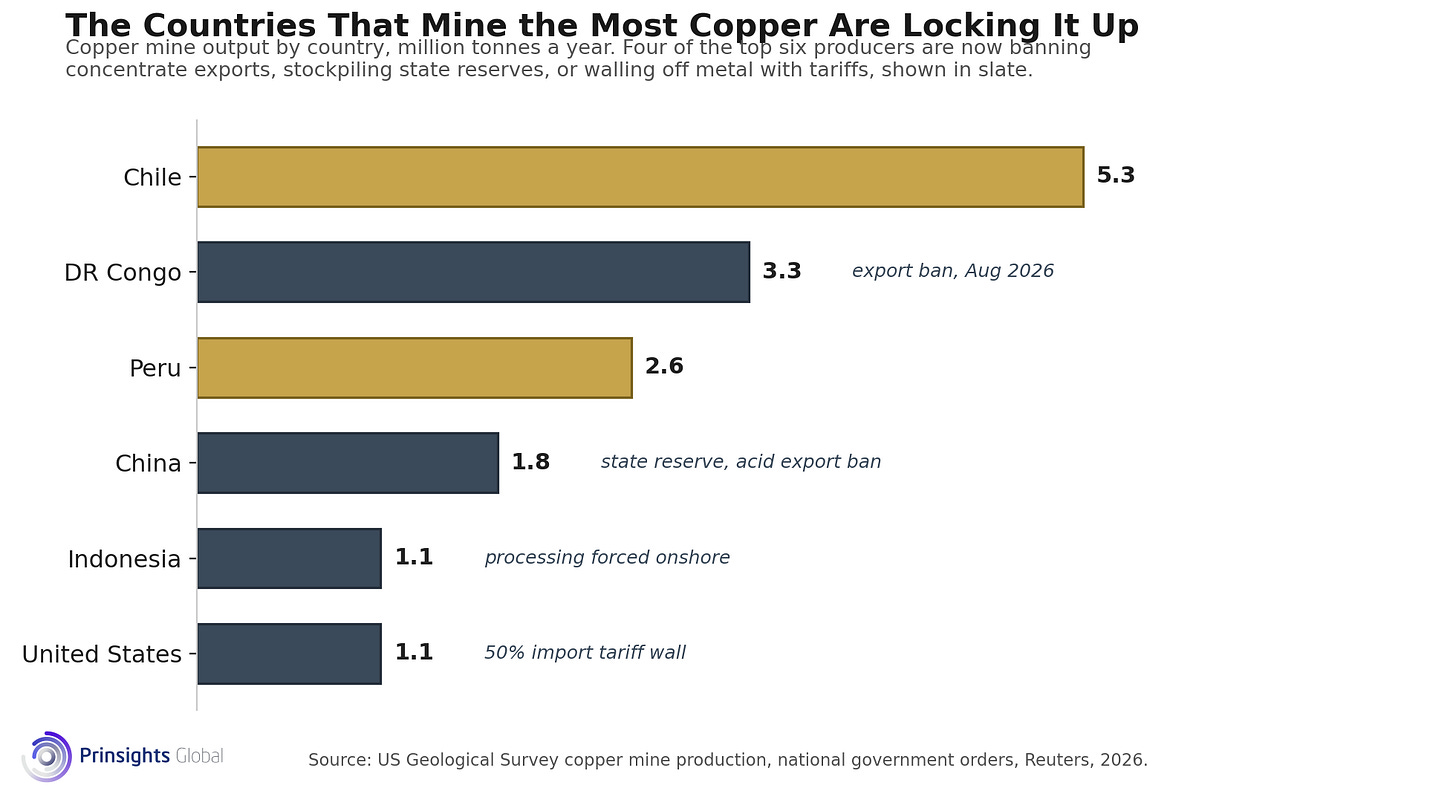
As you can see in the chart above, a new pressure on copper has emerged. The Democratic Republic of the Congo is the second-largest copper producer on earth, behind only Chile, at roughly 3.3 million tonnes a year. On August 6, an order signed by the DRC government on June 29 became public, banning exports of copper and cobalt concentrate outright. The immediate impact on tonnage is small, because the country already refines most of its copper at home. It shipped 696,725 tonnes of copper cathode in the first quarter of 2026 alone and only about 54,000 tonnes of concentrate.
But the broader ramifications of this move are systemic. That’s because they reflect the trend toward future strategic restrictions on copper. The DRC government is following the model Indonesia implemented with nickel, forcing raw material to be processed inside the country to capture more of the value downstream.
London copper jumped as much as 1.8% to $14,369.50 a tonne when that news broke.
Based on our analysis and conversations with thought leaders around the world, we see a growing pattern of resource-rich countries pushing to retain processing and value domestically, which will continue to provide tailwinds to copper prices.
China Is Stockpiling Copper and Halting Acid Exports
China refines nearly half the world’s copper and buys about two-thirds of the concentrate that feeds its smelters. On May 19, 2026, leaders in Beijing issued rules under its revised Mineral Resources Law that name copper a strategic mineral and let the state hold its reserves off the market for at least five years. The China Nonferrous Metals Industry Association, the top Chinese national trade association for metals like copper, aluminum, lead, zinc and nickel is reported to be pushing for a dedicated copper reserve on top of the country’s commercial stockpiles.
China also cut off a chemical the rest of the industry needs to process raw copper. Since May 1, the Chinese government has banned exports of sulphuric acid, which is used to produce about a fifth of the world’s refined copper. Chile alone buys more than a million tonnes of Chinese acid a year.
The United States Levied a Tax and Is Filling Its Coffers
Since April, a 50% U.S. tariff on semi-finished copper has meant the draining of copper from the rest of the world and hoarding of it into American warehouses. More than 200,000 tonnes hit U.S. ports in July alone, the fastest monthly import pace in twelve years, and combined COMEX stockpiles and London Metal Exchange inventories held in the U.S. have climbed past 740,000 tonnes, with another 110,000 tonnes in private port storage.
Policymakers in Washington were supposed to rule by June 30 on whether to tariff refined copper as well, the form American industries actually run on. That decision is in flux and now overdue.
The White House is also moving to keep its own copper from leaving U.S. borders. On July 30, President Trump signed a determination that hands the Commerce Department power under the Defense Production Act to block exports of critical minerals and the recyclable copper scrap the country needs. Trump placed copper under that same law by executive order back in March 2025.
Each of these decisions removes copper from the open market at the exact time that the world needs far more of it. Available inventory in London Metal Exchange warehouses, the key organization for copper, has fallen to about 94,200 tonnes, little more than a day of global consumption, from around 400,000 tonnes in April.
Merchant traders make money by moving physical copper to wherever it sells for the most, and right now that is the U.S. Trafigura, one of the world’s biggest metal traders, has pulled more than 51,000 tonnes out of LME warehouses this year, the largest withdrawal since 2013, and shipped it into the country to sell on COMEX at the tariff premium.
S&P Global expects demand to climb about 50% to 42 million tonnes by 2040, while mined output peaks near 33 million tonnes by 2030.
Closing the gap between demand and mine supply requires finding and developing new mines. That means looking to countries where mining capital can get in, and copper can get out more freely.
Comments
Log in or sign up to join the conversation.