

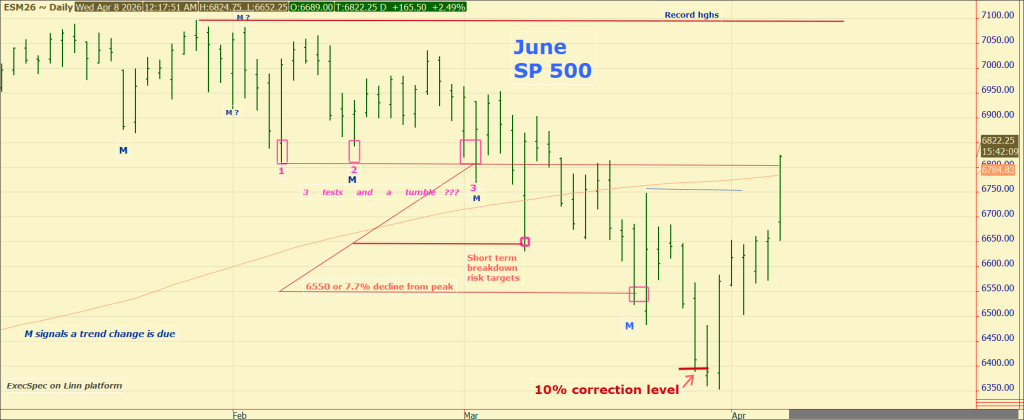
Markets, which only days ago wore the expression of a clenched jaw, have relaxed. The announced two-week ceasefire between the United States and Iran, coupled with the conditional reopening of tanker traffic through the Strait of Hormuz, has shifted the narrative from scarcity to anticipation. The reaction was immediate. S&P 500 futures surged roughly 3% within hours—less a celebration of present conditions than a wager on future normalization. Oil markets, too, have begun to retreat from crisis pricing, with expectations settling into a near-term range in the $80s to $90s per barrel from $115 earlier today. To be sure, the physical reality lags the financial one. Tankers delayed by weeks will take another month or more to reach their destinations. LNG bottlenecks will not dissolve overnight. Damaged infrastructure will require time to mend. Yet markets are already looking past the shortage and toward the resumption of flow.
What emerges now is not clarity, but a respite—a likely trading range in the S&P between 6700s and 6900s as investors weigh hope against hysteria. Anxiety will not vanish; it will soften, perhaps resurfacing as the April 21st ceasefire deadline approaches. But the odds have shifted. What once appeared an escalating crisis now resembles a familiar script.
In early 2025, tariff fears drove a sharp February peak off the road into a March sink hole, and then—once the rhetoric softened in early April—a powerful rebound into spring. Donald Trump, ever the practitioner of leverage, pressed his advantage before pivoting toward resolution. Whether such symmetry repeats is unknowable, but the market is beginning to suspect it might with this years February peak and March nadir. For now, investors are inclined to assume that the correction lows are in—and that oil’s recent highs in the $115–$120 range will stand as the peak of panic rather than a prelude to escalation.
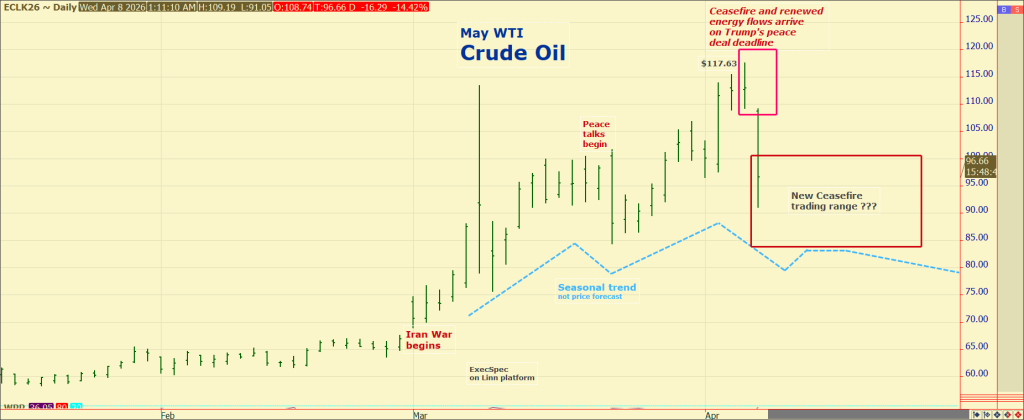
This assumption, of course, rests on fragile ground. A failed ceasefire, renewed obstruction of tanker traffic, or refusal by Iran to relinquish its enriched uranium would quickly unwind the current optimism. Markets would not hesitate to revisit darker scenarios. Yet incentives for restraint are unusually aligned. China, which sources more than half of its oil imports from the Middle East, can’t afford a prolonged disruption. It's quite pressure–through intermediaries such as Pakistan—likely helped bring Iran to the table. For Beijing, uninterrupted energy flow is not a preference but a necessity.
The United States, too, has reason to embrace a pause. Trump faces the practical constraints of depleted defensive munitions, the political imperative of lower gasoline prices, and the economic ambition of sustaining domestic momentum. A ceasefire, however temporary, relieves pressure on all three fronts.
Thus, what has emerged is less a resolution than an alignment of necessity—a deal shaped as much by exhaustion as by diplomacy.
Risks remain. Rogue elements within Iran could test the ceasefire with sporadic attacks, inviting retaliation and threatening to rekindle broader conflict. The regime itself is famous for deception and inconsistency, and markets will remain sensitive to any deviation from the agreed path. But if this arrangement holds—even imperfectly—it offers something markets prize above all else: direction.
And direction, in this case, points toward recovery. The reopening of energy corridors, however gradual, reduces the probability of sustained economic disruption. Investors, having braced for the worst, now find themselves recalibrating for something closer to the ordinary.
The rally, then, is not merely relief—it is recognition. Recognition that the crisis may have peaked, that the constraints are easing, and that the long-anticipated rebound trade may finally have its opening act.
If so, the recent advance may prove less a fleeting reaction than the foundation of a broader move—one that carries through the summer and, perhaps, toward new highs by the third quarter.
For now, the market has chosen to believe. And belief, once established, can be a powerful force.
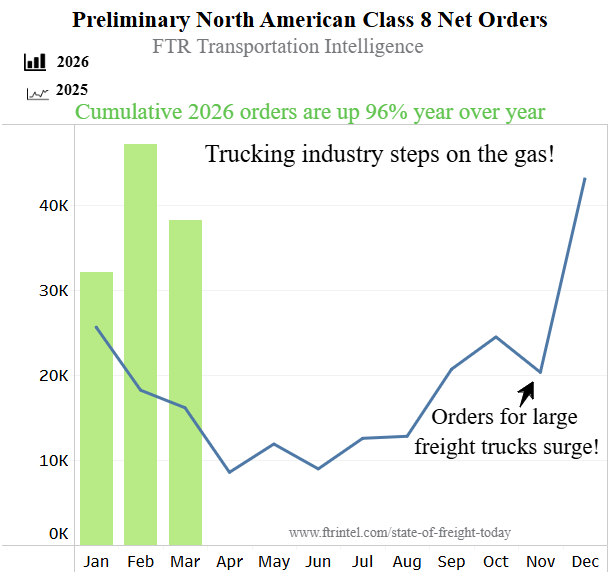
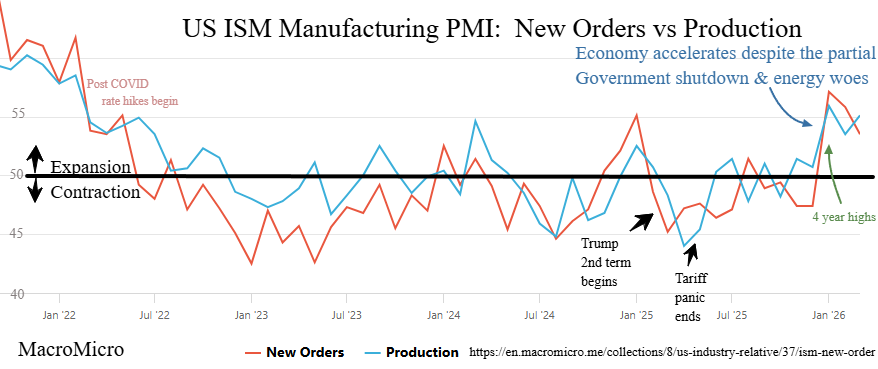
The economy continues to be ready to support a renewed Bull rally in stocks should this new ceasefire with Iran evolve into a permanent halt to hostilities. Unemployment fell to 4.2% in March, employment had a surprising uptick, the economic surprise index is rising, orders for large trucks have surged for several months, and new orders and production sentiment for manufacturing have broken out to 4 year highs. Imagine what a $285 billion fiscal stimulus bill and a dovish Fed on interest rates could do to add fuel to the fire.
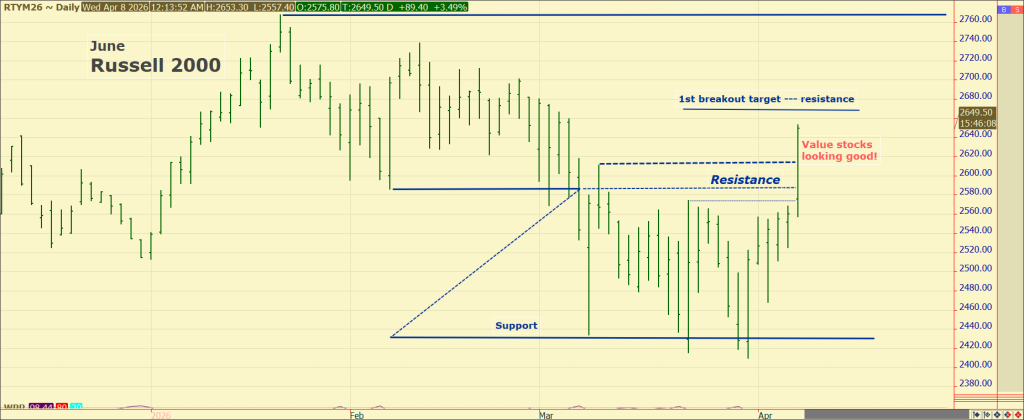
The stock market, however, is navigating a couple of uncertainties: the duration and cost of Middle Eastern energy disruption, and the longer-term implications of artificial intelligence. Of these, energy is the most immediate. Clarity on oil flows—if not normalization—garnered good news today with the ceasefire and a better forecast should begin to emerge by late April as the U.S. transitions from active conflict toward enforcement and stabilization. Markets, ever anticipatory, will not wait for resolution; they will discount it, as noted by the outsized 3% rally in the S&P 500 Index today when the 2 week peace deal was secured.
AI, as ever, is both blessing and disruption—but the market has already rendered a harsh preliminary verdict. The Tech-Software Sector ETF (IGV) had fallen nearly 40% since October, reflecting investor concern that artificial intelligence is eroding traditional software moats. Likewise, the cohort of mega-cap AI leaders—captured in the Magnificent Seven ETF (MAGS)—has suffered sharp declines, with leaders like Meta Platforms and Microsoft down roughly 40% from their peaks by the end of March. This, despite continued revenue and earnings growth near 20% annually, with little evidence of fundamental deceleration. Instead, a combination of AI-driven disruption fears and temporary legal headwinds has elevated risk premiums and compressed valuation multiples. This AI fear and wild claims of 50% entry level unemployment may have played most of its bad cards and awaits the timing to lay down its trump cards, renewing the tailwind for equities.
While currently a low odds bet, even if oil were to surge past $120—or in extremis, toward $150—the near-term arithmetic would darken considerably. The S&P 500 could fall into the 5700s during an all-out war that wipes out Iranian oil production. But the more consequential variable may be time. Trump has signaled an endgame in the second half of April, and as that horizon approaches, investors will increasingly look for any sign of energy price stabilization as a cue to re-enter risk assets. In such environments, the most heavily sold sectors—technology and financials—are often the first to rebound, and with force.
There is capital waiting, not fleeing. And when the fog lifts—even partially with today’s 2-week ceasefire—that capital will not tiptoe back into the market. It will move with conviction. The post-crisis trajectory, should energy flows stabilize, could well carry the S&P toward the mid-7000s within six months of a Persian Gulf resolution. The market, in short, is not ignoring risk. It is enduring it—and quietly preparing for what comes next.
Comments
Log in or sign up to join the conversation.