


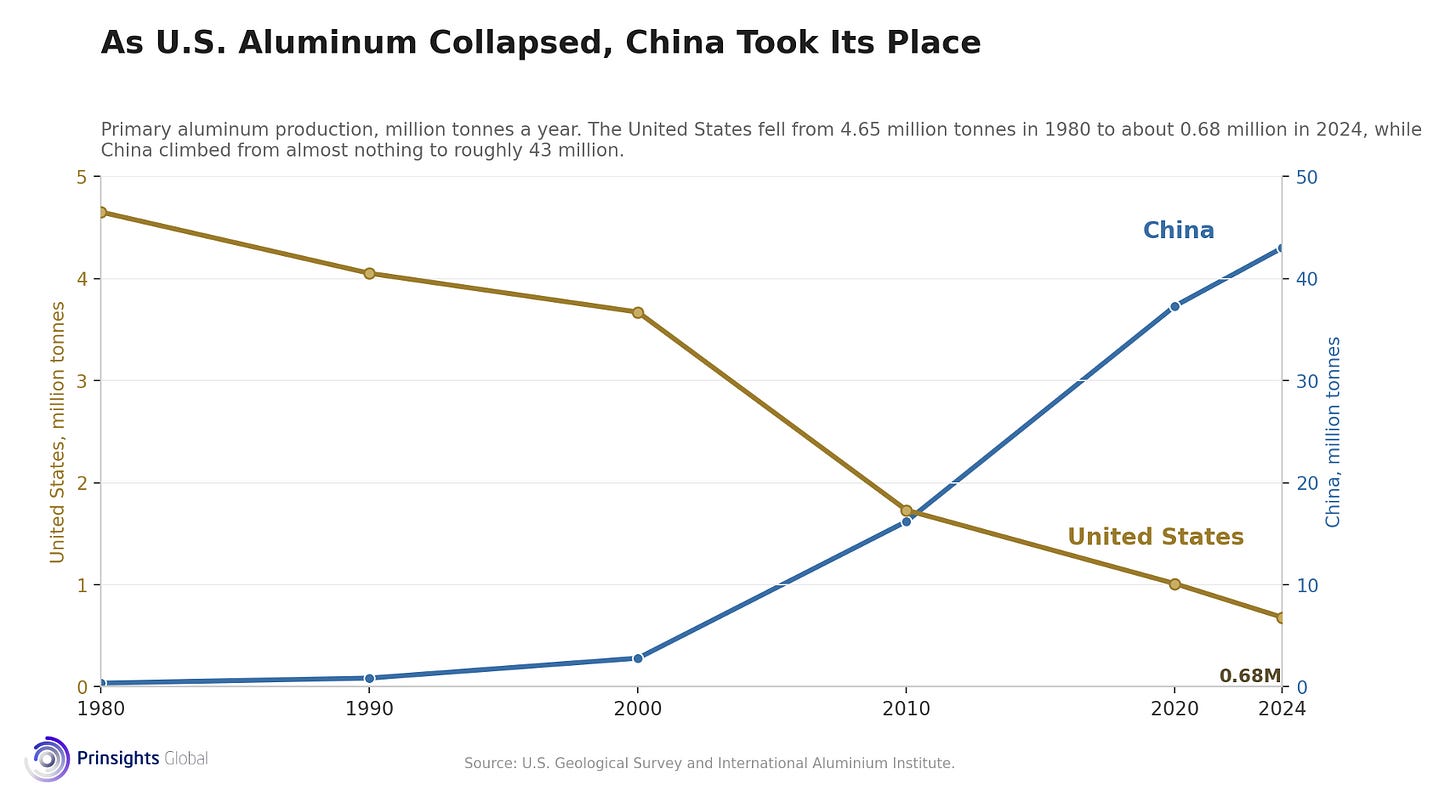
The United States makes about 680,000 tonnes of primary aluminum a year. To get a sense of how small that is, consider that China makes 43 million. That gap is why we placed aluminum at the top of our Darkhorse commodities to watch in 2026. Fast forward nearly 9 months and it has now become a national-security problem, and last week it became a pivotal flashpoint of tariff talks with Canada.
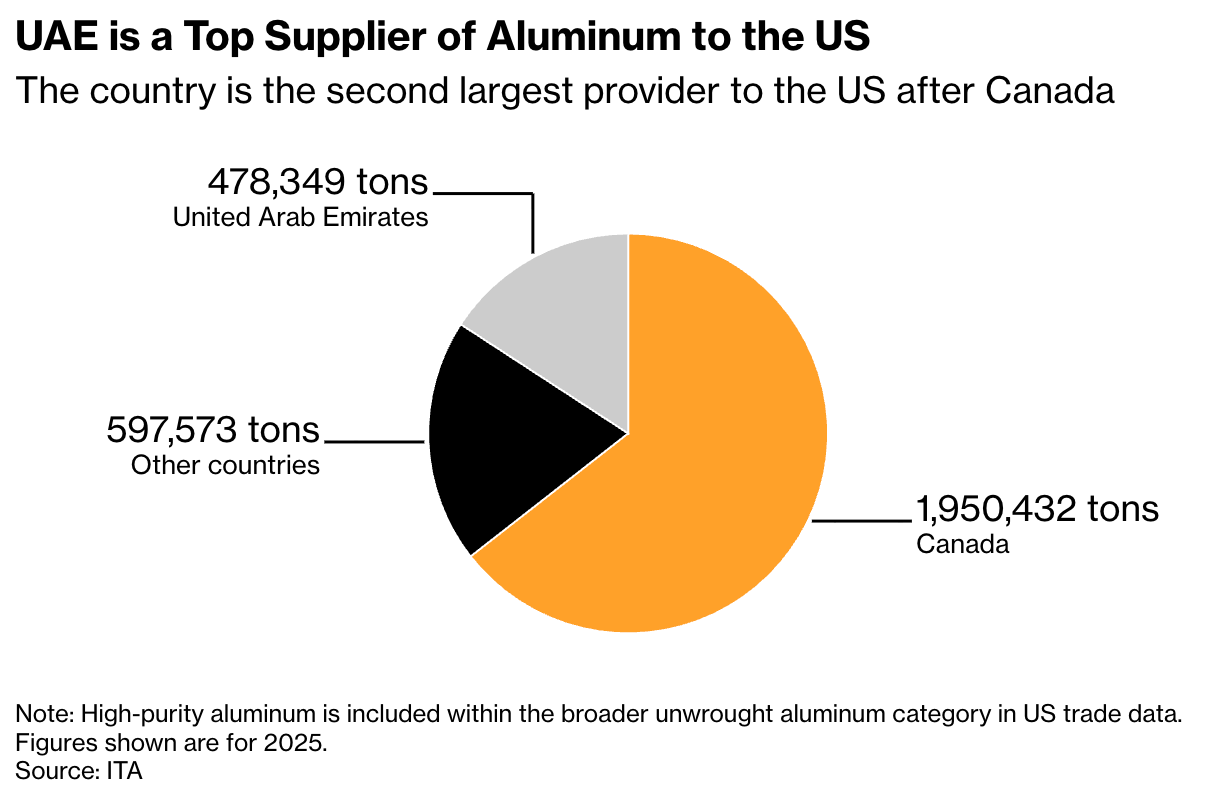
Canada holds the stronger hand in these discussions with respect to aluminum in particular, because it supplies 56% of the aluminum the United States imports, with the United Arab Emirates a distant second at 8%. Earlier in the week, both sides had worked on a deal to cut the tariff on Canadian aluminum and steel from 50% to about 25%.
However, those negotiations officially collapsed on Friday, causing the 50% tariffs to take effect early Saturday morning, and prompting Canada to announce it would take retaliatory measures. By Monday, the U.S. threatened new auto tariffs and Canada was preparing its retaliatory list. On Tuesday, Canada announced that it would officially begin collecting tariffs of up to 50% on nearly 700 products beginning on September 8.
Tariffs are supposed to shield a domestic industry from the competition imposed by cheaper imports but the reality is that the U.S. smelts almost none of its own. So, regardless of the intention, there is little domestic industry for the duty to protect. Instead, it makes the imported metal that American manufacturers must buy more expensive, raising costs for everyone ranging from automakers to canned beverages (hitting products from beer to non-perishable goods). But the exposure that worries Washington most is military.
The Pentagon Simulation That Exposed America’s Aluminum Risk
Last summer, the Pentagon put the U.S. aluminum supply chain through a two-day exercise. Specifically, it put to the test a question asking how it would hold up in a major war. The weak point it exposed was high-purity aluminum, the ultra-refined grade with almost no iron or silicon that forms the skin of a fighter jet and the plating on a combat vehicle.
Its lack of impurities is what lets engineers build alloys strong enough for the aerodynamic stress on a supersonic airframe used by jets and drones. Similar to the U.S. economy, the American defense sector has no real domestic source of it, and about 90% of what it imports comes from the United Arab Emirates. One major disruption in the Gulf could cut off the exact metal the American military depends on most.
Months later, the Iran war heavily depleted American stockpiles of precision missiles and interceptors, and the Pentagon’s 2027 budget asks to lift missile procurement by 188%, more than the defense industry can build at today’s supply. Every one of those weapons needs aluminum, and the highest-performance ones need the precise grade the simulation flagged. Suppliers of that metal are already scrambling to lock down what they can.
Beyond that high-purity grade, aluminum is the most-used structural metal in a modern weapons platform. The body of a missile, the frame of a drone, the casing of a round of ammunition all have a common aluminum thread. The buildout the Pentagon requires has demands that call for far more of a metal the country already struggles to source.
The First New Smelter Since 1980
Every grade of aluminum, high-purity included, comes out of a smelter, where alumina is turned into metal in giant electric furnaces. Domestically, from coast to coast, the U.S. has almost none of that smelting capacity left. The process devours electricity, about as much for one plant as a small city uses. Compounding the issue, as American power grew even more expensive compared to Canada, the Gulf, and China, at the same time plant after plant shuttered its doors and closed down operations.
Washington is now trying to reverse that. The Energy Department has backed the first new U.S. primary aluminum smelter since 1980, a plant now being developed near Tulsa, Oklahoma with up to $500 million in federal support. When it opens, it would be the largest primary aluminum plant ever built in the country, making more than 500,000 tons a year, including about 20,000 tons of the high-purity metal set aside for defense.
For the handful of companies that are still smelting aluminum in the U.S., that tariff has provided a tailwind. It serves to hold the U.S. price of the metal well above the global price. That means a domestic smelter now earns more on what it sells than it did before the duty took hold in 2025.
The White House is working to reinforce that disparity with cash, by funding new plants like the one in Oklahoma, and leveraging the Defense Production Act. The playbook is using the same tools deployed across copper, rare earths, and other critical minerals earlier this year. You see, while the talks with Canada and ongoing negotiations by the U.S. neighbor to the north might buy time, the long-game is keeping enough metal coming so prices hold until that new capacity exists.
Rebuilding this supply is a decade-long project. The Oklahoma plant is still years from producing, and even at full output it would replace only a fraction of what the country imports. Until it and a multitude of others come online, the few American smelters operating today are the only domestic source, selling into a market where aluminum trades over $3,200 a tonne (with a peak over $3,700 this year) and Washington is paying to build the supply chain at home.

Comments
Log in or sign up to join the conversation.