

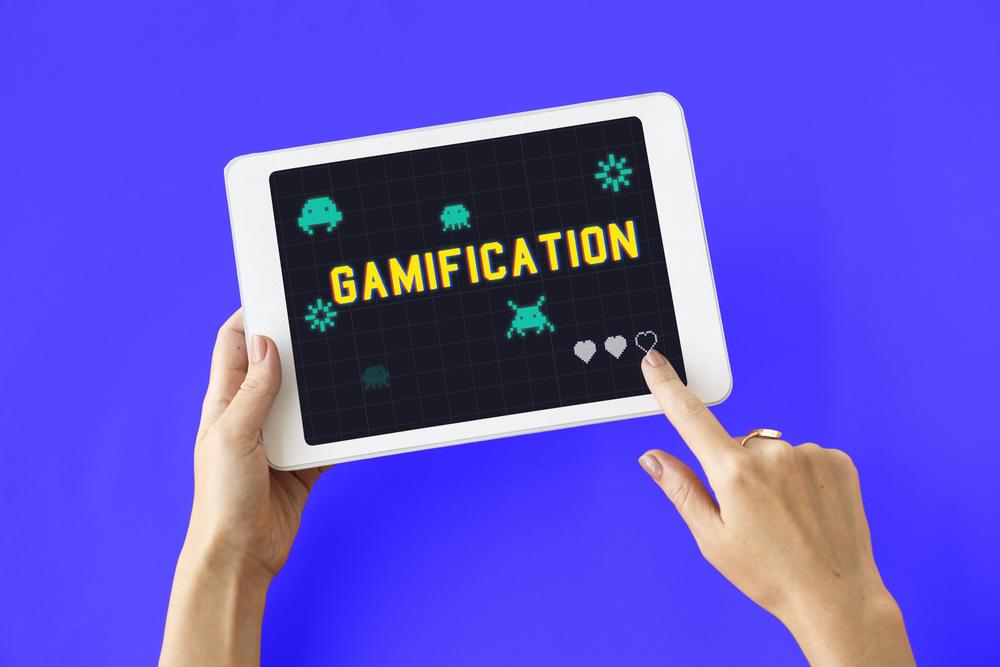
Digital products compete for more than downloads or sign-ups. They also compete for a scarce resource: the user’s attention after the first interaction.
This competition has pushed familiar game-design ideas into non-game environments. Points, progress indicators, challenges, rewards, badges, and immediate feedback now help digital products make activities feel more structured, responsive, and repeatable.
This is broadly known as “gamification”: applying elements associated with games to activities that are not themselves games. The important business question is not whether every interface should become a game.
It is whether selected mechanics can make a useful digital service easier to return to without overwhelming its underlying purpose.
How game mechanics escaped the gaming category
Gamification does not require turning an app into an elaborate game. Often, the mechanics are relatively small.
A progress indicator shows that an activity is moving toward completion. A badge marks an achievement. A challenge creates a defined objective. Points provide visible feedback, while levels can divide a longer journey into manageable stages.
Academic research documents the use of such elements well beyond entertainment. A systematic review published in PLOS ONE examined experimental studies involving online programs and smartphone applications that used features such as points, badges, leaderboards, and rewards.
The studies covered areas such as education and health-related programs, illustrating how game-derived design had already moved into non-game digital settings.
That distinction matters. Gamification is less about copying games wholesale than borrowing specific feedback and progression structures where they fit the task.
For product teams, this creates another layer of interface design. A service can still deliver the same core function while giving users clearer signs of progress, achievement, or next steps.
Why do these mechanics keep people coming back
Repeat engagement depends on more than a single design technique. Utility, relevance, convenience, and personal needs all influence whether users return, so gamification should not be treated as a guaranteed retention tool.
Its value often lies in making interaction more immediate. Users can see that an action produced a result, how much progress they have made, and what comes next. That visibility can make an experience feel more structured and responsive.
The same principle applies across digital leisure and more functional products. Entertainment platforms, learning tools, and other interactive services can all use feedback and progression to make participation feel less passive.
A casino online is one example within that broader landscape, but the underlying business idea extends far beyond gambling: digital products can use structured interaction to sustain attention without relying solely on their core function.
The broader issue is the attention economy. Digital platforms compete to attract and sustain user attention, and gamified design adds another layer to that competition.
Retention becomes a cross-industry playbook
The same mechanic can serve very different purposes across industries. What really matters isn't the feature itself, but whether it helps the user reach their goal.
Progress indicators show users how far they have moved through a task and what still remains, helping turn a longer process into something easier to follow.
Milestones divide larger goals into smaller stages, giving users clear checkpoints and making complex or time-consuming tasks feel more manageable.
Challenges and rewards give users clear goals and recognition, making digital experiences feel more structured and purposeful.
Feedback links these applications. Gamified systems can clarify actions, progress, and next steps, but adding more mechanics does not automatically improve a product.
Poorly matched rewards, excessive prompts, and artificial obstacles can create friction instead of value. Context matters too: a mechanic may work well in one product but feel forced in another if it does not match the user’s motivation or task.
This means that for businesses, the focus should be on improving the quality of recurring interactions rather than just increasing the number of return visits; retention then becomes a part of the overall product experience rather than just an indicator of acquisition.
A strong core service still matters most, but the surrounding journey can determine whether users have a clear, useful reason to come back.
The attention economy’s next phase
The most consequential form of gamification may be the kind users barely notice. As game-derived mechanics become standard interface features, progress, feedback, goals, and challenges can fit naturally into everyday workflows rather than feel overtly game-like.
From a business perspective, the line between “game” and “non-game” design therefore matters less than whether a product simply delivers a function or also makes progress clear and encourages continued participation. Because utility is still crucial, it now faces competition from an increasingly fierce competition for attention.
The most effective application of gamification is frequently selective; it is not used as decoration but rather as a useful means of making significant advancements visible, immediate, and simpler to maintain.


Comments
Log in or sign up to join the conversation.