


The longer term impact of the US-Iranian conflict is now taking hold on US debt markets,as a host of brokerage firms are now doing an about face. Where they once thought interest rates were headed downwards, US debt investors now worry about inflation returning and, possibly, rates rising.
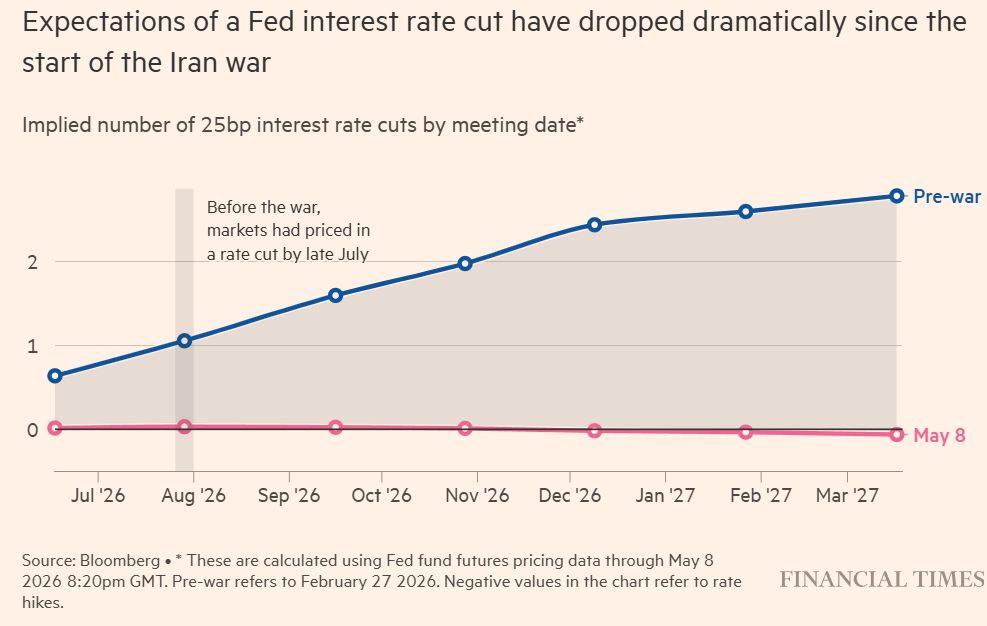
Earlier this winter before the conflict began,investors expected the Federal Reserve to cut US borrowing costs, some as much as ¼ point four times this year, and further cuts in 2027. Reflective of this confidence, the bellwether 10yr US Treasury- bond yields dropped since from 4.5% in mid-2025 to just under 4% late in the year. Inflation was well within range of hitting the 2% target figure, offering encouragement that the Fed could begin to lower rates.
The outbreak of the conflict soon changed that hope. Today, Fed watchers are not expecting any rate cuts, even as far out as March 2027.The consensus is that soaring fuel prices will bring inflation to a three-year high of 3.5 per cent to levels,well in excess of 2 per cent goal.Inflationary pressures are building everywhere. In some quarters, the fear is that the Fed will be forced to raise rates in order to reign inflation, further reducing the prospects for economic growth.
The inflationary impacts are seen in many aspects of the economy, including:
Rising fuel costs are putting pressure on the consumer, first at the pump, and secondly in paying for rising costs of transported goods, food and manufactured products;
The entire food chain is experiencing higher costs , not just from transportation, but from petroleum-based fertilizers to host of related agricultural expenses;
The supply chain is impacted, as shortages of some basic raw materials are caught up in the blockages of the Straits of Hormuz and throughout the world’s shipping lanes; many industries using “just in time” inventory production are facing specific shortages; and
While North America and much of Europe does not rely heavily on Middle East ports, worldwide shipping rates have soared. The impact of the disruption in the Straits of Hormuz has rippled throughout the world; a regional crisis is now global.
While the immediate impacts have yet to be absorbed without any serious outbreak in consumer prices, economists warn that there is still a ripple effect that has yet to be fully played out , especially in the food sector. Considering that the agricultural sector has yet to recover from loss incomes due to Covid, the Russian-Ukraine war and, domestically, from US tariff policies. The latter policy could not come at a worse time, making it more difficult for interest rates to drop.


Comments
Log in or sign up to join the conversation.