


When public policies, national security initiatives and macro supply chain matters all converge, massive investment trends emerge. As we continue to detail here at Prinsights, by watching where the money flows and the direction that this triple-edged-sword offers, while monitoring government and institutional capital, you can see the footprints long before the average market watcher catches on.
Right now, those footprints lead directly to red metal.
Copper is entering a new, structural phase of its multi-year bull cycle. While short-term traders focus on daily price swings, long-term investors are looking at a rare alignment of macro forces. Those include aggressive federal backing, fracturing global supply chains, and an unprecedented surge in demand driven by defense, grid modernization, and artificial intelligence booms across markets and sectors.
If you’ve been looking for an ideal entry point for a generational real-asset play, copper’s current setup warrants your full attention.
Washington Cracks the Capital Vault Open
The U.S. government has officially signaled that critical minerals are core national security assets.
As we detailed this week, the White House has announced billions of dollars in new deals, loan guarantees, and direct investments designed to power domestic mining and secure critical mineral supply chains. This backing of federal funding follows high-level summits with top mining executives, which have all been aimed at delivering and ratcheting up a buffer for defense manufacturing and power grid infrastructure against foreign rivals.
As policymakers across the D.C Beltway work to accelerate their bipartisan push to onshore resource extraction and processing, domestic mine projects and strategic processing partnerships in the U.S. are banking on regulatory tailwinds. What’s now unfolding is federal capital that’s not only backing the effort but serving as a catalyst for a pace not seen in decades.
When the public sector (and deep government funding) steps in to backstop an industry, private capital acts as a de facto floor for market demand.
Supply Friction Meets Structural Deficits
While demand is receiving government backing, global physical supply is seizing up.
Prices have surged past $14,000 per ton, driven by a combo of tight physical markets, lower interest rate expectations, and aggressive tariff-driven hoarding from both governments and businesses alike. What’s now taking place is that investors are racing to front-run new trade barriers, which is triggering a massive dislocation in global metal flows while inadvertently risking a major structural split between Western and non-Western commodity benchmarks.
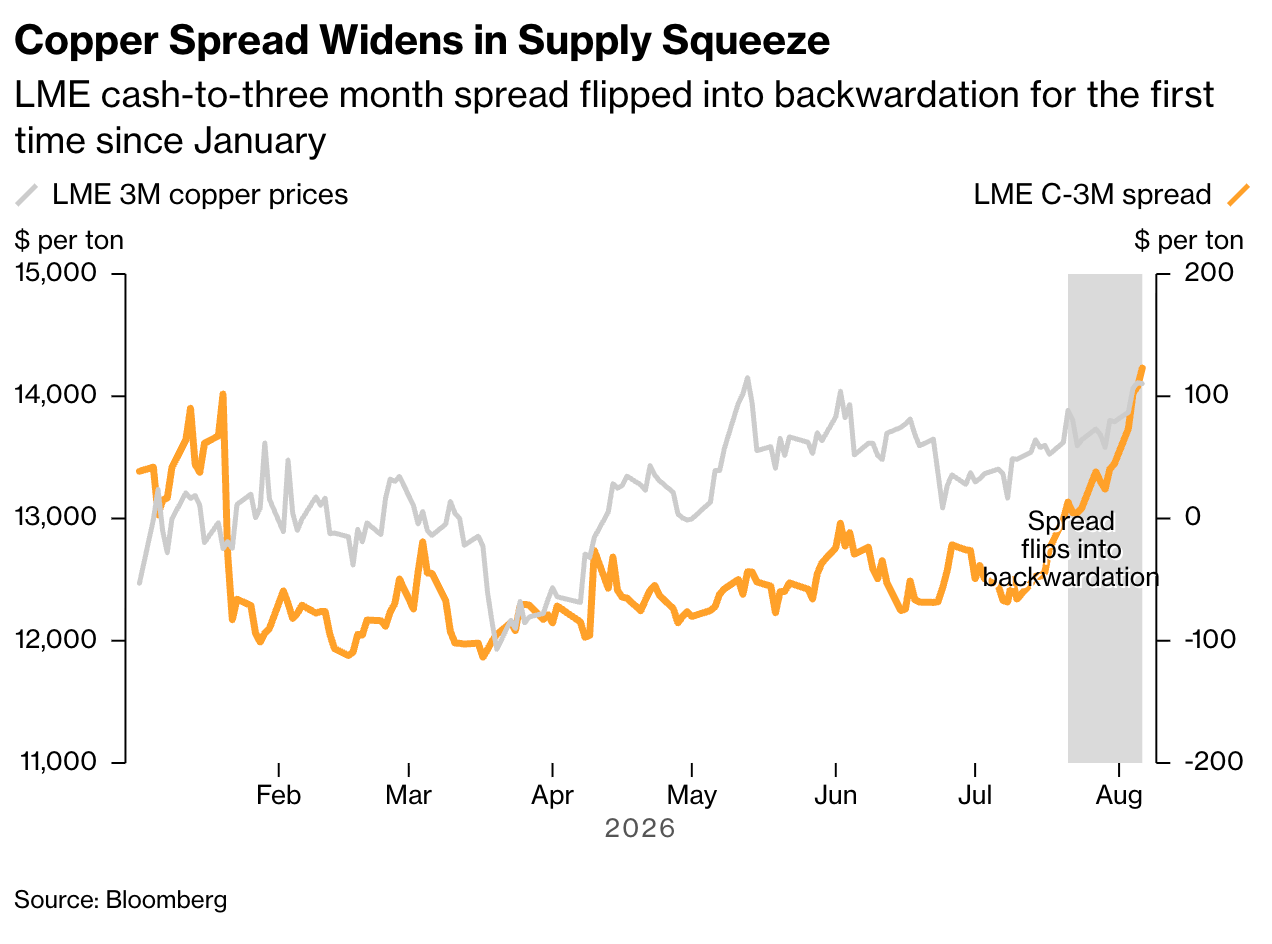
At the same time, supply from key producing countries is increasingly under a severe crunch. Major supply hubs are facing increasing resource nationalism and export restrictions, highlighted by recent export halts out of the Democratic Republic of Congo, which is one of the world’s vital suppliers of copper and cobalt. This all comes at a time of mine disruptions across South America and declining ore grades globally, meaning that physical supply cannot keep pace with long-term baseline demand.
The AI and Energy Grid Factor
The market is only beginning to price in the massive structural shift in copper demand, despite record highs. Building out hyperscalers and the data centers that not just push AI forward but enable improvements and efficiencies ranging from complex areas like healthcare to airline travel to entertainment industries like gaming and streaming. It also means that updating aging electric grids and scaling next-generation energy systems will not just be a “good to have” but essential. That change will require vast quantities of copper that cannot be substituted.
While broader economic indicators show mixed signals, payroll growth slows, and many people struggle to make ends meet, hard assets like gold and copper will continue to hold resilient and increase from these price levels. That’s because institutional money recognizes the long-term industrial necessity of red metal.
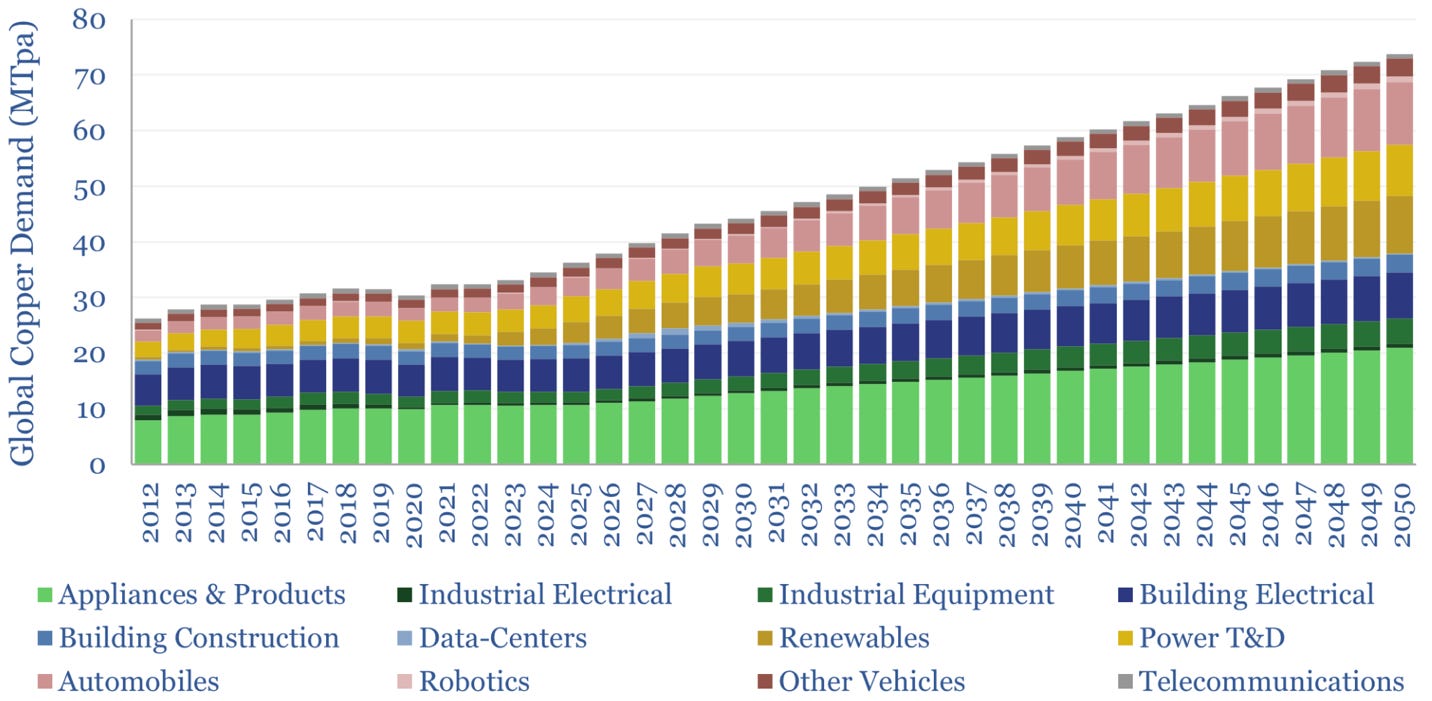
Unlike digital assets or paper contracts, you cannot code or print your way out of a physical mineral deficit. Opening a new copper mine takes anywhere from 10-15 years from discovery to first production.
Even with government support, that reality creates a structural supply lag that will take years, if not more than a decade to truly resolve.
The US-China Rift: The Catalyst Accelerating Bullish Momentum
Behind nearly every move in the geopolitical sphere is an expanding, structural rift between the United States and China. This is a superpower rivalry of the kind the world has never truly seen. And with it, one that is rapidly impacting and splitting up global commodity markets.
For decades, China built a dominant position in the processing and refining of critical minerals, controlling an estimated 40-90% of global capacity across key industrial metals.
Now, leaders in Washington are moving to break up that dependence. As we’ve detailed, through executive action from the White House and stricter trade rules from the executive and legislative branches of government, the U.S. is working to ensure that defense contractors, tech hubs, and energy infrastructure providers source their critical materials domestically or from partner governments. These moves directly strive to freeze Chinese supply out of Western supply chains. Link here.
This high-tech and economic decoupling means that the world is no longer operating on a single, frictionless global supply curve. Instead, we are seeing a structural “geopolitical premium” attached to non-Chinese copper assets and refined metals.
As leadership stretching from Washington to Beijing compete to secure long-term off-take agreements, while attempting to lock up African and Latin American mine output, two distinct market pricing tiers are emerging. Where that friction ultimately lands is still to be determined. But what’s clear is that copper will be a major factor over the long term.
The Bottom Line
Short-term noise around trade policies and interest rate expectations will create temporary volatility to be sure. But for long-term investors, volatility is not just something to navigate and hope to see through the other side. Instead, volatility offers an opportunity. For savvy investors, that means discovering new businesses, tapping into current private industry potential and seeking out emerging leaders in the space.



Comments
Log in or sign up to join the conversation.