

Technology makes every aspect of our daily life easier and more enjoyable. Things that we didn't believe were possible a decade ago are now part of our lives. Technology not only affects our personal lives, but also huge industries too. The sports industry is among them. Technological advancements have surprising effects on sports, and they not only improve the performance of athletes but also change the way those sports are done. In this article, we'll take a closer look at the impact of sports technologies on athletes and sports.
Performance Enhancing Technologies
What measures the performance of an athlete? Is it his strength, speed, or how efficiently he accomplishes a particular task? Whatever the answer is, it falls within the scope of sports technologies. Since the widespread use of video cameras in the 1980s, we have been recording athletes' performance and using these recordings to evaluate their performance. As this technology develops, so does what we can do with these recordings. For example:
A computer system called “Hawkeye” has been used in cricket and tennis since the early 2000s. The task of this technology is to track the ball in motion. Hawkeye tracks the ball's velocity, pitch, and trajectory in real time and transmits all this data to the referee. Thus, the referee can decide much more easily whether the ball is in or out, for example. Similar technology is used even for casino games, which are available for playing at vulkan casino. The technologies that prevent players from cheating in card and table games have similar camera systems.
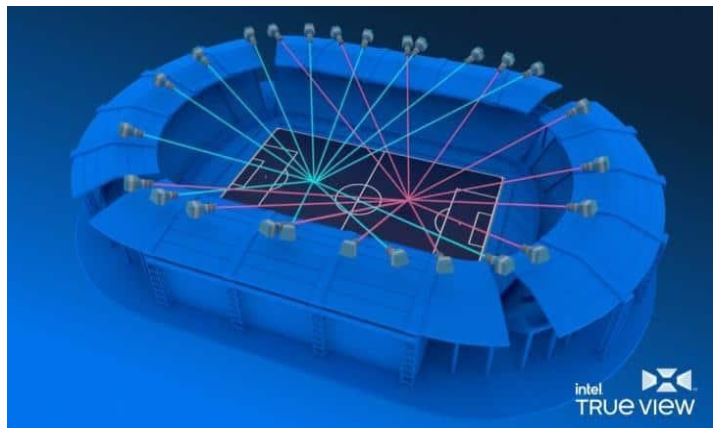
- It is now possible to obtain 360-degree views in football matches. The True View technology developed by Intel consists of dozens of tiny cameras that collect volumetric data. These cameras are installed throughout the stadium and record in real time. These recordings are then analyzed, rendered, and converted into 360-degree images by computers with Xeon processors. By watching these images, the referees can decide whether the penalty decision is appropriate or whether a goal has actually been scored.
But these are the technologies used to track athletes: Is there a way to improve their performance? Can technology help us in this too? As a matter of fact, there are lots of products and services that focus entirely on the performance of athletes. For example:
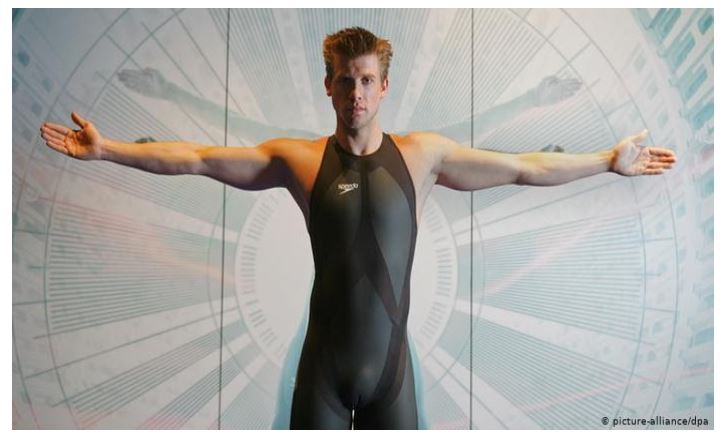
- Swimwear made of polyurethane was used for the first time at the 2008 Olympics and was an incredible success. They were even banned the following year because they could significantly improve the performance of swimmers.
- All kinds of equipment made of Kevlar fiber are much lighter and still durable than their counterparts. This is a material that is 5 times lighter than steel but offers almost the same durability. A bicycle and protective gear (helmet, body armor, etc.) made of Kevlar, for example, naturally improve an athlete's performance. You control something much lighter and the wind resistance decreases.
Speaking of Performance…
Above we talked about how video recordings are used to track athletes' performance. Thanks to technological advances, we no longer need video recordings to measure performance. We can do this with sensors placed directly on the athlete's body. Moreover, do not think of those round sensors used in hospitals. A technology called “smart clothing” is used for this job.
Smart cloth technology consists of activewear produced with sensing fiber. Thanks to these equipment, trainers can track the performance of athletes in a revolutionary way. Sensors in the suit transmit data, such as the athletes' heart rate, breathing speed, body temperature, and hydration to the trainer in real time. This makes it very easy to determine what the athlete is lacking. If you are a trainer, you want to know what type of training you should focus on. You can do this with smart cloth technology and create a unique profile for each athlete.
In this way, it is possible to create personal programs rather than a common training program for all athletes. Even if you are training 10 athletes, you can determine what difficulties each of them faces and create a suitable & personal training program. When you combine this technology with lasers and GPS devices, it becomes possible to track athletes even from a distance. You can see where they are on the track, their distance to each other, and their performance in real time while sitting in your home. Moreover, all of these data are provided with a consistency that a human can never obtain.
Mounir Zok, who is the Head of the Technology Department of the US Olympic Commission, thinks it will be possible to get the performance values required to win the gold medal with technology. So this personal data can be used to guide each athlete on what he or she should do to win the gold medal. In the future, computers will decide what the athlete's daily training and nutrition program should be, and if the athlete follows these programs, he will achieve a performance that will enable him/her to win the gold medal.
Sensors are useful not only for trainers, but also for athletes. Modern cycling glasses have HUD technology and enable data such as heart rate, speed, and incline to be displayed at any time. You do not even have to turn your head to view them. Any moment you want; every data you need appears in front of your eyes. Using this data, you can increase or decrease your performance, thus gaining a millisecond advantage. It might not seem like a long time, but if you're racing at the Olympic level, even milliseconds count.
Will there be a day when there is no difference between technology and doping? Are all these developments in line with the spirit of the Olympic races? We do not know the answers to these questions, but it is pointless to expect athletes to be trained and compete as they did hundreds of years ago. Of course, they will also benefit from technological advances and will use all legal opportunities to increase their performance. Therefore, instead of focusing on these discussions, we think we should talk about how we can use technology more efficiently in sports.



Comments
Log in or sign up to join the conversation.