


While there isn’t any big economic news today, there certainly was action overnight in response to the latest TACO. As I type this, oil is back down to $90/barrel, and stock futures are soaring. This for something (correctly, I think) framed as a “fragile cease fire” by J.D. Vance.
But let’s look at some of the economic damage that is likely to persist.
In the first place, the mafia-style bust out that is the ballooning US budget deficit has definitely put an end to the 40 year downdraft in Treasury yields. The graph below shows yields on the 30-year (dark blue) and 10-year (light blue) Treasurys as well as the Fed Funds rate (red):
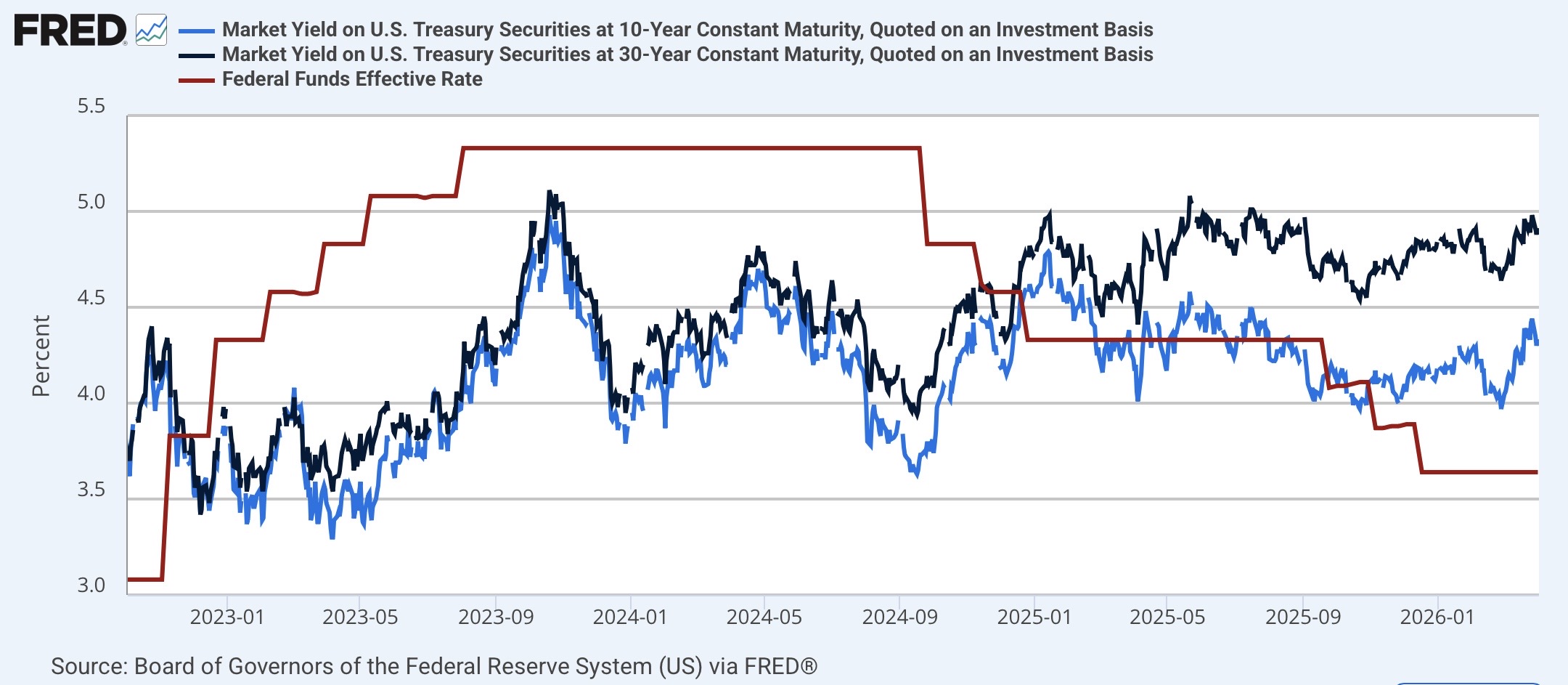
Notice that the 10 year bond is about equal in yield to what it was during 2023-24 when the Fed funds rate was at its peak. And it did not react at all to the last two Fed rate cuts. The record of the 30 year is even worse, as yields have acutally trended higher even as the Fed funds rate has been cut. This is all about the “bond vigilantes” waking up and demanding more interest to hold on to bonds from a government that, at the moment, appears to think it can issue infinite amounts of paper. This can be laid squarely at things like the “Big Beautiful Bill” as well as the astronomical military build-up.
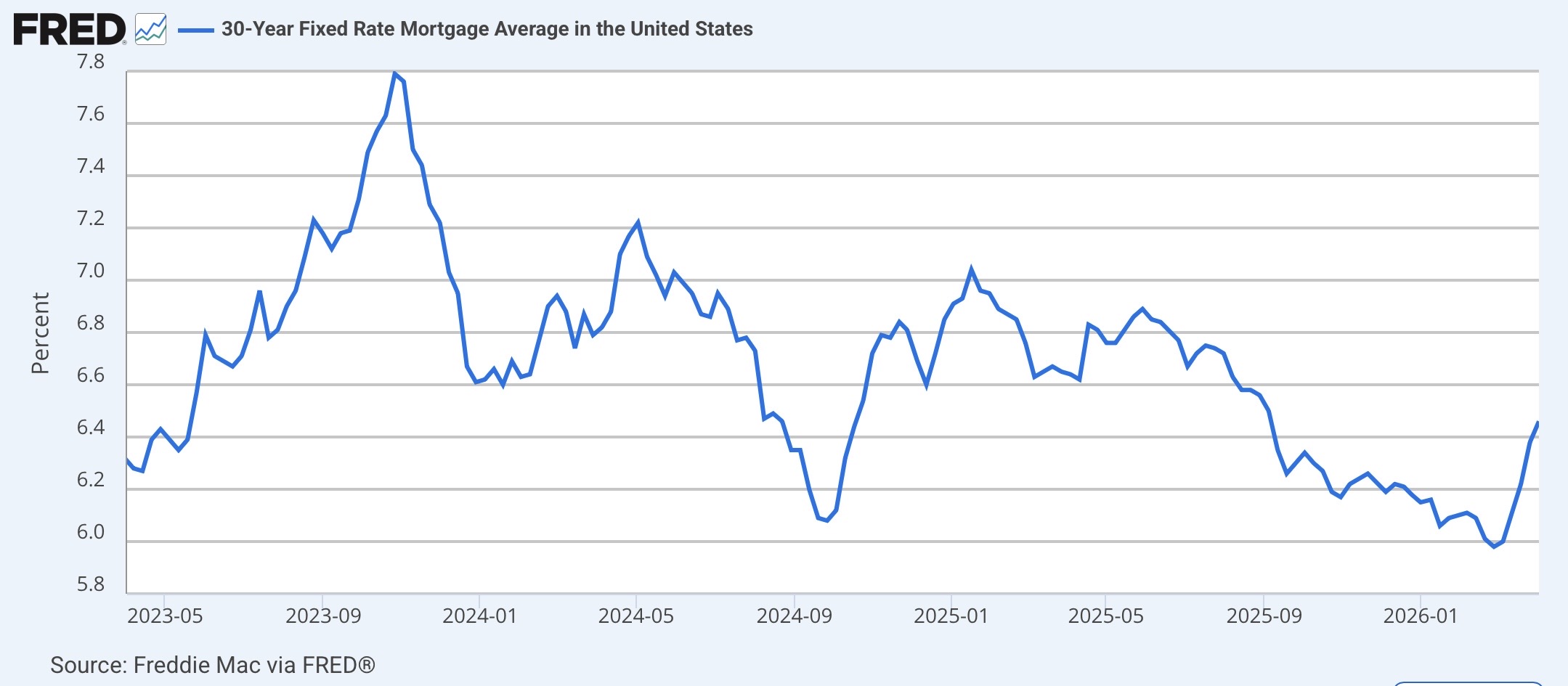
The increase in yields has also hit mortgage rates, which typically follow longer-dated Treasurys. As of one week ago, they had risen about .5% to about 6.5%:
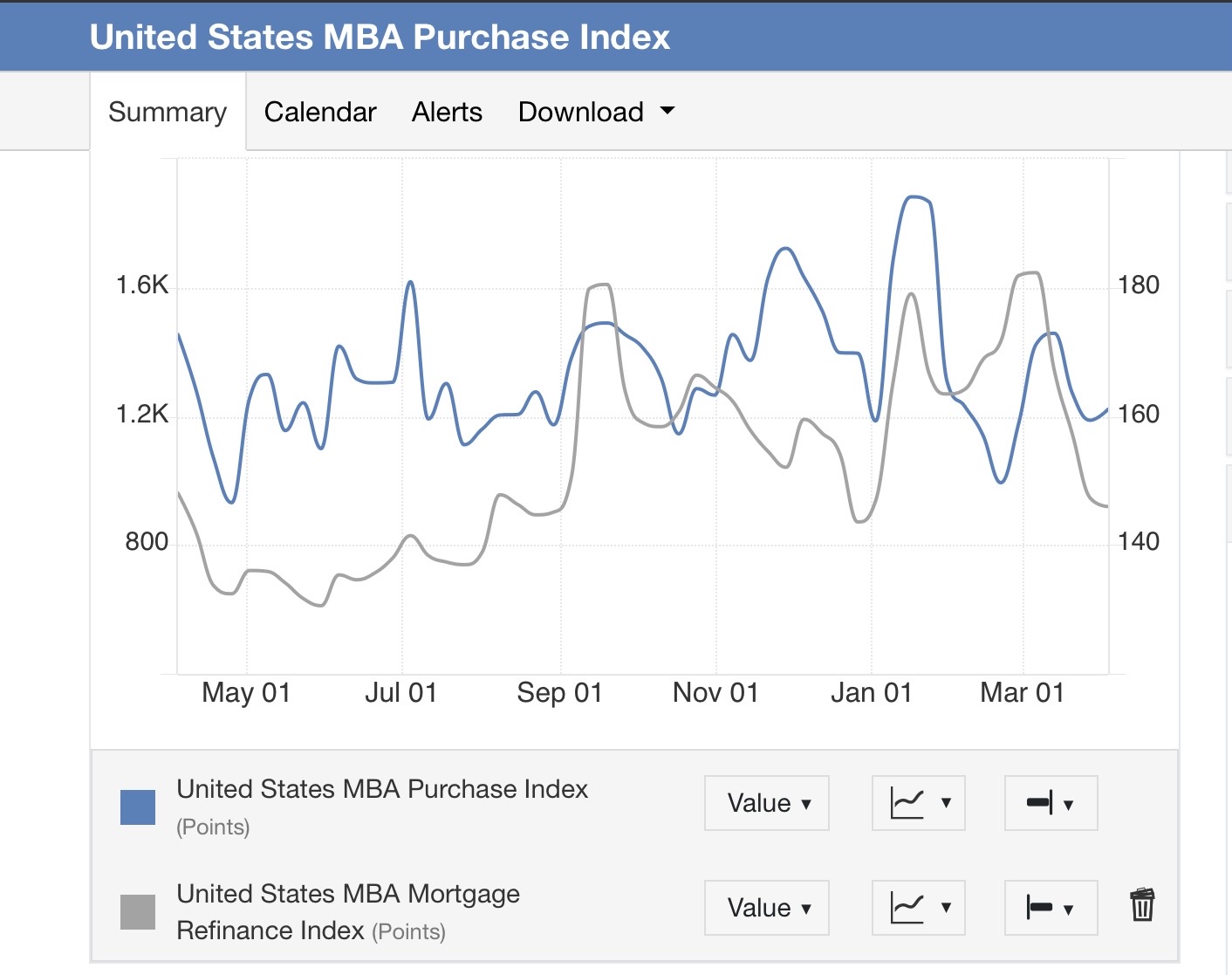
And with a several-week delay, mortgage applications responded. They have been trending down for several weeks, and this morning’s update showed both purchase mortgage applications (blue) and refinance applications (gray) lower YoY:
Here is a five-year view of the same data:
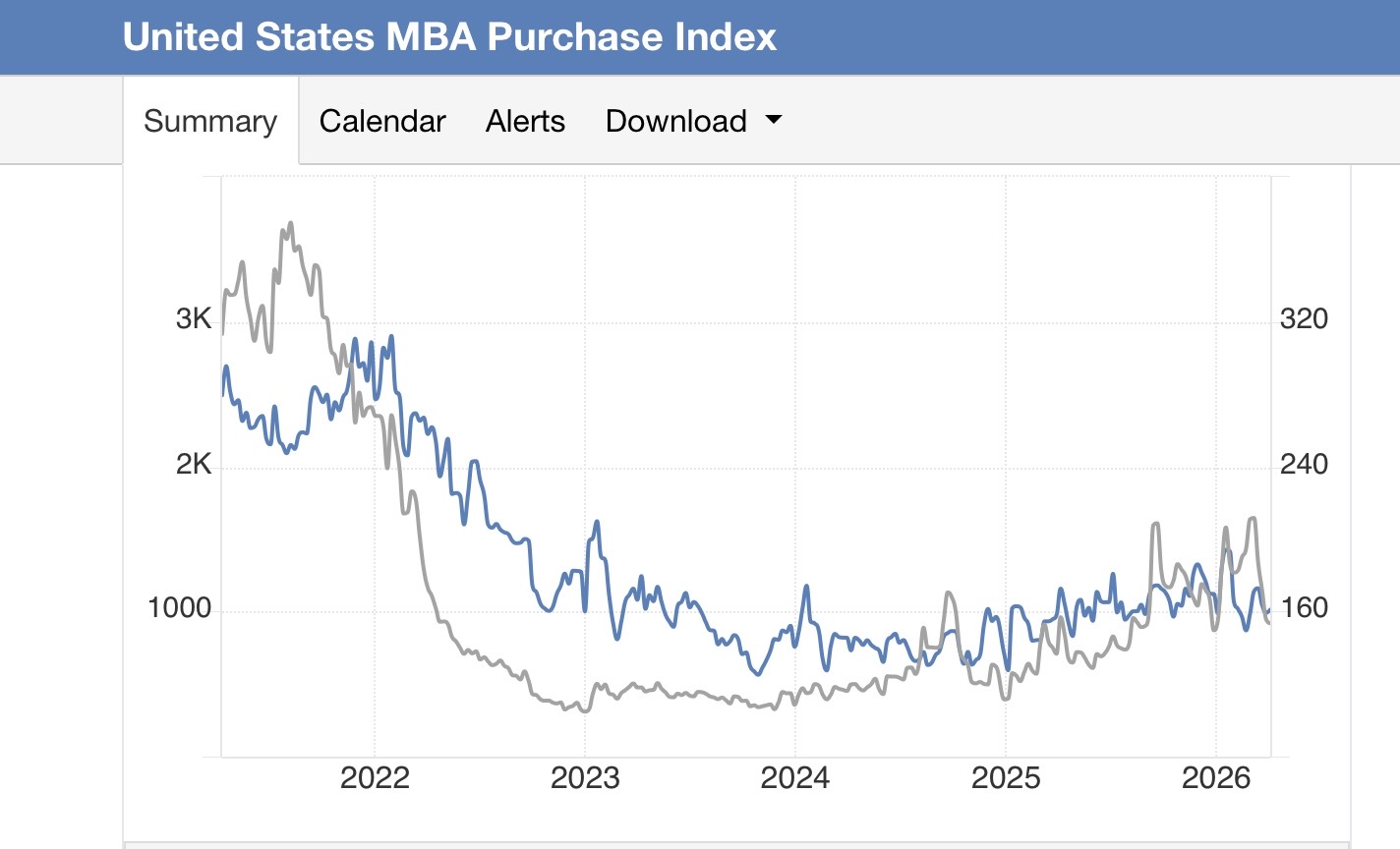
showing that, while the increase in mortgage rates has not knocked either type of application down to their 2023 nadirs, but has effectively halted the rebound.
Tomorrow we will get personal income and spending for February, and on Friday we will get the March CPI. Both will be important, and the latter is likely to be absolutely lit!


Comments
Log in or sign up to join the conversation.