

For much of the past four years, the stock market has resembled a Broadway production performed primarily by the seven actors, known as The Magnificent Seven. These hyperscale titans of silicon and artificial intelligence have been joined on center stage by dozens of supporting characters that support the AI buildout. With the evolving peace in the Middle East, the script is beginning to expand beyond data centers.
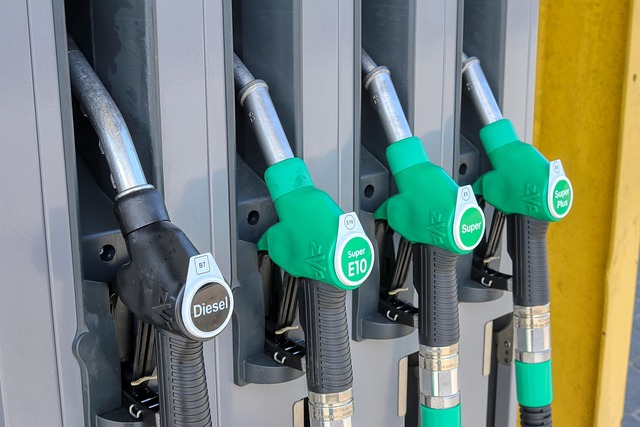
Bull markets mature when leadership broadens. They become healthier when prosperity spreads beyond a handful of giants and reaches the industrial, financial, transportation, manufacturing, and small-cap sectors that constitute the larger economy. The most important economic development of the summer may not be found in semiconductor news or a data center. It may be found at the neighborhood gas station. Crude oil and gasoline futures have fallen roughly 30% and 23%, respectively, from their May highs, waterfalling to 3-month lows. The national average gasoline price, which peaked near $4.57 in May, has slipped by over 60 cents a gallon and appears headed toward the mid $3 range in the weeks ahead if Middle East stability persists.
Energy, as always, remains the economy’s universal tax collector. When gasoline prices fall, consumers, especially at the bottom end of the K economy receive an immediate rebate without filing a single tax form. Every commuter, delivery company, airline passenger, and small business will discover a few extra dollars. Some of this is a psychological boost for consumers, but more importantly, falling energy prices takes the wind out of the inflation sails, pushing interest rates lower. The 10-year yield has already receded from 4.7% to under 4.5% since May as inflation statistics look backward while markets are looking forward. The cumulative effect can be powerful.
Recent data have understandably unsettled policymakers. Core CPI has risen to roughly 2.9%, headline CPI to 4.2%, while April’s Core PCE stood at 2.5% and headline PCE at 3.3%. The May and June reports may remain elevated and even tick slightly higher, but these are far from the alarming levels during the prior administration. Yet, nine Federal Reserve voting members now favor at least one rate hike this year, with five suggesting multiple hikes may be warranted. However, they are not prescient forecasters and will shift their dots later this year as CPI and PCE inflation numbers turn back down. Monetary policy often resembles driving by looking into the rearview mirror while markets navigate through the windshield. When energy prices fall sharply, history shows that inflation becomes less of a concern.
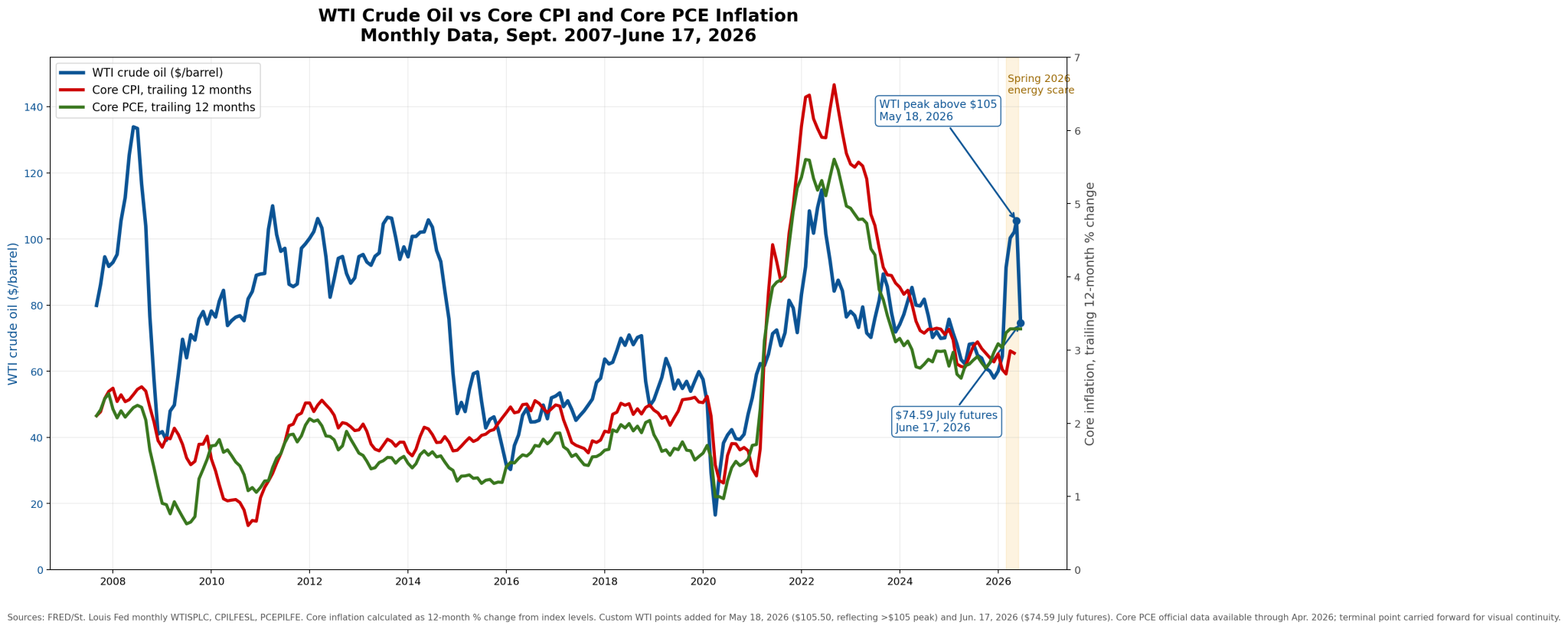
While there has been some modest tariff influence on prices, the inflation scare of 2026 appears increasingly tied to the energy shock that accompanied fears surrounding the Strait of Hormuz. If relative peace holds and the Strait remains open, inflation may have already registered its high-water mark in May or June. Markets care less about the level of inflation than about its direction. Directionally, the evidence increasingly suggests lower inflation rather than higher inflation as the year progresses.
That distinction matters. Technology companies—particularly semiconductor and data-center beneficiaries—have demonstrated immunity to inflation concerns. Their free cash flow and profit engines continue to hum. Nothing about the current environment suggests that artificial intelligence spending is slowing. The chipmakers remain busy building the digital equivalent of railroads during the nineteenth century.
But even the strongest racehorses require occasional rest. After an extraordinary advance, technology leadership may not disappear so much as share the spotlight. Lower energy costs, tax rebates, steadier inflation expectations, and improved consumer purchasing power create conditions more typical of an early innings economic expansion phase. The AI buildout remains the primary fuel for feeding this Bull, yet historically, such falling energy environments often favor banks, industrial companies, transportation firms, small-cap growth, travel and small-cap value stocks.
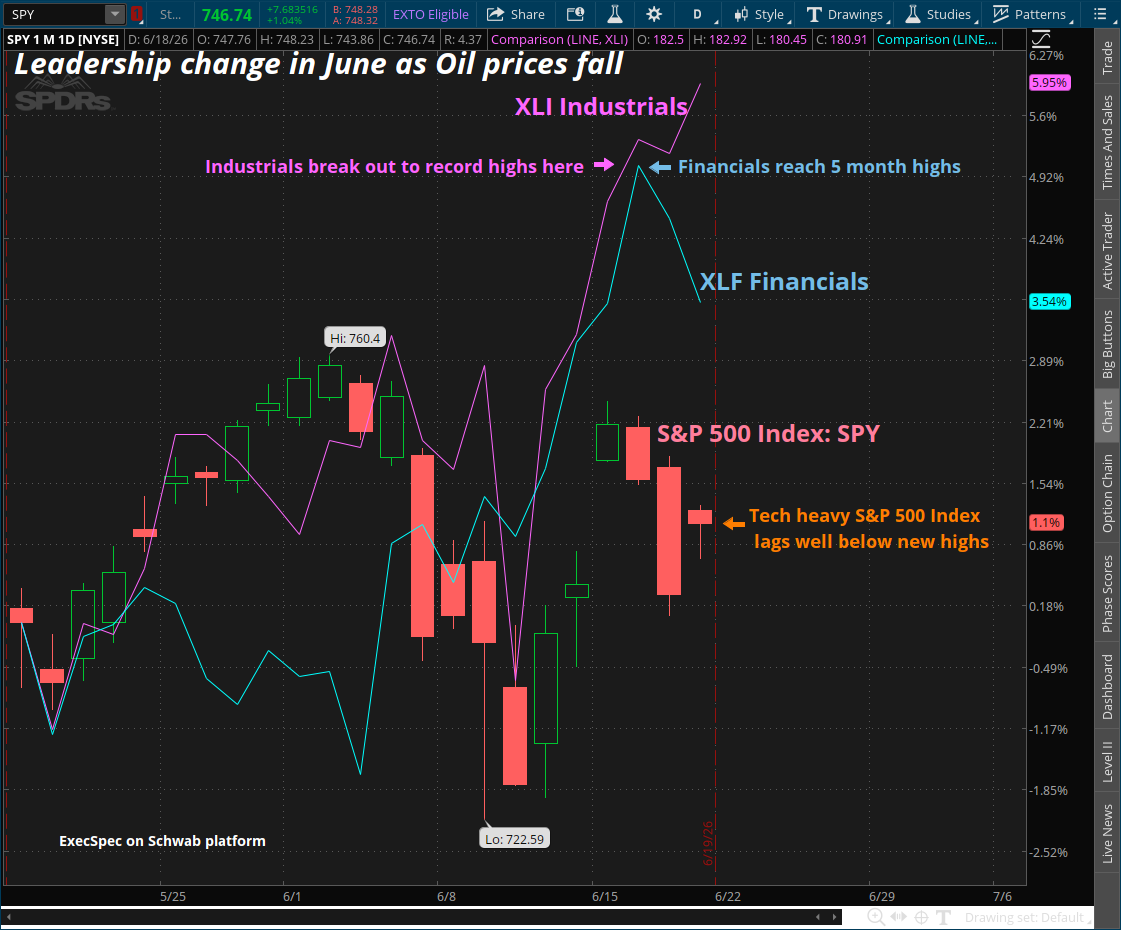
With moderating uncertainty and growing optimism over inflation and borrowing costs, non-AI tech sectors cna share the runway at the Wall Street Fashion Show. Investment banks, for example, have spent years operating beneath the shadow of inverted yield curves and regulatory uncertainty. Industrial companies have quietly benefited from domestic manufacturing investment, infrastructure spending, and the immense physical buildout required to support AI. Small-cap companies are discovering that lower fuel costs and improving economic confidence can matter far more to earnings than the latest chatbot release. The bench players are finally seeing meaningful minutes riding the Bull.
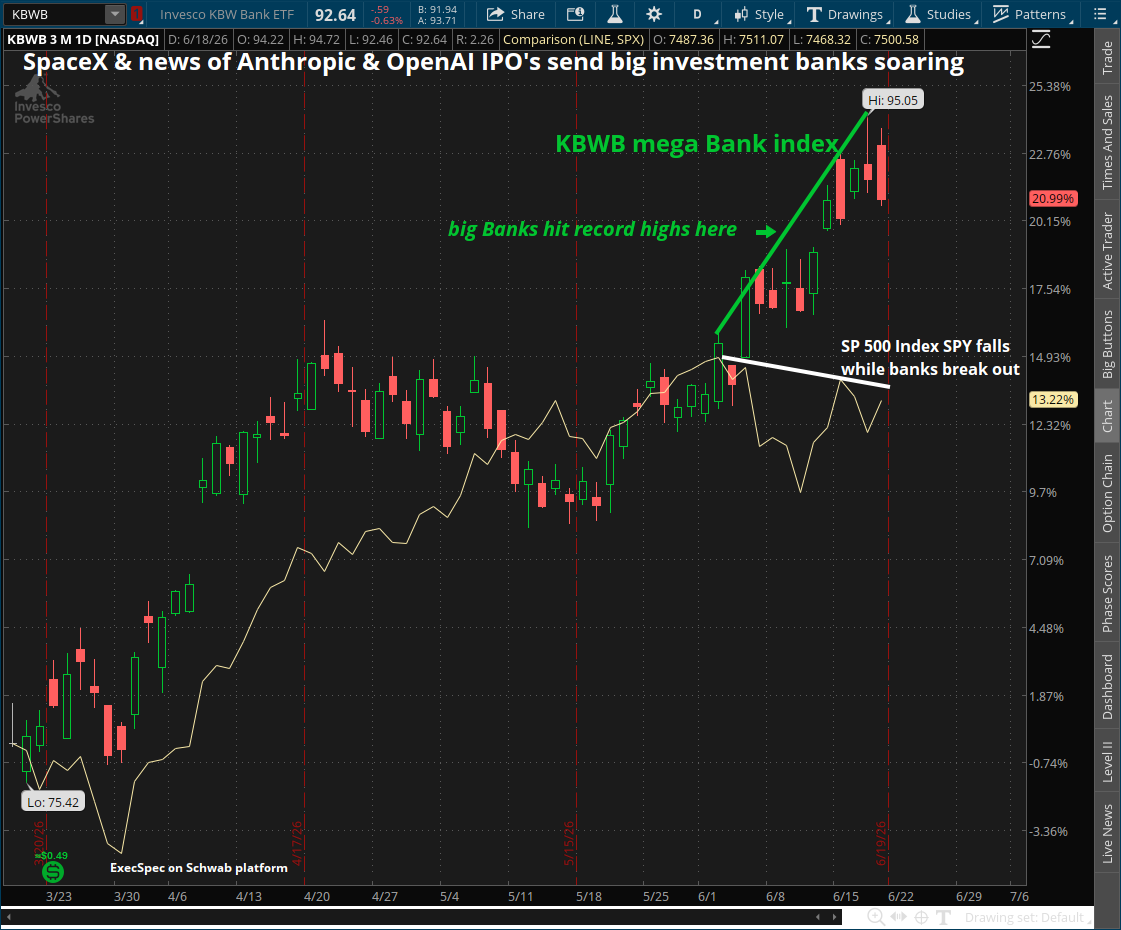
This broadening of leadership should not be mistaken for the absence of risk. Indeed, we expected the tech rally would stall in June as the SpaceX IPO sucked up investor demand for Magnificent 7 stocks. However, after a peace dividend rally, the risk may increase materially as 2026 moves into late third quarter and fourth quarter. Markets are preparing to absorb another substantial increase in share supply. The SpaceX IPO represents only the opening act. OpenAI and Anthropic may follow with a combined IPO supply of shares orbiting over the market that combined will rival SpaceX. Liquidity is finite. When extraordinary new investment opportunities emerge, capital often migrates toward them. The issue is not whether SpaceX, OpenAI, or Anthropic will attract interest. The issue is whether existing market leaders and a newly minted trillionaire temporarily surrender some of their premium valuations as investors raise cash to participate in the next generation of market icons.
Beyond valuation concerns lies the political calendar. As investors look toward the November elections, policy uncertainty may increasingly influence market behavior. Markets generally prefer legislative predictability regardless of party. Significant shifts in Congressional power often generate questions regarding taxation, regulation, energy policy, and artificial intelligence oversight. Such uncertainties can temporarily compress valuation multiples even when economic fundamentals remain healthy. A political shift in the balance of power that is running on legislating AI restraint will suck a significant premium from the technology sector multiples. If a political victory fosters a public groundswell and actual terminations of new data centers and added fees, then the multiples and earnings will be revised lower. Surveys give 77% odds that the Democrats will take control of the House and 57% odds that Republicans will hold the Senate. That possibility may help explain why we continue to anticipate greater volatility as the year progresses, although a successful peace deal with Iran with a corresponding decline in energy and interest rates should improve the odds for Republicans.
Month (2026)     | Jan   Feb   Mar   Apr   May   Jun (mid)
-----------------|-----|-----|-----|-----|-----|-----
Dem House %      | ~70 | ~75 | ~80-85| ~80 | ~78 | ~77
GOP Senate %     | ~65 | ~60 | ~50-55| ~55 | ~57 | ~58
While this summer may be an upward biased trading range followed by severe valuation risk into the fourth quarter, our longer-term outlook remains constructive. We continue to envision the S&P 500 (SPX) ultimately moving north of 8,000. Whether that milestone arrives this year or slips into 2027 may depend less on corporate earnings and more on the intersection of energy prices, monetary policy, political outcomes, and the market’s capacity to absorb a historic wave of new equity issuance.
For now, however, the dominant story is neither fear nor excess. It is rotation. After years of a market powered by a handful of technological superstars, a widening circle is emerging. Lower energy costs are easing inflation pressures. Consumers are receiving relief. Financials, industrials, banks, and small-cap companies are beginning to participate more fully. The AI revolution is not ending. It is simply learning to share the stage.
Comments
Log in or sign up to join the conversation.