

“Put two economists in a room and you’ll be lucky to get five opinions.” - Neil Dutta, Renaissance Macro
That was economist Neil Dutta’s response when I mentioned the broad disagreement among economists on the direction of the economy. I’ve been tracking economic trends and reading economist reports for three decades. The post-COVID period ranks among the most unclear of my career when it comes to economist consensus.
For example, you can argue that the economy is strong. Neil, my guest this week at Global Macro Update, lists several bullish factors: mortgage rates have dropped, AI CapEx is boosting equity prices, tax refund season should boost consumer spending, and the effect of last year’s rate cuts should show up around now.
In that environment, yields should be going up, right? Yet 10-year yields are drifting lower, not higher.
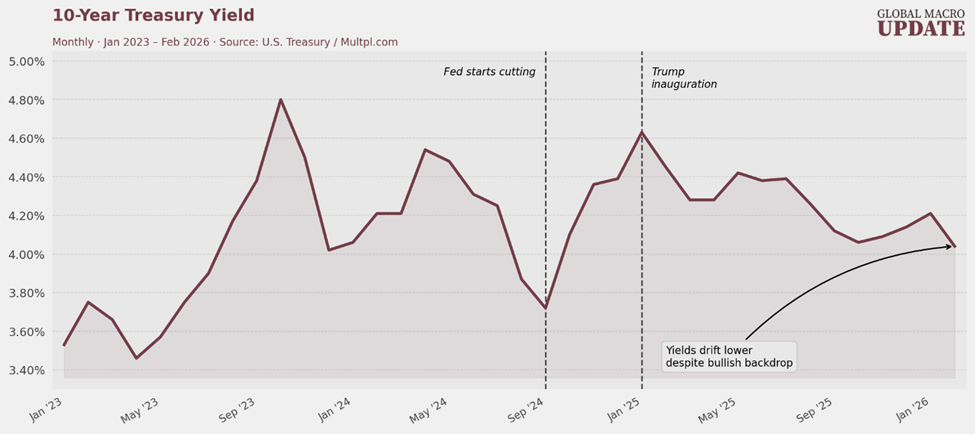
Neil’s question (which he goes on to answer) is: If all these tailwinds can’t push rates up, what does that tell you?
If you aren’t familiar with Neil Dutta, head of economic research at Renaissance Macro, I’m happy to introduce you here. Neil was one of the few people who pushed back against the recession consensus in 2022. While most of Wall Street was bracing for impact, he was arguing the economy would hold together.
When Neil tells me he’s now more cautious than the consensus, that the economic outlook isn’t as rosy as many expect, I pay attention. And you should too.
“Yields Have Every Reason to Go Up—and They’re Not.”
When you pile up every bullish data point and the long end of the yield curve still refuses to move higher, the bond market is sending a message. Neil’s read: It’s sniffing out the fact that nominal growth is slowing.
Think about that for a second. The bond market is one of the few places left where it’s Herculean to fake the signal. Equity markets can get carried along by vibes, by narrative, or by a handful of mega-cap earnings beats. Bonds are blunter instruments. When they don’t move in the direction the macro story says they should, it pays to ask why.
Neil’s feeling is that a lot of the upside scenario may already be priced in… that underneath the headline optimism, the actual machinery of the economy is grinding slower than the consensus wants to admit.
The Setup Sounds Familiar… Because It Is
Here’s what I found most interesting about talking with Neil: The four factors he’s watching right now—labor markets, housing, state and local governments, and expectations management—are the same four factors he used in 2022 when he was arguing against recession. The framework didn’t change, just the conclusion.
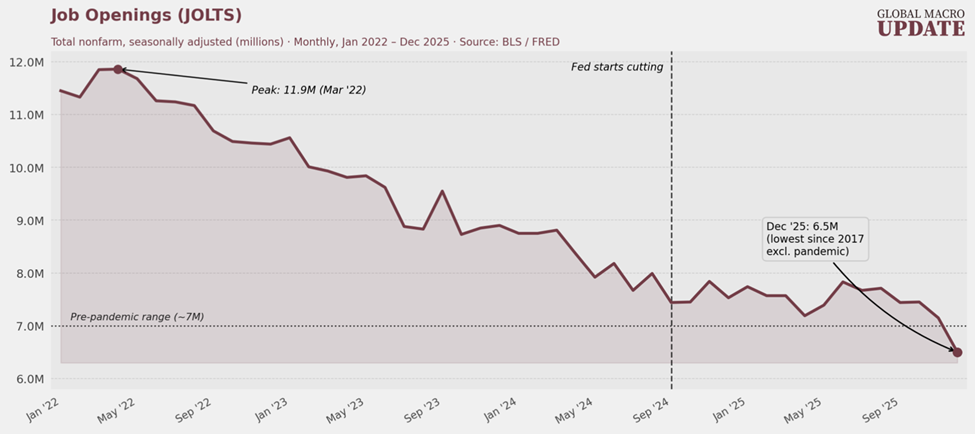
On labor: Job seekers will tell you it’s hard to find a job. Neil takes that anecdotal point seriously, as do I. Consumer sentiment about the job market tends to lead official data.
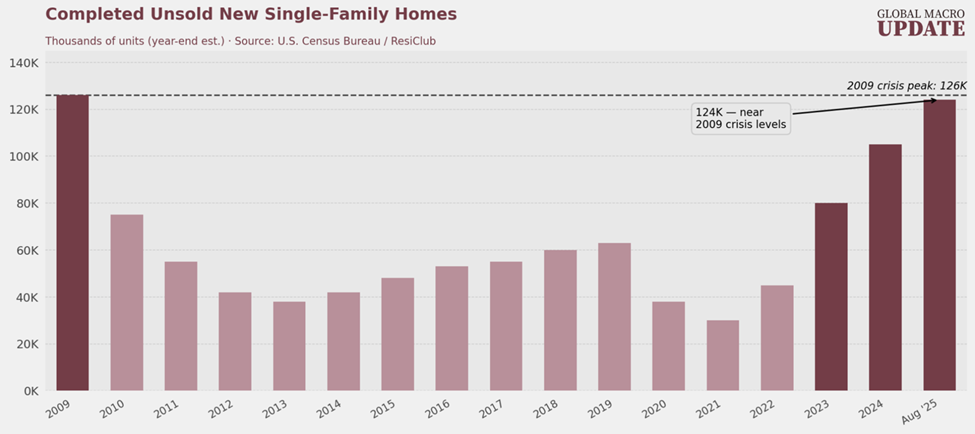
On housing: Yes, mortgage rates have come down, but demand hasn’t responded accordingly. Home builders are heading into the year with the most completed unsold inventory since 2009. That’s not a soft-landing story—that’s inventory pressure building.
On state and local governments: State and local government employment is contracting. More states are projecting flat to slightly lower general funds relative to the prior year.
Lastly, on expectations: In 2022, the consensus was so gloomy that when a recession didn’t materialize, businesses had to restock, rehire, and reinvest. That restocking impulse was a growth engine. Today, the consensus is optimistic, but if things don’t deliver, there’s no restocking impulse to fall back on. The unwind goes the other way.
What Does It Mean for You?
Neil believes the Fed will cut more than the market is currently pricing—not because of a “golden age” productivity story but because the labor market gets weaker and inflation continues to cool. If you believe nominal growth is slowing, he makes a pretty straightforward case: There’s value in long-duration bonds.
Maybe it’s a contrarian call in an environment where everyone’s been piling into “higher for longer.” But that’s usually when the contrarian calls are worthy of your attention.
I encourage you to listen to the full conversation. We cover a lot more ground than I can summarize here, and Neil has a way of making complex macro accessible without dumbing it down. A few other things we got into:
Tariffs and whether they’re inflationary: a more nuanced argument than the headline debate, framed as a relative price shift rather than broad-based inflation.
AI and the labor market: whether we’re seeing any displacement in the data yet, plus a sharp way to think about how you’d even know if a productivity boom were real.
The Kevin Warsh Fed chair nomination: a no-holds-barred criticism about Warsh’s forecasting record.
How to think about savings, boomers, and consumer spending: a pushback on some of the narratives floating around about why households are dipping into savings.
Watch my full conversation with Neil here.



Comments
Log in or sign up to join the conversation.