

Subscribe
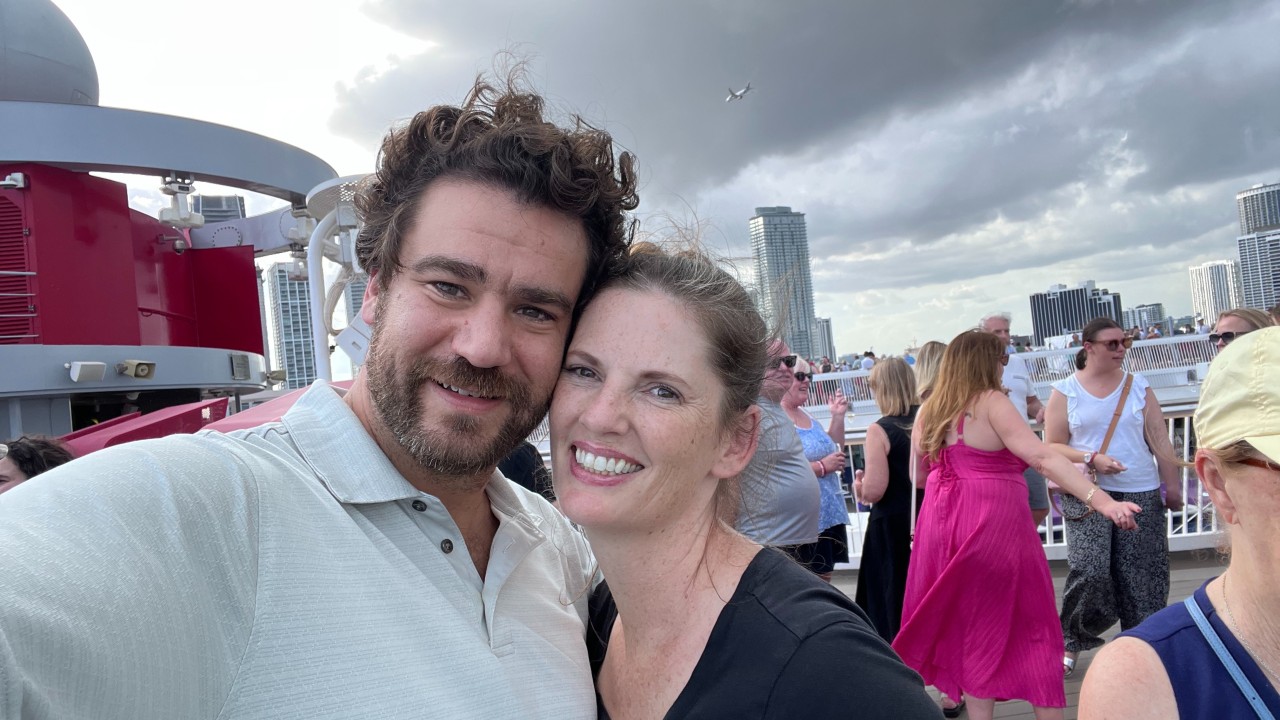
Zach here...
Angela and I are writing to you from somewhere in the warm waters between Miami and our first port of call. And I have to say, it's a welcome change of scenery after a volatile few weeks in the market.
Before we left, we made our way up to the top deck see the view.
I was looking out over the water, taking in the Miami skyline, when I noticed something subtle. The buildings were moving. Not dramatically, just the faintest drift... So slow I had to stare for a moment to be sure I wasn't imagining it.
That's how the ship started its departure. No lurch, no rumble. Just 100,000 tons of steel imperceptibly beginning to change direction.
Over the next twenty minutes, our ship executed a full 270-degree turn in the harbor -- a slow, sweeping arc to point the bow out toward open water. It was impressive and almost meditative to watch. But it was also a reminder of just how long it takes something that large to go a different direction.
Meanwhile, the harbor pilot boats were something else entirely.
They darted between ships, reversed course in seconds, and zipped through the narrow inlets that wind past the waterfront mansions lining the Miami shoreline. Places our massive ship could never dream of reaching.
They were nimble in a way that made the cruise ship look almost frozen by comparison.
And standing there on that top deck, I thought: this is exactly how the market works.
The Advantage Most Investors Overlook
Most individual investors look at their account size and assume it's a disadvantage. Big institutions have more money, more analysts, more resources. Surely they win, right?
Not always. And here's why.
When a large pension fund or mutual fund wants to buy a position, they can't just click a button and own it. They might need to accumulate millions of shares over days, weeks, or even months!
(Because if they try to buy it all at once, the act of buying itself drives the price up against them.)
They are the cruise ship. Every move is slow, deliberate, and telegraphed.
And they leave a wake. If you know how to read a stock chart, you can often see institutional accumulation happening in real time... a stock quietly trending higher on steady volume before any big news breaks.
Smart individual investors can spot that wake and position themselves ahead of the next leg of the move.
Now think about what you can do.
You can read the morning headlines, assess the situation, and be fully repositioned before most institutional investors have finished their first committee meeting.
If the market shifts (and lately, there have been a lot of shifts) you can adjust that same day. You could technically liquidate your entire portfolio and redeploy it into a completely different strategy before lunch.
That's not a small advantage. That's enormous.
Why This Matters Right Now
Markets have been unusually volatile lately. Airstrikes in the Middle East, energy price spikes, inflation worries resurfacing... there's no shortage of reasons for uncertainty. And in environments like this, the ability to move quickly is worth more than ever.
The investors who struggle in volatile markets are often the ones locked into positions they can't easily exit. The ones who thrive are the ones who stay nimble -- who can cut a losing trade, pivot to a new opportunity, or simply step to the sidelines and wait for a clearer picture.
Individual investors have that ability every single trading day. Most just don't think of it as an edge.
I'd encourage you to flip your thinking. Your account size isn't a limitation. Your speed and flexibility is your advantage. Use it.
Angela and I are going to enjoy a few days of sunshine and warm water... But rest assured, I'm keeping an eye on the market and the positions we're holding together.
Here's to the open water — and to building and protecting your wealth.

Comments
Log in or sign up to join the conversation.