

The popularity of international MBA (Master of Business Administration) programs in Russia has a lot to do with the growing experience of national managers and their wish to grow professionally. Stanislav “Stan” Yurchenko, a graduate of one of the oldest French business schools, talks about the European and American MBA.
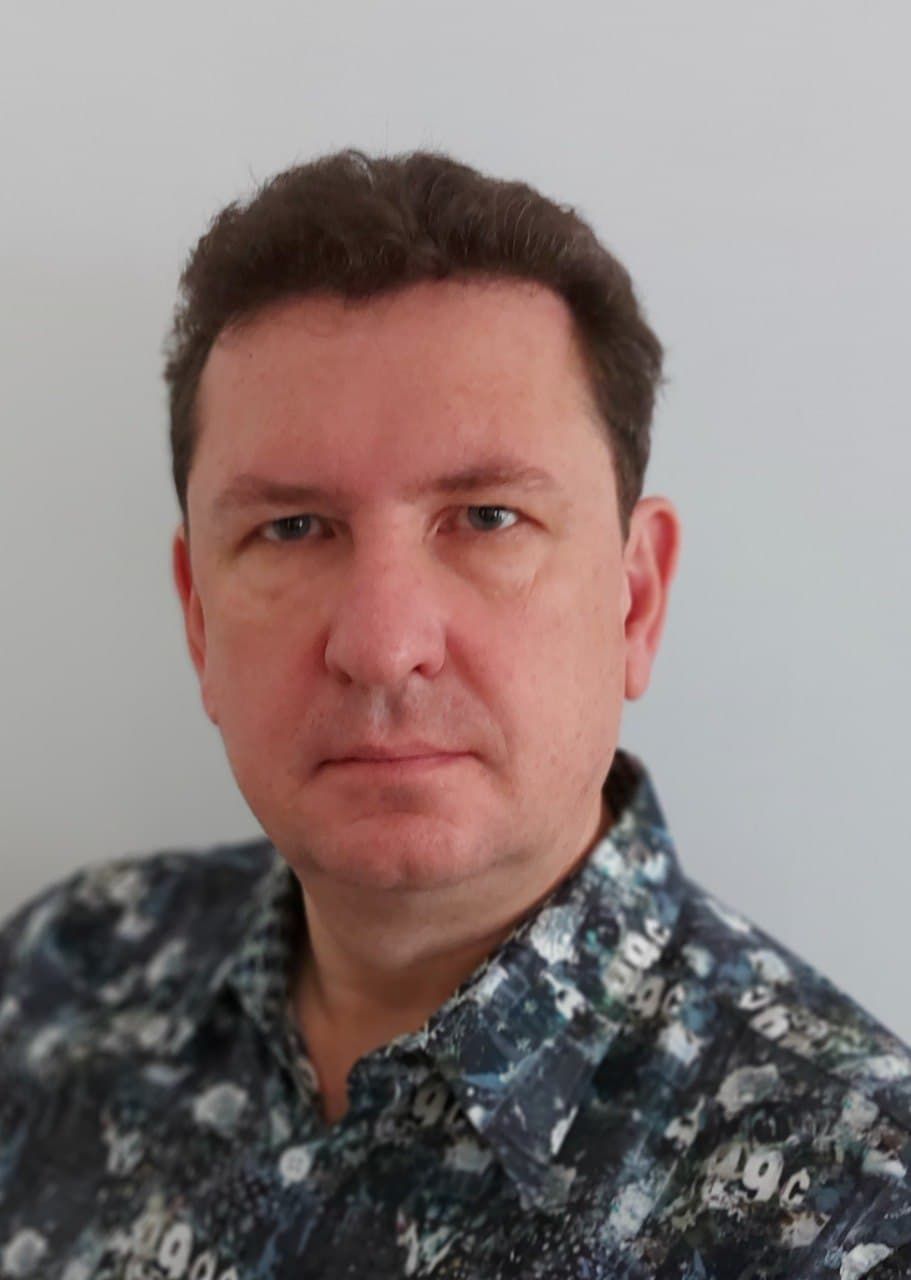 Ed.: Stanislav, why had a physicist suddenly decided to go for business education?
Stan Yurchenko: Everyone knows that practically all Russian businesspeople, 40 years of age or older received an education in Russia (or the USSR, for the older ones). In most cases, those are irrelevant degrees that have nothing to do with whatever line of business people may be in right now. In my case, it was the Moscow Institute of Physics and Technology (MIPT), from which I graduated in 1993. Admittedly, you have to do justice to national education: it has always been marked by a heavy emphasis on academia and fundamentality, imbuing the students with a systematic approach not only to their majors, but to life as a whole. Experience shows that this comes in quite handy and so, fully-trained journalists become heads of state corporations, historians turn into leading media managers, and techie guys like me convert into economists.
Ed.: A systematic approach is a good thing. You were quite successful, why would you need an MBA? Just to hang a pretty certificate on your wall?
Stan Yurchenko: Once I received my second graduation certificate, officially becoming a manager and economist, it became clear that business approaches and practices had to be systematized in order to move forward. All my previous business experience was trial and error, a groping in the dark with no theoretical basis whatsoever, which seemed wrong and uncomfortable to me as an MIPT graduate. The choice was obvious: an executive MBA, meaning a degree that anyone can knowingly choose for themselves, without any pressure from parents, teachers, or friends. It is often believed that it is the last long-term education in a person’s career, so it should be chosen thoughtfully and rationally. Well, no, the task is somewhat larger than just a pretty certificate.
Ed.: In that case, why did you decide to get a French diploma and not a Russian one, say, at Skolkovo?
Stan Yurchenko: It ought to be understood that, by and large, the choice of business education is not a wide one: either you get it in Russia or abroad. That said, you need to take into account that an MBA is not so much an education as accumulation of new connections and contacts that you should have to grow your business well. In Russia that means either the Russian Academy of State Service or the Skolkovo Business School that you mentioned. The Academy, given all the fundamentality inherent in Russian state education seemed to me, even back then in 2009, quite conservative. If I were betting on state corporations or on state management then – yes, that would probably be my choice. As for Skolkovo, where mostly Russian teachers teach Russian entrepreneurs in English using American textbooks at twice the price of the best American business schools, their approach seemed (and still seems) to me strange, to put it mildly.
Ed.: Alright, we’ve figured out Russian business education. Why didn’t you choose the US? After all, that is where MBA, as such, comes from. The oldest Wharton School that is turning 140 this year, Harvard, Chicago University, all these schools mean experience and long-term tradition.
Stan Yurchenko: You know, I think I had bad luck. I talked to the graduates of Wharton and Chicago University and I saw a lot of smugness and pride in having graduated from those particular schools, citing the traditions and hundred-year-old experience that you referred to. But trust me, it was all a very low level of education. Naturally, business is a sport invented by the Anglo-Saxons in its present form. Of course, the basis of an EMBA is cases, which mostly come from America. But it seems to me that the educational business in the USA has successfully moved onto the, let’s say, best practices track, just using standard model cases, and has thus reduced its expenses. Right now, it’s an assembly line that produces a standard product of predictable quality. The quality is quite high, undoubtedly, but it is very indirectly related to a fast-changing market. Besides, you’d have to deal with travel and jetlags, which would take up the key resource of time. So, these days, an American EMBA degree is what you were talking about earlier, a pretty picture on the wall.
Ed.: In this case, why did you choose HEC? France is not quite an obvious choice for a Russian businessman.
Stan Yurchenko: First of all, I should explain what HEC is. It is École des hautes études commerciales, in other words, the School of High Commercial Studies, founded the same year as Wharton, 1881. It is among the top 10 business schools worldwide, so its certificate is quite as valuable as those of the most prestigious American business schools. I chose it not least because of its slogan, Apprendre à oser, which means “Learn to dare.” These words very clearly and succinctly describe my personal approach to business, to the ability to widen horizons. And the fact the school campus is not in Paris proper, but near Versailles, reminded me a bit of MIPT, which as ‘Moscow’ as it may be is actually located in Dolgoprudny.
Ed.: You weren’t very complimentary in your comments about American business schools. What would you say about the French?
Stan Yurchenko: The French have a totally different approach, their own way of doing business, you could feel it. We, the students, were immersed in both French and American schools of business; we compared them and recognized the difference. Also, one of our training modules was in America, in Silicon Valley, and the other was in Japan. The faculty came from all over the world: from the USA, from UK, Germany, Finland; that’s not to mention the French who spoke an unfamiliarly-sounding but understandable English. The HEC students also came from all over the world: America, Lebanon, China and many other countries. School time passed very quickly, but it was a wonderful time that gave me an understanding of the basics of how international business worked. So, from the point of view of my investment in education, it paid off many times over.



Comments
Log in or sign up to join the conversation.