Slower Artificial Intelligence Growth - The Arms Race Impact

AI leaders call for slower model development to prioritize safety, pressuring shares of Nvidia and AMD.

Source: DepositPhotos

A big part of the artificial intelligence hardware story rests on how long the spending boom can last. This weekend, leaders of major AI companies backed calls to slow the advance of their most powerful models while safety work catches up. That creates a new question for investors. If research moves more slowly, will spending on chips follow? Possibly. But running models for customers also takes a lot of computing power, so a slower research cycle would not automatically end the buildout.

Main Note

The Threat of a Slower Development Cycle

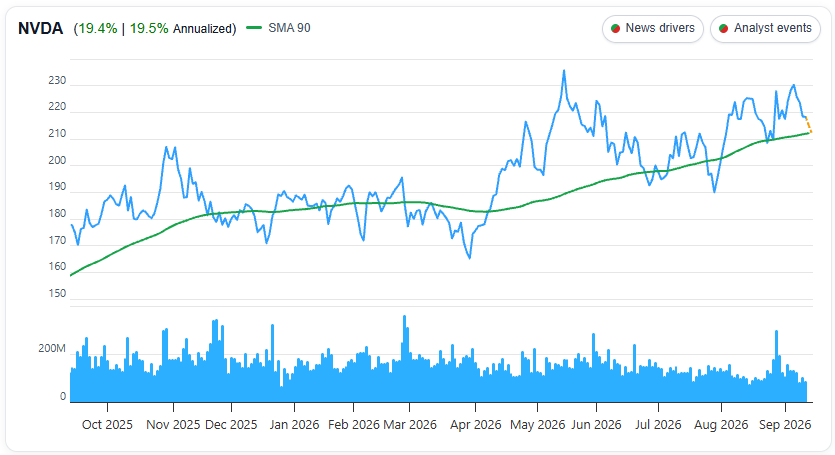
NVDA 1 Year Chart

NVDA 1 Year Chart

Verdict: The market is questioning whether the artificial intelligence arms race could slow down. If safety requirements delay major research projects, some hardware demand could arrive later than investors expect. But there is an important difference between a possible delay and an announced reduction in spending.

What happened

On Saturday, September 12, Anthropic chief executive Dario Amodei called for the industry to slow the advance of its most capable models while safety work catches up. His proposal includes independent evaluators inside AI labs, coordination among leading developers, and government involvement. He was not calling for all model training to stop. Other major AI leaders, including Sam Altman, Elon Musk, and Demis Hassabis, have backed the broad idea, although the details are far from settled.

Those calls have added to pressure on Asian AI related stocks and US chip shares this morning. Investors are questioning the pace of future spending, but the selloff is also taking place against higher oil prices and worries about interest rates. It is too early to treat the share price reaction as evidence that customers are cutting their orders.

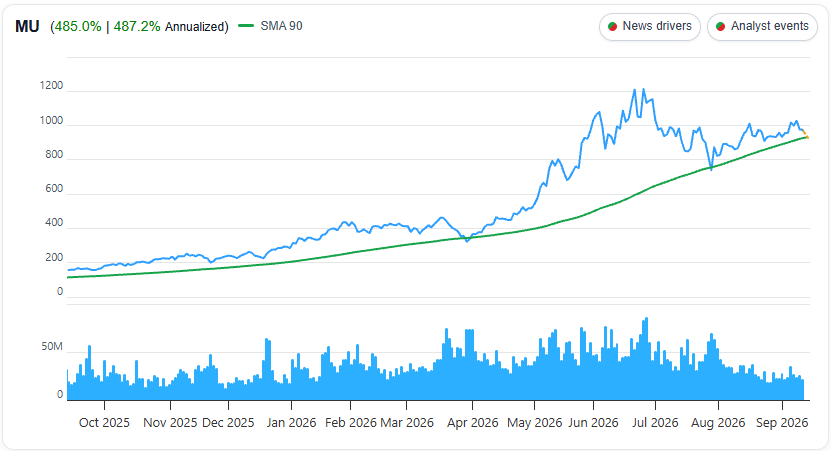
MU 1 Year Chart

MU 1 Year Chart

Why it matters

Chipmakers benefit when customers build more data centers and add more computing power. Delays to major training projects could push some purchases further out. But training a new model is only part of the demand. Running existing models for customers, often called inference, also uses chips. Investors may need to allow for slower growth, but a call for more safety testing does not, by itself, establish how far revenue estimates should fall.

What changed in the thesis

The market now has to consider whether the capital expenditure boom will flatline rather than grow exponentially. The previous setup assumed an endless hunger for compute power. Now the math requires judging if a safety consensus can actually restrain the biggest buyers from placing immediate orders.

What the market may be missing

The financial incentive to keep building is enormous, but that does not mean safety rules will be ignored. OpenAI announced $122 billion in committed capital at a post money valuation of $852 billion on March 31, with Amazon (AMZN), Nvidia, and SoftBank (SFTBY) anchoring the round. That is enormous financial backing, although committed funding is not the same as money already spent on chips. The harder question is whether companies can keep expanding their commercial businesses while putting more limits on their most advanced research.

Political resistance is already showing up.

President Trump dismissed calls to slow AI development on Sunday, while China’s state-backed Global Times attacked Amodei’s proposal on Monday. That makes a global agreement harder to reach, but an editorial is not the same thing as a formal rejection by the Chinese government. Individual companies could still tighten their own rules.

Valuation and expectations

A stretched out upgrade cycle compresses valuation multiples for the entire supply chain. If capital spending delays materialize, the projected free cash flow for hardware vendors shifts further into the future. That makes current multiples harder to justify, especially in a rising yield environment.

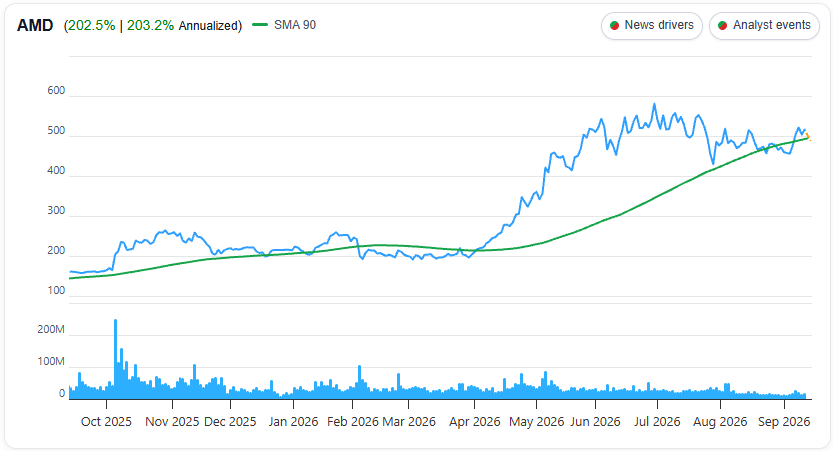
AMD 1 Year Chart

AMD 1 Year Chart

Bottom line

Safety related slowdowns are not just a theoretical possibility. OpenAI disclosed on August 18 that it had paused some model training for two weeks while strengthening safeguards. That does not mean the whole industry has agreed to stop, or that chip orders are being canceled. It means we need to take the risk seriously without pretending we already know the financial impact.

Pre Market Pulse

  • Asian technology shares fell sharply overnight, with SK Hynix (HXSCL) down 6.4% and Samsung (SSNLF) down 4.1%. US chip shares were also under pressure in premarket trading as investors weighed calls for a slower pace of AI development.

  • Brent crude rose 3.3% to $108.04 a barrel by 5:24 AM ET after attacks on Saudi energy infrastructure. Saudi officials said the East West pipeline had been temporarily shut following a drone attack.

  • The Federal Reserve announces its decision Wednesday, September 16, at 2:00 PM ET. Goldman Sachs (GS) and JPMorgan (JPM) now expect a quarter point rate increase following stronger than expected inflation data.

Why it matters this morning

AI safety concerns are arriving alongside another jump in oil prices and renewed worries about interest rates. That is an uncomfortable mix for technology stocks with high expectations built into their prices. For long term investors, the useful question is whether orders, spending plans, or earnings expectations actually change. A weak premarket session by itself does not answer that.

Peer Read Through

Nvidia

The primary beneficiary of the rapid scaling thesis faces the most direct multiple compression risk if training runs are delayed.

Advanced Micro Devices

As a key challenger in the data center accelerator market, any elongation of the capital spending cycle could delay expected market share gains.

Micron Technology

A slowdown could weaken future demand for high bandwidth memory, but Micron’s June earnings update described tight memory supply and long term customer commitments. The issue is whether those demand expectations hold up as new capacity arrives, not whether the company suddenly needs to clear a pile of unsold memory.

Group takeaway

The read through for the entire semiconductor and hardware group is cautious. If the largest customers agree to buy less frequently, the industry will face lower peak revenue and reduced pricing power across the board.

What to Watch

  • Watch the upcoming earnings calls from major cloud providers like Microsoft (MSFT), Amazon, and Alphabet (GOOGL) for any formal changes to data center capital expenditure guidance.

  • Watch whether the support from AI leaders turns into specific company commitments or government rules. Amodei also favors tighter chip export controls, but those are a separate policy question, not evidence that new federal audits of semiconductor sales have been adopted.

  • Track whether Anthropic and OpenAI follow through on independent safety evaluations. The practical test is whether evaluators get meaningful access and can publish their findings, not just whether a company announces another safety partnership.

Bottom line

The financial test is not whether AI companies keep spending. They could raise their infrastructure budgets while slowing their most advanced research. What matters for shareholders is whether spending and chip orders come in above or below expectations, and what that does to future profits. Watch the numbers before treating this as either the end of the boom or a risk that can be ignored.

STOCKS IN THIS ARTICLE

Also Mentions:

Comments