

The space economy used to be easier to split into two camps: companies that built rockets and companies that operated satellites. That separation meant satellite operators usually had to negotiate with outside launch providers to get their assets into orbit. Now the math is changing. Rocket Lab (RKLB) is acquiring Iridium (IRDM) for $8 billion to combine launch capabilities with a global communications network. The deal tests a simple premise. Owning the delivery vehicle and the cargo can create a structural cost advantage. If management is right, the commercial space sector will likely move faster toward consolidation.
Rocket Lab and the Push for Vertical Integration
Verdict: Building rockets is no longer enough to win the space race. Launch providers need captive high margin customers, and satellite operators need guaranteed access to space.
What happened
Rocket Lab agreed to buy satellite communications operator Iridium for $8 billion in cash and stock. Iridium investors will receive consideration valuing their equity at roughly $54 per share. The transaction is expected to close in mid 2027.
To fund the purchase, Rocket Lab secured a $3.6 billion bridge loan and will use cash from its own balance sheet along with other financing. This marks a massive scale up for a company known primarily for its small launch vehicles and spacecraft manufacturing.
Why it matters
A vertically integrated space company does not have to fight for third party launch contracts to survive. By acquiring an established operator, Rocket Lab buys a steady stream of recurring revenue. Iridium generates reliable cash flow from government and commercial contracts. That cash can directly fund future rocket development.
What changed in the thesis
Investors previously treated Rocket Lab as a pure play launch service and manufacturing provider. The valuation rested on how many rockets the company could launch per year and how many spacecraft components it could sell. Now the math shifts. Investors must value a telecommunications provider carrying billions in new debt.
What the market may be missing
The timeline creates an awkward overlap with the Rocket Lab launch vehicle development schedule. Iridium’s last major constellation refresh relied on SpaceX, and Rocket Lab’s Neutron rocket is still targeted for its first flight in the fourth quarter of 2026. If Neutron slips materially, Rocket Lab could still end up using outside launch providers for future Iridium replenishment before the vertical integration math fully works.
Valuation and expectations
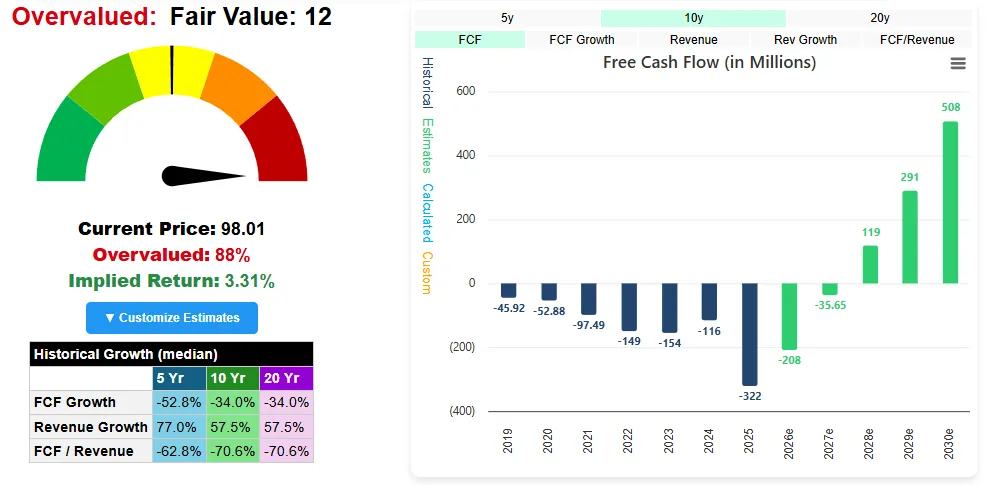
The new debt burden is the critical variable. The Federal Reserve is still holding rates around 3.50% to 3.75%, and Rocket Lab has lined up a $3.6 billion 364 day bridge facility to help fund the cash portion of the deal. Iridium’s roughly $318 million pro forma free cash flow target gives Rocket Lab something real to underwrite, but the final interest cost and debt/equity mix are not public yet. The market will likely penalize any signs that customer churn, refinancing costs, or Neutron spending threaten that cash flow cushion.
Bottom line
Owning the network and the delivery system makes strategic sense over a long horizon. But the immediate reality is that a hardware company just took on extreme leverage to buy a legacy telecommunications network. Flawless execution on the new Neutron launch vehicle is now an absolute requirement.
Pre Market Pulse
Space equities rallied sharply yesterday and overnight after the acquisition announcement.
Major banks committed $3.6 billion in bridge financing even with the Federal Reserve holding rates steady at 3.50% to 3.75%.
Why it matters this morning
Institutional capital is still willing to fund massive space infrastructure projects despite a restrictive interest rate environment. The willingness to finance this deal suggests lenders see reliable cash flow in government and defense satellite communications, rather than just speculative growth.
Peer Read Through
AST SpaceMobile (ASTS)
Shares surged more than 20% to close near $87 yesterday as the broader sector caught a bid. But standalone operators now face a competitor that owns its own launch infrastructure. That creates a severe structural cost disadvantage.
Planet Labs (PL)
Shares surged more than 15% to close above $31 yesterday. Speculation is building that the Earth observation company could become an acquisition target for larger defense firms seeking similar vertical integration.
Viasat (VSAT)
The legacy satellite operator saw shares surge roughly 20% to near $75 yesterday on analyst upgrades and sector momentum. However, legacy operators may struggle over the long term without dedicated partners for launch and satellite manufacturing.
Globalstar (GSAT)
This is not just a read through anymore. Amazon (AMZN) already agreed to buy Globalstar in April to add direct to device services to Amazon Leo. Rocket Lab buying Iridium confirms the same trend from a different angle. Spectrum and operating satellite networks are becoming the scarce assets that larger platforms want to control.
Group takeaway
Consolidation is accelerating because space infrastructure is too capital intensive to rely on fragmented supply chains. Companies that only build satellites or only operate networks will likely be forced to merge or face higher costs than fully integrated rivals.
What to Watch
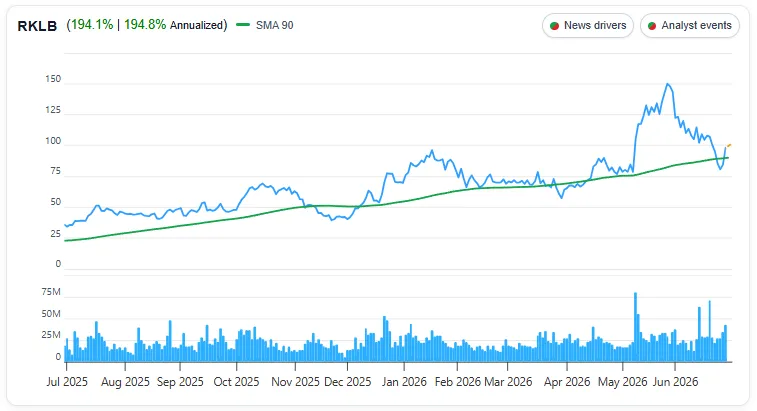
Watch the merger agreement, and future financing updates for the exchange ratio math, regulatory conditions, and final debt structure. The collar is already disclosed at $67.50 to $112.50 for Rocket Lab stock, but the final share count and financing cost still depend on where Rocket Lab trades and how Rocket Lab replaces the bridge facility.
Monitor test flights and development milestones for the Neutron launch vehicle expected in late 2026 and early 2027.
Track quarterly free cash flow generation from Iridium to confirm the target $318 million required to service the new debt load.
Look for updates on antitrust clearance and federal communication license transfers ahead of the mid 2027 target close date.
Bottom line
The entire bet rests on replacing external launch costs with internal rocket flights. Any delay to the new rocket timeline flips this acquisition from a cash flow engine into a massive debt trap.


Comments
Log in or sign up to join the conversation.