Microsoft Separating AI Winners By Cash Flow

Microsoft is outperforming AI peers by converting massive infrastructure spend into surging Azure revenue.

For the past year, the market has worried about the massive checks technology giants are writing to build artificial intelligence infrastructure. The puzzle was always when those billions would turn into actual software revenue. Microsoft just offered an answer. The latest earnings report shows that enterprise demand for cloud computing is directly translating into bottom line profit. That matters because the market is starting to separate companies that simply spend on servers from those that can quickly sell that new capacity at a premium.

Main Note

Microsoft Proves The Cloud Math Works

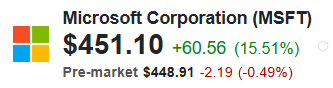
Microsoft (MSFT) Quote

Verdict: The company showed that its aggressive infrastructure investments are already supporting faster Azure growth and stronger operating cash flow. That separates Microsoft’s business performance from companies where the artificial intelligence payoff is still harder to see. It does not separate the stock from technology sector volatility, especially when one earnings report can move the shares by more than 15% in a single day.

What happened

Microsoft delivered a strong fiscal fourth quarter earnings report that confirmed heavy infrastructure spending is paying off. The company showed that Azure cloud growth is expanding rapidly enough to absorb the enormous costs of building new data centers.

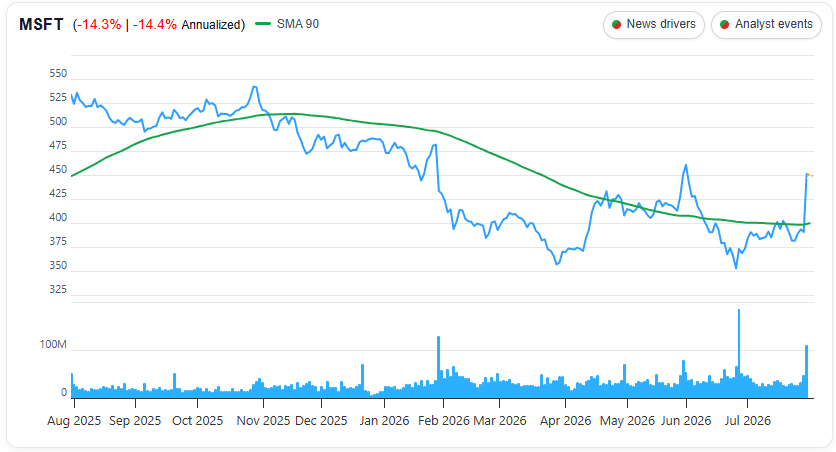
The market reacted positively on Thursday because the results provided physical proof of demand. Instead of asking investors to wait years for a return on investment, Microsoft is converting new server capacity into paid software contracts right now.

Microsoft (MSFT) 1 Year Chart

Microsoft (MSFT) 1 Year Chart

Why it matters

The primary economic variable is how quickly capital expenditures turn into high margin cloud and software revenue. Not every dollar has to be recovered immediately because data centers and networking equipment can produce revenue for years. The shorter lived central processing units and graphics processors need high utilization much sooner. Microsoft said roughly two thirds of fourth quarter capital spending went toward those shorter lived assets, which is why Azure growth and cloud margins matter just as much as the total spending number.

What changed in the thesis

The expectations for cloud providers are splitting into two camps. Investors now demand clear and immediate profit translation from any company building artificial intelligence models. The market will no longer tolerate vague promises of future monetization if current cash flow is deteriorating without a clear revenue offset.

What the market may be missing

One risk worth watching is how much of Microsoft’s contracted backlog is tied to OpenAI. Commercial remaining performance obligations, which are contracts that have not yet been recognized as revenue, reached $678 billion and grew 84%. Excluding OpenAI, that backlog still grew 25%, and management said all of the sequential growth came from customers outside the frontier model companies. Microsoft also said nearly 90% of full year cloud revenue came from customers outside those companies. OpenAI is a real concentration risk, but the current revenue base is more diversified than the headline backlog makes it look.

Valuation and expectations

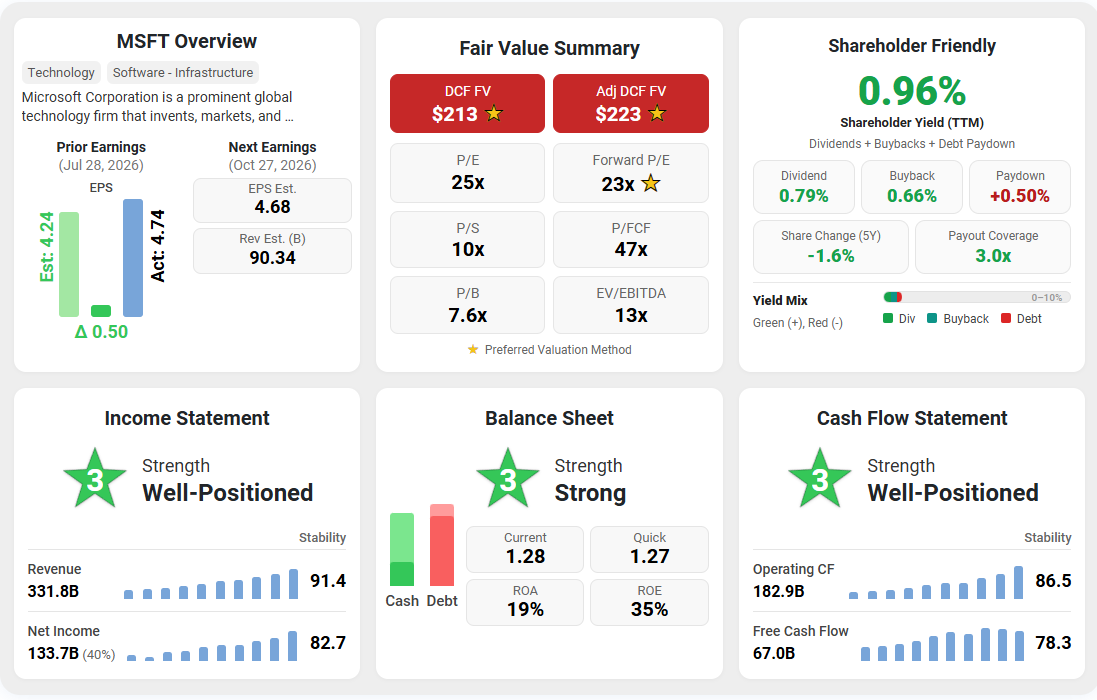
The math remains highly sensitive to free cash flow generation. Free cash flow fell 23% in the fourth quarter as the company spent $35.8 billion on property and equipment. If Microsoft cannot return to positive free cash flow growth by next year, the current premium multiple could contract sharply.

Microsoft (MSFT) Summary Scores

Microsoft (MSFT) Summary Scores

Bottom line

Building the future of computing is expensive. Microsoft is one of the clearest examples of a company turning new artificial intelligence infrastructure into current cloud growth, with Azure revenue up 43% and operating cash flow up 30%. The tradeoff is that free cash flow fell to $19.6 billion as cash spending on property and equipment more than doubled. The premium valuation can still work, but only if demand remains strong enough to absorb higher capital spending without causing a sustained decline in margins and free cash flow.

Pre Market Pulse

  • June Personal Consumption Expenditures price index data showed core inflation easing to 3.3% year over year.

  • Futures for the Nasdaq 100 pointed higher by roughly 1% early Friday.

  • Semiconductor equipment and design stocks caught a strong bid as massive capital expenditure budgets guarantee hardware demand.

Why it matters this morning

Cooling inflation takes some pressure off the Federal Reserve, but it does not guarantee that an interest rate cut is coming. Core inflation eased to 3.3% year over year in June, while headline inflation remained at 3.7%, which is still well above the Fed’s 2% goal. The Fed held rates steady this week, and three policymakers actually preferred a quarter point increase. For technology stocks, strong earnings and visible cloud demand are doing more of the work this morning than a clear shift toward lower interest rates.

Peer Read Through

Amazon (AMZN)

Amazon Web Services revenue grew 36.7% to $42.2 billion, its fastest growth in 18 quarters, while operating income reached $16.6 billion and operating margin expanded to 39.4%. The other side of the story is cash flow. Amazon reported a trailing twelve month free cash outflow of $7.6 billion and raised its expected 2026 cash capital spending to roughly $220 billion. Investors still rewarded the stock because the acceleration in AWS made the return on that spending easier to see.

Meta Platforms (META)

Meta showed that advertising demand remains strong, with total revenue up 28% and advertising revenue up 27%. Operating margin fell from 43% to 31%, but that decline also included $2.4 billion of legal charges and $1.18 billion of severance expenses. Separately, capital expenditures reached $31.1 billion against $31.9 billion of operating cash flow, leaving only $784 million of free cash flow.

Alphabet (GOOGL)

Google Cloud revenue jumped 82% to $24.8 billion, while its operating margin increased from 20.7% to 35.6%. Actual second quarter capital spending reached $44.9 billion against $39.1 billion of operating cash flow, producing negative free cash flow of $5.9 billion. Separately, management raised its full year capital expenditure guidance to between $195 billion and $205 billion, which added to investor concerns about how long cash flow will remain under pressure.

Group takeaway

The market is not applying one simple rule to every company. Microsoft was rewarded for strong Azure growth and positive free cash flow, while Amazon rallied even though its trailing twelve month free cash flow turned negative because AWS growth accelerated to 37%. Meta and Alphabet were punished because spending surged while near term free cash flow weakened and the payoff looked less certain. The common thread is not positive free cash flow by itself. It is whether investors can see enough growth and future profit to justify the spending.

What to Watch

  • Monitor whether Azure constant currency growth can meet management’s approximately 45% guidance in the upcoming fiscal first quarter.

  • Watch how quickly Microsoft turns recently added capacity into revenue. The company added 31 data centers during the fourth quarter and 88 during the full fiscal year, but management still said customer demand exceeds available capacity.

  • Track paid Microsoft 365 Copilot seats from the current level of more than 30 million. The more important measures are the pace of new seat additions and whether Copilot helps increase the amount Microsoft earns from each customer.

  • Expect first quarter capital expenditures to be over $50 billion, not near $50 billion. Part of that figure will reflect a change in how certain data center leases are classified, so investors should separate the accounting change from the underlying increase in physical infrastructure spending.

Bottom line

The setup relies on customer demand staying strong enough to absorb the new capacity while Microsoft protects margins and cash flow. One slight miss on Azure growth would not break the thesis. The real warning would be a sustained period in which capital spending keeps rising faster than cloud revenue, operating profit and free cash flow. That is the gap long term investors need to track.

STOCKS IN THIS ARTICLE

Also Mentions:

Comments