Nvidia And The Circular Financing Debate

Nvidia is pivoting from chip supplier to financier, reportedly weighing a $250 billion guarantee for OpenAI.

The traditional way to value a semiconductor company is to look at its chip designs, its manufacturing partners, and its order book. For the past two years, Nvidia (NVDA) looked like the perfect high margin supplier, selling expensive hardware to eager cloud giants. But over the weekend, several massive partnerships and one reported financing proposal signaled a possible shift in that business model. Nvidia is no longer only selling the picks and shovels for the artificial intelligence gold rush. It is also investing directly in customers and, according to a Wall Street Journal report, discussing a potential $250 billion guarantee tied to OpenAI’s planned Ohio data center. That guarantee has not been announced or finalized, but if it moves forward, it would change the risk profile for every shareholder.

Main Note

The Balance Sheet Cost of Securing Capacity

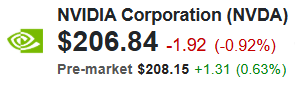
NVIDIA Corp (NVDA) Quote

Verdict: The market is split on whether Nvidia is rationally unblocking a financing bottleneck or moving too close to buying its own future revenue. The distinction matters because the reported OpenAI guarantee is still under discussion. If it is signed on the terms being reported, Nvidia would take on a very different kind of risk. Until then, this is a potential thesis change, not a completed balance sheet event.

What happened

Over the weekend, Nvidia and SK Group announced plans for a $500 billion plus initiative covering SK Telecom (SKM)’s planned 2 gigawatt AI factory and a long term memory partnership with SK hynix. The two sides signed letters of intent, so the headline value should not be treated as a funded Nvidia commitment or a binding order book. Nvidia also announced a planned $1 billion equity investment in Naver. Naver said it will issue 7.2 million new shares to Nvidia, giving the company a 4.5% stake if the transaction closes. The investment is subject to Naver securing at least $9 billion of separate financing, while Brookfield (BN)’s term sheet to provide that financing is nonbinding. These are staggering figures, but the structure is what matters. Nvidia is not just receiving purchase orders. The company is deploying its own stellar credit rating and cash reserves to ensure its customers can actually afford to build the massive facilities required to house its next generation chips.

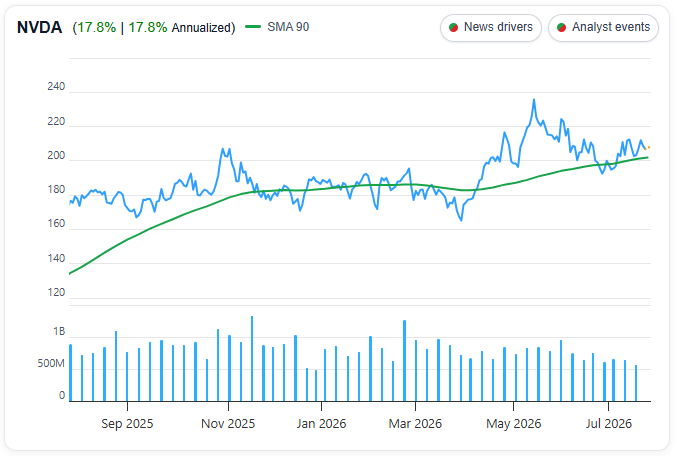
NVIDIA Corp (NVDA) 1 Year Chart

NVIDIA Corp (NVDA) 1 Year Chart

Why it matters

Separately, the Wall Street Journal reported that Nvidia is discussing a potential $250 billion guarantee to support OpenAI’s lease of a 10 gigawatt data center project being developed by SoftBank (SFTBY)’s energy subsidiary in southern Ohio. The same report said Nvidia is also discussing up to $350 billion of financing for OpenAI chip purchases. The $250 billion figure relates to lease and project financing rather than a purchase of Nvidia chips. Reuters said it could not independently verify the report, and the companies had not confirmed that either proposal had been signed.

What changed in the thesis

Investors should increasingly view Nvidia as more than a pure chip designer, but the thesis has not changed as much as the headline figures suggest. The SK agreement is primarily a long term commercial partnership, and the Naver deal is a planned equity investment. The potential step change would come from an executed OpenAI guarantee. If that happens, shareholders would need to track the maximum exposure, accounting treatment, credit protections and effect on Nvidia’s financial flexibility.

What the market may be missing

Markets may be focusing on the $250 billion headline without separating a guarantee from an immediate cash outlay. A guarantee would expose Nvidia only under the events and limits set by the final contract, which have not been disclosed. There is a real industry precedent here. Google (GOOGL) has already agreed to backstop billions of dollars of Fluidstack lease obligations tied to TeraWulf (WULF) data centers. Anthropic has also reportedly discussed seeking similar support from Google, but that arrangement has not been confirmed.

Valuation and expectations

The sheer size of these financial backstops introduces a new risk premium to the valuation multiple. Markets will have to discount the possibility of defaults in the developer ecosystem. While the deals lock in long term demand for Nvidia hardware, the actual deployment timelines are stretched into 2027, meaning near term revenue expectations should not automatically jump to match the headline figures.

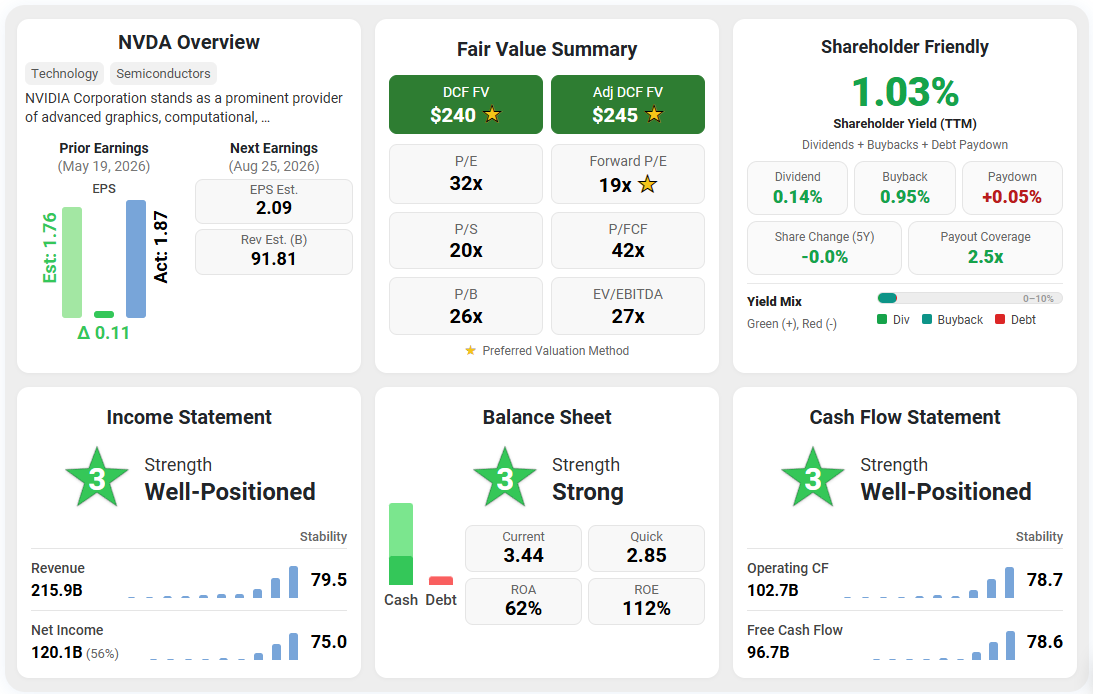
NVIDIA Corp (NVDA) Summary Scores

NVIDIA Corp (NVDA) Summary Scores

Bottom line

Nvidia is aggressively using its financial weight to secure its future ecosystem. If monetization holds up, this looks like a brilliant move to lock out competitors. If end demand falters, the historical parallels to the late 1990s telecom bust suggest severe balance sheet risks.

Pre Market Pulse

  • Nvidia shares were up roughly 1% near $209 in early Monday trading as investors weighed the potential OpenAI guarantee against the long deployment schedule and a broader rebound in technology stocks.

  • Naver shares closed more than 8% higher in Seoul after the company approved a $1 billion share placement to Nvidia. The investment is still subject to closing conditions, including Naver securing at least $9 billion of separate project financing.

  • SK hynix shares closed 3.2% higher in Seoul, while its newly listed US shares were up roughly 6% in early pre market trading. The permanent Nasdaq ticker is SKHY.

Why it matters this morning

The early reaction is positive, but investors are responding to three different things. Naver is getting a valuation boost from a planned equity investment, SK hynix is gaining from a long term memory partnership and a broader chip rebound, and Nvidia shareholders are evaluating a financing structure that remains under discussion. None of that creates a $250 billion liability for Nvidia today.

Peer Read Through

Alphabet Inc. (GOOGL)

Google has already used its balance sheet to backstop billions of dollars of Fluidstack lease obligations tied to TeraWulf data centers. Anthropic has reportedly discussed seeking similar backing from Google, but no completed Anthropic guarantee has been confirmed

SK Hynix (SKHY)

The partnership strengthens SK hynix’s position as a key supplier of next generation HBM and gives Nvidia a more stable memory supply path. It does not mean future capacity is fully sold out because the companies have not disclosed binding volumes, pricing or purchase commitments.

SoftBank Group (SFTBY)

SoftBank’s SB Energy is reported to be developing the southern Ohio site. It could benefit if an Nvidia guarantee improves the project’s financing terms, but Nvidia has not announced that guarantee and the final structure remains unknown.

Group takeaway

The capital required to scale artificial intelligence has grown too large for traditional funding markets alone. Regional operators and infrastructure developers are leaning heavily on the credit ratings of mega cap tech companies to keep the build cycle moving.

What to Watch

  • Whether Nvidia, OpenAI or SB Energy confirms that a binding Ohio guarantee has been signed. The maximum covered amount, maturity, trigger events, collateral, recourse and guarantee fee will matter more than the headline number.

  • Any Nvidia filing or rating agency comment explaining how a completed guarantee would be treated and how much financial flexibility it would consume.

  • Whether the SK Group letters of intent turn into binding purchase commitments with disclosed volumes, pricing and deployment schedules.

  • Whether Naver secures at least $9 billion of committed financing, which is a condition of Nvidia’s planned $1 billion investment.

Bottom line

The focus shifts from tracking supply constraints to monitoring the health of the financial instruments funding these purchases. Investors should watch bond yields and credit spreads for any sign of stress in the broader financing ecosystem.

STOCKS IN THIS ARTICLE

Also Mentions:

Comments