

Key Market Outlook(s) and Pick(s)
On Friday, I joined Joel Elconin on The Stock Trader Network to discuss markets, the economy, outlook, and the latest developments. Thanks to Joel and Zoltan Suranyi for having me on. Link here
On Tuesday, I spoke to students at La Quinta High School in Westminster, CA, about investing and life lessons. Thanks to AP Statistics Teacher Cork Snider for inviting me back for the second time. Link here.
View the full slide deck PDF here
GXO Update
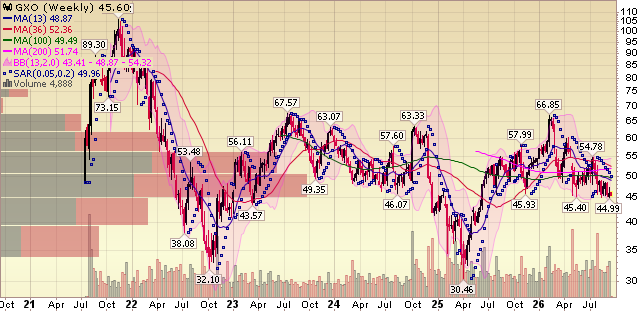
For newer readers, here’s a quick overview of the key drivers behind our thesis on GXO, the world’s largest pure-play contract logistics provider and one of the cleanest ways to play the restocking cycle against a backdrop of powerful secular tailwinds:
Company Overview
World’s largest pure-play contract logistics provider; spun off from XPO Logistics in August 2021. Based in Greenwich, CT. 4x–8x the size of nearest pure-play competitors.
Global operations: >1,000 facilities, >200M sq ft, >150,000 team members across 27 countries.
Services: warehousing, distribution, order fulfillment, e-commerce, reverse logistics, and value-add supply chain solutions.
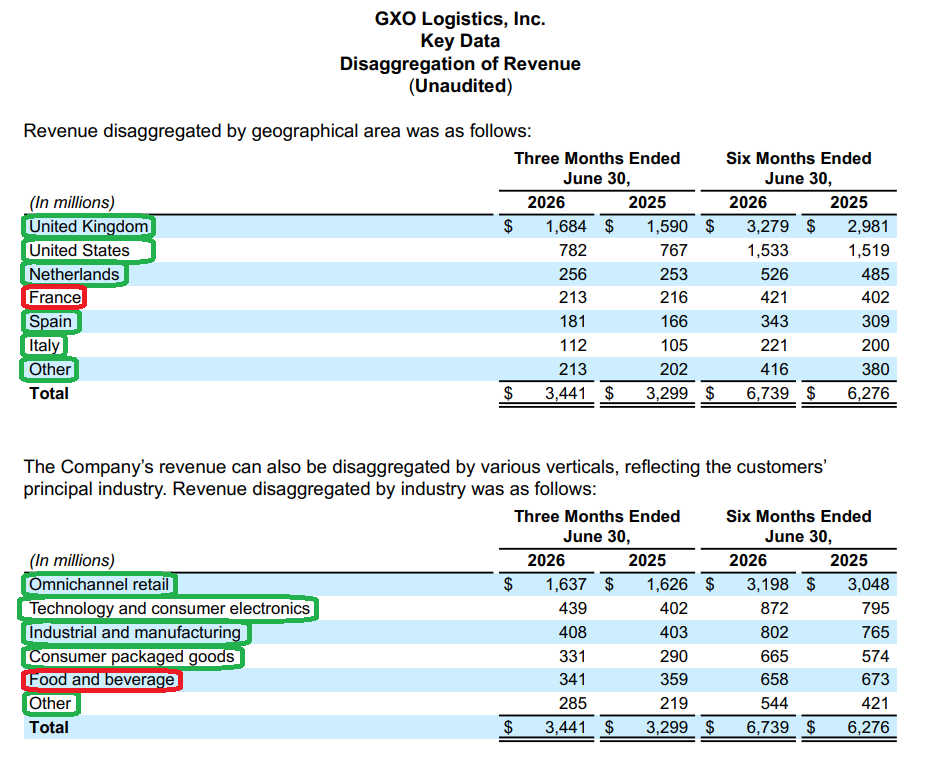
Revenue mix (FY2025): UK 47.8%, U.S. 24.0%, Netherlands 7.9%, France 6.2%, Spain 4.9%, Italy 3.1%, Other 6.2%. Key end markets: omnichannel retail 48.6%, tech & consumer electronics 12.5%, industrial & manufacturing 11.6%, food & beverage 10.5%, CPG 9.5%.
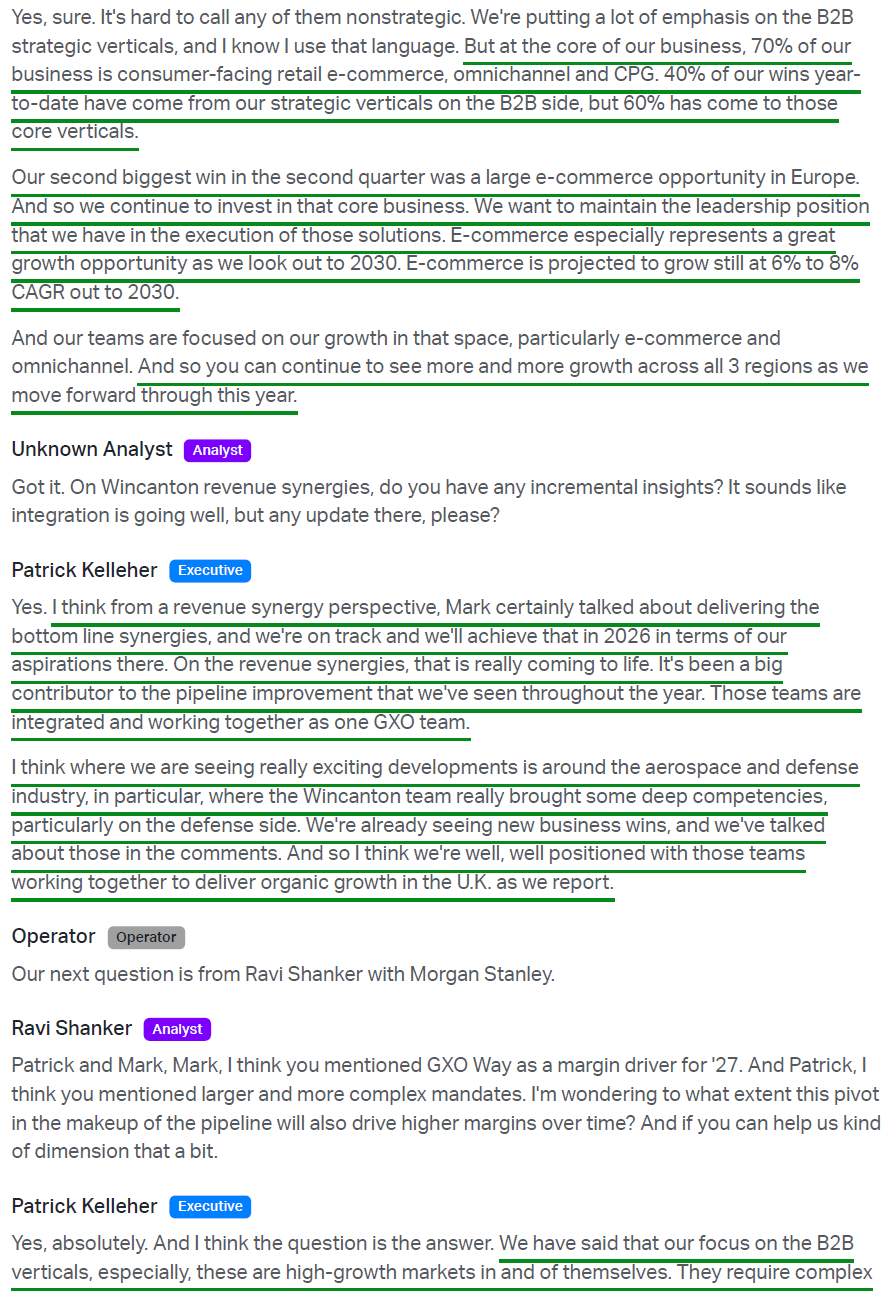
Business mix ~70% CPG / consumer retail e-commerce and ~30% B2B, with the shift toward higher-growth verticals expected to move both top line and margins.
Serves ~30% of Fortune 100. Blue-chip customers include Apple, Nike, Boeing, Levi’s, and Pepsi (top 20 average tenure ~15 years). Customer retention >95%, average contract ~5 years, revenue predictability 80-90%.
Record net sales $13.2B in FY2025. Shares are still down ~55% from post-spin highs (~$104).
Management
CEO Patrick Kelleher (since August 2025): 33+ years in global supply chain; former CEO of DHL Supply Chain North America.
Refreshed leadership team: new President Americas & Asia Pacific (Michael Jacobs, ex-Ferguson), new COO (Bart Beeks, 20+ years CEVA Logistics), new Chief Commercial Officer (Karen Bomber, ex-ABB), and new CFO (Mark Suchinski, decades of experience in labor productivity, contracting and pricing, with deep aerospace & defense expertise).
The build-out is still in progress: GXO had no COO, no CCO, and no global procurement function at the start of 2026. Both new leaders are building teams from scratch, with an implementation solutions leader being recruited to enable enterprise-level deployment rather than regional.
Refreshed board with seven new members, all hand-picked by Brad Jacobs.
Investor Day on November 16, 2026 at the NYSE will provide the updated long-term strategic roadmap, financial framework, and value-creation opportunities under Kelleher.
Re-Accelerating Organic Growth
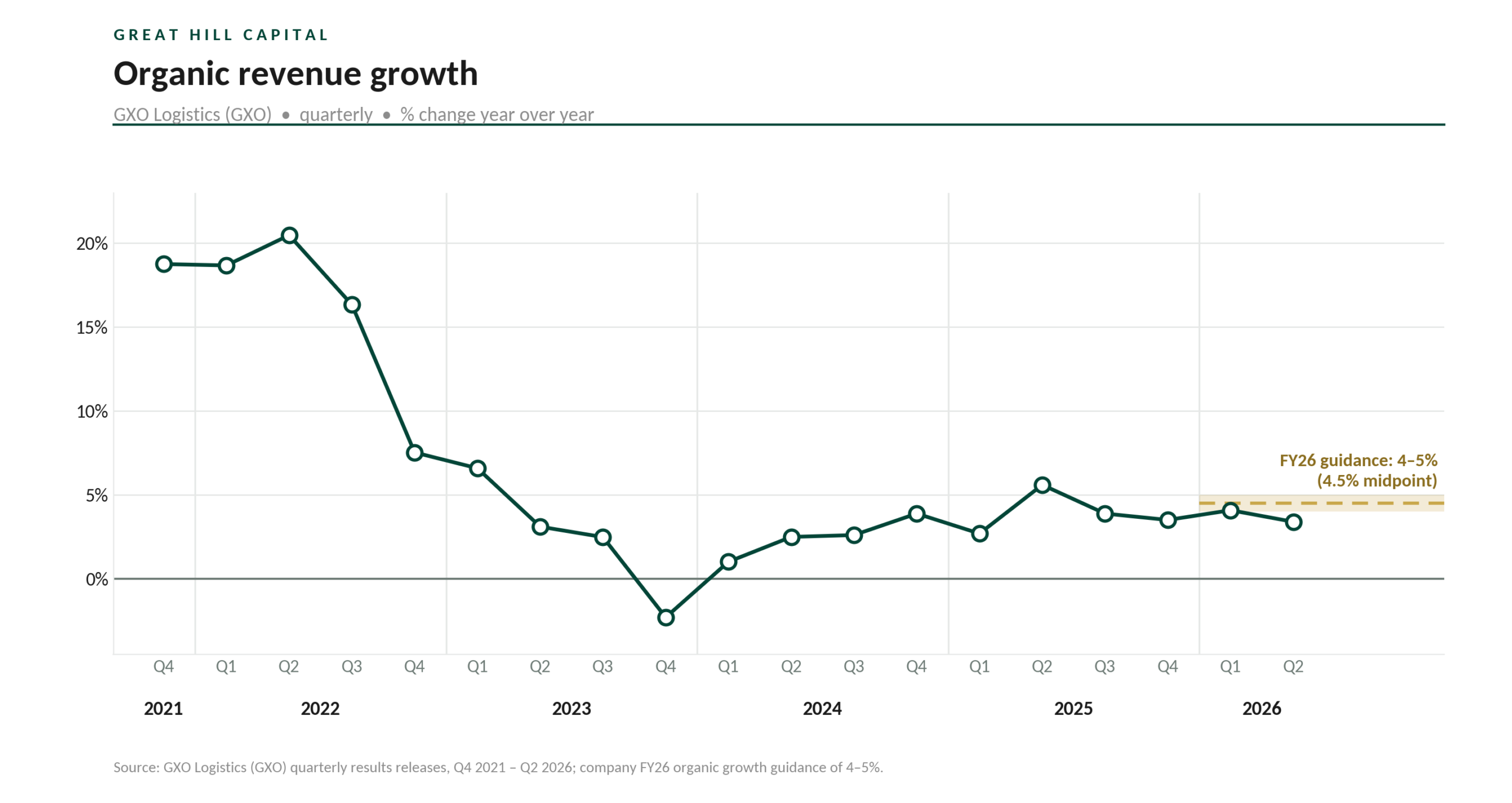
The e-commerce boom (high-teens to 20% growth pre-2022) slowed sharply from the goods-to-services shift, destock cycle, and prolonged freight downturn. Organic growth bottomed at -2.3% in Q4 2023.
FY2025 organic growth +3.9%.
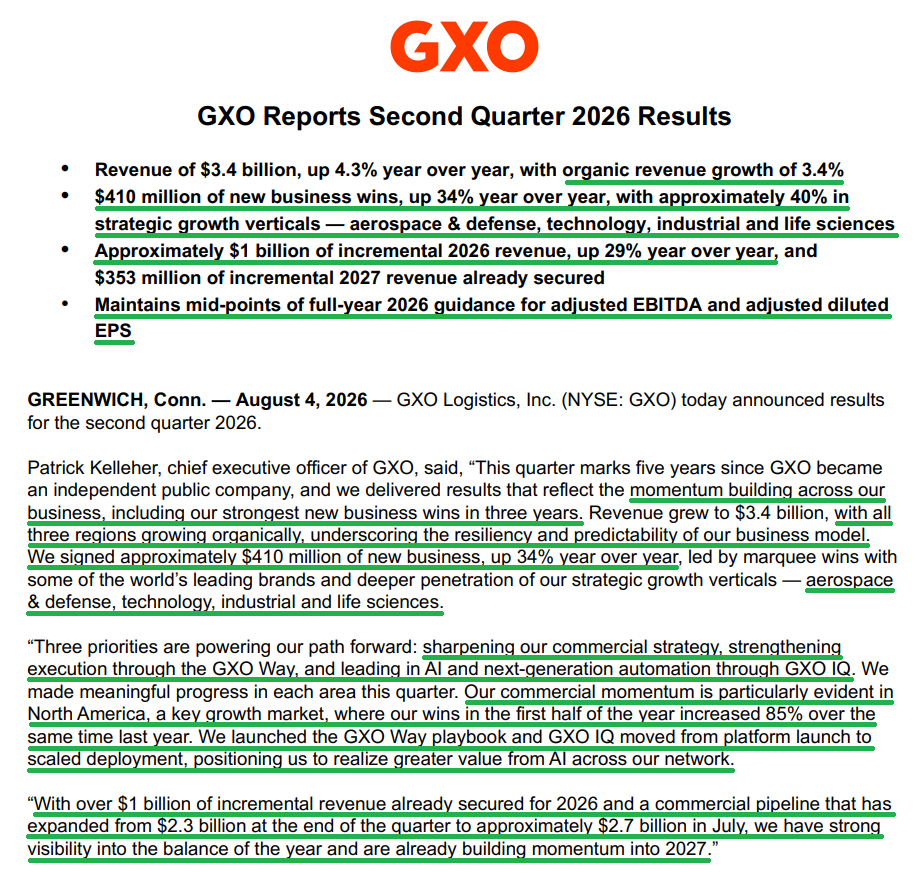
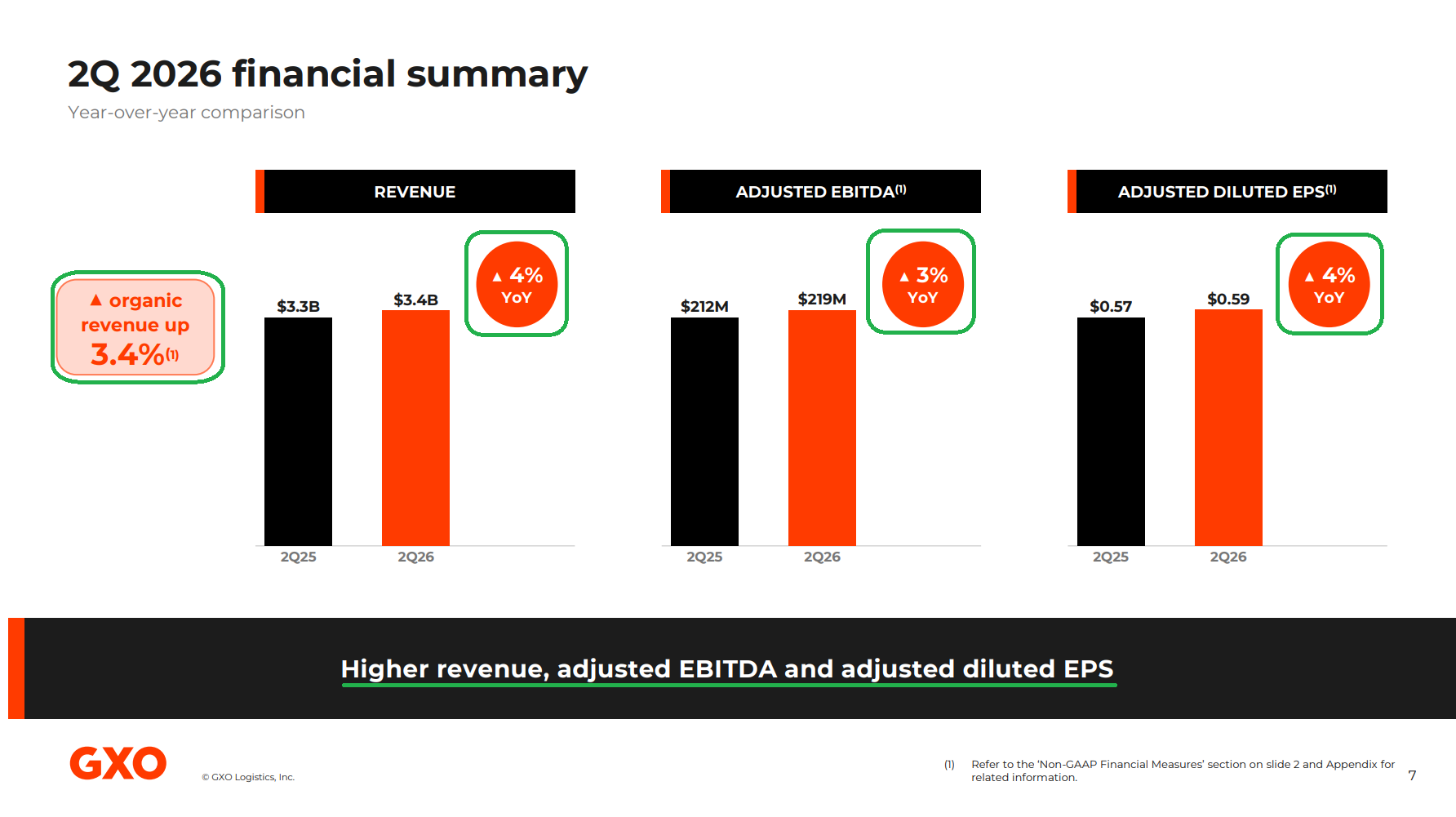
Q2 organic growth +3.4%, decelerating from +4.1% in Q1 and landing shy of the ~4% Street expectation. Reported revenue $3.4B (+4.3% Y/Y), missing consensus $3.47B by ~$30M, with FX providing only a ~0.9% tailwind (vs the 6.7% boost in Q1) as the weak-dollar comp narrows (key factor of the multinational and weaker dollar thesis, with >75% sales outside the US). Growth broad-based across all three regions, with 1H organic at 3.8%.
Management attributes the gap to 3.4% versus the expected 4% to $17M, or ~a two-week slip in contract start-up timing. New contracts take 3 to 6 months to ramp.
Aggregate customer volumes ~flat, plus or minus 1%. Softer e-commerce and retail in Europe offset by aerospace and defense, technology, industrial, and life sciences.
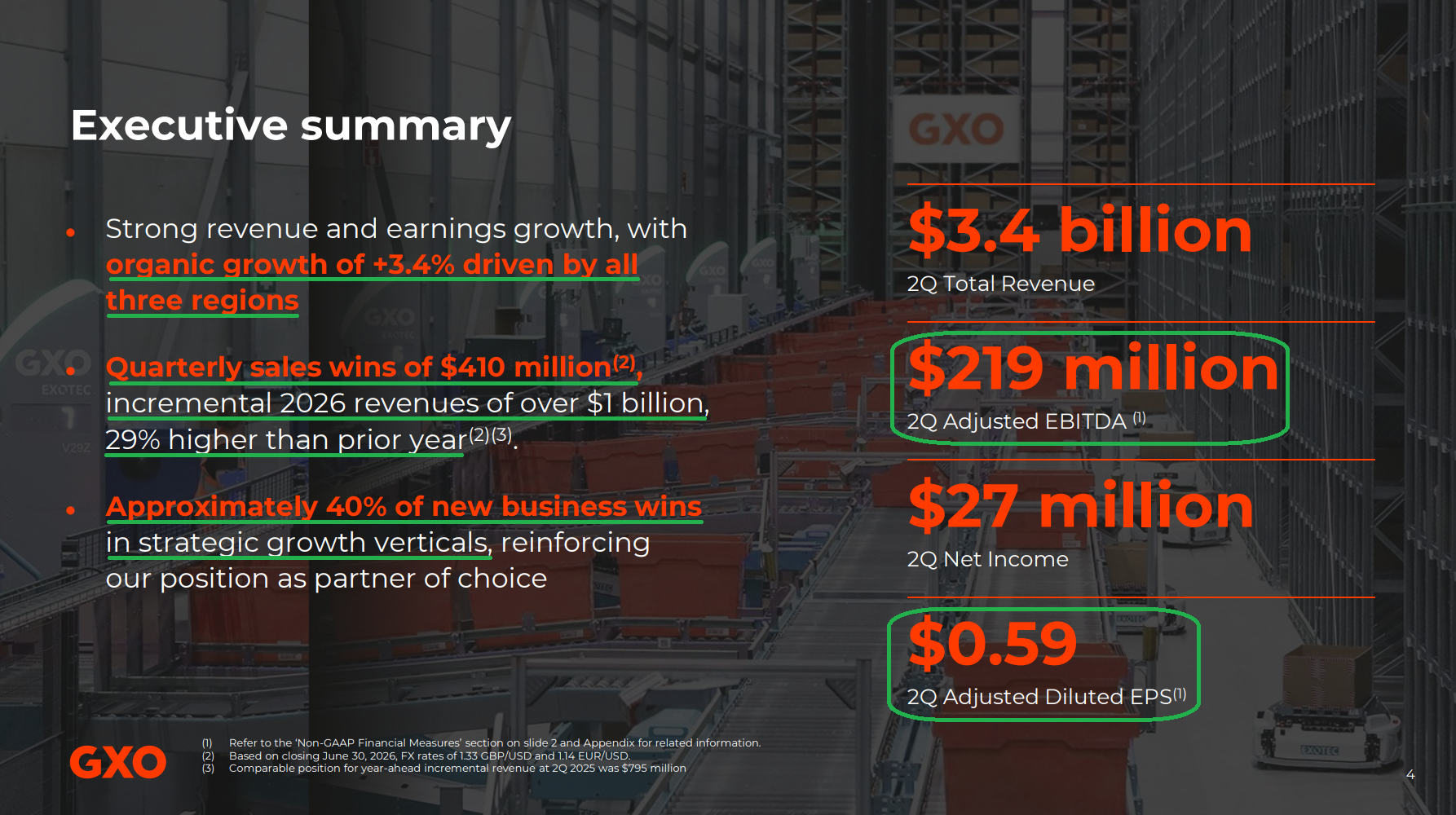
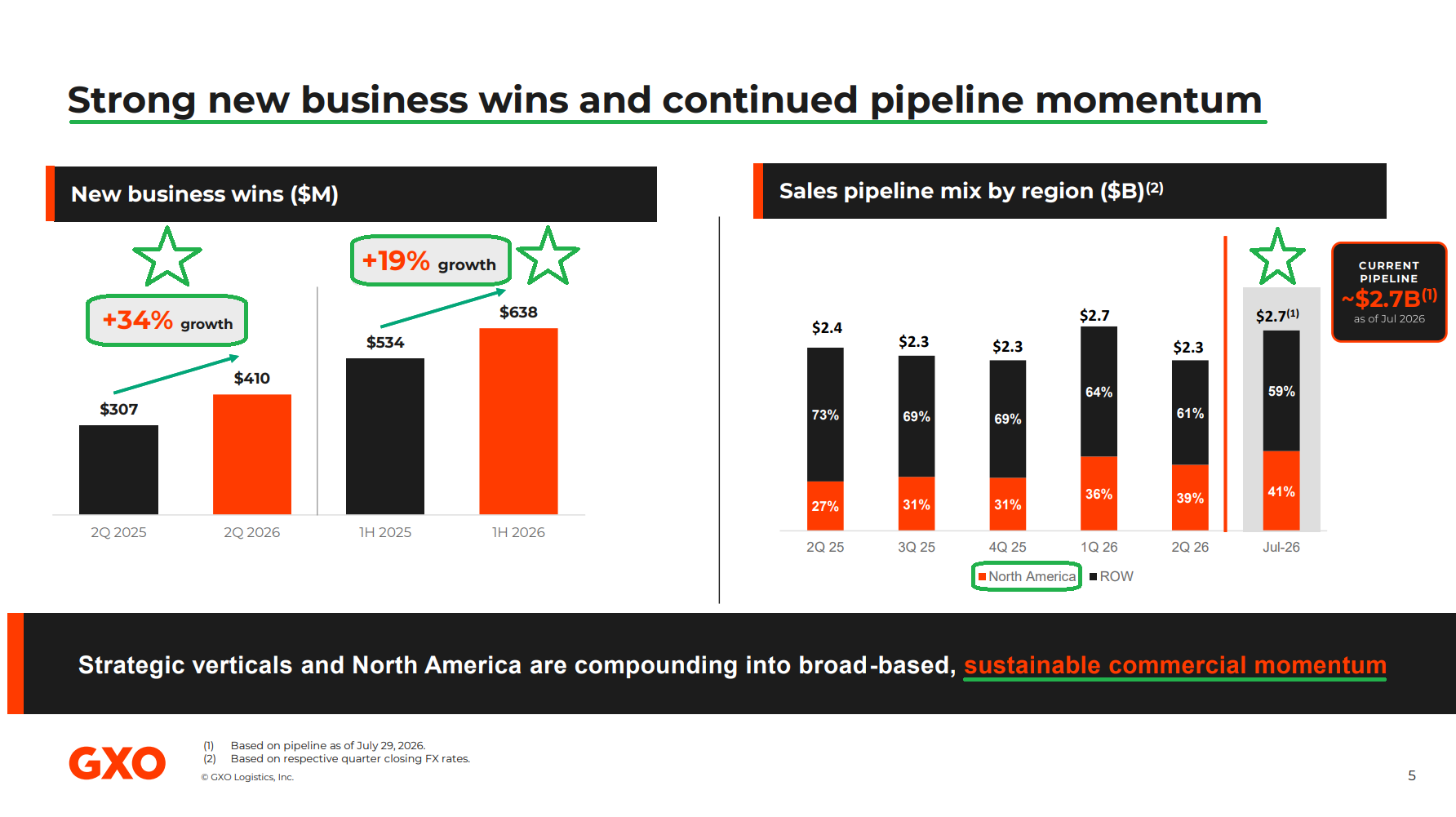
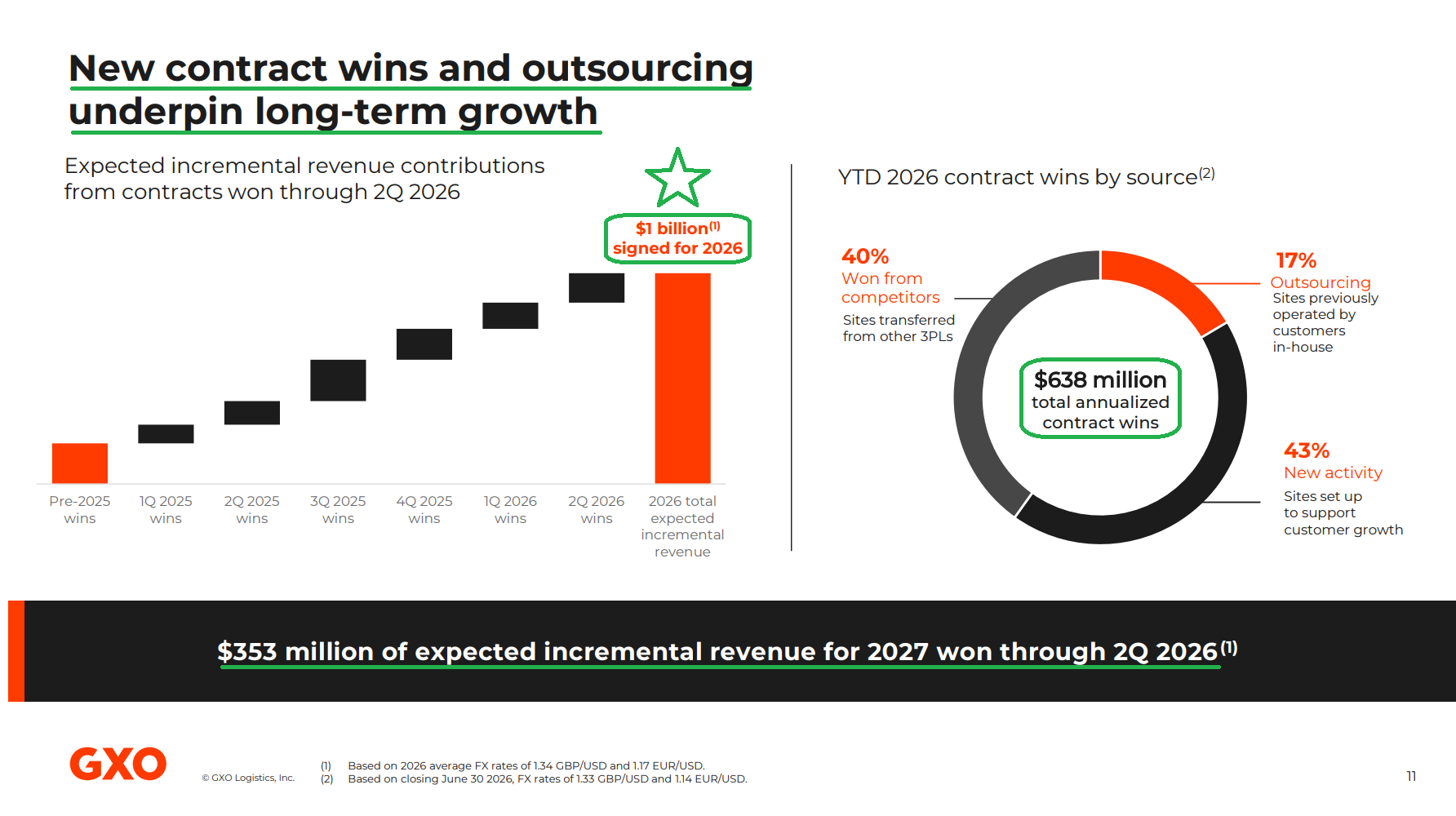
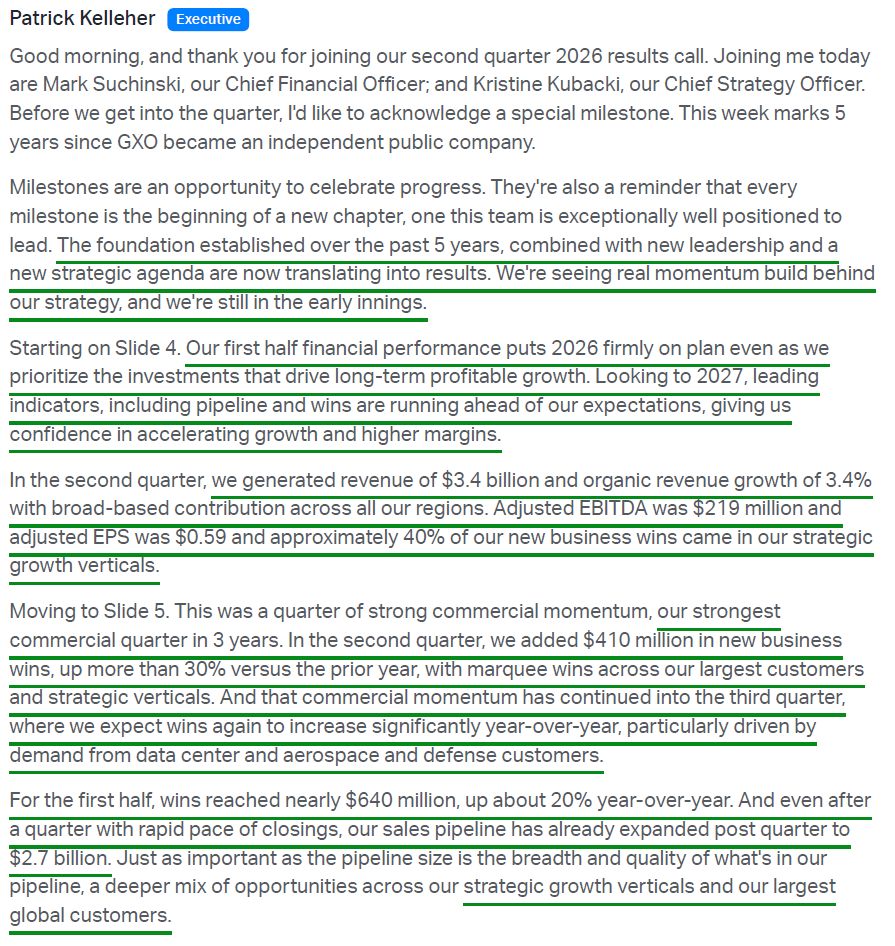
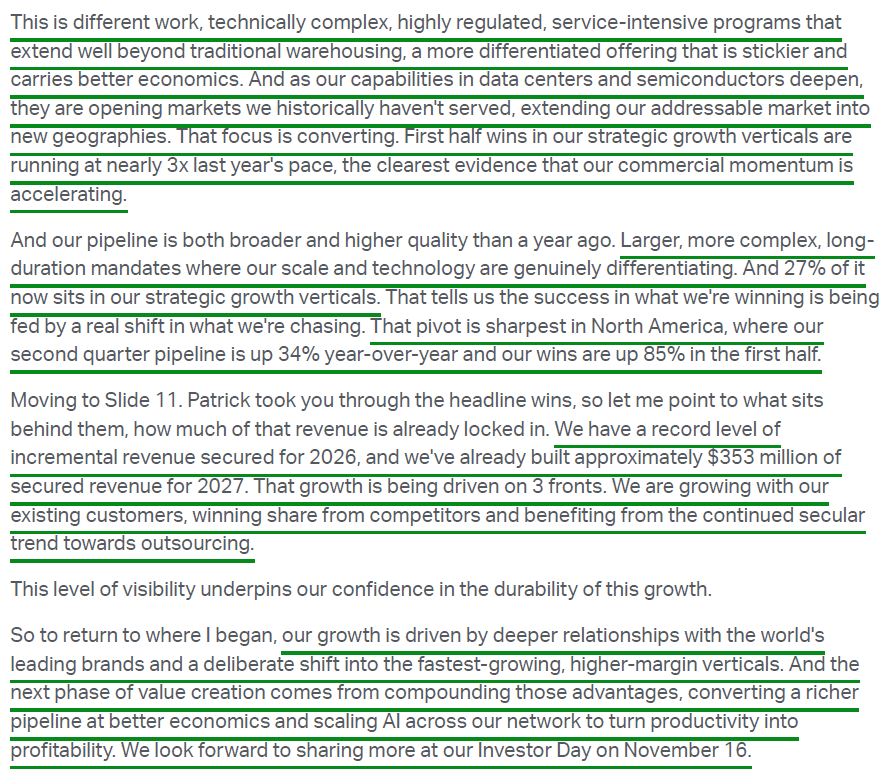
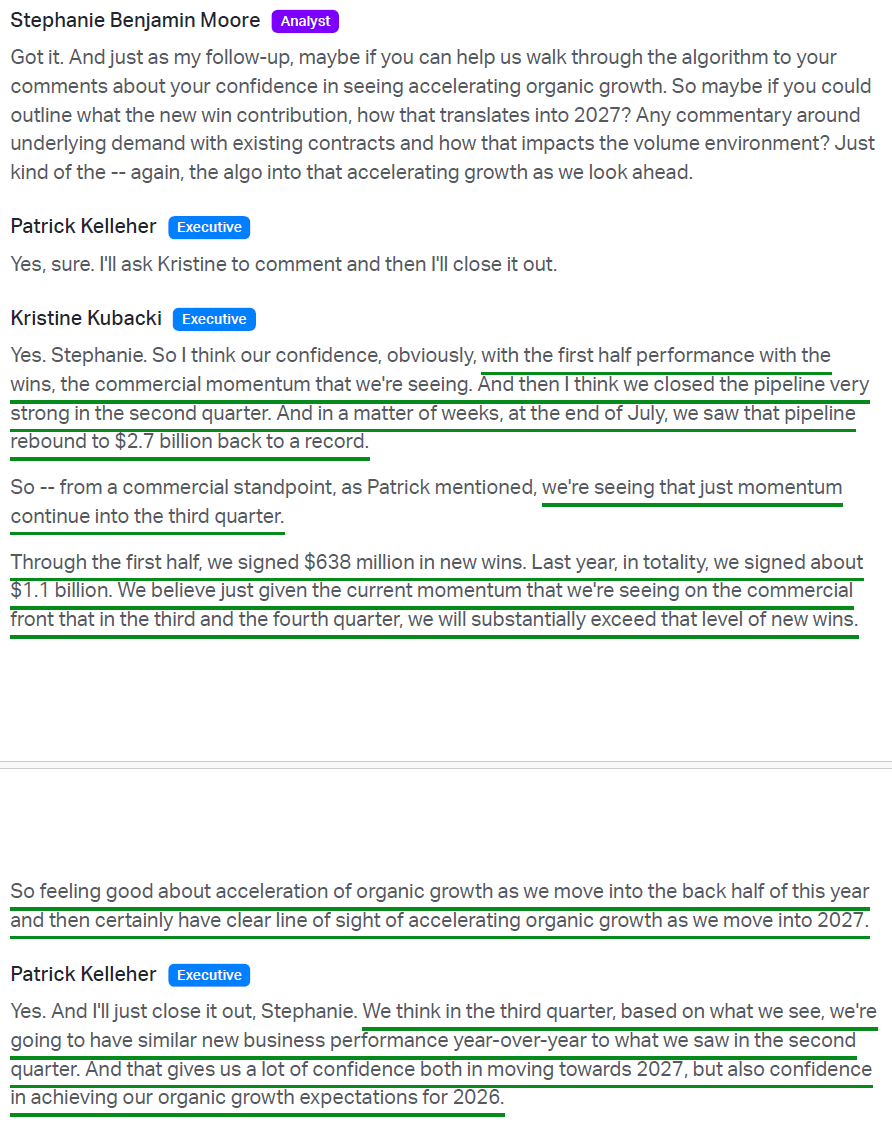
Signed $410M in annualized contract wins in Q2 (+34% Y/Y), the strongest commercial quarter in three years, with ~40% in strategic growth verticals (aerospace & defense, technology, industrial, life sciences). 1H wins $638M (+19% Y/Y). YTD wins by source: 40% won from competitors, 43% new activity, 17% outsourcing.
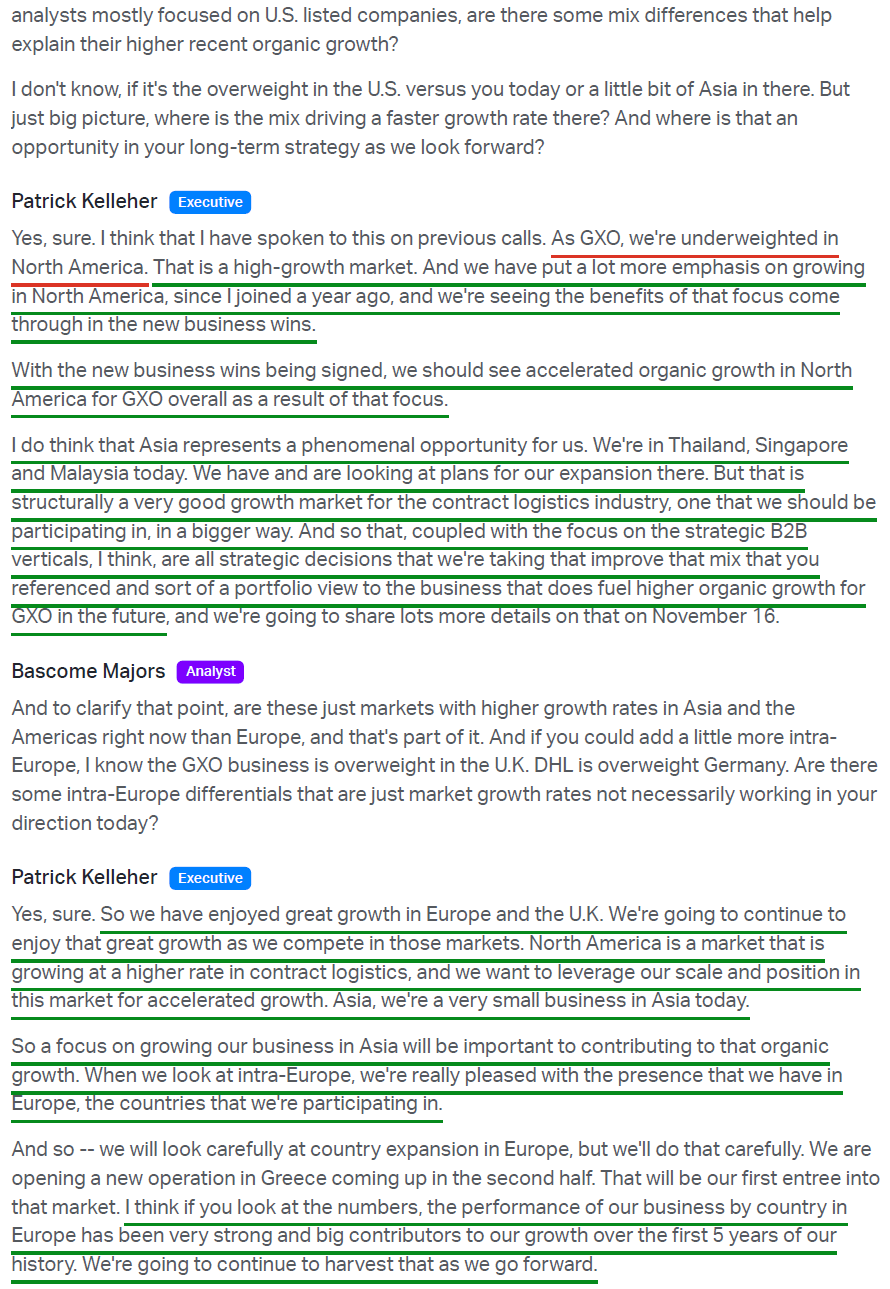
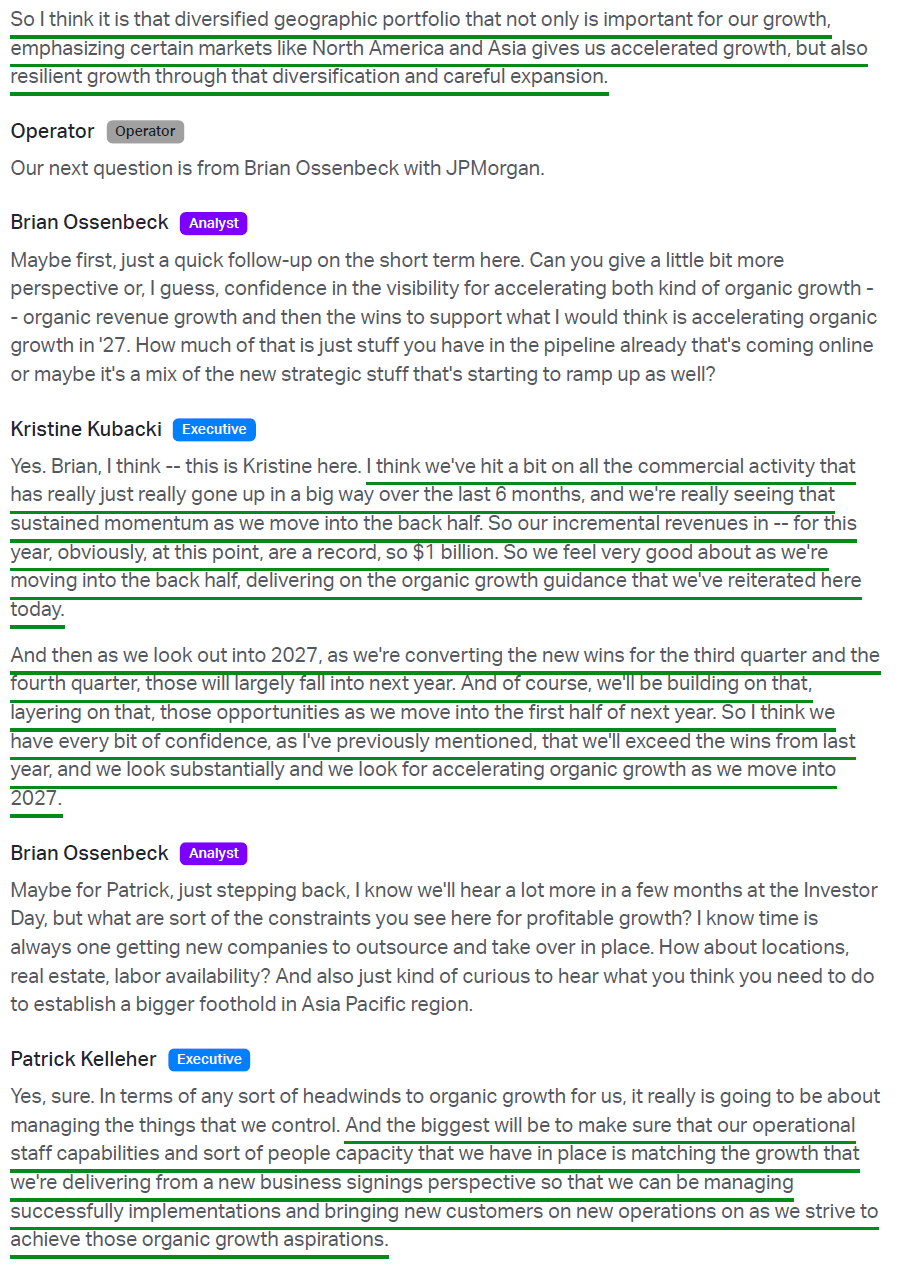
Incremental 2026 new business revenue now tops $1B (+29% Y/Y), with $353M already booked for 2027. Sales pipeline rebounded to a record $2.7B in July (from $2.3B at quarter-end), with North America now 41% of the mix (vs ~27% a year ago) and NA 1H wins up 85% Y/Y as Kelleher’s commercial focus on the underpenetrated U.S. market takes hold.
Pipeline converts at ~28% and turns ~1.5x per year.
Management’s stated Q3 goals are another strong contract win quarter plus sequential improvement in organic growth.
~70% of logistics still handled in-house; supply chains only getting more complex, creating a massive outsourcing opportunity. TAM exceeding $500B.
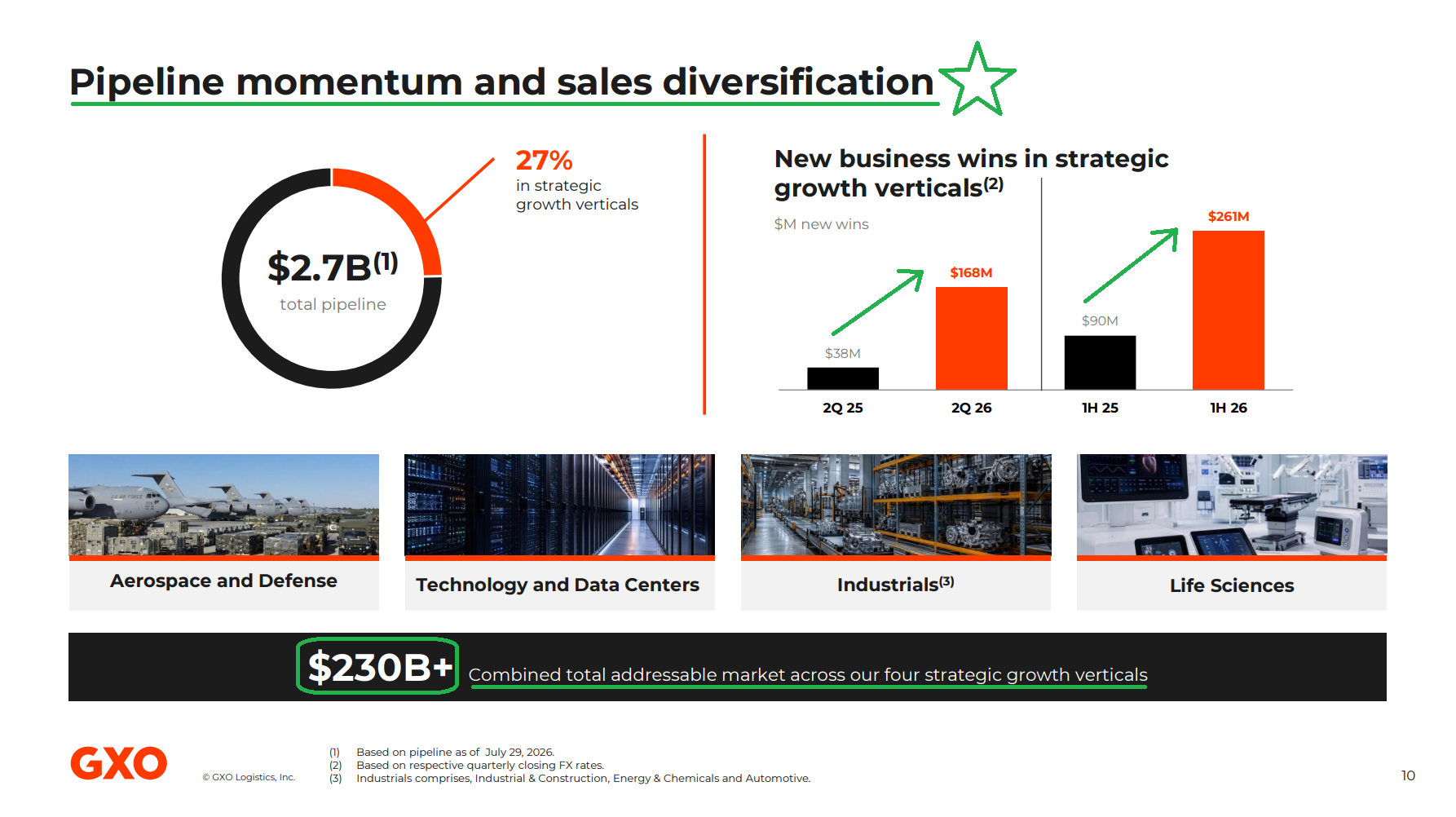
New verticals: data centers TAM $28B (added a major new hyperscaler relationship in Q2, GXO’s largest win of the quarter, plus GXO’s first semiconductor logistics win in Malaysia). Life sciences pipeline 3x in the last 12 months (TAM $34B). Combined TAM across the four strategic growth verticals >$230B.
FY2026 guidance: organic growth 4-5%. Mid-term target: return to high-single-digit organic. Potential for mid-teens organic long-term.
Margin Expansion
FY2025 adjusted EBITDA margin ~6.7% (-30 bps Y/Y due to Wincanton integration delays).
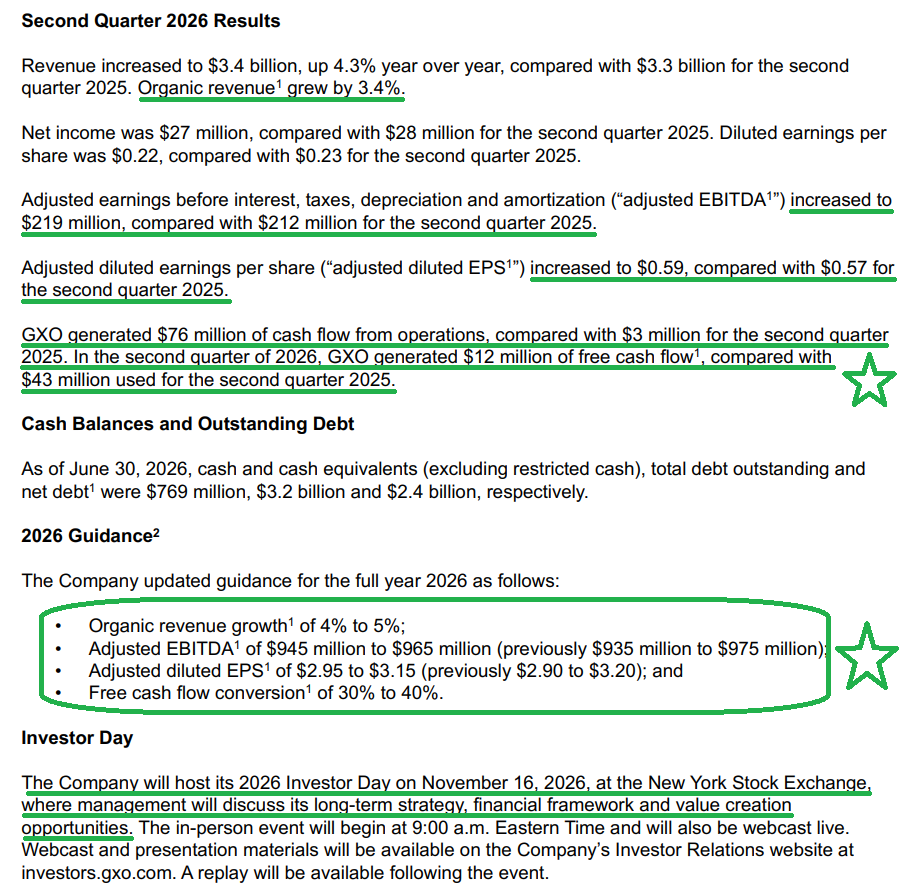
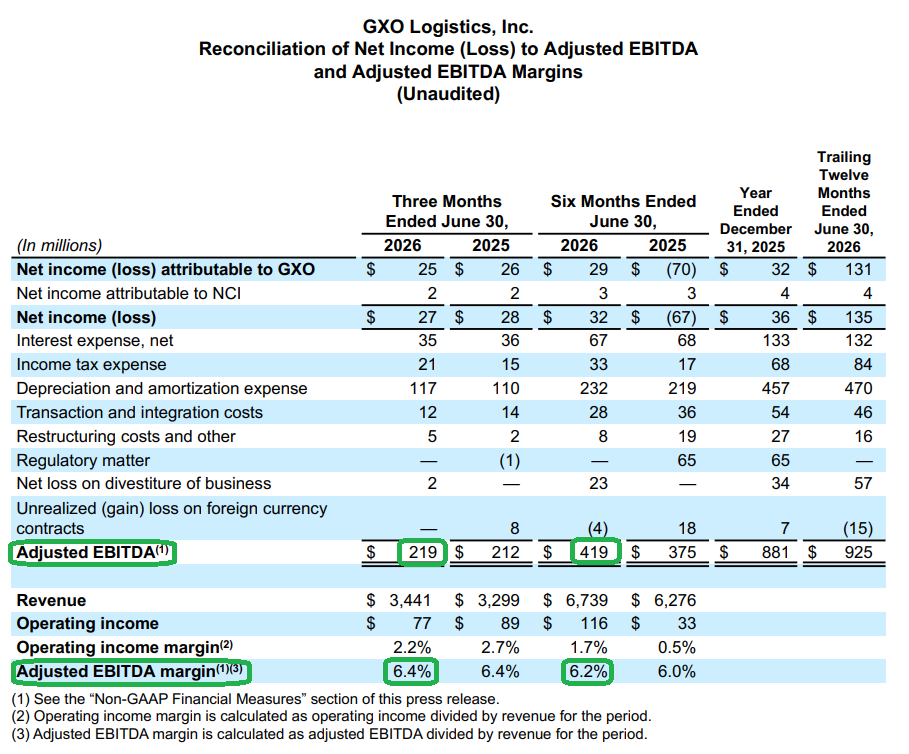
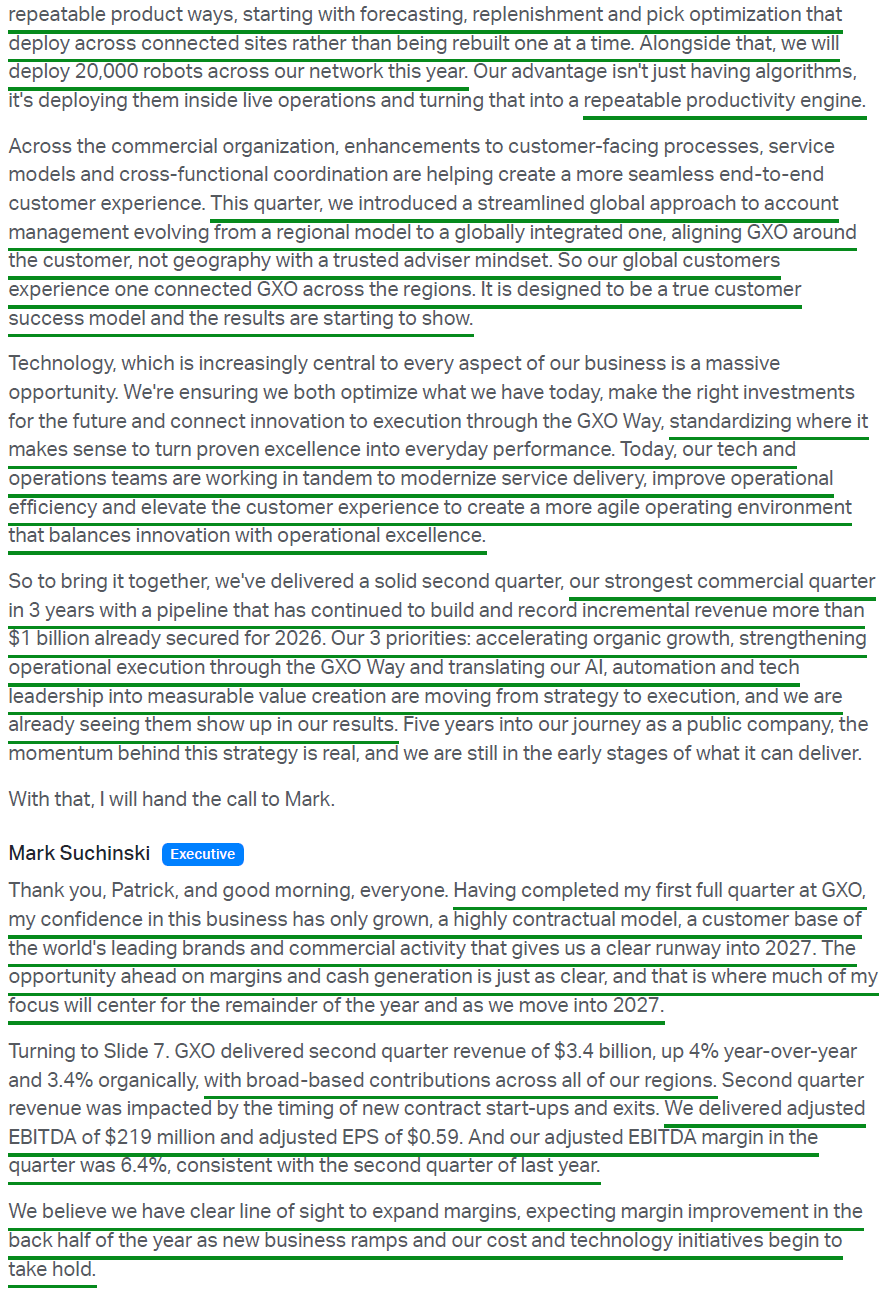
Q2 adjusted EBITDA $219M (+3.3% Y/Y), beating consensus ~$213M, with margin flat Y/Y at 6.4%.
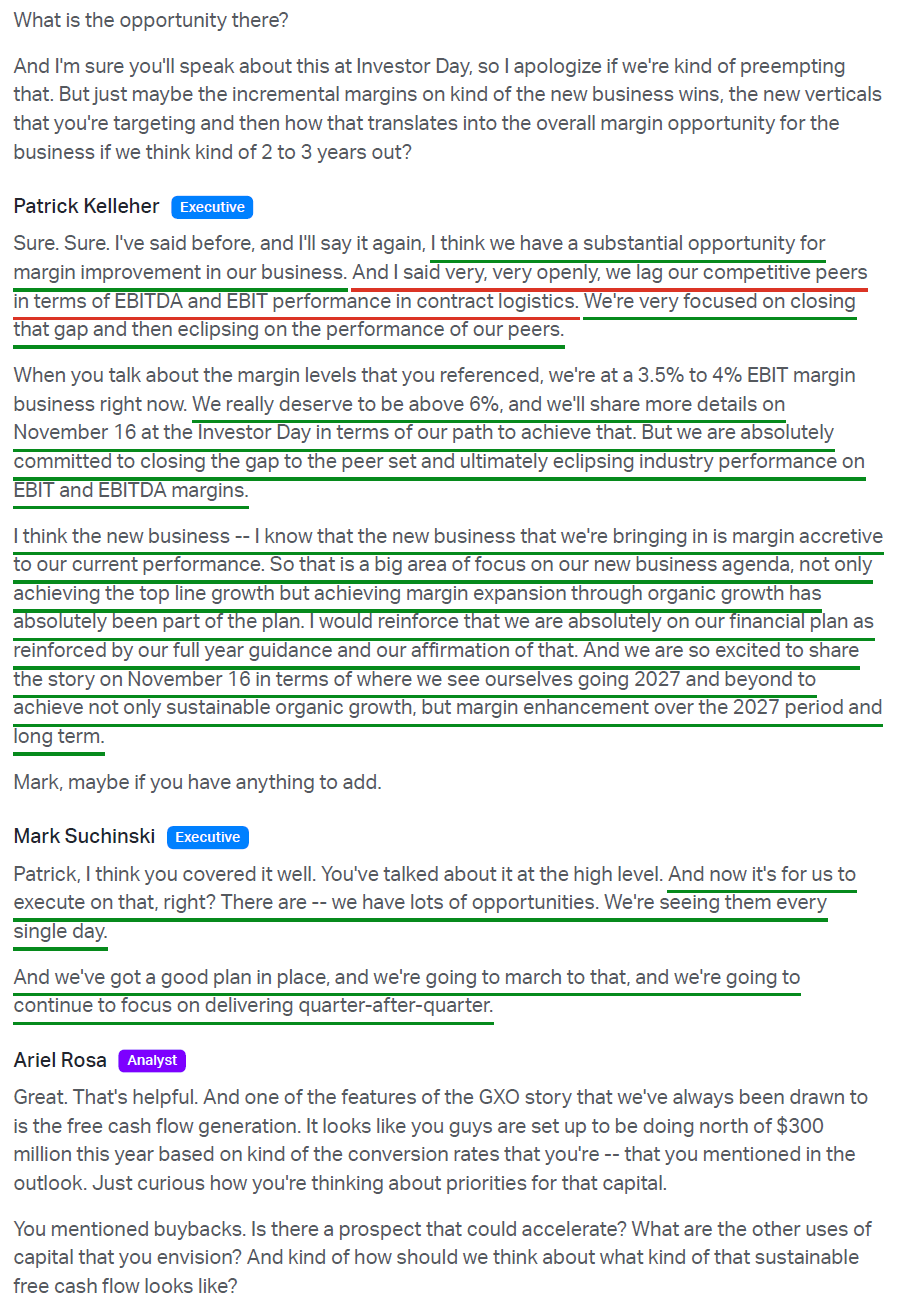
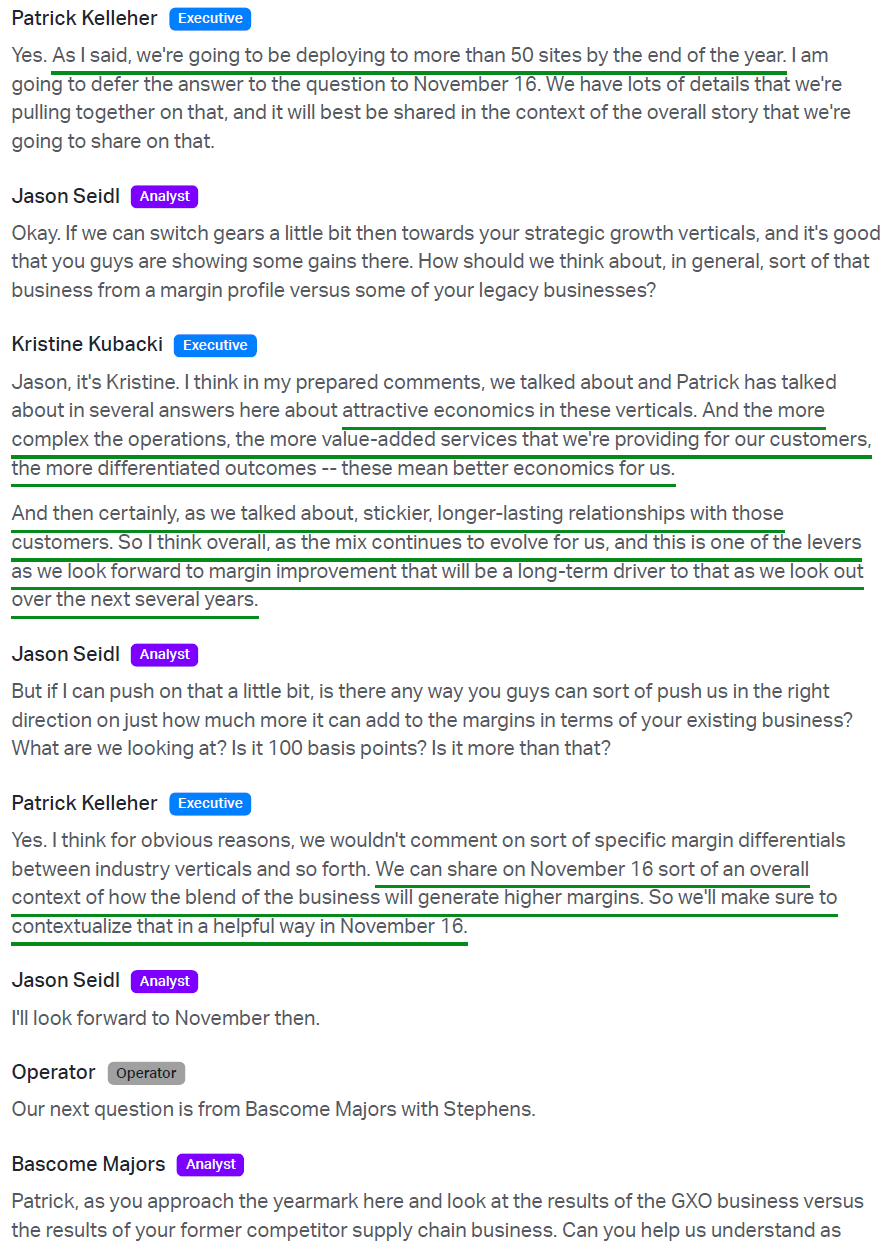
Clear line of sight to back-half margin expansion as new business ramps and cost/tech initiatives (procurement scale, labor management, the GXO Way) take hold. Currently a 3.5-4.0% EBIT margin business that management believes deserves to be above 6%, with the peer-gap-close path to be detailed at Investor Day.
The One GXO shift targets supplier savings at enterprise scale plus best practice sharing across ~1,200 operations.
Geographic mix is the second lever. North America is structurally higher margin and still under 30% of revenue. Asia is under 1% of revenue (Thailand, Singapore, Malaysia), a healthy-margin region where GXO steps in earnest in 2027.
Labor is ~2/3 of total cost, making it the largest single margin lever. Management found 58 different labor management systems across the network, deployed at only ~60 sites, and is consolidating to 2 enterprise systems. Six pilots are running across regions with 2 vendors selected.
Site-level implementations typically deliver 5% to 15% productivity improvement, with some shared back to customers and some retained.
The GXO Way, under the new COO, adds standard operating KPIs and continuous improvement.
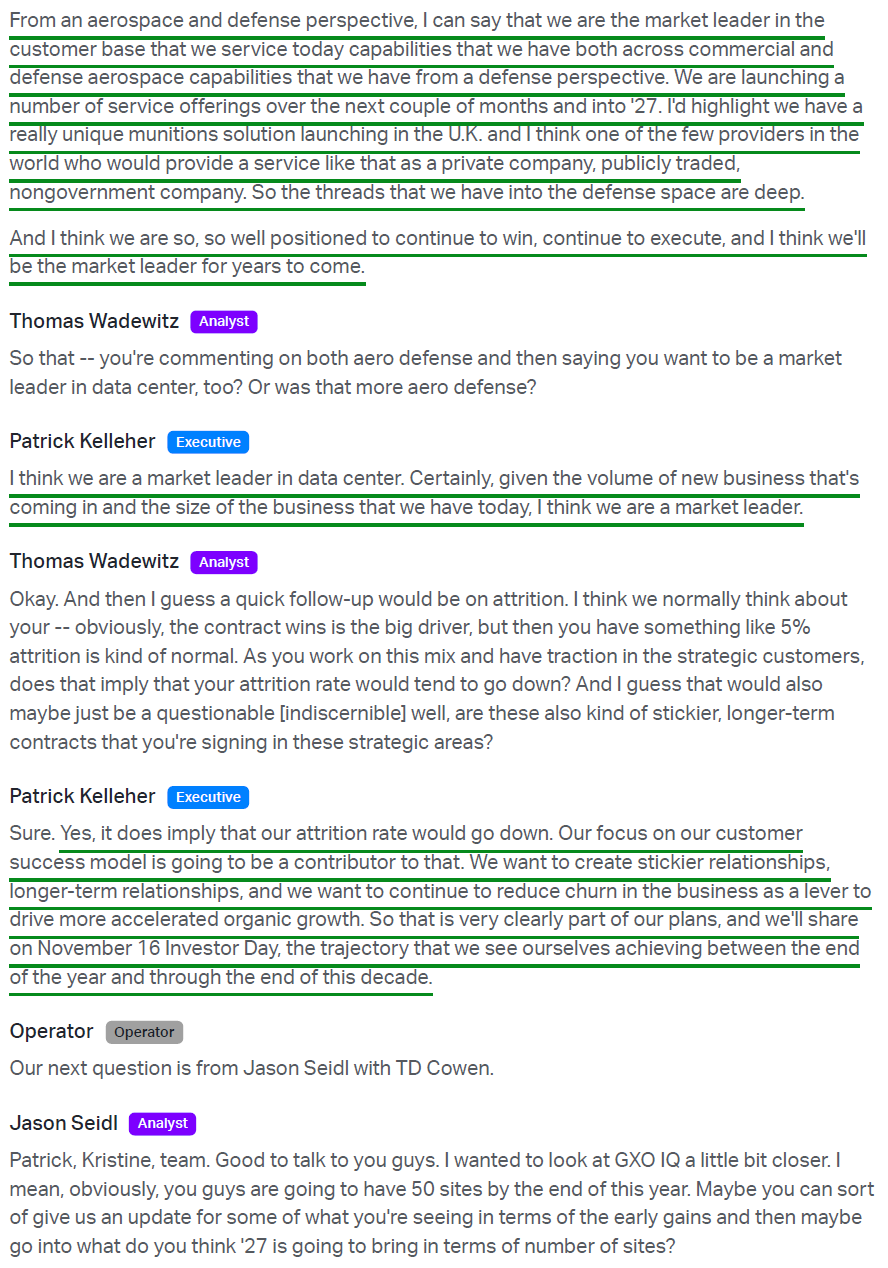
Retention sits at 95%, with a global account management and customer success model implemented to push it to 96-97%.
Open book is ~55% of contracts today. Management does not view it negatively given low risk and consistent cash flow, so it stays part of the portfolio. Faster North America growth, which skews fixed-type, pulls the open book share down over time and creates operating leverage.
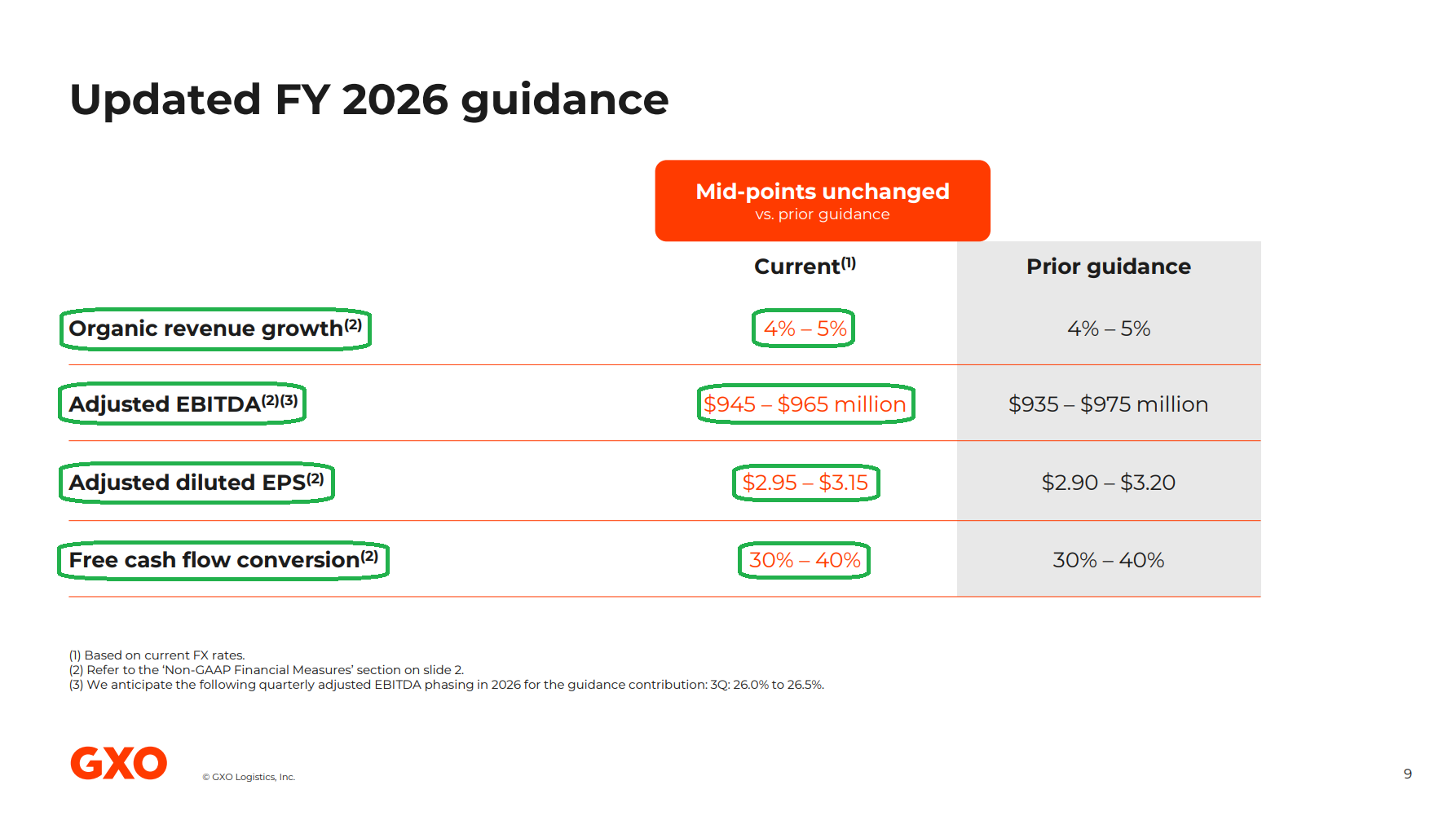
FY2026 guidance tightened: adjusted EBITDA $945M-$965M (from $935M-$975M, midpoint held at $955M, +8.4% Y/Y). Margins +20 bps (~6.9%).
Automated contracts: +200 bps margin lift on average. >40% of revenue automated (vs. industry ~8-10%). Reverse logistics: +300 bps uplift; e-commerce returns ~1 in 3 items (vs. ~1 in 10 for brick-and-mortar). 96% returns to stock (vs. industry 25% to landfill).
Automation + reverse logistics drive higher incremental margins on revenue growth (>9%).
$60M Wincanton cost synergies in 2026 to support stronger margins. Targeted investments in productivity/growth intentionally held back faster expansion this year.
Amazon “Threat”
Amazon’s supply chain expansion drew investor concern but was framed by Kelleher as a validation of the ~$0.5T contract logistics market.
Fundamental distinction: Amazon sells standardized access to its existing infrastructure; GXO builds bespoke, purpose-built solutions for enterprise customers with complex operational requirements, multi-year contracts, and a vendor-agnostic technology stack.
Management has never lost new or existing business to Amazon and does not see them in the $2.7B pipeline or in competitive bids.
Data security is a key differentiator: enterprise customers are generally reluctant to share inventory, demand, and financial data with a potential competitor.
The only area of direct overlap is GXO Direct, GXO’s shared-use e-commerce offering, which grew 5% in Q1 but represents less than 6% of total revenues.
Wincanton Deal
Acquired UK-based Wincanton for ~$958M (closed April 29, 2024). UK CMA cleared June 19, 2025 with a minor divestiture (~5% of lower-margin grocery contracts).
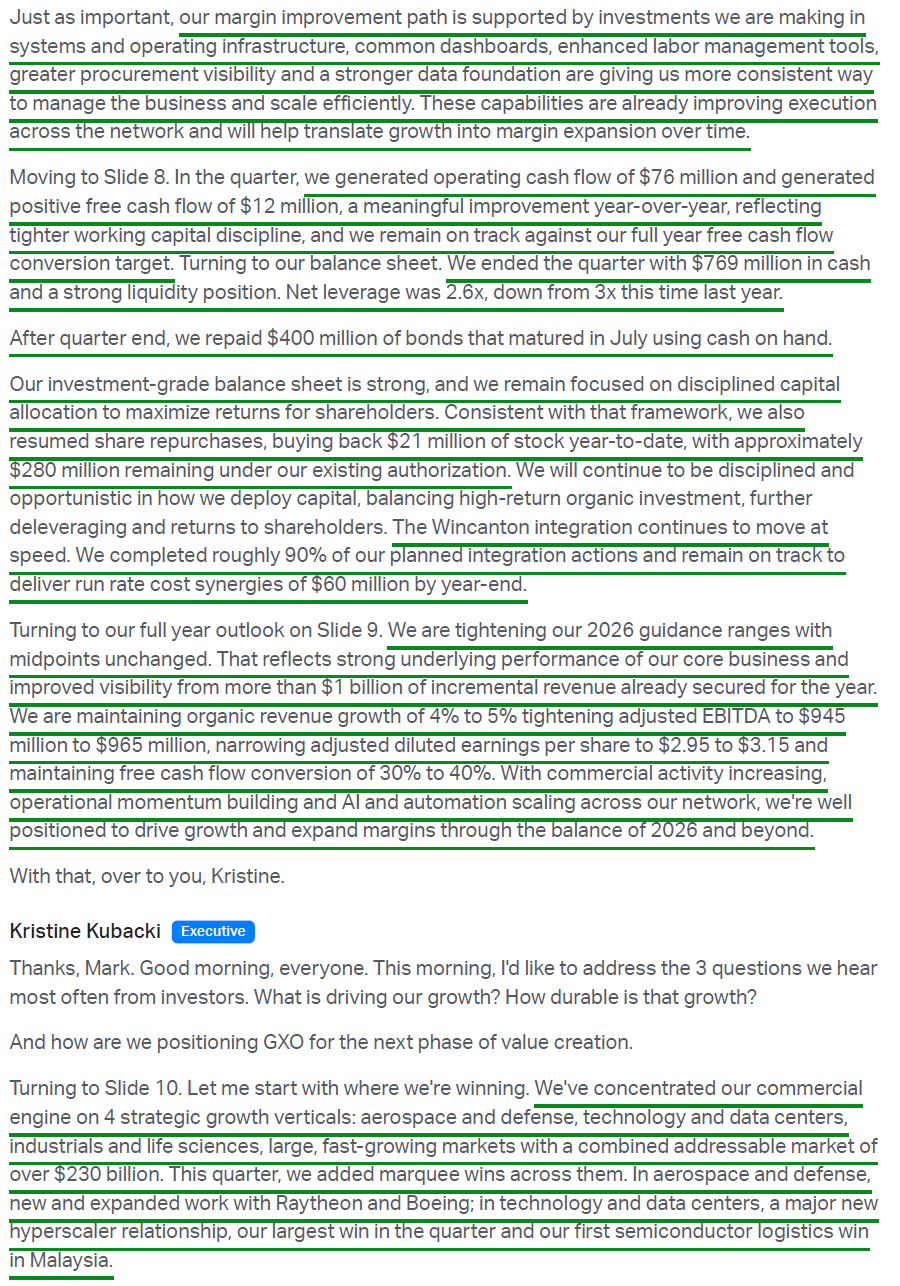
~90% of planned integration actions complete, on track for full $60M run-rate cost synergies by end of 2026.
Revenue synergies now a meaningful contributor to the pipeline build, with Wincanton’s defense competencies converting into new aerospace & defense wins in the UK. Accretive in year one.
Established the Taurus Defense Supply Chain Alliance in the UK in Q1 2026, positioning GXO as a leading supply chain provider to the UK defense industry, building on capabilities and relationships brought through the acquisition.
North America Reshoring + Tariff Tailwinds
The U.S. is ~24% of revenue (~$3.2B) but $250B+ TAM: the largest and most immediate growth lever. Scale is already 340 sites and 40,000 employees.
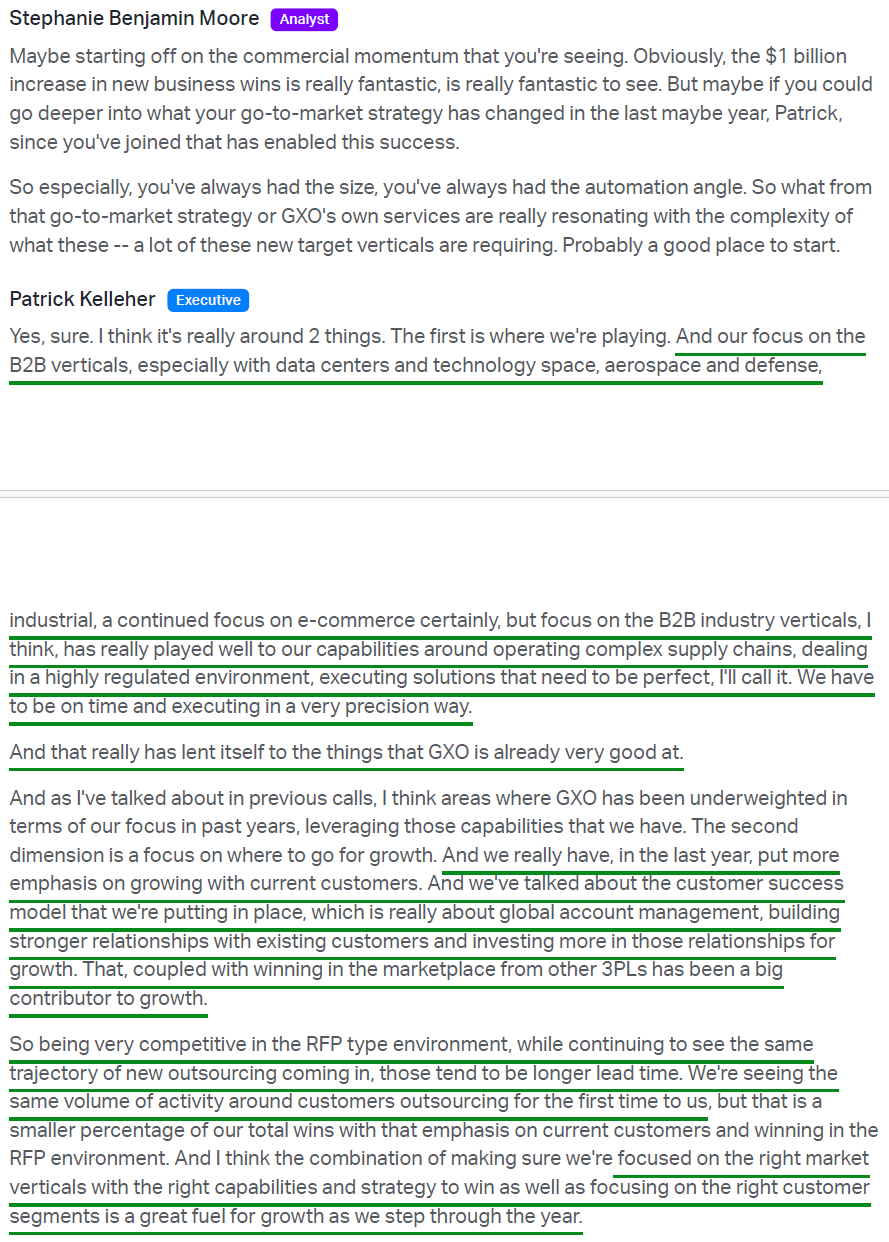
North America was previously unsupported from a leadership standpoint. Management frames the gap as communication rather than capability: the task is selling complex kitting, parts distribution, and data center rack build and wiring into RFPs.
GXO works with multiple hyperscalers across both North America and Europe, building and wiring racks in its own warehouses then delivering them complete to the data center, which is materially more efficient than performing the work on site.
The more durable opportunity is maintenance and sustainment: supplying repair parts to technicians and handling returns, which carries longevity past any peak in build-out. These contracts sit at the company-average ~5-year life, carry lower CapEx than typical solutions, and are accretive to current margins.
Tariffs fueling supply chain complexity and accelerating reshoring/nearshoring trends. Drives domestic sourcing, inventory build, warehousing demand, and Foreign Trade Zone interest (GXO operates >70 global FTZ locations).
Onshoring lands supply chains in GXO’s existing North America and Continental Europe footprint, which management ties directly to the pipeline build from $2.3B at quarter-end to $2.7B three weeks later.
New Defense Advisory Board formed to guide aerospace/defense expansion (~a dozen retired senior military supply chain leaders); actively pursuing U.S. government contracts.
Under new Americas President Michael Jacobs: reallocating resources to solution design, sales, and digital marketing to improve U.S. pipeline conversion. A digital marketing capability that did not previously exist is being stood up.
AI + Robotics Beneficiary
Industry leader in automation: >40% of revenue automated (vs. industry average ~8-10%). 17,000 pieces of automation deployed today, approaching 20,000 by year-end 2026.
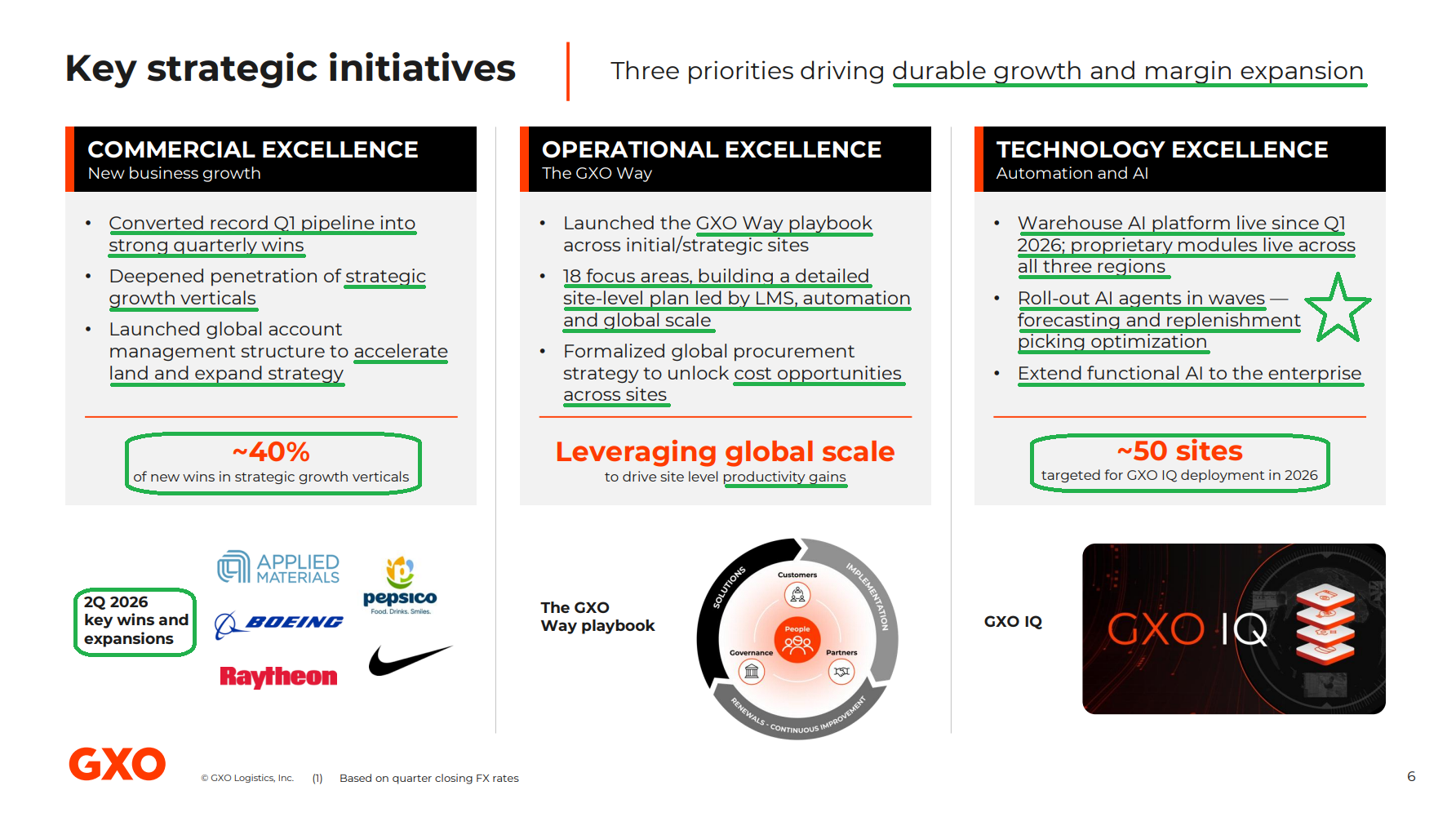
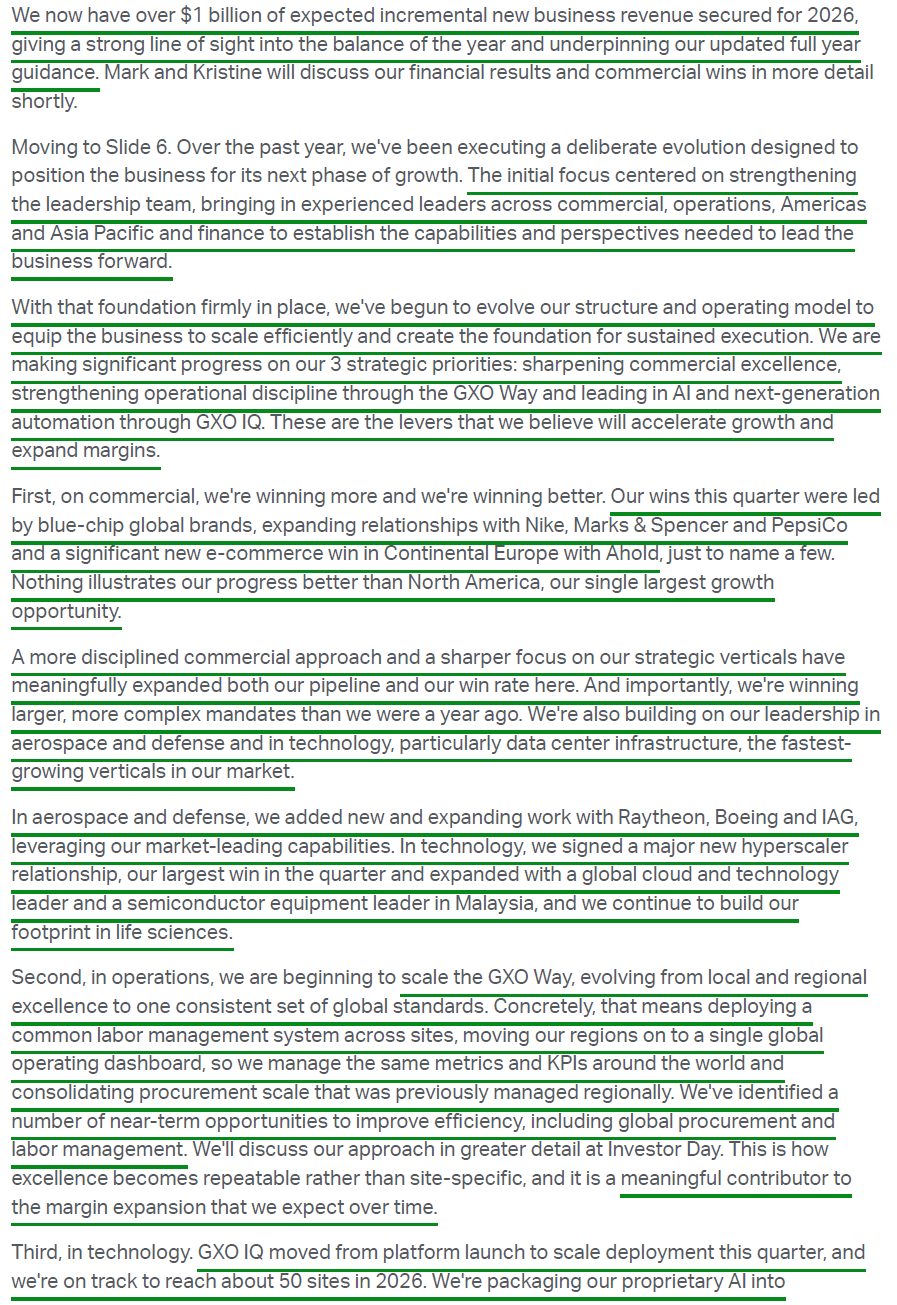
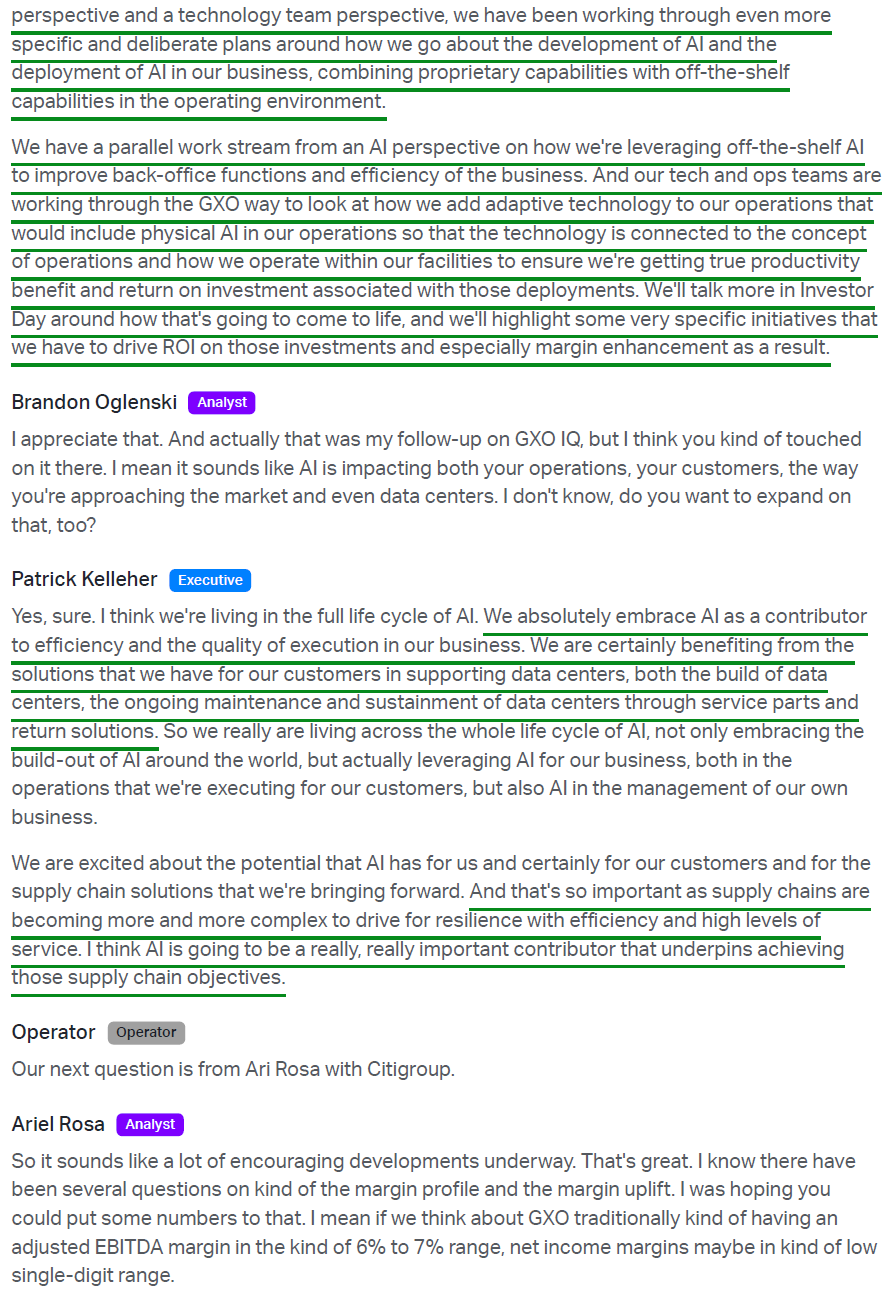
GXO IQ: proprietary AI-powered warehouse operating system. Live since Q1 2026, moved from launch to scaled deployment in Q2, with proprietary modules live across all three regions and AI agents rolling out in waves (forecasting, replenishment, pick optimization).
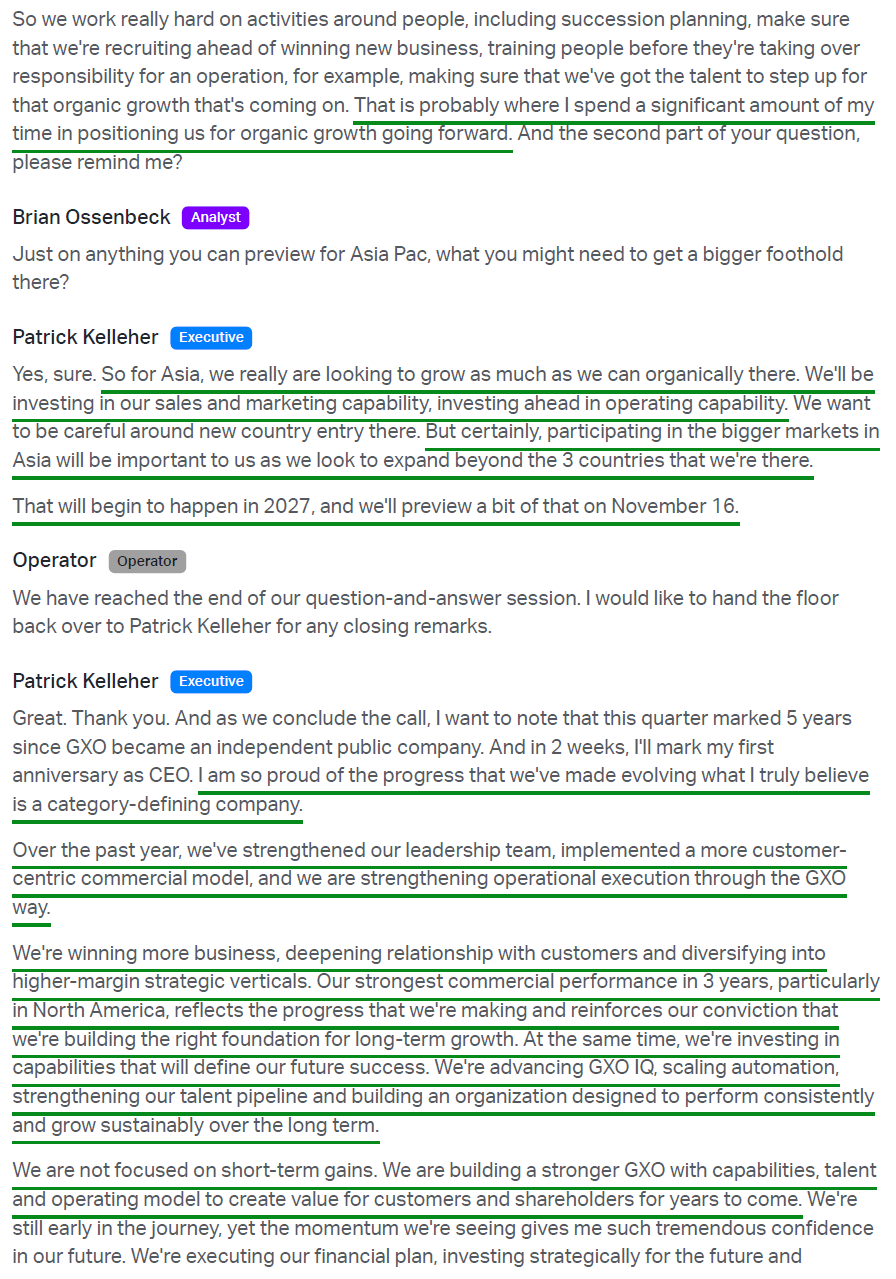
50 to 60 sites now live on GXO IQ, with most new start-ups launching on the platform and full portfolio coverage targeted over the next couple of years.
46 humanoid pilots run or launching. Hand dexterity was the primary constraint and has improved sharply this year; speed remains the gap, with humanoids still unable to work at human pace.
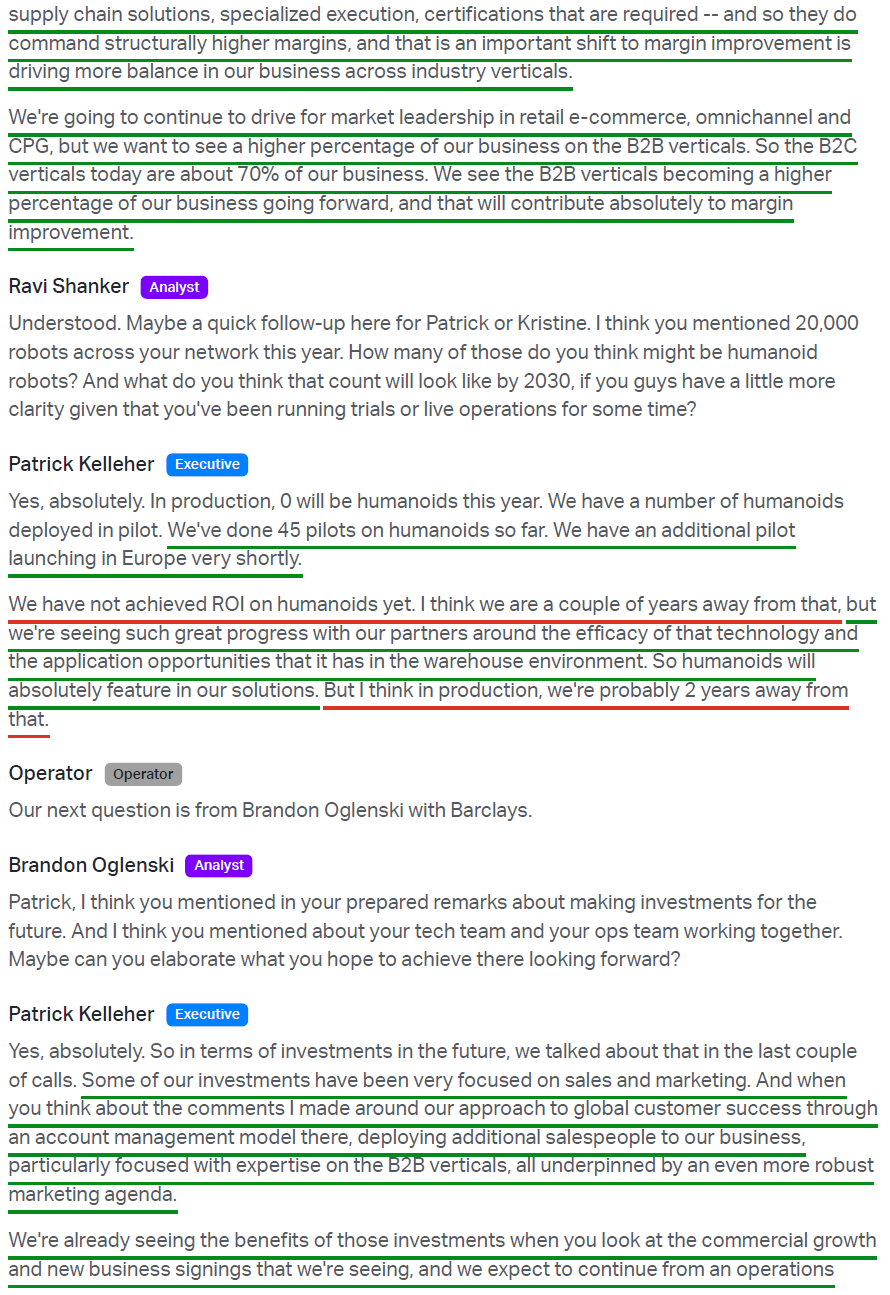
Humanoid unit cost ~$70K today, expected below $40K within two years. Operating cost ~$15/hour expected to drop below $10, putting fully loaded cost at ~$15-16/hour against ~double that for a fully loaded associate. No ROI achieved yet, with production deployment seen ~2 years out.
Management increasingly frames GXO as a tech services company rather than a transportation business.
Key Financials + Valuation
FY2025: record net sales $13.2B (every region delivered organic growth). Adjusted EBITDA $881M. Adjusted diluted EPS $2.51. FCF $259M (+3% Y/Y).
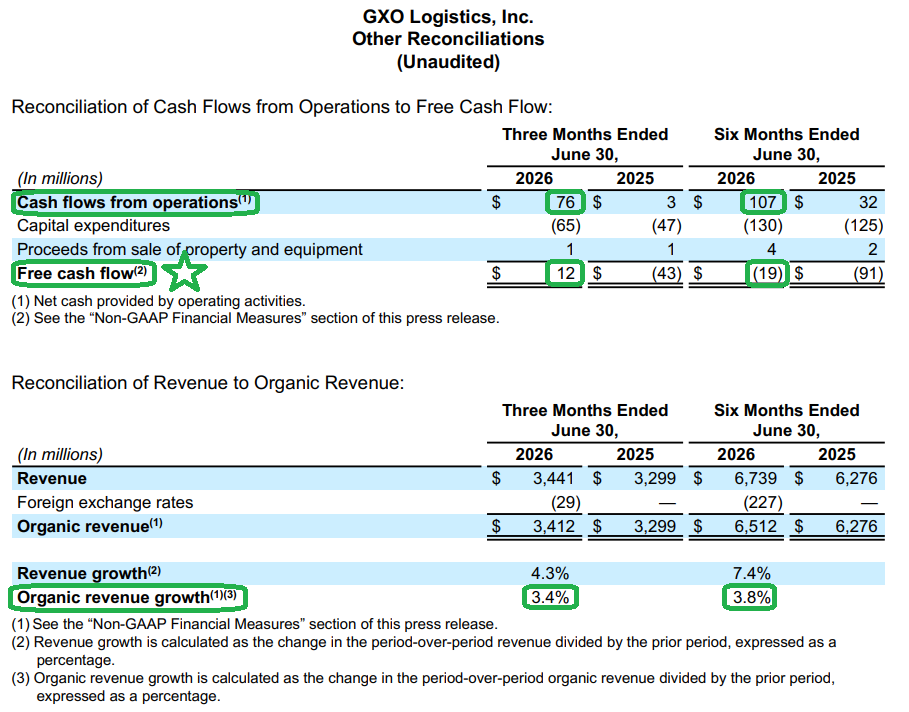
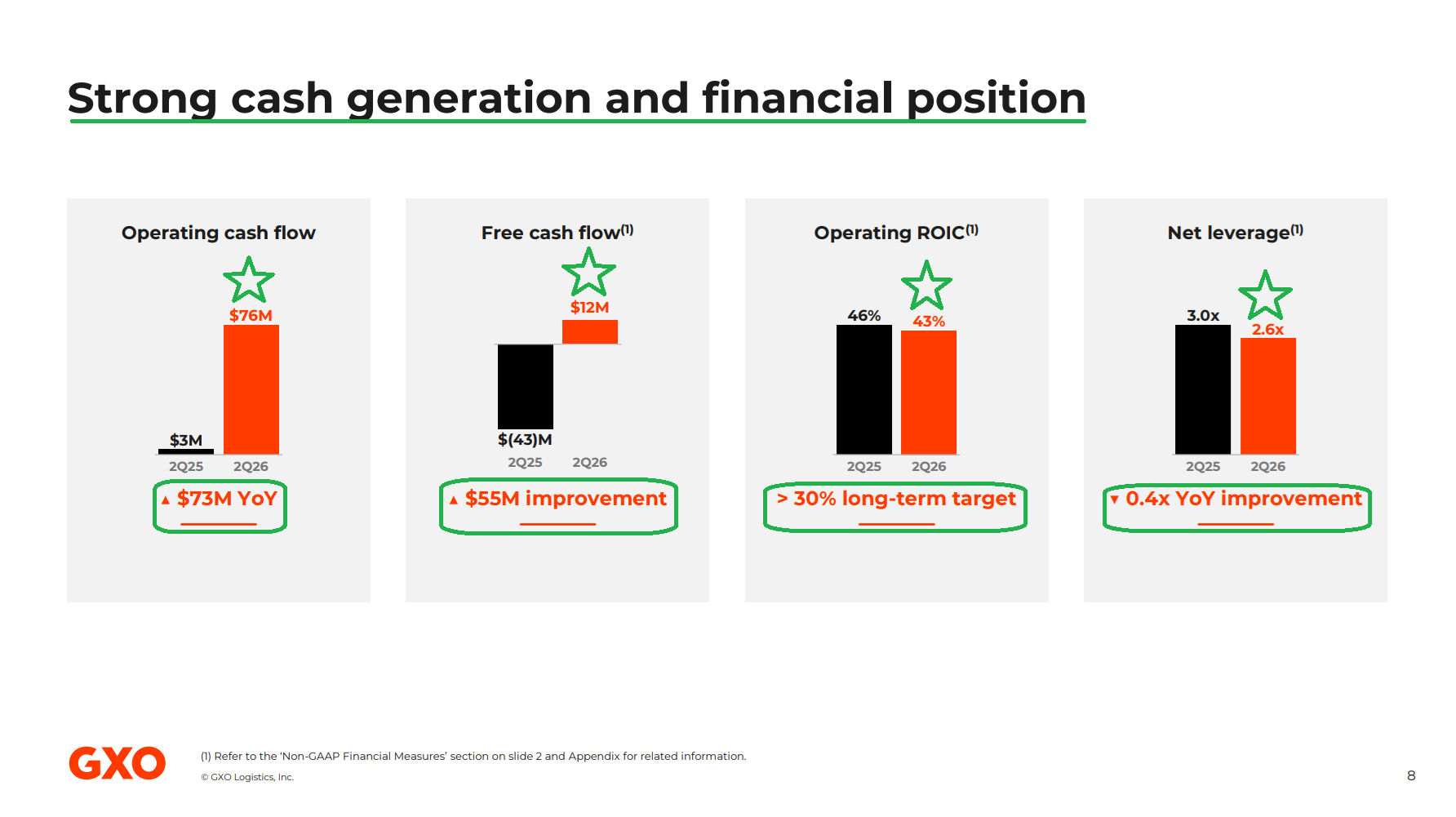
Q2 adjusted EPS $0.59 (+3.5% Y/Y), in line with consensus. Operating cash flow $76M vs. $3M last year (+$73M Y/Y). FCF positive at $12M vs. ($43M) used in the prior-year quarter (+$55M Y/Y).
FY2026 guidance tightened: adjusted diluted EPS $2.95-$3.15 (from $2.90-$3.20, midpoint $3.05 vs. consensus $3.04, +21.5% Y/Y). Organic revenue growth of 4-5% and FCF conversion of 30-40% maintained (implying ~$334M FCF at the EBITDA midpoint, +29% Y/Y vs. $259M in FY25). EBITDA midpoint held at $955M.
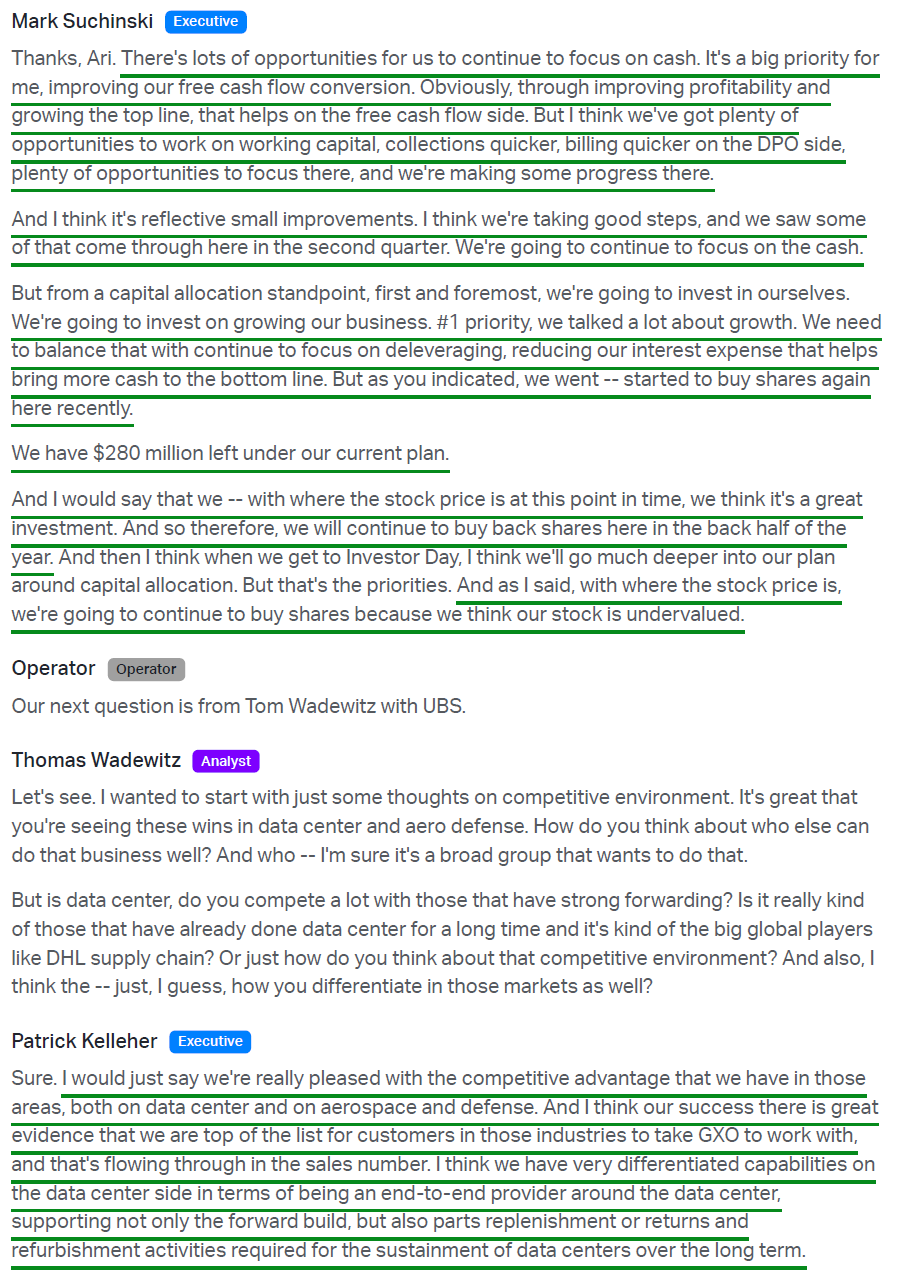
FCF conversion ran below 30% historically against best peers at 50%+. The 30-40% guided this year is a step toward a >50% conversion business, to be laid out November 16, funded by working capital, global procurement, and more creative financing of robotics and automation.
Balance sheet: total debt $3.2B, cash $769M, net debt $2.4B, net leverage 2.6x (down from 3.0x a year ago). Repaid $400M of bonds maturing in July with cash on hand. Resumed buybacks ($21M repurchased YTD, ~$280M remaining under authorization). Operating ROIC of 43.2% vs. long-term target >30%. Maintenance capex ~1% of revenue.
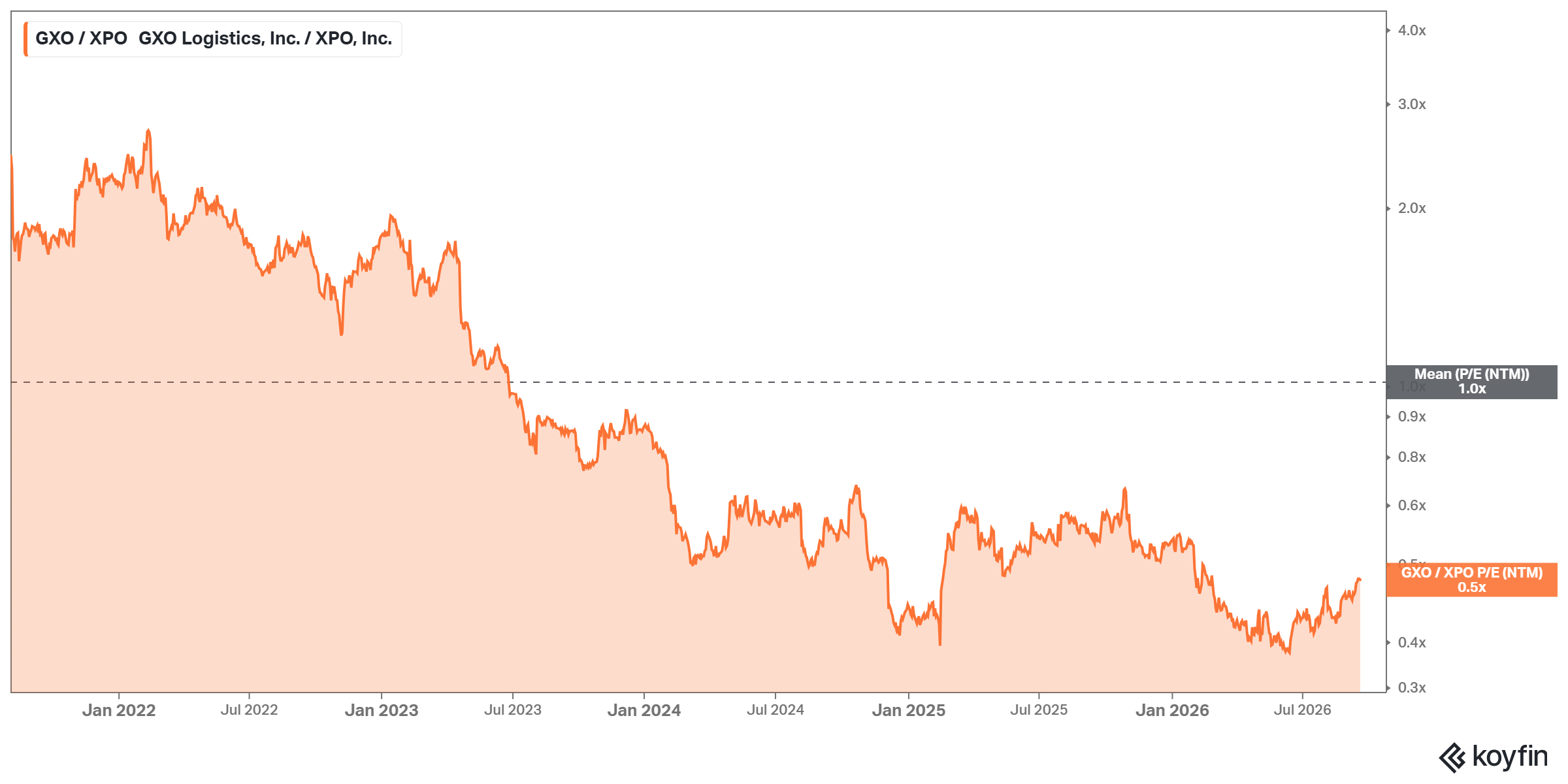
Trading at 13.9x forward earnings against a 20.2x post-spin mean, with XPO at 29.3x. That leaves GXO at 0.5x relative to XPO versus a 1.0x average since the spin.
Attractive re-rating potential from current trough multiples to normalized levels consistent with a double-digit grower profile.
Q2 Commentary
GXO’s second quarter was a textbook case of the market staring into the rearview mirror while the road ahead gets clearer.
Shares sold off ~10% on the print as organic growth of 3.4% fell short of the ~4% the Street was looking for, down from 4.1% in Q1. Management attributed the shortfall to the timing of new contract start-ups and exits. Put in perspective, the ~60 bps gap represents just ~$17M of revenue, or ~2 weeks of start-up timing, a blip hardly indicative of where the business is headed. Just about everything else in the release pointed the other way. Adjusted EBITDA of $219M beat expectations, free cash flow swung positive with a $55M Y/Y improvement, while full-year guidance held, including 4-5% organic growth. Most importantly, GXO delivered its strongest commercial quarter in three years.
To us, that is the most important and somehow overlooked takeaway of the quarter. In contract logistics, today’s wins are tomorrow’s revenue, with new contracts typically taking ~3 to 6 months to implement and ramp before they show up on the top line. GXO signed $410M in new business during Q2 (+34% Y/Y), with ~40% coming from strategic growth verticals like aerospace and defense, technology and data centers, industrials, and life sciences. That lifted secured incremental revenue for 2026 above $1B (+29% Y/Y), with another $353M already locked in for 2027. Management expects that commercial strength to carry into the back half, with Q3 wins set to post a similar Y/Y increase to Q2 and full-year wins on track to “substantially exceed” last year’s ~$1.1B.
Put simply, the organic growth the market is waiting for has already been signed. The back half of guidance implies ~5% organic growth at the midpoint, with management pointing to further acceleration into 2027 as recent wins ramp. That outlook still assumes ~flat customer volumes for the full year, an assumption Kelleher has repeatedly called prudent that looks increasingly conservative with each passing month. Better yet, the quality of that growth is improving alongside the quantity, with new business weighted toward margin-accretive B2B verticals and North America, both of which carry structurally higher margins than GXO’s legacy mix.
Which brings us to volumes, where the real economy is finally starting to tilt in GXO’s favor.
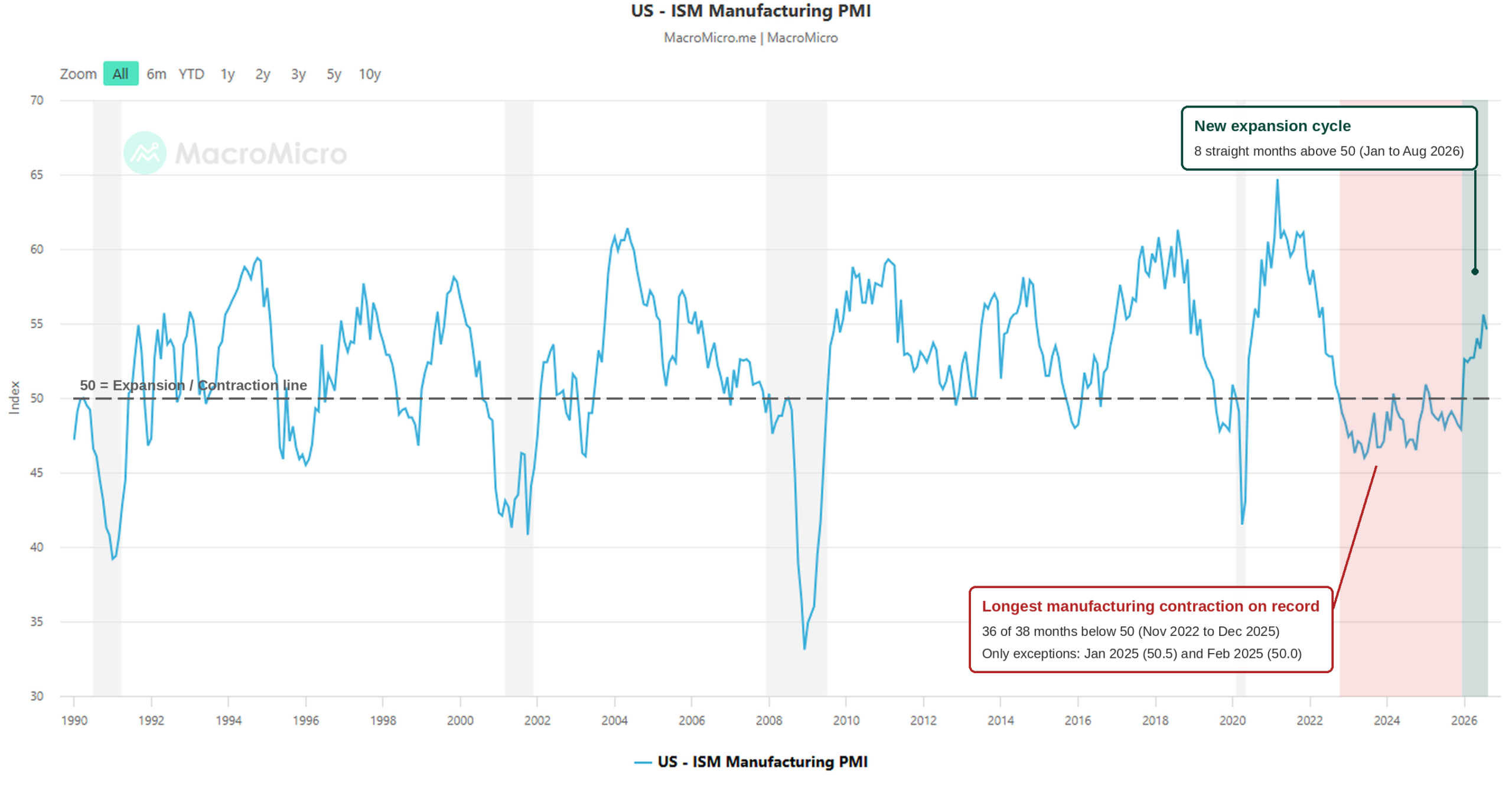
The ISM Manufacturing PMI was below 50 in 36 of the 38 months preceding January 2026, the longest stretch of manufacturing weakness on record. It has now printed in expansion territory for eight straight months, with August coming in at a strong 54.6.
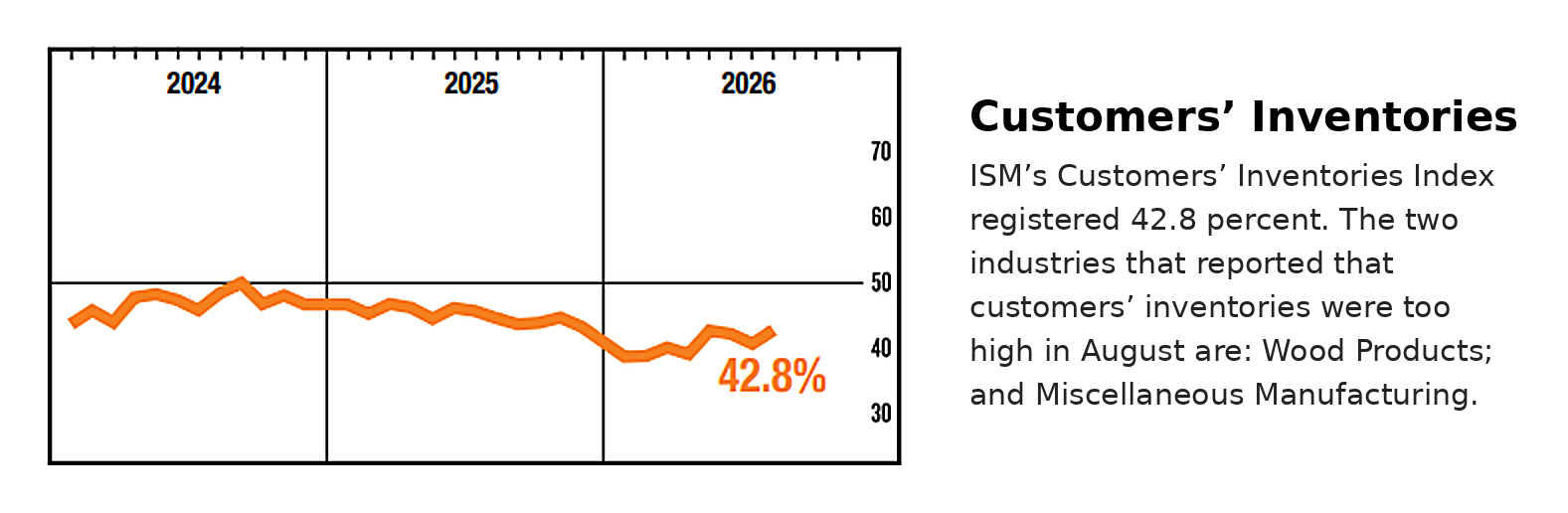
At the same time, customer inventories have been classified as “too low” for 23 consecutive months, a condition that sets the stage for a restocking cycle.
The physical movement of goods is confirming the turn as well. The Cass Freight Index shipments component rose 2.1% Y/Y in August, its first annual gain since January 2023, ending a 42-month downturn that was the longest on record.
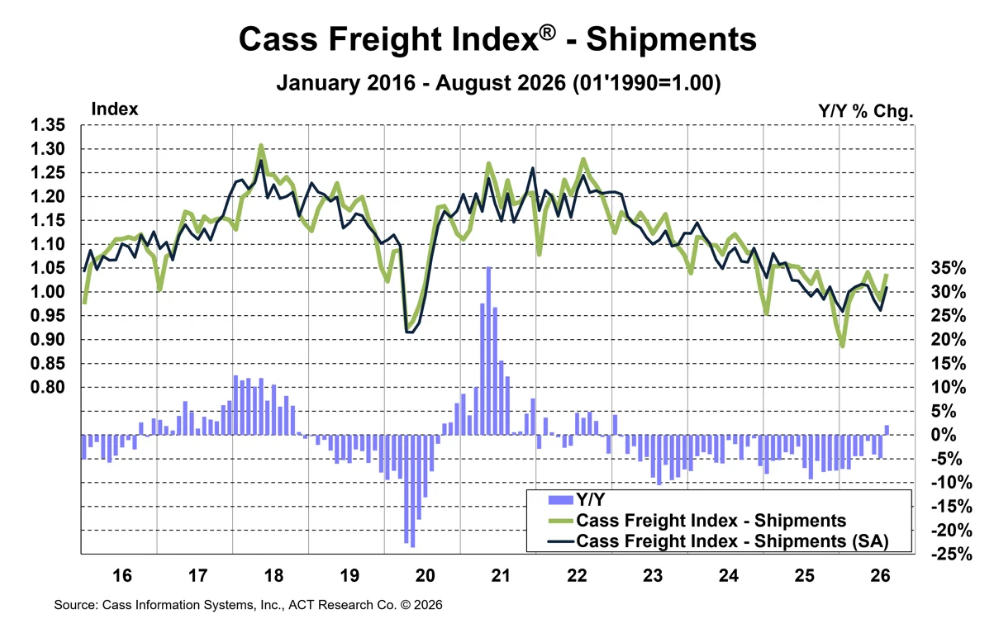
Historically, the early stages of an industrial recovery have been among the most favorable parts of the cycle for transport names, with leading indicators now suggesting we are entering that window.
In the case of GXO, it sits directly downstream of this cycle, managing the warehousing, fulfillment, and distribution of the goods that manufacturers produce and customers restock. The U.S. represents only ~23% of revenue today, with GXO historically underweight the region given its UK concentration (~49% of revenue) and prior leadership based there. With a $250B+ TAM, a higher growth rate, and the recovery signals above flashing green, North America is now GXO’s single largest growth opportunity and the top priority for Kelleher (former CEO of DHL Supply Chain North America and a key reason he was brought in). Early evidence of that focus is already clear, with North America now accounting for 41% of the sales pipeline versus ~27% a year ago and first-half NA wins up 85% Y/Y.
So why hasn’t the market given GXO credit, with all signs pointing to the early innings of a new freight upcycle? In our view, it comes down to a company that has been misunderstood since the day it went public.
GXO came out of the gates strong following its spin from XPO in August 2021, posting organic growth of 18.7% in Q4 2021, 18.7% in Q1 2022, and 20.5% in Q2 2022. That gangbusters growth, however, proved short-lived. The post-COVID logistics boom soon rolled over, with inventories rebuilt aggressively during the pandemic unwinding into a historic destock cycle. Organic growth declined every quarter from there, troughing at -2.3% in Q4 2023, as the industry endured the longest manufacturing and freight downturn on record.
Compounding the problem, GXO has no clean public comp set. As the world’s largest pure-play contract logistics provider, it tends to get lumped in with the broader transport group, leaving its business model largely underappreciated. Unlike most transport names, GXO offers defensive, recurring growth with a high degree of visibility, backed by multi-year contracts, retention north of 95%, and 80-90% revenue predictability. Between a brutal cycle and a misread business model, GXO never had the chance to build a long-term shareholder base.
The latest blow came from Amazon’s expanded supply chain offering earlier this year, which handed GXO its worst trading day since going public. It was a classic case of the market shooting first and asking questions later, with the fundamental distinction between the two models lost in the panic. Management was quick to push back, a view we shared at the time, seeing the selloff as a buying opportunity to add to our position. Amazon sells standardized access to excess capacity within its existing infrastructure. GXO, by contrast, builds bespoke solutions for enterprise customers with complex operations, backed by multi-year contracts and a vendor-agnostic technology stack. Management has yet to see Amazon in a competitive bid, let alone lose new or existing business to it.
Every one of these hurdles has been largely out of GXO’s control. Together, they have left a stock that has only ever traded through the worst part of its cycle, carrying a level of skepticism the underlying business doesn’t warrant.
That is why we view November 16 as a clearing event. GXO’s Investor Day will deliver the first long-term roadmap in years, as the targets set under prior management were thrown off course by the record downturn. Management will lay out the organic growth trajectory, the path to margin expansion, the role of automation and AI across the network, and its capital allocation framework, finally giving the market a clear picture of where GXO is headed over the next several years.
When the dust settles, we suspect the biggest takeaway will be how well positioned GXO is as one of the true beneficiaries of AI. In a market focused on separating the AI winners from the AI cost centers, it’s hard to think of a better example than GXO. Rather than footing the bill for the buildout, GXO is applying AI inside live operations to drive productivity and profitability, the kind of practical, everyday application we have long believed will define the real winners of this cycle.
GXO IQ, the company’s proprietary AI-powered warehouse platform, moved from launch to scaled deployment this quarter and remains on track for ~50 sites by year-end. The platform targets the daily tasks that drive warehouse economics: demand forecasting, inventory replenishment, pick optimization, and labor planning across inbound and outbound operations. GXO also expects to deploy ~20,000 robots across its network this year, with humanoids still in the pilot phase and likely ~2 years from production.
Kelleher does a great job laying out his vision for the warehouse of the future and the role GXO will play in it in the video.
Automation is central to what we expect will be the other major takeaway: a credible path to a structurally higher margin base. Kelleher has been candid that GXO lags its peers, running a 3.5-4.0% EBIT margin business that he believes deserves to be above 6%. Getting there comes down to three levers already in motion:
Automation and AI: GXO IQ and robotics drive site-level productivity across the network, with automated contracts delivering ~200 bps of margin lift on average.
The GXO Way: Labor is ~2/3 of total costs, making it the single largest margin lever. The GXO Way standardizes labor management, procurement, and operating KPIs across a global network that was previously managed regionally, turning best practices from individual sites into a repeatable playbook across ~1,200 operations.
Mix shift: B2B strategic verticals bring larger, more complex, long-duration mandates that are stickier and carry structurally higher margins. Together with a growing North America contribution, they lift the profile of every new dollar of revenue.
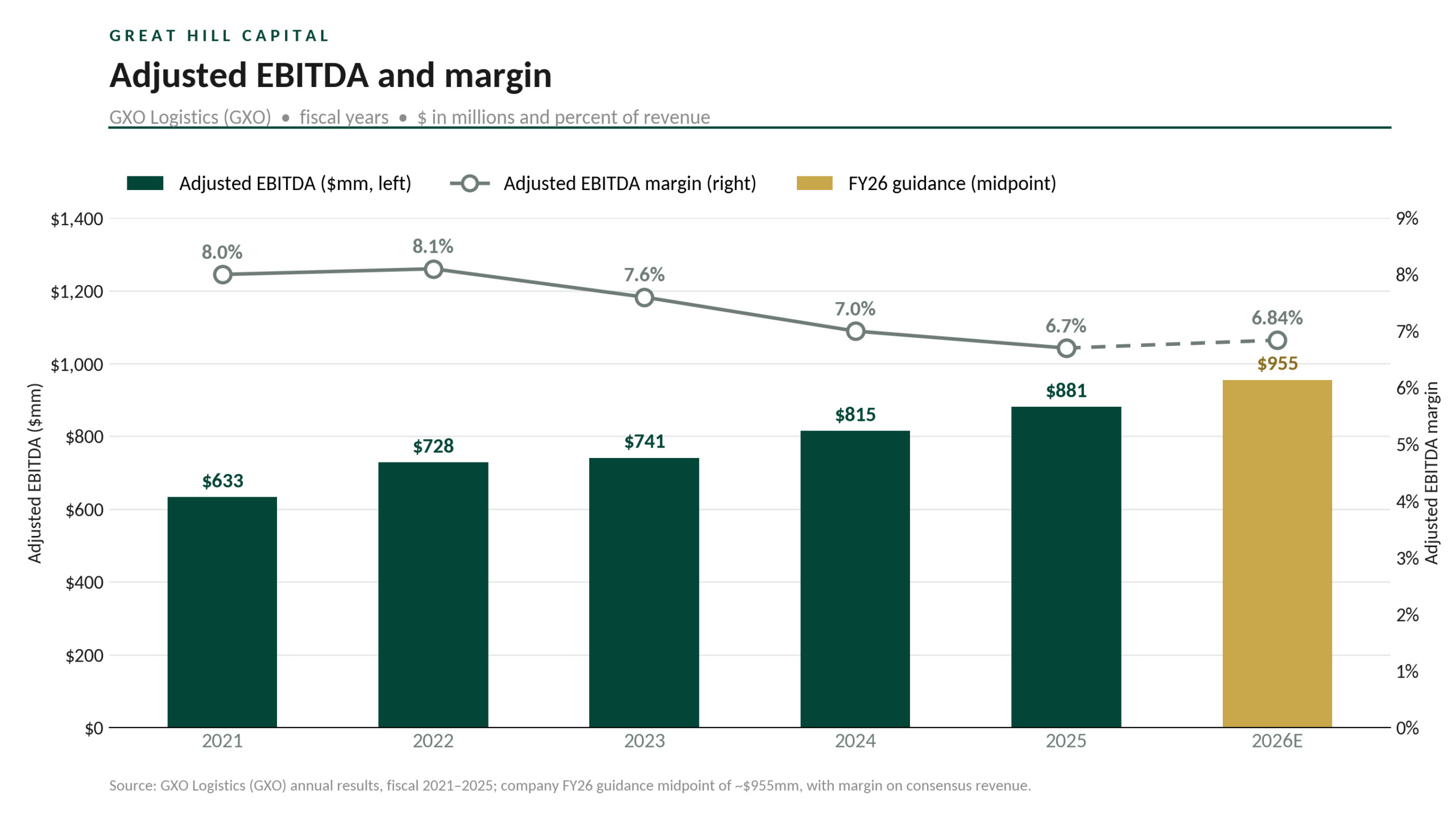
Paired with re-accelerating organic growth, GXO has all the makings of a compounder entering a multi-year stretch of margin and earnings expansion.
None of that is reflected in the stock today. GXO trades at just 13.9x forward earnings, well below its 20.2x post-spin average, while its former parent XPO trades at 29.3x. That leaves GXO at 0.5x XPO’s multiple versus a 1.0x average since the spin, not far from the all-time low of 0.4x set in June.
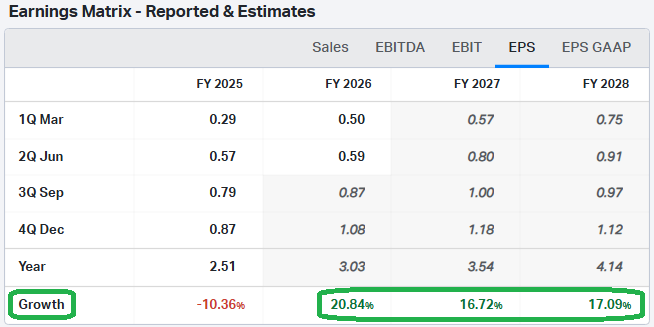
All this for a business with consensus EPS growth of ~21% in 2026 followed by ~17% in both 2027 and 2028.
A high-quality compounder growing earnings ~20% a year, sitting downstream of a turning industrial cycle, with an embedded option on AI and robotics, trading at less than half the multiple of its former parent. That’s a setup we are happy to own, with the leading indicators already flashing green and what we see as a major clearing event right around the corner. The market is focused on last quarter’s organic growth. We are focused on the next three years.
Q2 Earnings Breakdown
10 Key Points
1) Q2 revenue came in at $3.4B (+4.3% Y/Y), missing consensus of $3.47B by ~$30M. Organic growth of +3.4% fell shy of the ~4% Street expectation and decelerated from +4.1% in Q1, bringing 1H organic growth to 3.8%, with management citing the timing of new contract start-ups and exits as the primary drag. FX contributed only a ~0.9% tailwind (~$29M) versus 6.7% in Q1 as the weak-dollar comp narrows. Adjusted diluted EPS came in at $0.59 (+3.5% Y/Y), in line with consensus.
2) All three regions grew organically, with the UK (~49% of revenue) up 5.9% Y/Y and the U.S. (~23% of revenue) up 2.0%. Kelleher reiterated that GXO has historically been underweight North America, a higher-growth contract logistics market that has been his top focus since joining a year ago. Management expects the recent momentum in NA wins to drive accelerated organic growth in the region into 2027. Asia remains small today but represents a significant untapped growth opportunity, with further investment in sales, marketing, and operations planned for 2027. By vertical, omnichannel retail (~48% of revenue) grew 0.7% Y/Y, technology and consumer electronics 9.2%, CPG 14.1%, and industrial and manufacturing 1.2%, while food and beverage declined 5.0%.
3) GXO signed $410M in annualized new business wins during Q2 (+34% Y/Y), its strongest commercial quarter in three years. ~40% came from strategic growth verticals, with those wins totaling $168M versus $38M a year ago. 1H wins reached $638M (+19% Y/Y), with strategic vertical wins running at nearly 3x last year’s pace and North America wins up 85%. By source, YTD wins broke down as 40% from competitors, 43% from new activity, and 17% from outsourcing. Marquee wins included a major new hyperscaler relationship (the largest of the quarter), GXO’s first semiconductor logistics win in Malaysia, expansions with Raytheon, Boeing, Nike, and PepsiCo, plus a large e-commerce win with Ahold in Continental Europe. Over $1B of incremental 2026 revenue is now secured (+29% Y/Y), with $353M already booked for 2027. Management expects Q3 wins to increase significantly Y/Y on data center and aerospace and defense demand, with full-year wins set to “substantially exceed” FY25’s ~$1.1B.
4) The sales pipeline ended Q2 at $2.3B following a strong quarter of closings, then rebounded to a record-matching ~$2.7B by late July. North America now represents 41% of the pipeline versus ~27% a year ago, with the NA pipeline up 34% Y/Y at quarter-end. ~27% of the pipeline sits in strategic growth verticals, which carry a combined TAM exceeding $230B. Management highlighted a pipeline that is broader and higher quality than a year ago, weighted toward larger, more complex, long-duration mandates where GXO’s scale and technology are differentiators.
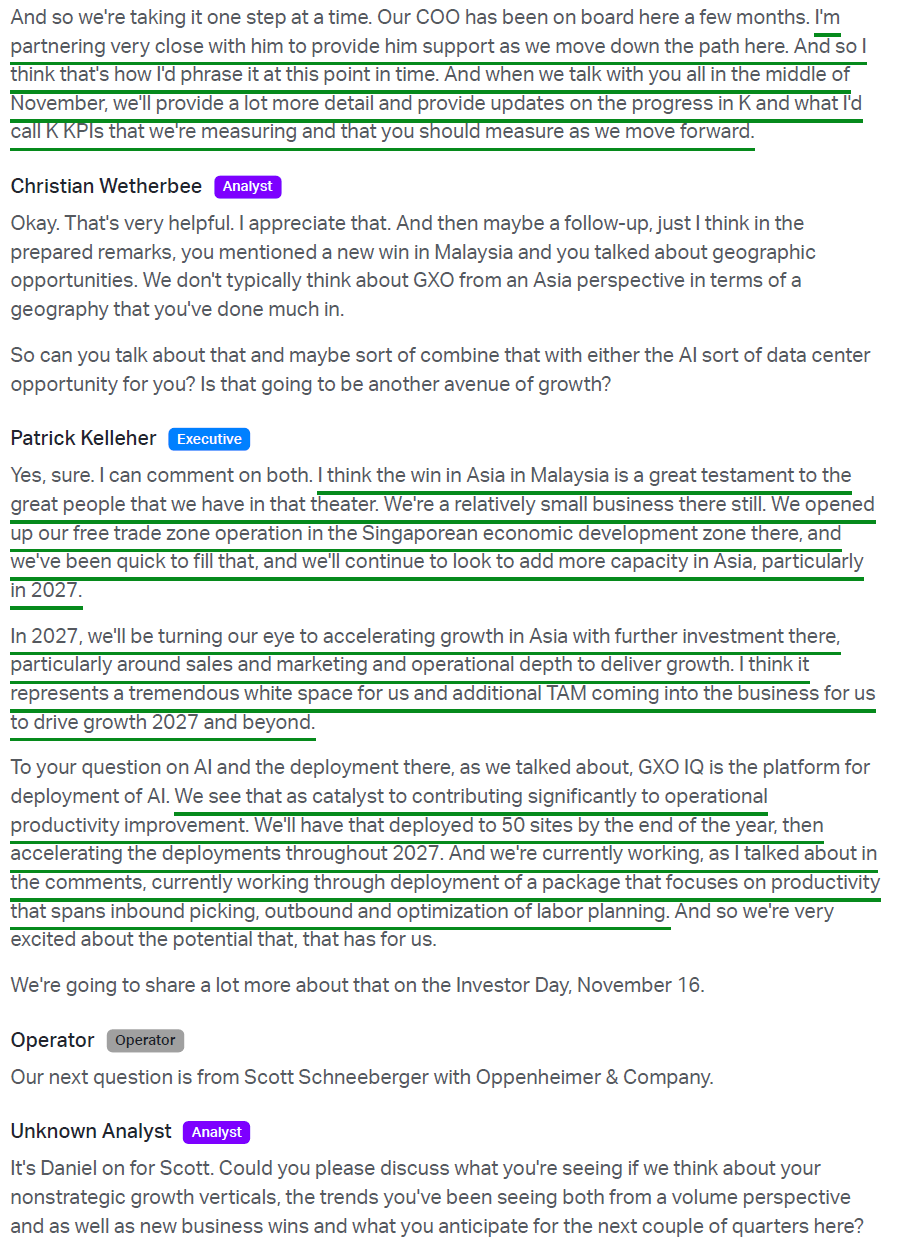
5) GXO IQ, the company’s proprietary AI-powered warehouse platform live since Q1, moved from launch to scaled deployment in Q2 and remains on track for ~50 sites by year-end, with deployments accelerating through 2027. Proprietary modules are now live across all three regions, with AI agents rolling out in waves, starting with forecasting, replenishment, and pick optimization. GXO expects to deploy ~20,000 robots across its network this year, though none will be humanoids in production. GXO has run 45 humanoid pilots, with another launching in Europe shortly, but management has yet to achieve ROI and sees production deployment ~2 years out.
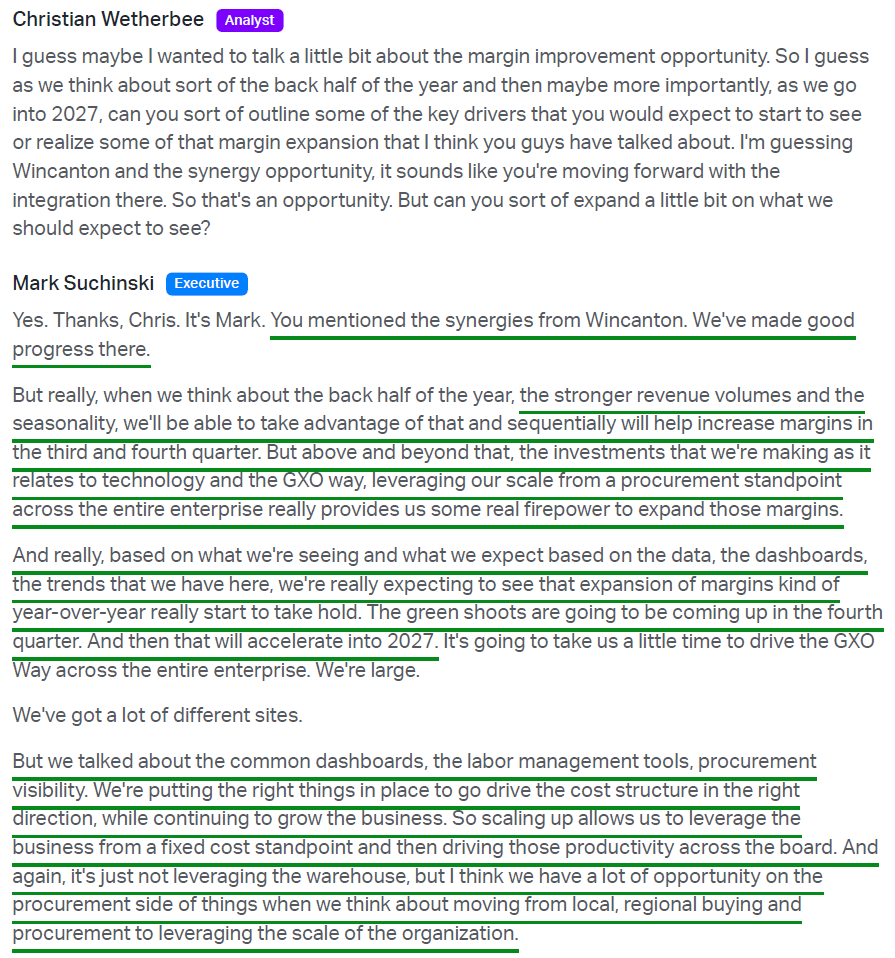
6) Adjusted EBITDA came in at $219M (+3.3% Y/Y), beating consensus of ~$213M, with margins flat Y/Y at 6.4%. 1H adjusted EBITDA margins improved 20 bps Y/Y to 6.2%. Management expects sequential margin expansion in the back half as new business ramps and seasonal volumes build, with Y/Y gains emerging in Q4 before accelerating into 2027. Key drivers include the GXO Way (common labor management systems, a single global operating dashboard, and consolidated procurement), Wincanton synergies, and fixed-cost leverage from scale. Kelleher acknowledged GXO lags peers on margins, running a 3.5%-4.0% EBIT margin business he believes deserves to be above 6%. New business wins are margin accretive, with B2B strategic verticals commanding structurally higher margins.
7) The Wincanton integration is ~90% complete, with management reiterating its $60M run-rate cost synergy target by year-end 2026. Revenue synergies are now coming to life and have been a big contributor to the pipeline build this year, with the combined teams operating as one GXO. Wincanton’s defense competencies are already converting into new aerospace and defense wins in the UK, with GXO also preparing to launch a unique munitions solution, a service few private providers can offer.
8) Operating cash flow came in at $76M versus $3M in the prior-year period (+$73M Y/Y improvement). Free cash flow turned positive at $12M versus ($43M) in Q2 2025 (+$55M Y/Y improvement), driven by tighter working capital discipline. That brings 1H free cash flow to ($19M) versus ($91M) last year (+$72M Y/Y improvement). Management named cash flow as a top priority, pointing to further working capital opportunities in collections, billing, and payables. Full-year FCF conversion guidance of 30-40% was maintained, implying ~$334M of free cash flow at the EBITDA midpoint (+29% Y/Y vs. $259M in FY25).
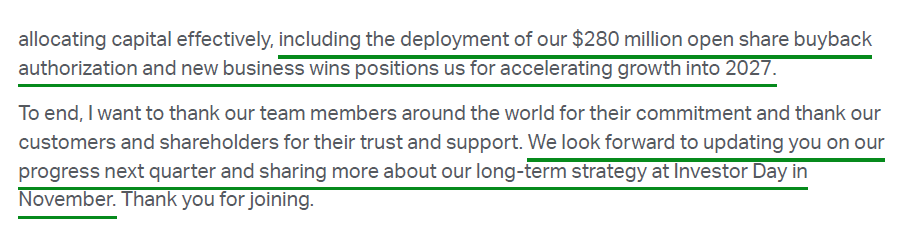
9) GXO ended Q2 with $769M in cash, total debt of $3.2B, and net debt of $2.4B, with net leverage improving to 2.6x from 3.0x a year ago. After quarter-end, GXO repaid $400M of bonds maturing in July with cash on hand, further strengthening its investment-grade balance sheet. Share repurchases also resumed, with $21M bought back YTD and ~$280M remaining under the current authorization, as management called the stock undervalued and plans to keep buying through the back half.
10) Management tightened FY26 guidance ranges with midpoints unchanged. Adjusted EBITDA narrowed to $945M-$965M (from $935M-$975M), holding the midpoint at $955M (+8.4% Y/Y). Adjusted diluted EPS narrowed to $2.95-$3.15 (from $2.90-$3.20), with the $3.05 midpoint representing +21.5% Y/Y growth versus consensus of $3.04. Organic revenue growth of 4-5% and FCF conversion of 30-40% were both maintained, with the full-year range implying ~5% back-half organic growth at the midpoint. The next major catalyst is Investor Day on November 16, where management will outline the long-term strategy and financial framework.
Earnings Call Highlights
QXO Update
For newer readers, here’s a quick overview of the key drivers behind our thesis on QXO, Brad Jacobs’ latest venture and one of our favorite arms dealer plays on a U.S. housing market recovery:
Brad Jacobs: Track Record
Known for the “Midas Touch,” running the same M&A playbook for 40+ years across fragmented, capital-light industries
Founded and led eight companies, six taken public, including United Waste Systems, United Rentals, XPO Logistics, and its spin-offs GXO and RXO, now QXO
500+ acquisitions completed across his career, ~$60B+ capital raised
Cumulative return across all Jacobs-led companies: >300x
Invested over $900M of his own capital into QXO (~90% of the founders’ round)
United Waste: A 7.5-bagger in under five years: 55% annualized return, outperforming the S&P 500 by 5.6x.
United Rentals: A 300-bagger from the $3.50 inception price: 2.2x the S&P 500 under Jacobs, now a $62.6B company.
XPO: A 50-bagger for 2011 investors and the 7th best-performing Fortune 500 stock of the decade.
QXO Overview
North America’s largest distributor and installer of insulation, second-largest distributor of roofing products, largest distributor of waterproofing products, and second-largest publicly traded distributor of lumber and building materials (post-TopBuild)
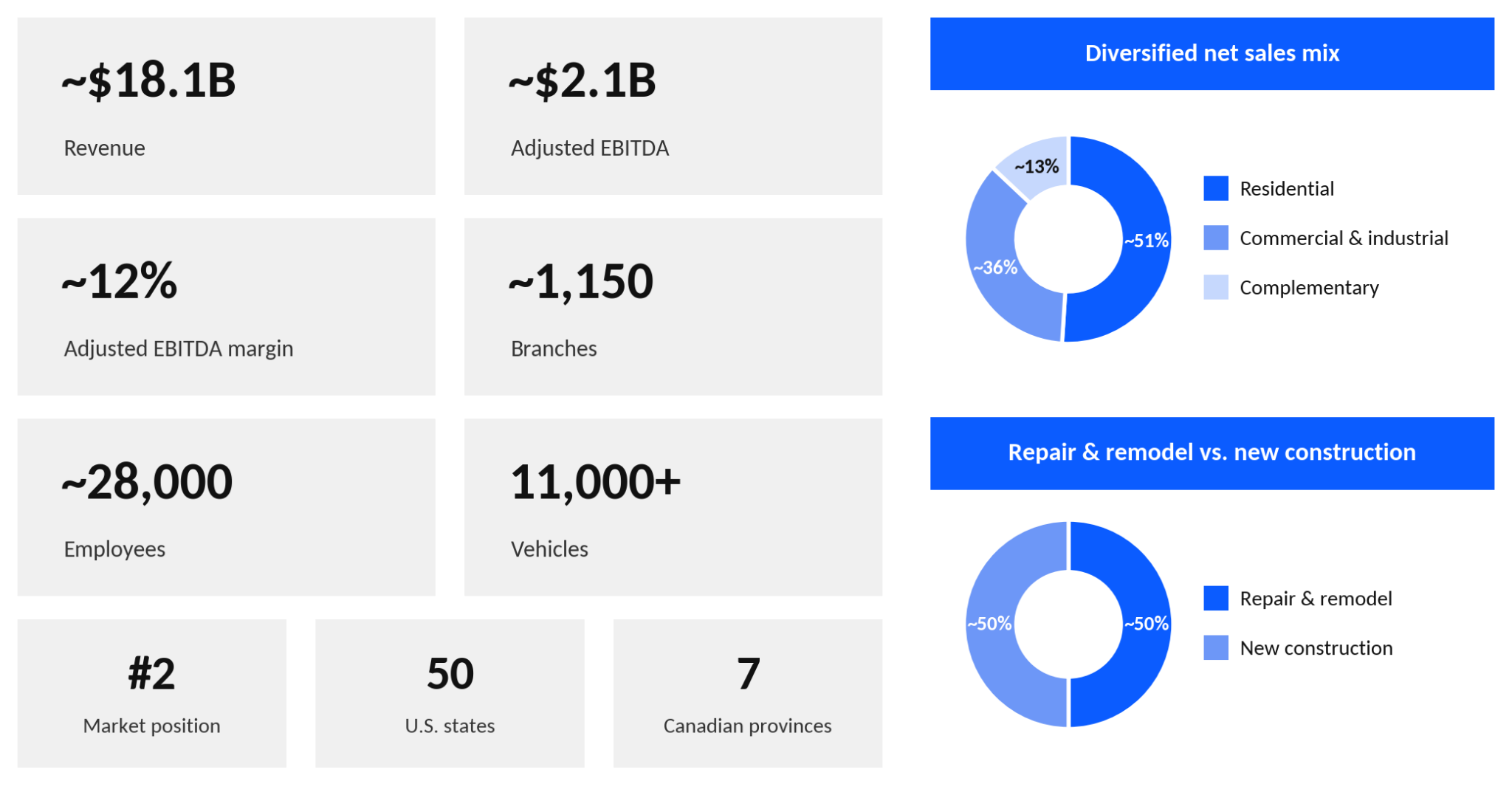
Platform of ~28,000 employees and ~1,150 locations across all 50 U.S. states and seven Canadian provinces
Targets $50B in annual revenue and $7.5 billion EBITDA within a decade via accretive M&A and organic growth
Geographic priority: U.S. first; Canada attractive; Europe only at the right price
Technology platform went live across several legacy Beacon branches in August 2026, on or ahead of schedule, with the remaining Beacon branches targeted for Q1 2027
Kodiak and TopBuild begin migrating to the platform in H1 2027, with completion targeted by the end of Q3 2027
Residential (~51%) / Commercial & Industrial (~36%) / Complementary (~13%); R&R (~50%) / New construction (~50%)
Beacon Roofing Supply: First Acquisition
Deal closed April 29, 2025: ~$11B (~$124.35/share cash; ~10.5x EBITDA)
Beacon (founded 1928): leading distributor of roofing, waterproofing, and exterior products; ~600 branches across the U.S. and Canada; No. 2 player in the space
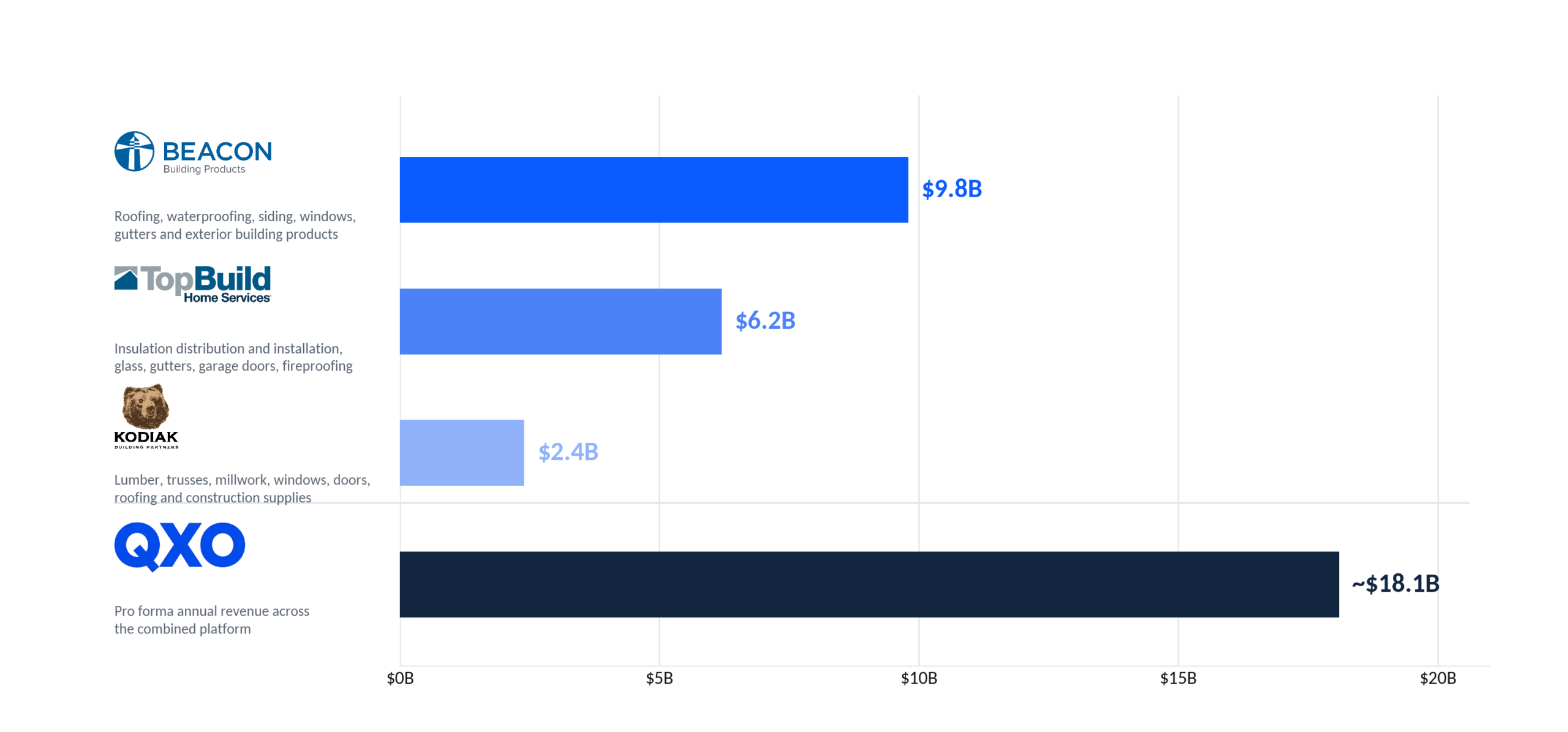
Provides QXO with a ~$10B revenue foundation
~97% U.S.-based, domestically sourced supply chain, virtually tariff-immune
Non-discretionary demand profile: ~80% of Beacon revenue from repair and remodel (R&R), where work like roof leaks can’t be deferred
Revenue mix: ~50% residential, ~30% commercial, ~20% complementary products
Organic revenue growth in 18 of 21 years since its 2004 IPO, a testament to durable demand
Jacobs’ plan: double legacy Beacon EBITDA to >$2B over the next five years via 500+ bps of margin expansion through better pricing discipline, procurement, logistics, and tech
Management identified ~$200M in annual pricing leakage from undisciplined discounting and operational inefficiencies
4% of SKUs drive ~80% of sales; many fast-movers were chronically out of stock
Removed ~250 mid-level and senior roles (overstaffed relative to peers); redeployed resources to frontline sales, drivers, warehouse staff, procurement, and tech leadership
Rolling out ERP upgrades, improved warehouse systems, demand forecasting tools, and digital platforms to drive efficiency, margin expansion, and organic growth
Kodiak Building Partners: Second Acquisition
QXO acquired Kodiak Building Partners for ~$2.25B in cash and stock; deal closed April 1, 2026
Contributed $595M to net sales in Q2 2026, its first quarter under QXO
Paid ~10.7x projected 2025 EBITDA of $211M, or ~0.95x sales; drops to an attractive ~7.3x once synergies are factored in
Kodiak generated ~$2.4B in revenue in 2025 as a U.S. distributor of lumber, trusses, windows, doors, roofing, waterproofing, and construction supplies, a market leader in most of its geographies
~40% of Kodiak revenues from Florida and Texas, where building market growth has consistently outpaced the national average over the past decade
Deal triples QXO’s addressable market to $200B+ in construction materials; highly accretive to 2026 earnings
16 of Kodiak’s top 20 vendors shared with Beacon (~$5.3B in spend), creating meaningful cross-selling and procurement synergies
Transforms QXO into a true one-stop shop across nearly every major building products category under a single scaled national distribution platform
QXO views the deal as a bottom-of-cycle buy at a favorable valuation
TopBuild Corp.: Third Acquisition
QXO acquired TopBuild (NYSE: BLD) for ~$17B; transaction valued each TopBuild share at $505 (23.1% premium to the 4/17/2026 close); deal closed July 1, 2026
Purchase price represents 14.9x TopBuild’s 2025 adjusted EBITDA pre-synergies and 11.8x post-synergies
Transaction funded with $7.9B new stock to TopBuild shareholders, $1.0B drawdown of preferred stock commitment, $6.0B new debt, and the remainder from cash on hand
Expected to be immediately and substantially accretive to QXO’s earnings
TopBuild (HQ Daytona Beach, FL) is the largest distributor and installer of insulation and related building products in North America, serving residential, commercial, and industrial end markets
Product set spans wall, attic, floor, and roofing insulation, plus complementary offerings like gutters, fireproofing, mechanical insulation, and specialized roofing systems for airports, data centers, stadiums, and warehouses
Installation business puts QXO on ~22,000 job sites per day, providing real-time visibility into project needs and new cross-selling opportunities
Deal makes QXO the #2 publicly traded building products distributor in North America behind Ferguson Enterprises (NYSE: FERG), with ~$18.1B in combined revenue, ~$2.1B in combined adjusted EBITDA, and ~$50B combined enterprise value
Expands QXO’s addressable market to $300B+ with leadership positions across key verticals: #1 in insulation, #2 in roofing, #1 in waterproofing, and #1 or #2 in lumber and building materials in key geographies served
TopBuild delivered ~$6.2B in 2025 net sales and ~$1.14B in adjusted EBITDA (industry-leading ~18% adjusted EBITDA margins); has compounded sales at ~13% and adjusted EPS at ~31% over the past 10 years
TopBuild management has guided to $9-10B in annual revenue (~8.9% CAGR at the midpoint), $1.7-2.0B in annual adjusted EBITDA (~10.2% CAGR at the midpoint), and $4.2-5.0B in cumulative FCF by 2030 (60-70% FCF conversion)
QXO expects ~$300M in run-rate synergies by 2030 from cross-selling an expanded product suite, scaled procurement, network optimization, logistics efficiencies, inventory management, and technology integration
Integration + Operating Model
Deployed >$30B across three acquisitions in ~14 months; near-term focus shifts from deal-making to integration and proving the operating model (“rest and digest”)
Bar for large deals is now higher, though tuck-ins that add density in core building-envelope categories remain an important part of the model
First wave of value creation is cost synergies (duplicative SG&A, redundant positions, overlapping technology, procurement); the longer-term driver is revenue synergies from cross-selling, merged sales forces, and shared best practices across a one-stop-shop platform
2030 roadmap: grow combined adjusted EBITDA from ~$2B (2025) to ~$4B organically, driven by self-help rather than a macro recovery
Organic bridge: legacy Beacon ~$800M to ~$2B, Kodiak ~$210M to ~$400M, TopBuild ~$1.1B to ~$1.6B
Management expects organic growth to accelerate in 2027 and beyond as the tech stack and integration work mature
Appointed President & COO effective September 1, 2026, reporting to Jacobs and overseeing day-to-day operations, freeing Jacobs to focus on capital allocation
Joins from Honeywell, where he rose to lead three major business segments in six years, most recently as President & CEO of Honeywell Process Technology
Seen as a contender for the CEO role at Honeywell, having been considered a potential successor to CEO Vimal Kapur
20+ years leading large, complex industrial businesses across operations, strategy, finance, and integration
Industry + Structural Tailwinds
Highly fragmented market: 7,000+ distributors in North America, 13,000+ in Europe, ideal conditions for Jacobs’ roll-up approach
$800B building products distribution industry across North America and Europe
Weaker housing macro creates more attractive M&A opportunities at lower valuations
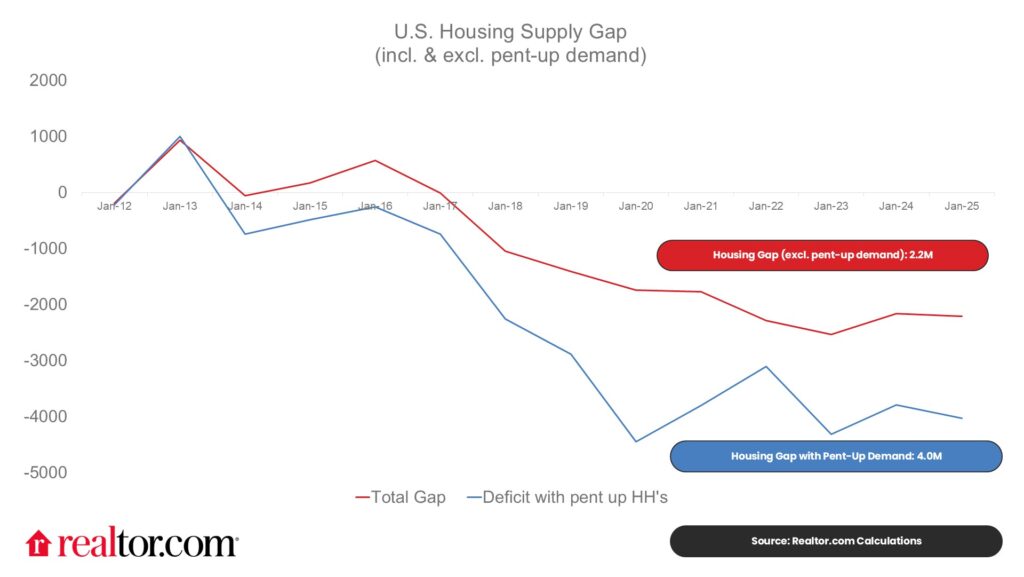
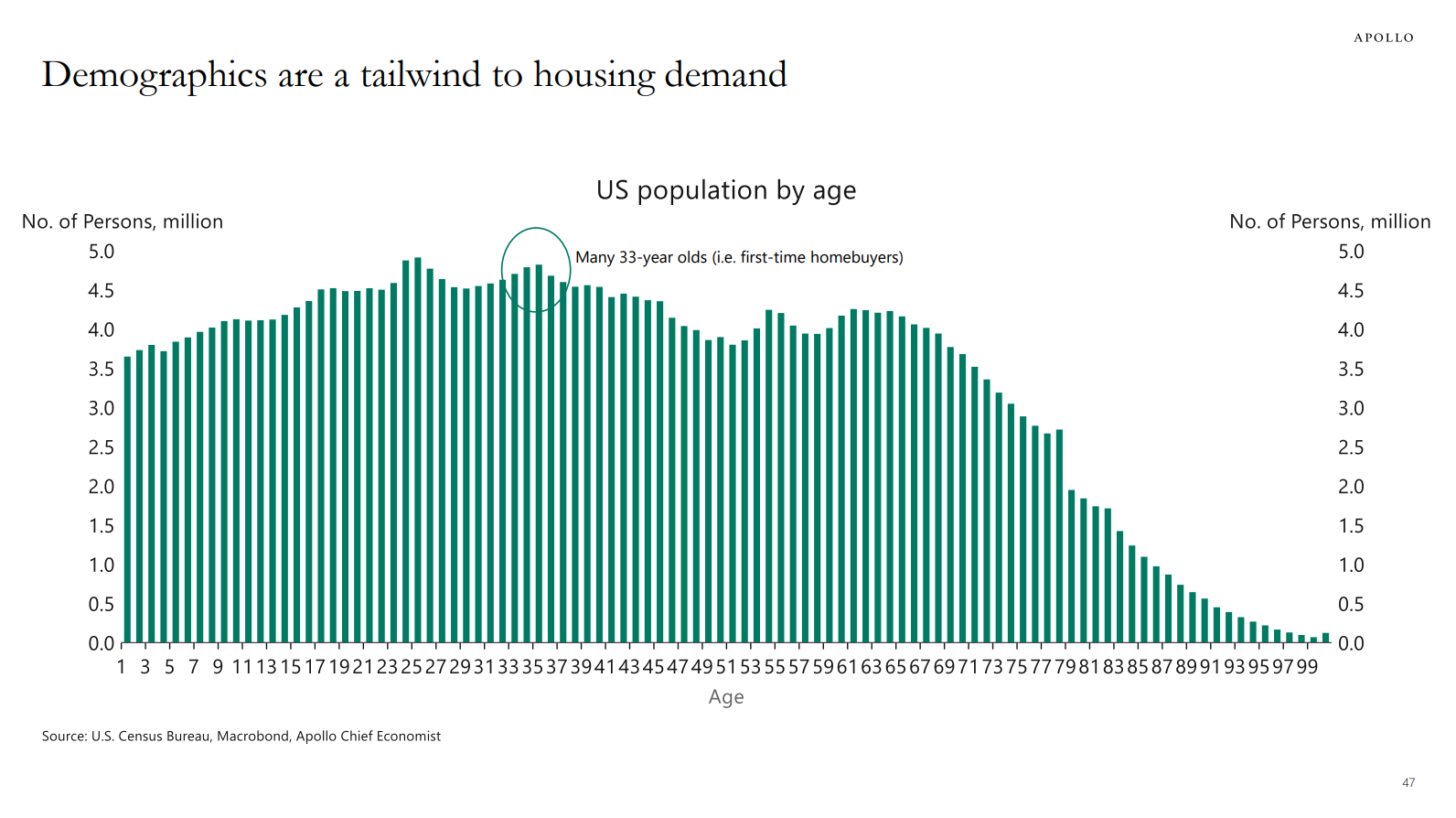
U.S. housing is short ~4 million homes; 70M+ millennials entering peak family formation years
Existing home sales near 30-year lows (~4M vs. a ~5.0-5.5M norm) despite ~79M more people and ~36M more households than in 1995, significant pent-up demand
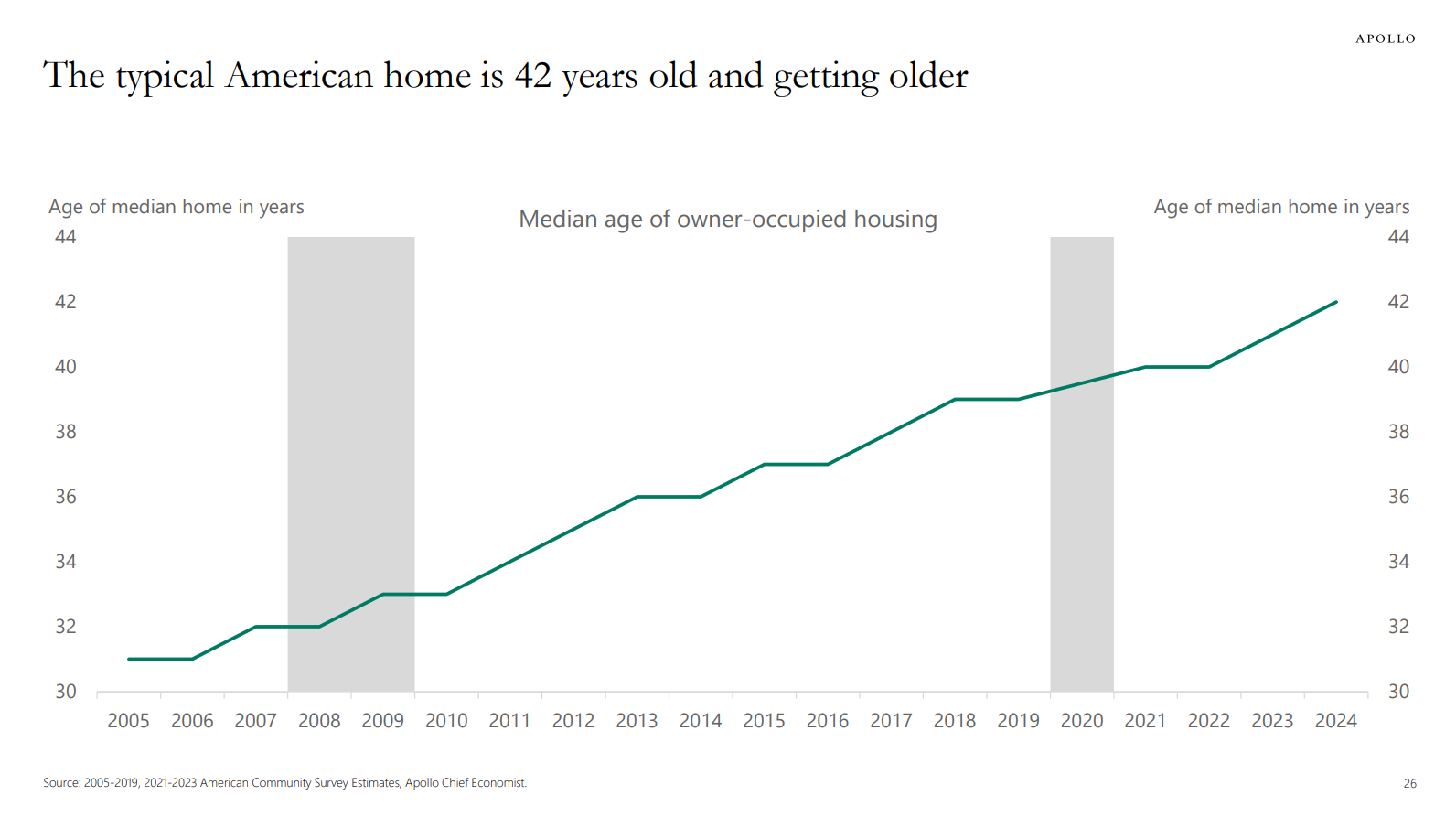
Significantly aged housing stock (42+ year average age) and commercial buildings (50+ years), a structural driver of repair and remodeling demand
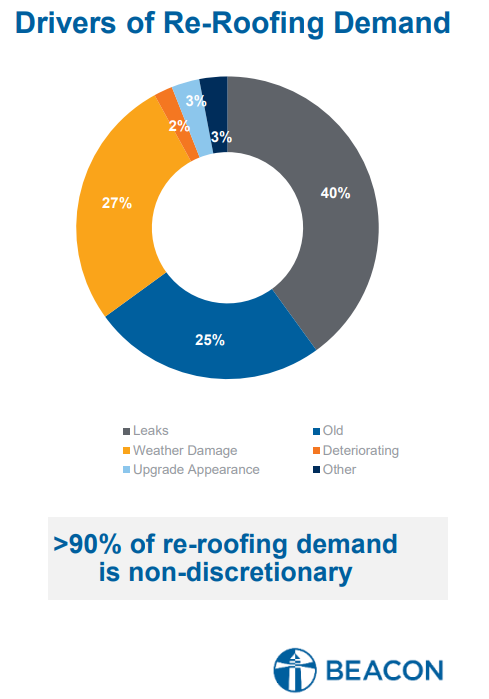
Severe weather events that drive roofing demand have quadrupled in frequency over the last 20 years, with >90% of re-roofing demand non-discretionary
~$2T in infrastructure repair needs across North America over the next two decades
Q2 Commentary
Q2 was another quarter of QXO doing the hard work while the housing market refuses to cooperate.
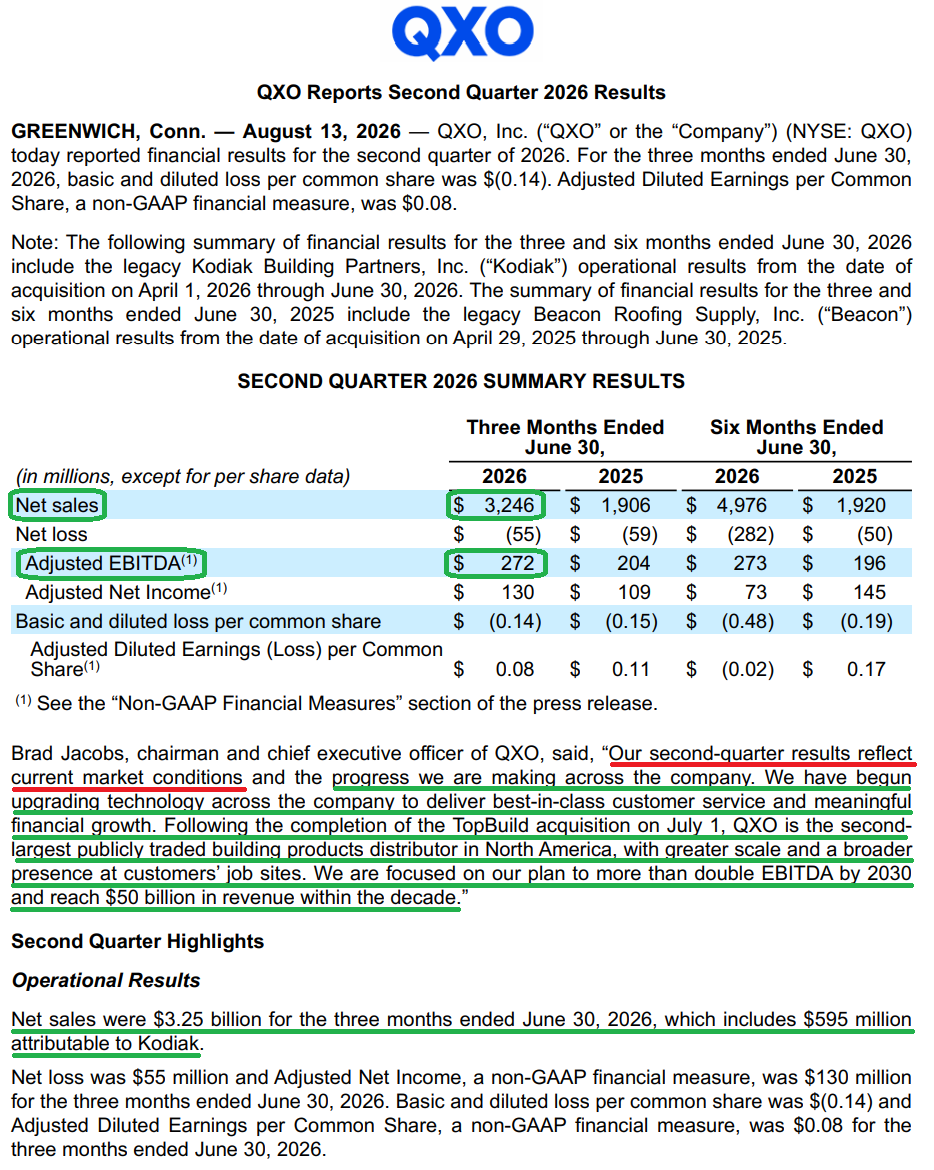
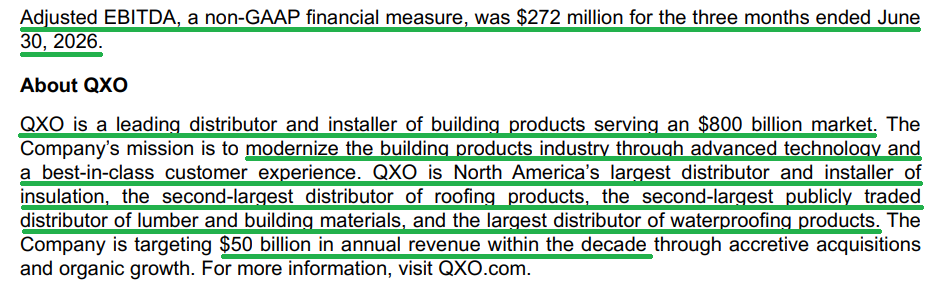
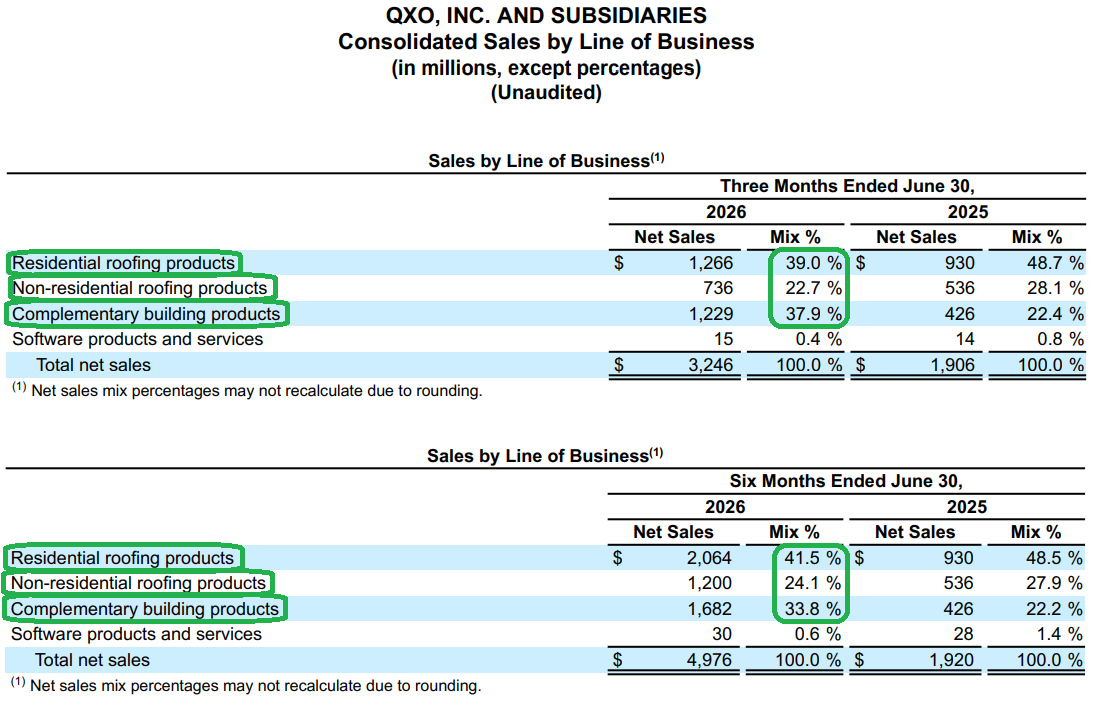
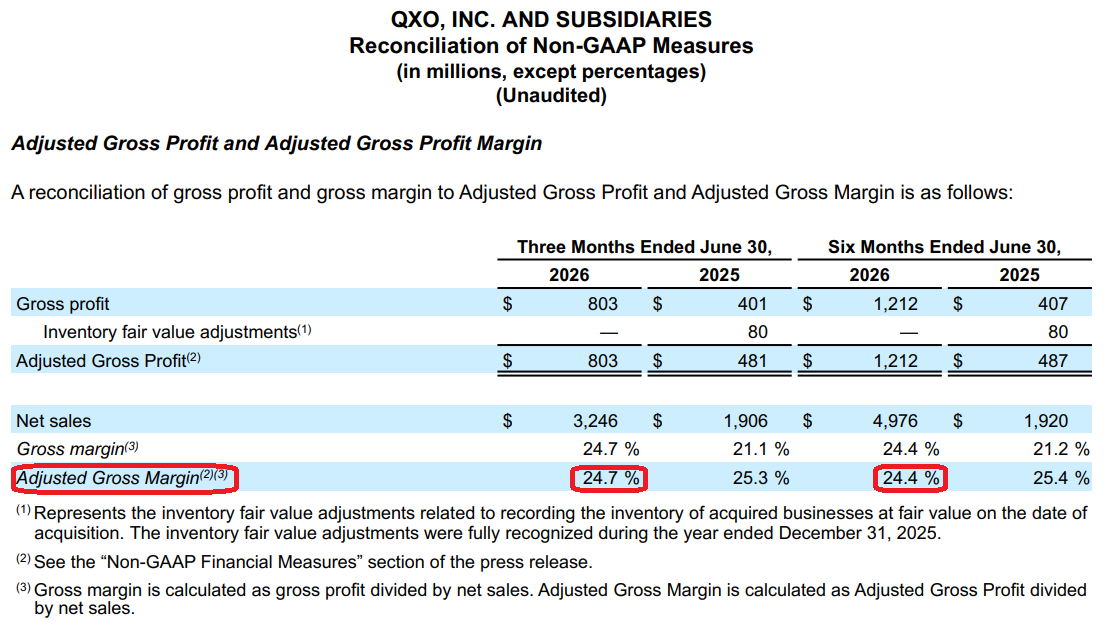
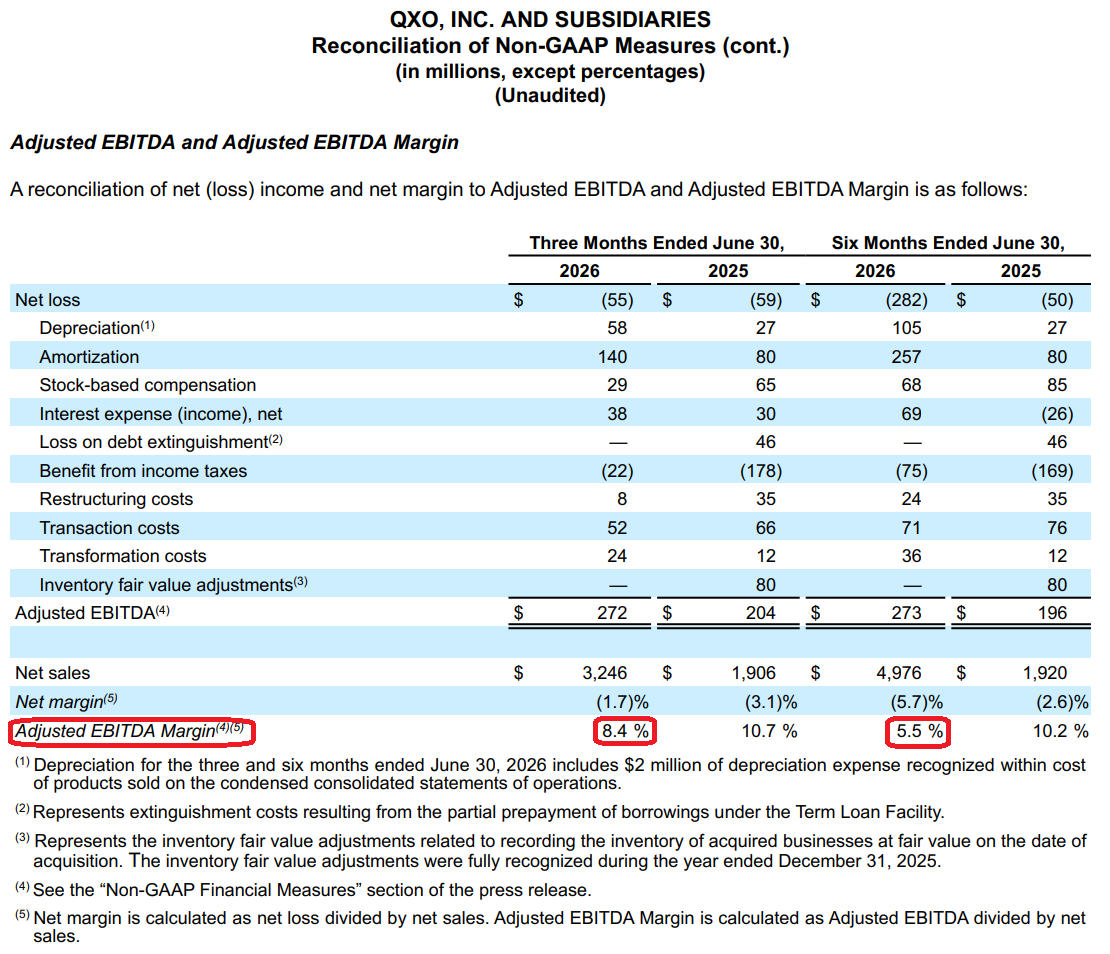
Revenue of $3.25B topped the ~$3.19B consensus, while adjusted EBITDA of $272M beat the Street’s $253M. Adjusted EBITDA margin came in at 8.4%, down ~230 bps from 10.7% a year ago, while adjusted gross margin slipped ~60 bps to 24.7%. Mix did most of the damage at the gross line, with Kodiak lifting lower-margin complementary building products to ~38% of sales from ~22%, while softer roofing demand and a larger cost base weighed further on the P&L. Sequentially, gross margin improved ~100 bps from Q1’s 23.7%, a modest but welcome step in the right direction.
Brad Jacobs summed up the quarter best: “Our second-quarter results reflect current market conditions and the progress we are making across the company. We have begun upgrading technology across the company to deliver best-in-class customer service and meaningful financial growth.”
Read between the lines and the message is twofold. The market remains a grind, while the work that will ultimately drive results over the long haul is only getting underway.
That work now spans a far larger platform than the one QXO reported on just a quarter ago, and far more than the one we covered in our last update. With TopBuild closing on July 1, QXO now brings ~$18.1B of pro forma revenue and ~$2.1B of adjusted EBITDA across ~28,000 employees and ~1,150 locations in all 50 states and seven Canadian provinces. It is North America’s #1 distributor and installer of insulation, #1 in waterproofing, #2 in roofing, and #1 or #2 in lumber and building materials across the key geographies it serves. The mix is also more balanced, at ~50/50 between new construction and repair and remodel and ~60/40 between residential and commercial, leaving the platform far less beholden to any single end market than a pure-play distributor.
Having deployed >$30B across three large acquisitions in ~14 months, QXO is now doing what any disciplined acquirer does after a feast: resting and digesting. Management made that clear in its July investor Q&A, noting that the next chapter is less about buying businesses and more about integrating them and proving the operating model. That doesn’t mean Jacobs has lost his appetite. The bar for large deals is simply higher, with tuck-ins that add density in core categories still very much on the menu.
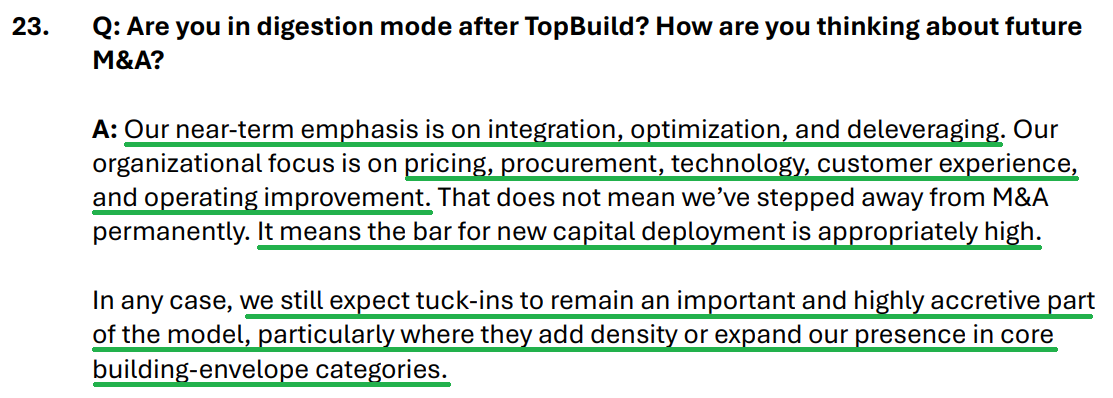
For any roll-up, this is the phase where the real value gets created, starting with the low-hanging fruit of eliminating duplicative SG&A, redundant positions, and overlapping technology. Procurement falls in the same bucket, with 16 of Kodiak’s top 20 vendors shared with Beacon, representing ~$5.3B of combined spend and a much stronger seat at the negotiating table. These cost synergies certainly matter, but Jacobs himself has described them as a bit of a one-trick pony. Once the redundancies are gone, they’re gone.
The gift that keeps on giving is revenue synergies, which is where the one-stop shop comes to life. A builder or contractor who buys roofing from Beacon, lumber from Kodiak, and insulation from TopBuild can now consolidate all three into a single relationship, with QXO cross-selling across categories, merging sales forces, and spreading best practices from one business to the next. TopBuild’s installation crews add a layer no traditional distributor can match, putting QXO on ~22,000 job sites every day with real-time visibility into project progress and what the customer will need next.
Technology ties it all together. The building products industry remains remarkably under-digitized, which is why QXO is rolling out a modern stack of ERP, warehouse management, CRM, pricing tools, and e-commerce across the entire platform. The new platform went live across several Beacon branches in August and is set to be substantially complete by the end of Q1 2027. Kodiak and TopBuild begin migrating in the first half of 2027, with completion targeted by the end of Q3 2027.
Executing all of this at once is no small task. QXO is integrating three large businesses while rolling out an entirely new technology stack across each of them simultaneously, which is why the appointment of Ken West as President and COO, effective September 1, could not be more timely.
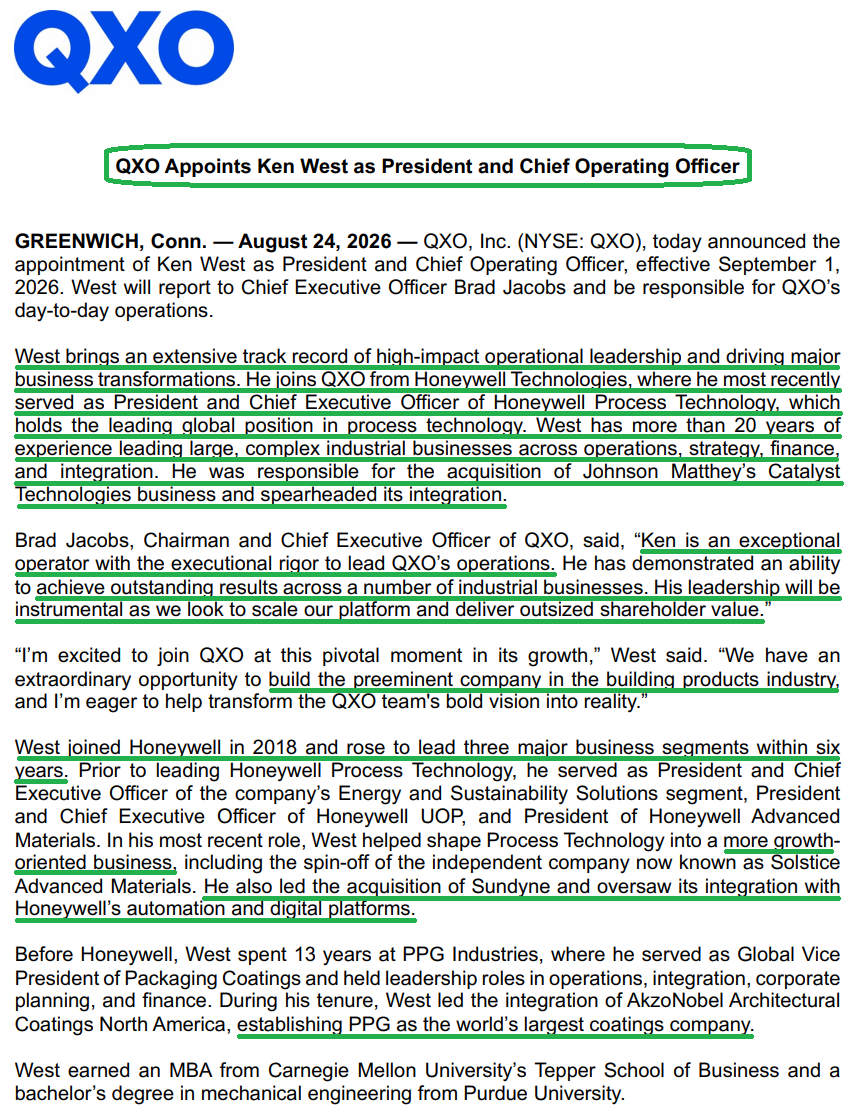

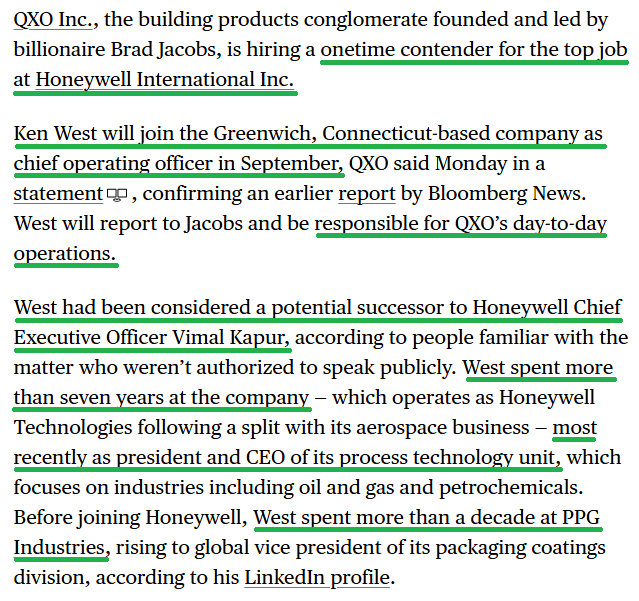
West arrives from Honeywell, where he rose to lead three major business segments in six years, most recently as CEO of Honeywell Process Technology. More importantly, integration is his specialty. He led Honeywell’s $2.2B acquisition of Sundyne and its integration into Honeywell’s automation and digital platforms, followed by the $1.8B acquisition and integration of Johnson Matthey’s Catalyst Technologies business. Before that, he spent 13 years at PPG, where he led the integration of its $1.1B acquisition of AkzoNobel’s North American architectural coatings business, a deal that made PPG the world’s largest coatings company.
That is exactly the experience this phase of the roll-up calls for. With West running day-to-day operations, Jacobs is free to do what he does best: deploy capital. We view it as a much-needed hire at the right moment in the story.
Every one of those levers sits squarely within QXO’s control. The macro does not, though at this point in the cycle it is far more likely to be a source of upside than downside.
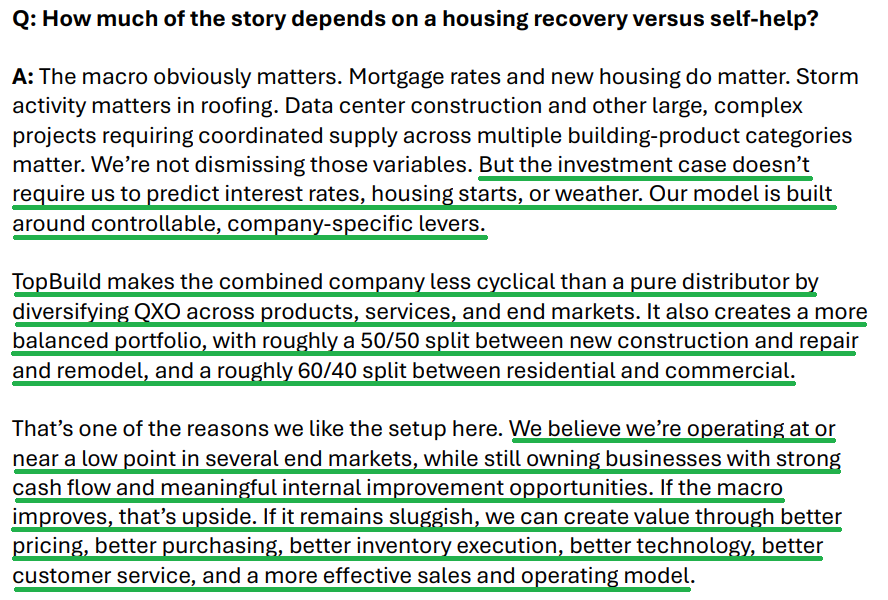
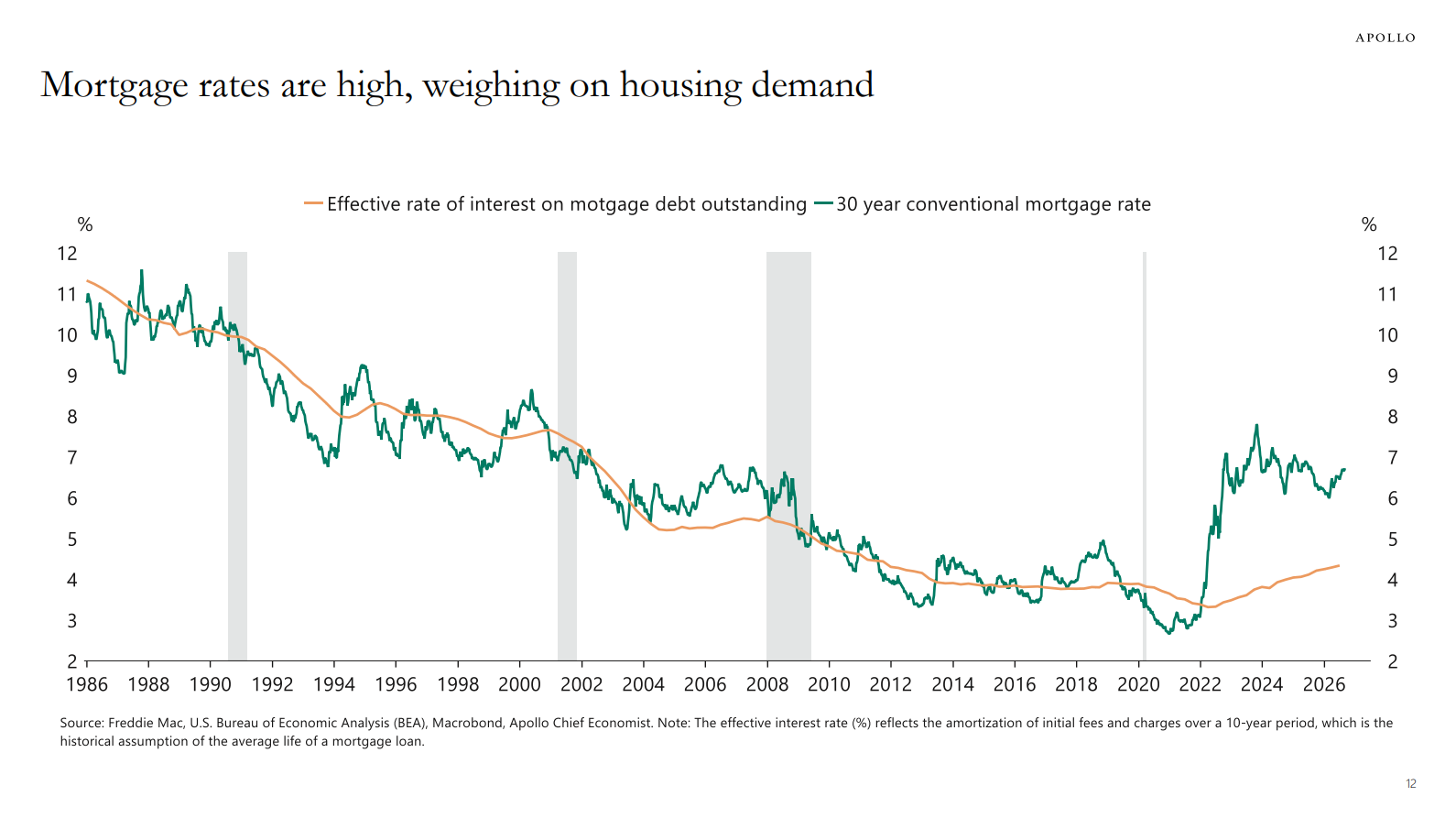
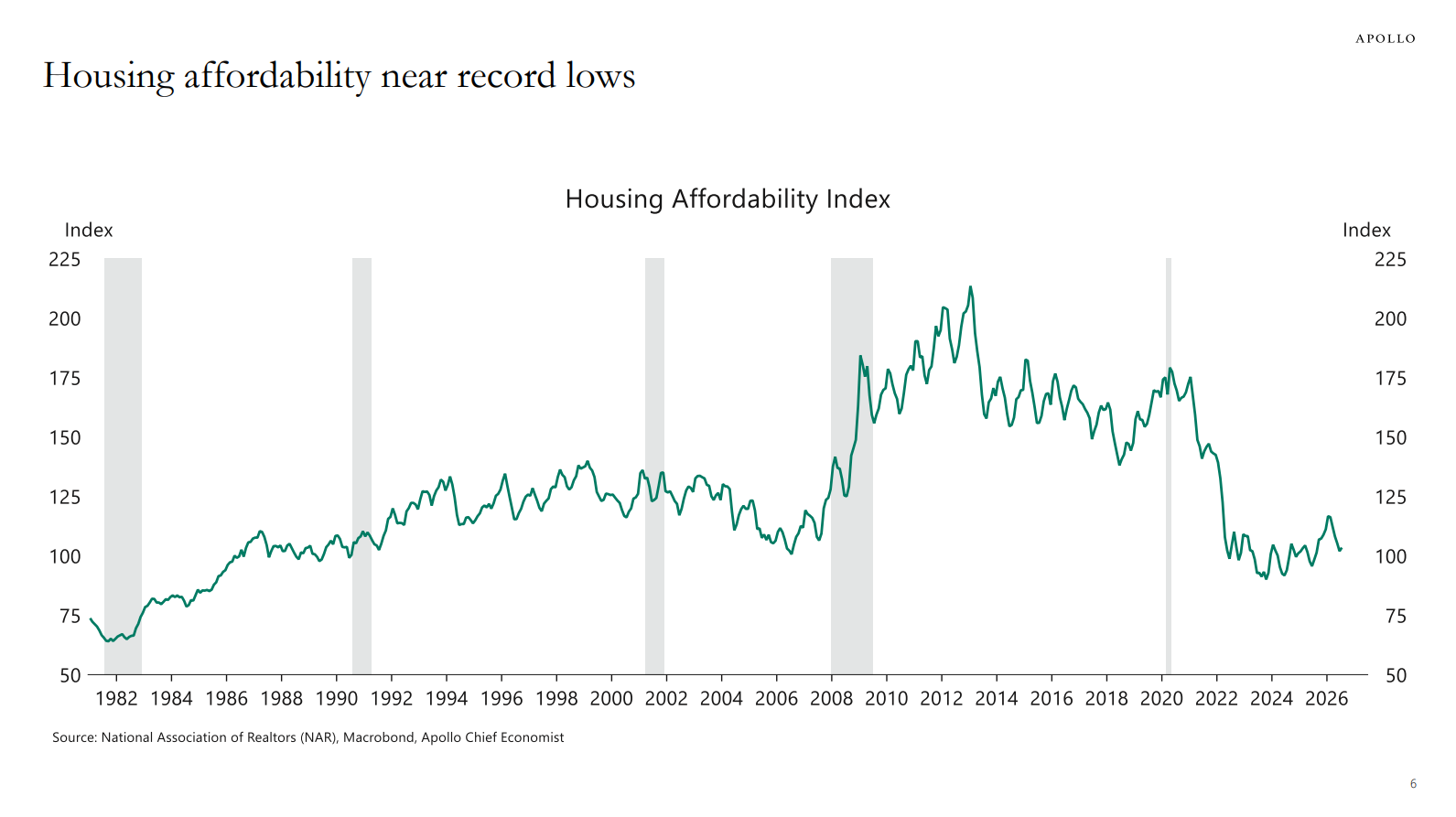
Housing remains in the gutter, with mortgage rates knocking on the door of 7% and weighing on affordability. The lock-in effect compounds the pressure, with the wide gap between the effective rate on outstanding mortgages and today’s prevailing rate keeping would-be sellers locked in and would-be buyers on the sidelines.
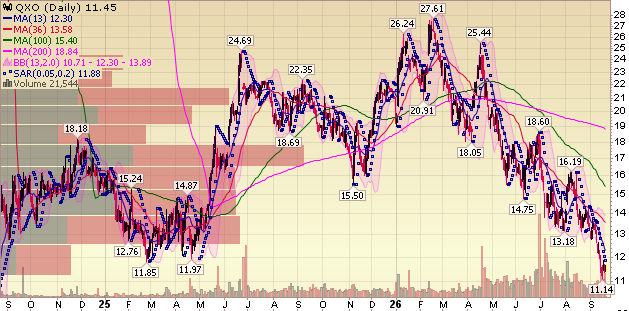
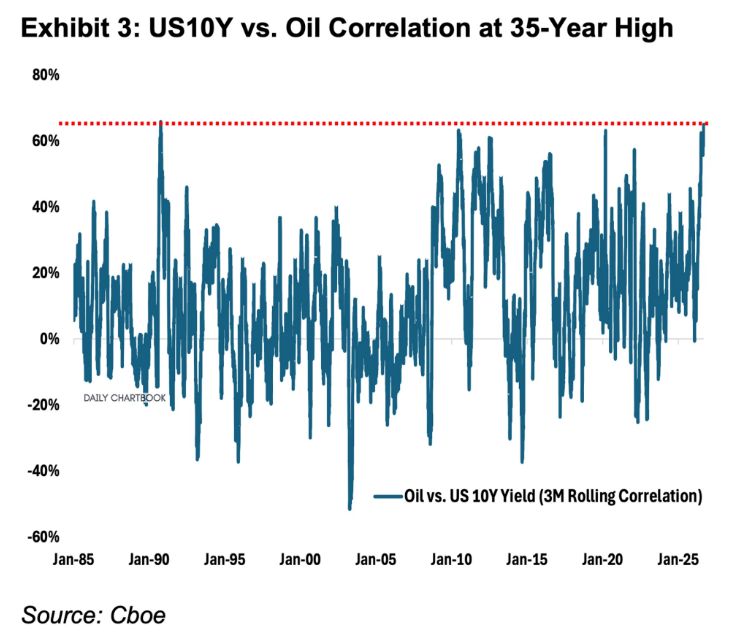
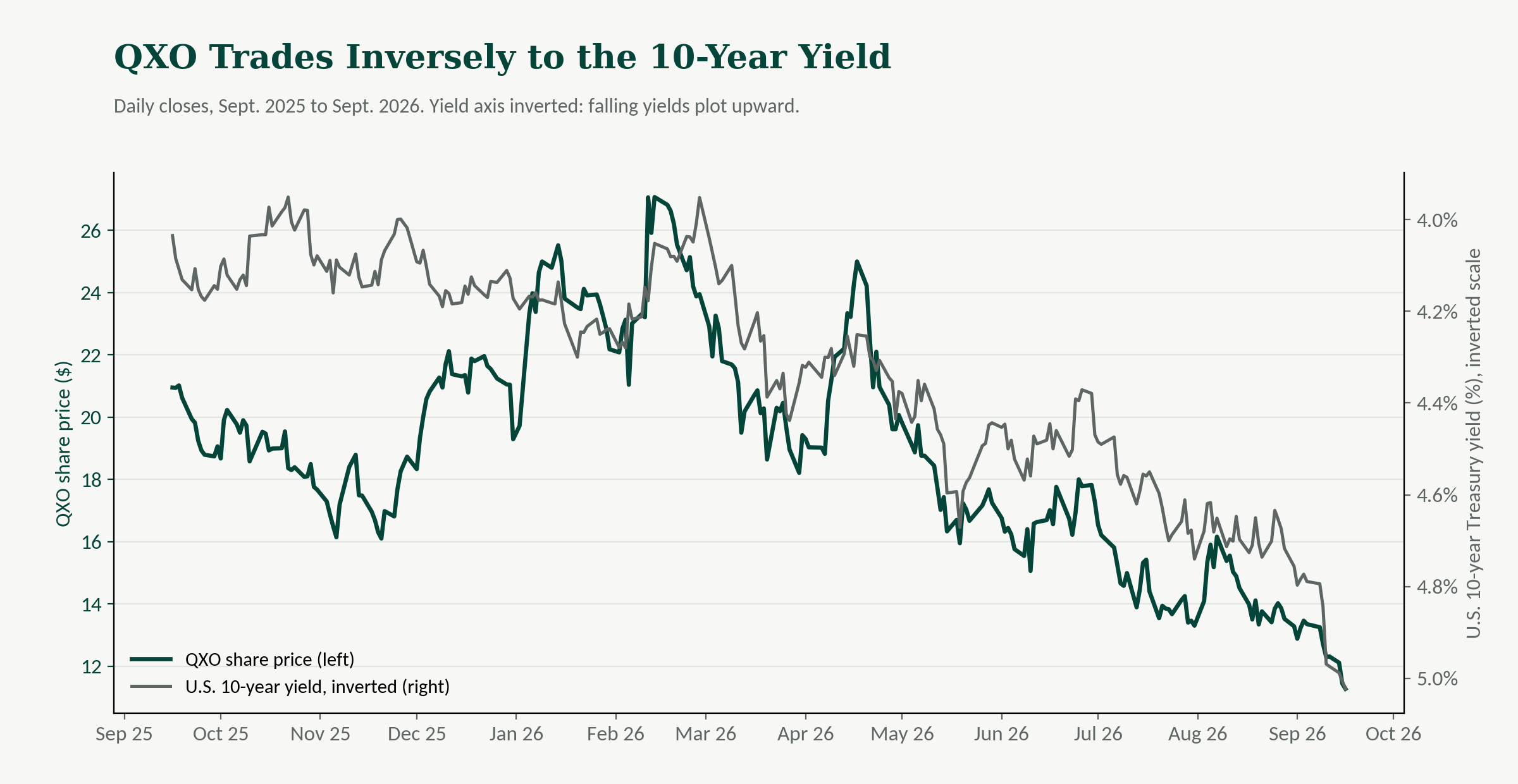
Look closer at what is driving rates, however, and there is a strong case for optimism. The three-month rolling correlation between the 10-year and oil recently hit +65%, a 35-year high just shy of the 66% record set at the onset of the Gulf War in 1990. In plain English, yields are taking their cues less from the Fed and more from oil, which today means Iran. As a rate-sensitive name, QXO has traded inversely to the 10-year, so the same dynamic that pushed rates higher (QXO lower) can bring them back down (QXO up) just as quickly on any clarity in the Middle East, with the administration having every incentive to deliver that clarity sooner rather than later.
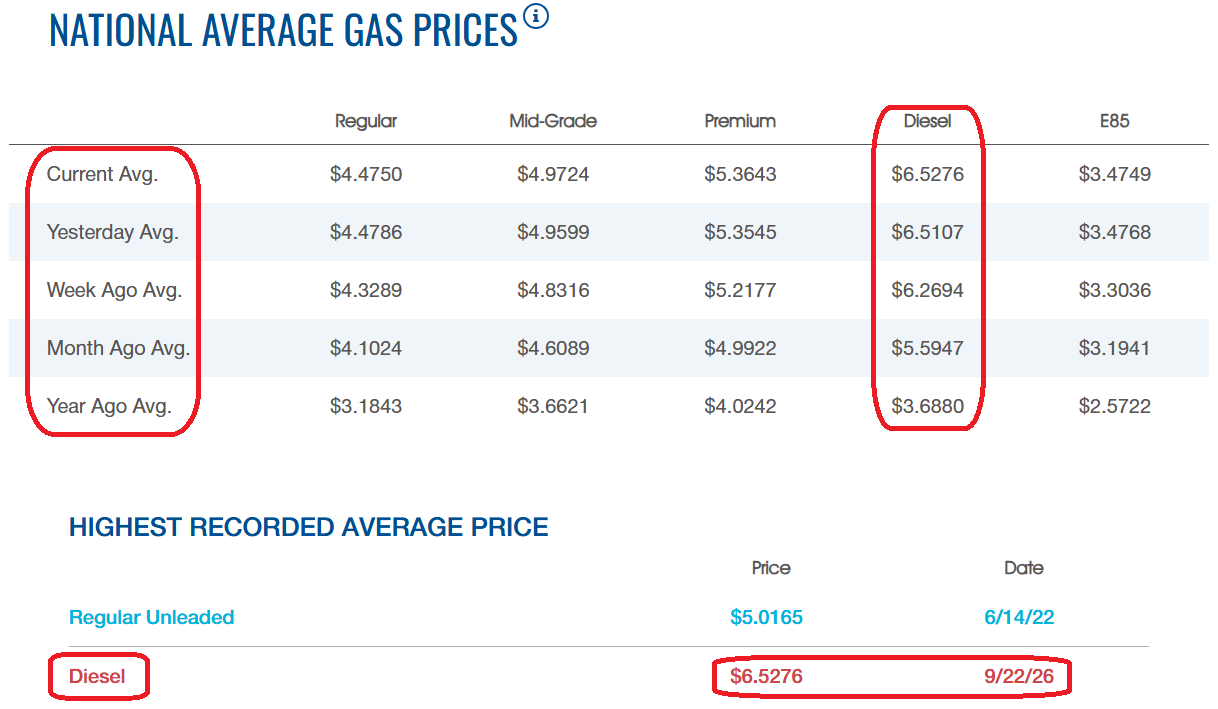
In the meantime, there is a case to be made that for long-term investors, the downturn actually works in QXO’s favor. North America’s building products distribution industry is made up of 7,000+ distributors, many of them sub-scale and without the deep pockets or backing to weather elevated rates, soft volumes, and rising energy costs (diesel at ATH $6.52) all at once. QXO has both, along with the scale to absorb the pressure. The longer it persists, the more motivated sellers become, allowing QXO to add high-quality tuck-ins at cheaper multiples while the rest of the industry plays defense. This is the same clearance-rack dynamic we have highlighted since day one, now playing out in what we expect to be smaller, bite-sized deals.
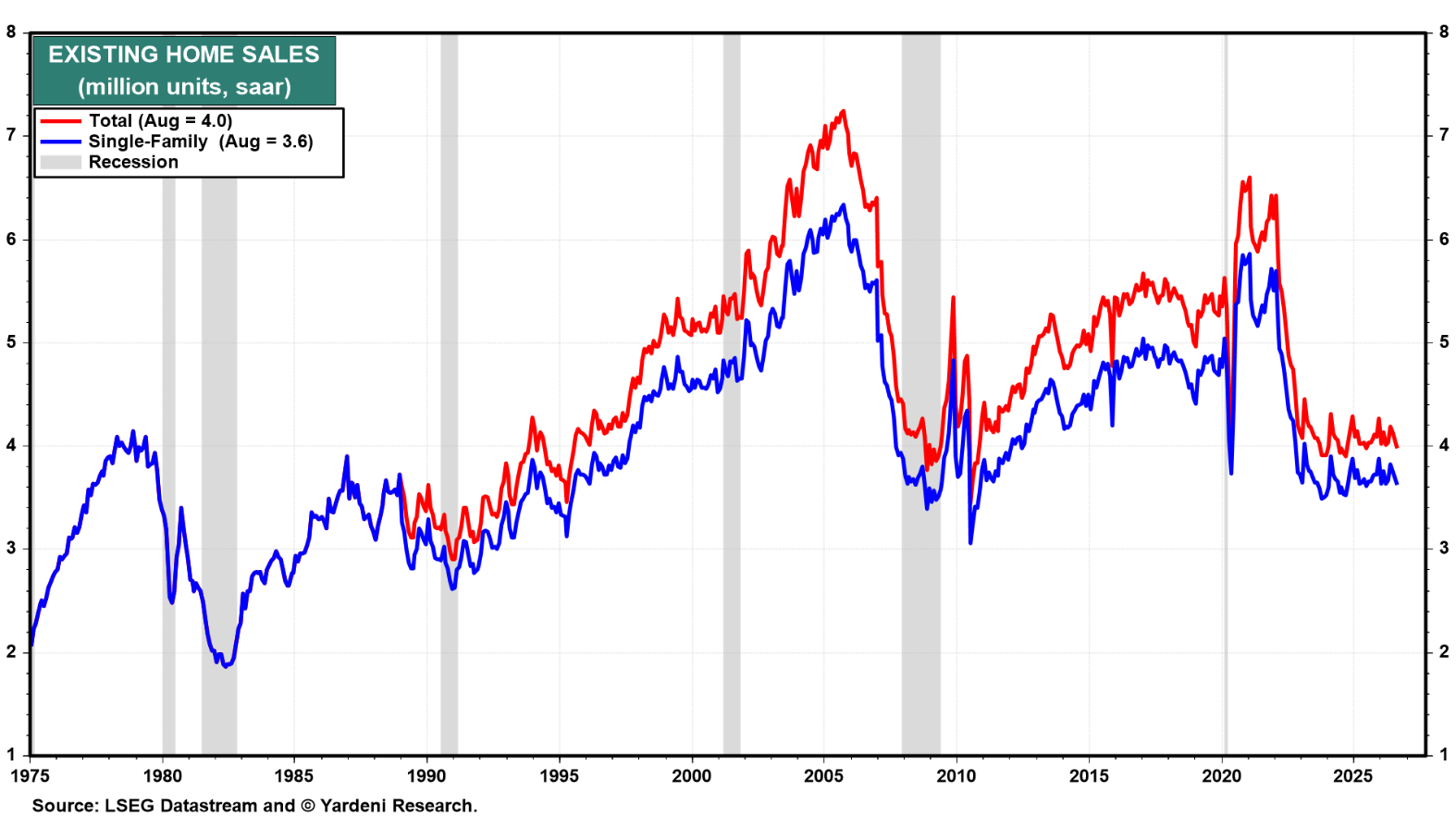
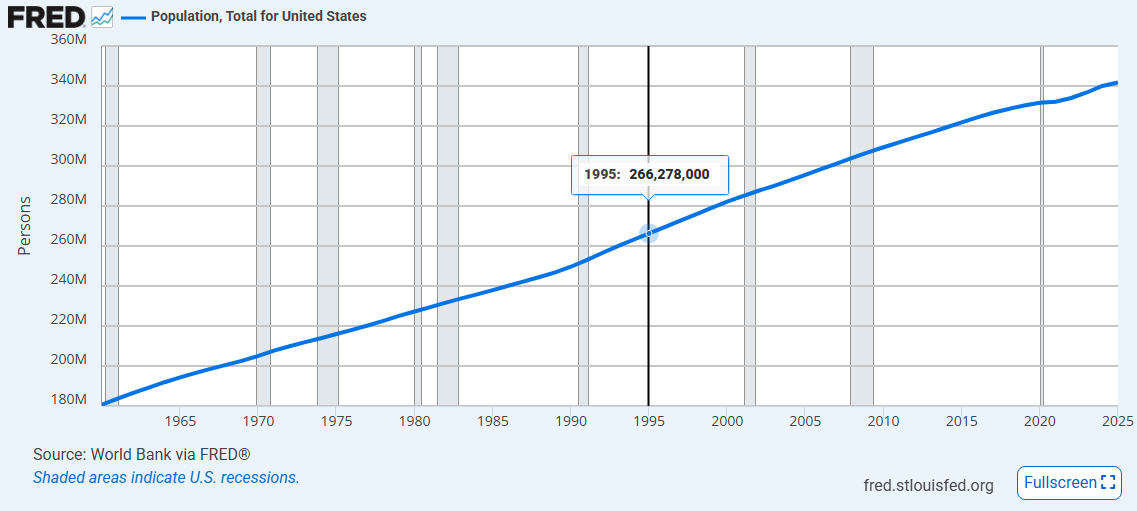
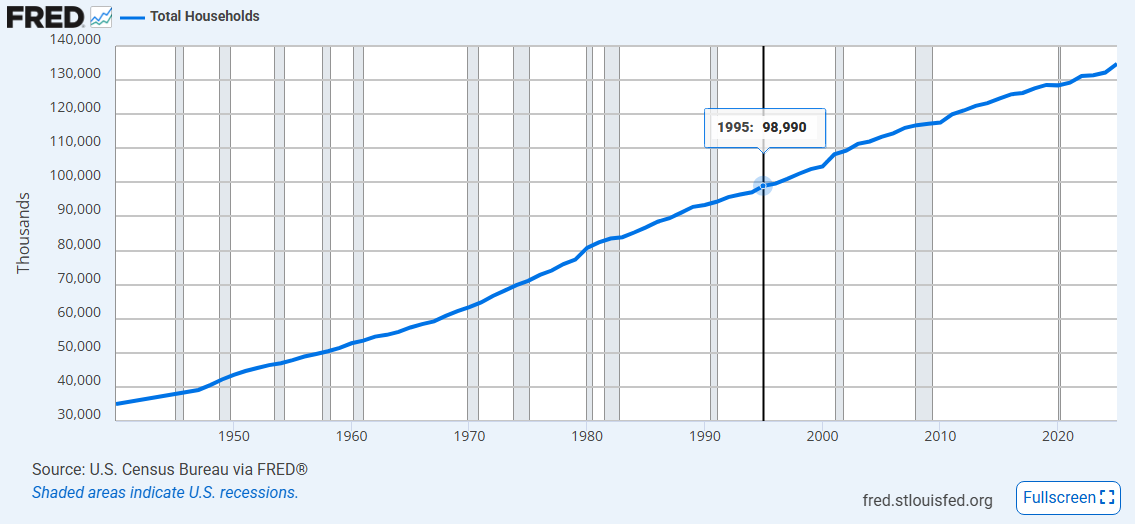
Existing home sales are a headwind today and a tailwind in waiting. At August’s 3.98M on an annualized basis, sales sit near 30-year lows against a ~5.0M to 5.5M norm, with 2025’s 4.06M the lowest annual total since 1995. Yet since 1995, the U.S. population has grown by ~76M people (+28%) while the country has added ~36M households, a 36% increase. Today’s sales volumes would look depressed even against the America of three decades ago. Against the America of today, they represent a beach ball of pent-up demand held underwater.
That demand is backed by structural tailwinds that care little about where the 10-year trades:
Housing shortage: the U.S. is short ~4M homes after more than a decade of underbuilding, with household formation outpacing construction every year since 2013.
Aging homes: the typical American home is now 42 years old, up from 31 in 2005, with ~48% of the housing stock dating to the 1980s or earlier.
Demographics: the largest age cohorts in the country are hitting their early 30s, prime first-time homebuyer territory, with 70M+ millennials entering peak family formation years only to sit on the sidelines as affordability bites.
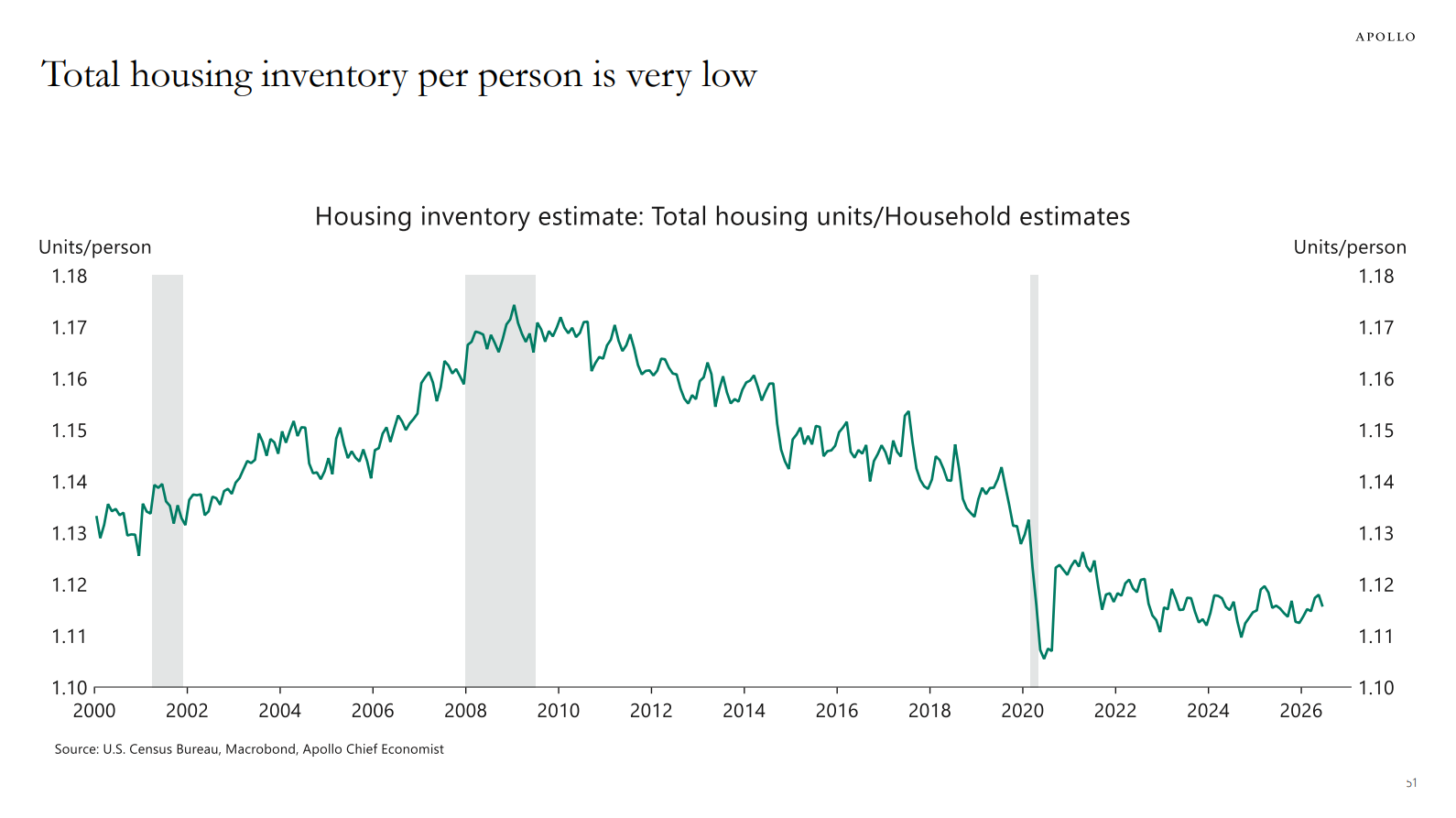
Thin inventory: housing inventory per person remains exceptionally thin.
Weather: severe weather events that drive roofing demand have quadrupled in frequency over the past 20 years, with >90% of re-roofing demand non-discretionary.
Commercial and infrastructure: commercial buildings average 50+ years of age, while North America faces >$2T of infrastructure repair needs over the next two decades.
Put it all together and QXO has a long runway ahead with the wind at its back as it pursues ~$50B of revenue and ~$7.5B of EBITDA within the decade. The roadmap is already laid out, with management targeting more than a doubling of combined adjusted EBITDA to ~$4B by 2030 through self-help alone. That means legacy Beacon moving from ~$800M to ~$2B, Kodiak from ~$210M to ~$400M, and TopBuild from ~$1.1B to ~$1.6B. Layer in self-funded tuck-ins and that figure climbs to ~$5.5B, all without assuming any help from the macro. If QXO hits its $7.5B EBITDA target, reasonable assumptions point to a ~5x bagger from here. Knowing Brad Jacobs, we wouldn’t be surprised if it ends up being a whole lot more.
At ~$18.1B of pro forma revenue, QXO is already more than a third of the way to its $50B goal, less than 18 months after closing its first acquisition. That still leaves plenty of room to run as Brad Jacobs pursues his fourth highly successful industry roll-up, building on a career that has already produced a cumulative >300x return for shareholders. With a proven operator now in the COO seat and a macro backdrop with far more room to improve than deteriorate, we are more than happy to let QXO rest, digest, and compound.
Q2 Earnings Breakdown
General Market
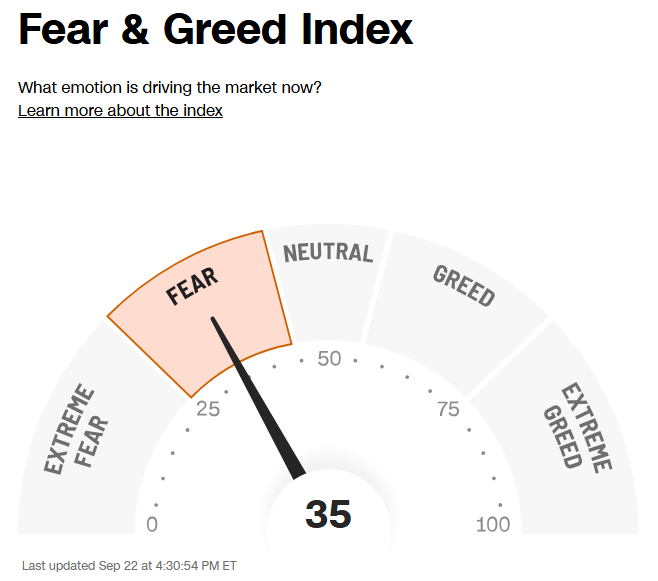
The CNN “Fear and Greed Index” ticked up to 35 this week from 29 last week. You can learn how this indicator is calculated and how it works here: (Video Explanation)
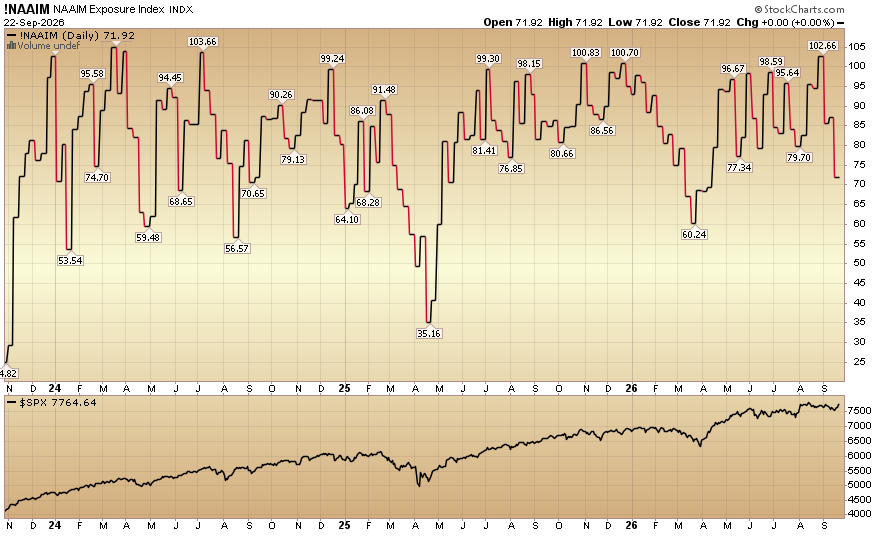
The NAAIM (National Association of Active Investment Managers Index) (Video Explanation) ticked down to 71.92% equity exposure this week from 87.19% last week.
Our podcast|videocast will be out sometime today. We have a lot of great data to cover this week. Each week, we have a segment called “Ask Me Anything (AMA)” where we answer questions sent in by our audience. If you have a question for this week’s episode, please send it in at the contact form here.


Comments
Log in or sign up to join the conversation.