

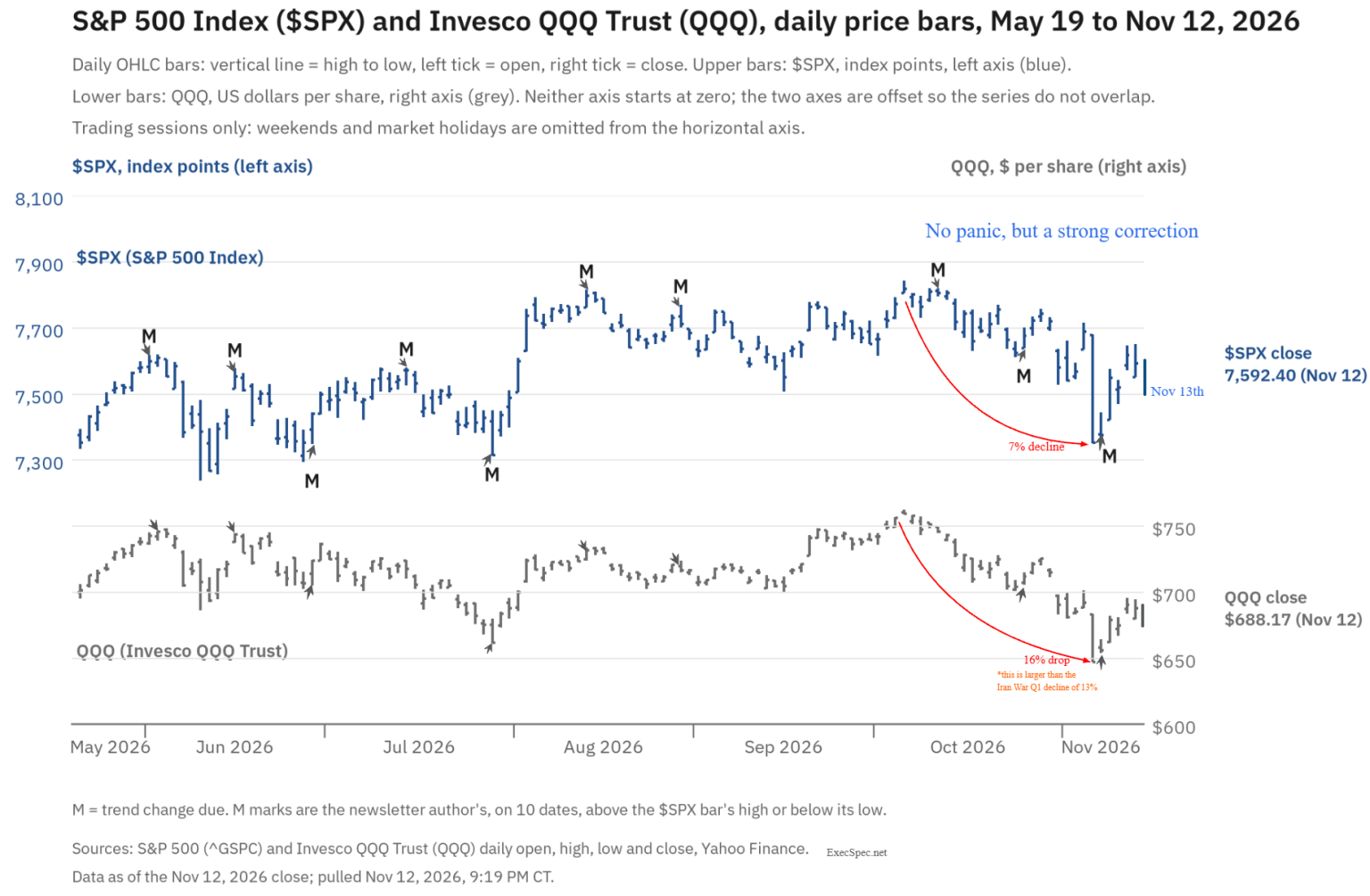
On November 3rd, voters delivered a blue wave. Wall Street supplied the red ink. Democrats won both chambers of Congress, and the post-election technology selloff fell particularly hard on AI infrastructure stocks. On November 5 the Nasdaq Composite fell 5.5 percent, its sharpest one day decline since April 2025, and the Nasdaq 100 shed some $2.5 trillion in a single session. From its October 6 record, the Nasdaq entered a correction, down 12 percent, with the Nasdaq 100 falling 16%. CoreWeave (CRWV) and other neo-clouds took a beating alongside chip shares. After falling roughly 70% from its summer peak, CoreWeave had what could be a dead cat bounce this week on earnings, a reminder that customers are still buying computing power even as investors question the time to recoup the cost.
Investors were pricing the prospect that tighter regulation and higher costs for artificial-intelligence development under a Democrat mandate, including possible pauses in data-center construction, will slow the capital cycle that has led this economic and stock market expansion. A slower buildout would be felt first in chips, memory, and neo-clouds, and then in inflation, interest rates, and the leadership of the rest of the market. That thesis is now being tested on several fronts at once: a leadership crisis at Nvidia (NVDA), a recent decline in oil alongside a still-dangerous Iranian blockade, and a bond market that is increasingly voting for higher rates.
Nvidia, the Scandals, and the Neo-Clouds
On November 12, Nvidia announced that Jensen Huang, its co-founder and chief executive of 33 years, had resigned. Huang’s admission of an extramarital affair with an alleged Chinese spy has raised national-security questions. Investors capitulated, selling NVDA shares down 14% near the open, below 150 a share. Nvidia is not only a world beating chip designer, it is a supplier, a co-investor, and a circular web of financier for the neo-clouds that rent its processors. The company owns more than 10 percent of CoreWeave. Governance and key-person risk is therefore a sector event. Nebius (NBIS) fell about 20 percent after indicating that 2026 revenue would come in at the low end of its prior forecast and is hitting new lows today. Super Micro (SMCI), Dell (DELL), Micron (MU), and other suppliers were lower with them. {Our buy zone for NVDA is the 124 to 150 zone}
Demand for computing has not been repealed, but the multiple investors will pay for it has become more fragile. Nvidia itself has not issued a new forecast today; it reports on November 17 against prior guidance of about $108 billion for the quarter. That report, the first without Jensen Huang, will be the next test of whether this is a crisis of governance, demand or investors continuing to mark down future PE multiples on AI stocks.
Oil, the Blockade, and Inflation
A slower AI cycle is one possible path to cooler inflation. A more immediate path runs through the oil market. West Texas Intermediate oil is down about 16 percent in November, and Brent about 20 percent, on hopes (again?) that the Iran war might ease. A sustained decline in crude is a most direct route to lower gasoline prices and to lower inflation expectations and bond yields. That would, in turn, support the rotation toward rate-sensitive and consumer-oriented sectors for investors. President Trump has repeatedly stated in public that he’s content to maintain the current status quo, blockading the Iranians and waiting for a real peace deal.
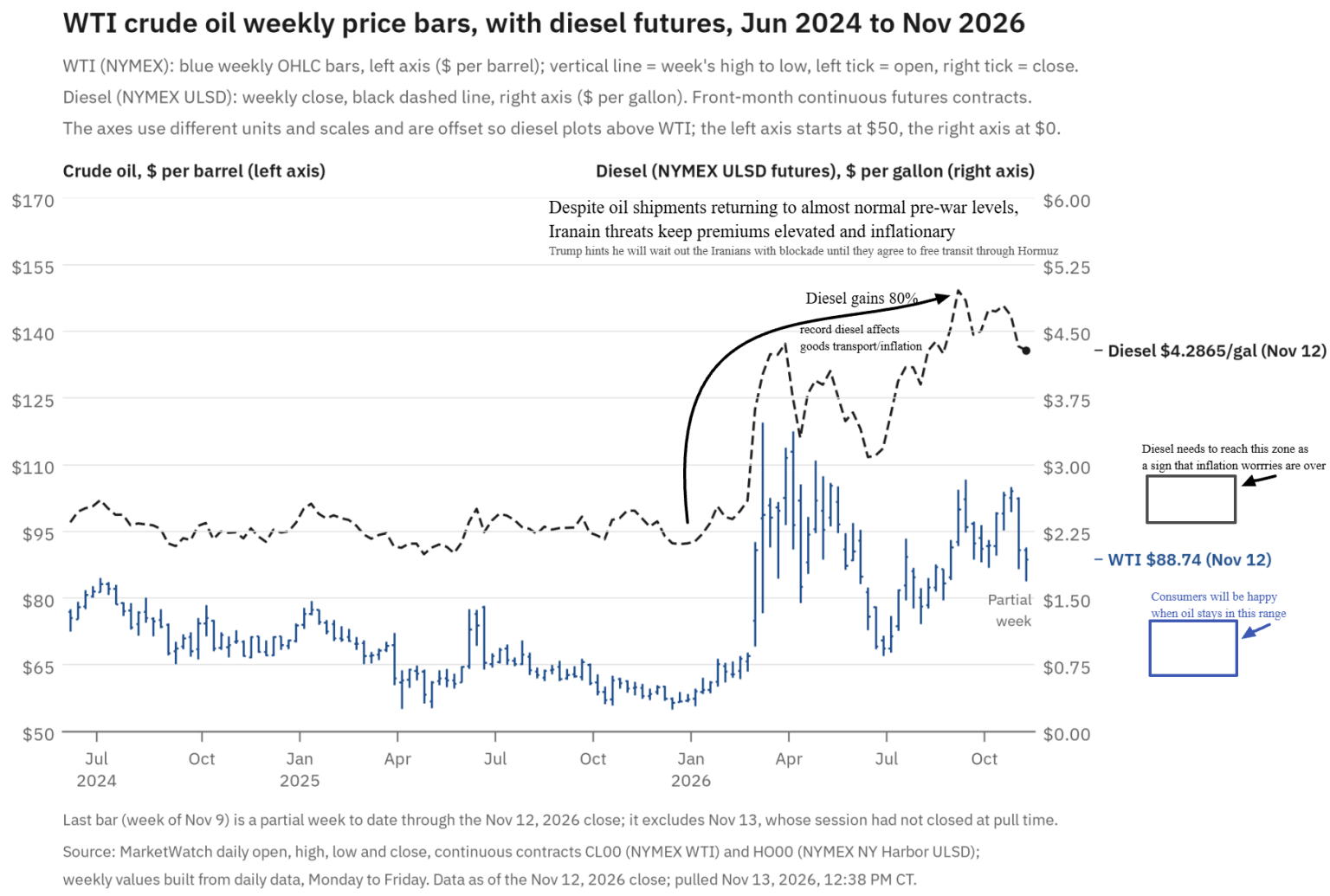
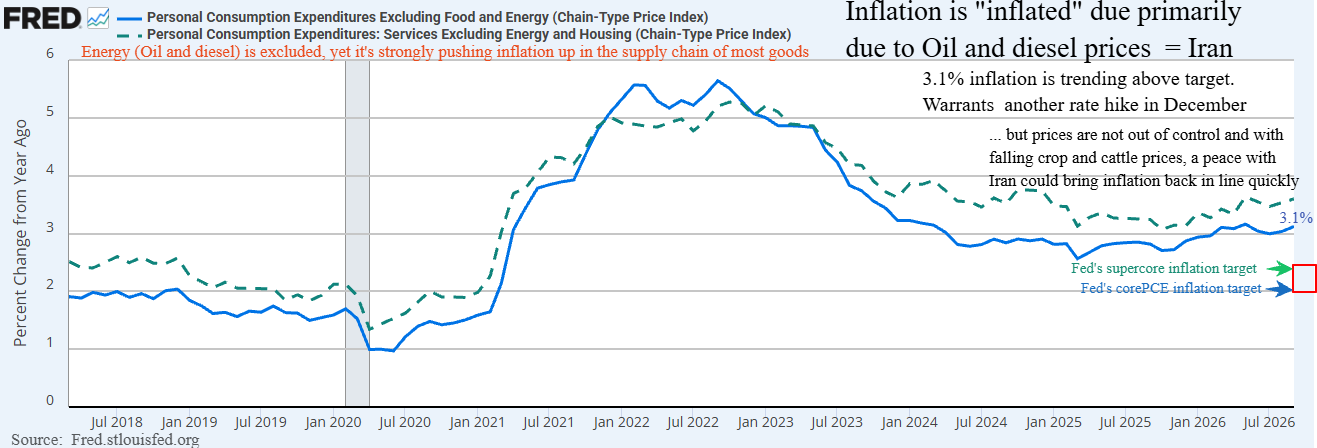
The relief is not yet complete, and it is reversible. Diesel has remained elevated even as crude has fallen; refining, freight, and fertilizer costs have not declined much, and those costs increase consumer price inflation with a lag. The bond market is still hedging between peace and war. On November 13 the ten-year Treasury yield rose to 5.17 percent, dashing hopes for easier Fed policy. October consumer prices were firmer than expected. Traders assigned essentially certain odds to a quarter-point Federal Reserve increase in December, with some chance of a larger move. Chair Kevin Warsh, having raised rates a quarter point in September has offered little forward guidance, but appears likely to oblige the hawks. The bond market is still voting on last month’s inflation and on the residual risk in the Gulf, not yet on a slower AI cycle or on a lasting oil decline. Watch the ten-year (staying below 5.35%), inflation expectations, crude and diesel, and whether rhetoric heats up for delaying the data-center buildout.
We expect the incoming majority to press oil and gas producers on permitting, drugmakers on pricing, and add to the data center buildout cost. Democrat spending ambitions are likely to center on health care and income support, and we expect a fight over funding for the Iran blockade, with an active Veto pen in the White House. If divided government limits new federal stimulus while regulatory uncertainty delays private investment, the net effect could be softer demand. Meanwhile, producer prices for cereals, dairy and meat eased in recent months. Grocery shoppers may have to wait a few quarters for some of that relief to reach the checkout, assuming diesel shipping costs finally decline sharply.
Our longer-term expectation is for lower energy and food prices before the end of 2027. If that forecast holds, headline inflation and bond yields could ease before the Fed has delivered the 50 to 75 basis points of tightening now under discussion. By spring, a rush to raise rates could look like a response to an oil shock already subsiding.
Why the Wave Was Blue
The White House has preferred to read the midterm as a failure of candidate quality: weak campaigners, poorly promoted, rather than a verdict on the administration. The president’s own strategy was to put himself at the center of the campaign—to ask the country, in effect, to vote as if he were on the ballot. That is, in our view, precisely what happened. It was because the president was perceieved to be on the ticket, and because the Iran war, high gasoline and diesel prices, and rising inflation and interest rates were the facts of daily life, that Democrats performed above already lofty expectations. Midterm electorates punish the cost of living regardless of political party.
Even in Florida, long regarded as a Republican bastion, the GOP lost its state House supermajority and held the state Senate only narrowly. Byron Donalds won the FL governorship by about one percentage point. That is not the signature of a few deficient nominees. It is the signature of a national wave.
Housing: The Diagnosis and the Lock-In
The same misreading appears in the housing market, which will be central to any rate-sensitive rotation. President Trump and Vice President Vance have preferred to blame burdensome regulation and large institutional purchasers of single-family homes for high house prices and mortgage rates. Those are convenient antagonists. They are not the principal mechanism.
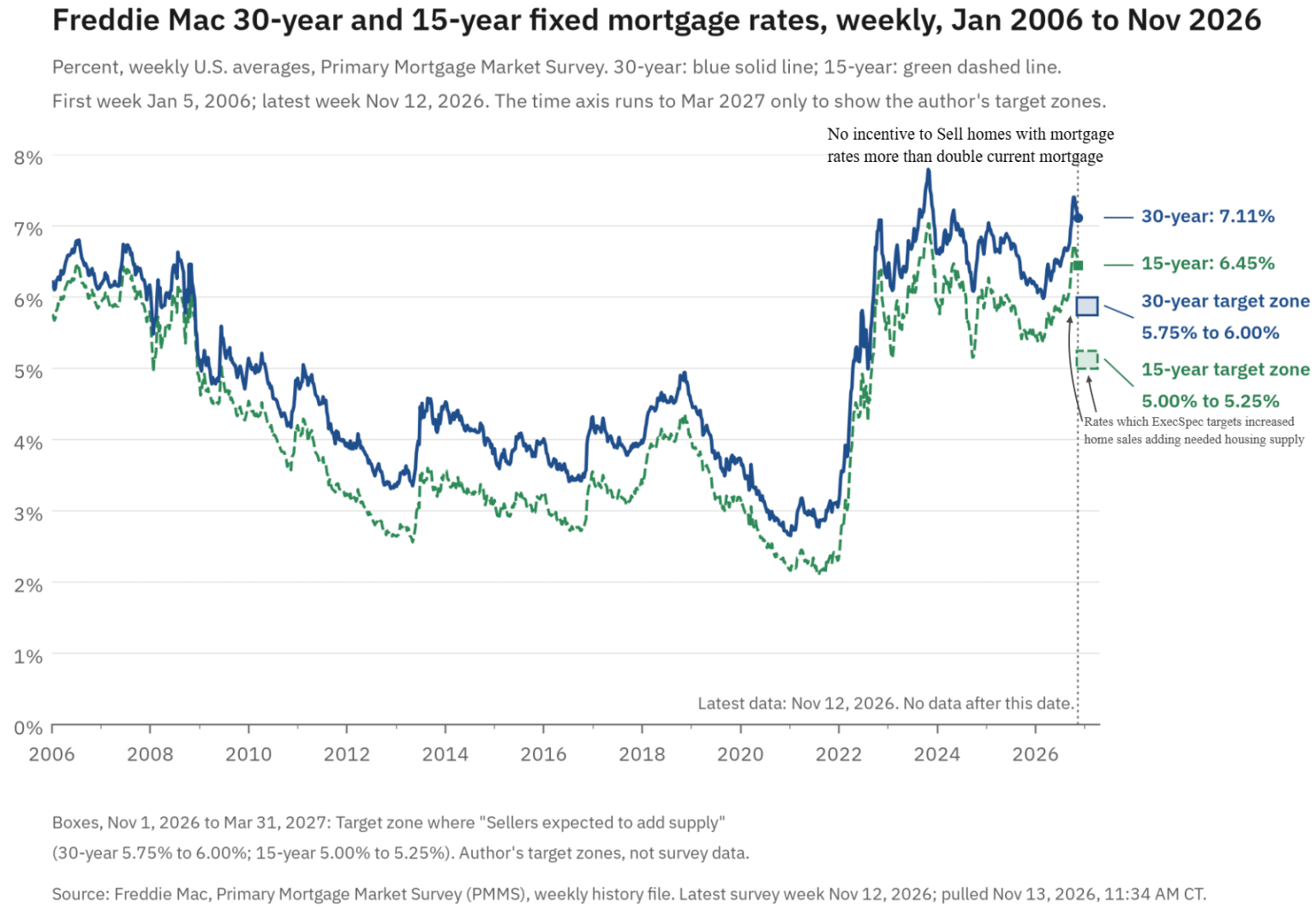
Home prices and mortgage rates have been driven by rising inflation, by supply-chain tightness from tariffs and trade conflict, and, above all, by a lock-in of existing housing supply. During the pandemic, the government and the Federal Reserve engineered artificially low mortgage rates. The 28 million homeowners who secured their mortgages in the 2 to 3 percent range have little incentive to sell and take on a new loan at today’s 6 to 7+ percent cost. The inventory is, in large measure, frozen. It will not come to market in size until inflation falls and interest rates fall with it. Supply will begin surging when the 15 year mortgage rate falls below 5%. Targeting corporate buyers and local rules may be popular. It will not unlock that supply. Lower inflation and lower yields in a healthy economy will.
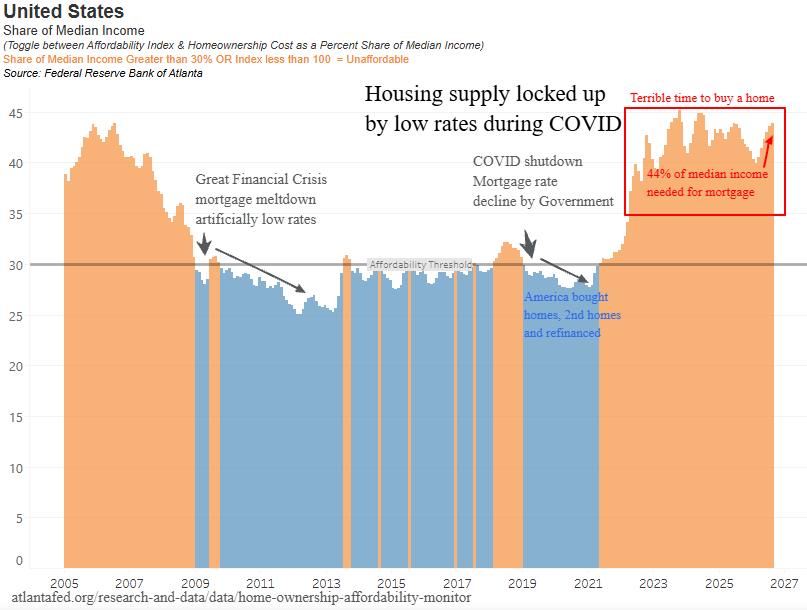
When those yields do decline, the beneficiaries are: financials; smaller-capitalization stocks and equal-weight indexes, which need cheaper money and cheaper oil; homebuilders, housing-related shares, utilities, and real estate, which tend to move early when mortgage rates ease; and consumer discretionary firms, which benefit when credit is less burdensome. Consumer staples are the more defensive counterpart if growth cools more than rates do. The rotation is from a narrow leadership of chips, neo-clouds, and hyperscalers toward financials, smaller stocks, housing, and the consumer—once the bond market cooperates. The AI spending wave will continue to grow rapidly and bargain basement opportunities will keep popping, but pateince in this lame duck period is warranted. We have been advising holding higher cash levels since the summer and avoid chasing one day wonders during this period. The 2027 earnings comparisons and guidance in a more hostile political – regulatory environment could suppress valuation multiples and create continued volatility in tech, even as the overall AI trend is higher.
The next data center needs a permit
The lame-duck Congress has already given investors a preview. A bipartisan permitting bill would speed approvals for power plants and transmission lines while making large data centers shoulder more of the cost of upgrading the grid. In Texas, the incoming Democratic governor campaigned for an immediate moratorium on new data-center development. Come January, expect calls for pauses, tougher permitting and a larger bill for developers. President Trump’s veto power and differences among Democrats will help determine how much of that agenda becomes law.
We expect the 2027 buildout to hold strong. Demand for computing capacity is enormous, and private capital is already committed to much of the work. The greater risk lies in 2028 and beyond, when projects still on the drawing board have to clear whatever rules emerge from the blue wave. A delayed opening leaves a neocloud servicing debt while it waits to bill customers. Enough delayed openings can push out chip orders and bring down suppliers’ growth estimates. Investors can mark down those future earnings today, even as next year’s order books remain full. Expect more developers to ask customers for partial payment up front on future orders, easing some of the pressure to borrow.
That leaves AI stocks vulnerable through early 2027. A strong earnings report can produce a sharp rally, as CoreWeave just demonstrated. However, a durable recovery may have to wait until the new majority takes office and its push for tighter AI rules reaches full volume of maximum pain. By then, investors should have a better sense of what Congress can pass and what developers will have to pay. Currently, investors are cautious, but not ready to panic after the recent healthy corrections of 7 and 16% in the benchmark, yet tech heavy, S&P 500 and Nasdaq indices.
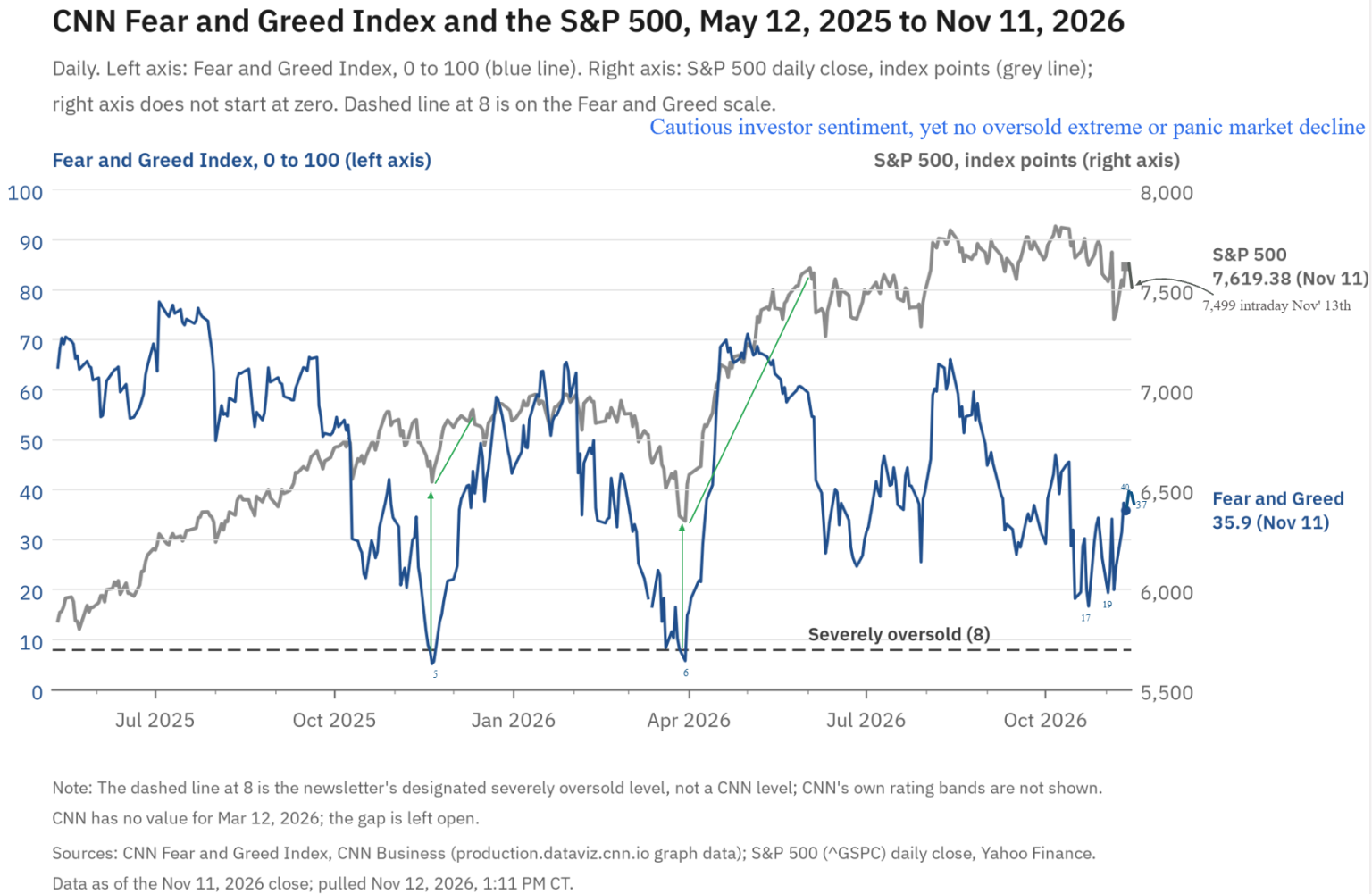
A broader market with a lower speed limit
We expect the economy to lose some steam in 2027, with softer demand and slower nominal revenue growth trimming earnings expectations. Cheaper energy can help household purchasing power and some corporate margins. Easing inflation can also take pressure off yields. As with NVDA this week in the 140s (maybe lower), AI related bargains will appear. Cyber security and healthcare continue to be a core holdings. Once the post-election turbulence fades, likely in the first quarter, we expect more stocks to participate and the broad market to grind higher.
The path of least naiveté is to wait for the bond market to corroborate the story. A sustained decline in the ten-year, a cooling in inflation, a further easing in oil that reaches diesel, and evidence of deferred data-center spending would favor financials, smaller stocks, and housing- and consumer-oriented shares. Until then, 3.75% cash yield remains an asset and selectivity a virtue.



Comments
Log in or sign up to join the conversation.