


Election Day has at last passed, bringing with it the modest consolation that the nation’s televised invective and the postal service’s contributions to the recycling stream may now subside. The spectacle has been characteristically unedifying: candidates of both parties have devoted considerable resources to the timeless practice of exaggerating their opponents’ defects while airbrushing their own. Voters, having been lectured at length about the stakes, have now registered their preferences for big blue.
Investors appraising future cash flows, have spun the Democratic “Blue Wave” as a positive change initially. Republican core voters, surveying the polls, understand that the arithmetic was unpromising and clung to the slim hope that the surveyors had again mismeasured the electorate, as they did in the 2024 election that returned Donald Trump to the presidency. Democrats were gifted bad economic data of a rising cost of living under the second Trump administration—an affliction that also tainted the Biden years until the president’s evident cognitive decline rendered other issues secondary. Unaffordability is a hardy perennial; parties merely take turns claiming authorship of the cure.
The equity markets, meanwhile, have behaved largely as anticipated since the concerns we enumerated last June: elevated energy prices, exuberant financing of artificial-intelligence infrastructure, and a growing popular resistance to the proliferation of data centers. Aggregate valuations have been essentially becalmed through the summer and into the autumn. Most sectors have, in turn, endured corrections of ten percent or more—corrections that, while uncomfortable for those invested in the afflicted industries, have been sequential rather than simultaneous. The absence of a broad, panicky liquidation has been the market’s most telling characteristic. Investors appear to have discounted the election-day alarmism with a calculation that a divided government after a midterm election has historically been congenial to equity returns. When one party controls Congress and the other the White House, each may introduce legislation, yet neither can readily enact substantial new spending. The resulting stasis is a form of predictability that businesses and capital allocators prefer to the open-ended possibilities of unified government.
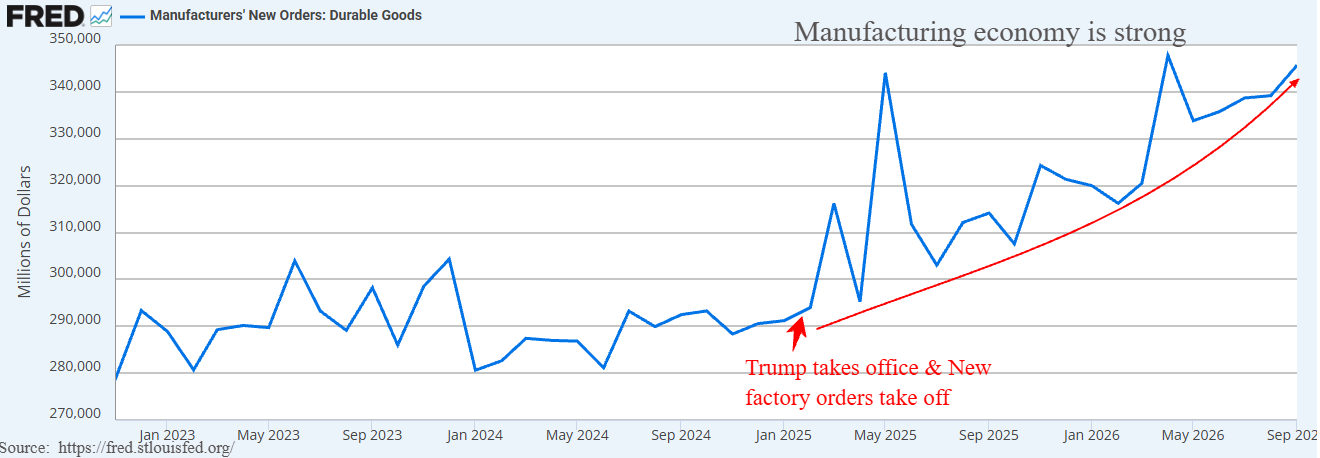
Beneath the political surface, the real economy has offered mixed but not unencouraging signals. The Institute for Supply Management’s manufacturing survey has strengthened through the year and especially of late. Job openings have risen for four consecutive months, unemployment remains a modest 4.2 percent, and factory orders have recently surged. The expansion is narrowly led—its vigor concentrated in artificial-intelligence investment and related activity—yet it is not feeble. The labor market, at least, continues to absorb workers without evident distress and consumes continue to spend at a healthy pace.
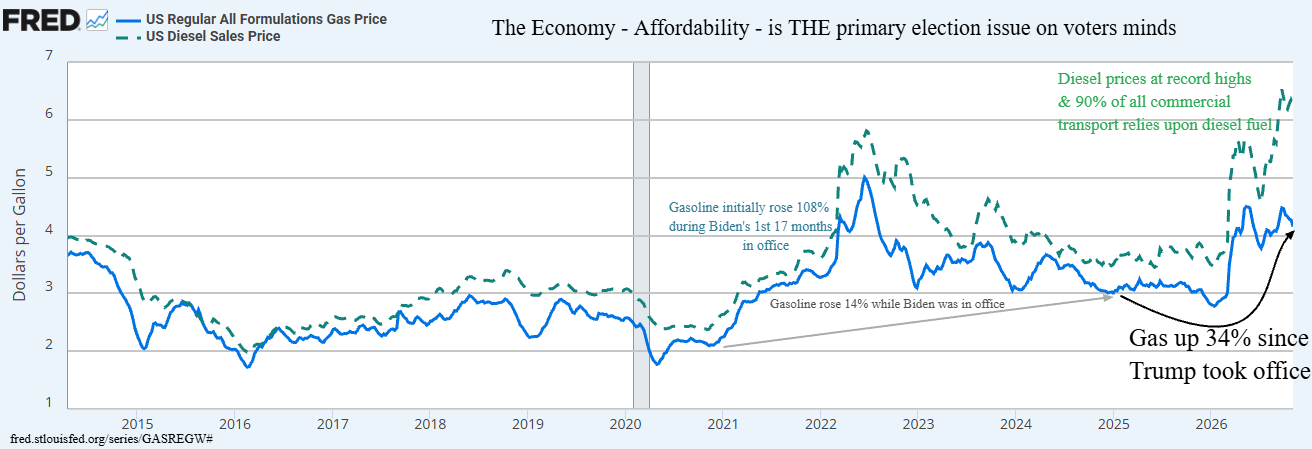
The political difficulty for Republicans can’t be easily dismissed. Gasoline prices at the pump have risen 34 percent since Trump took office in 2025; diesel, the essential fuel of transport and logistics, has climbed more than 80 percent.
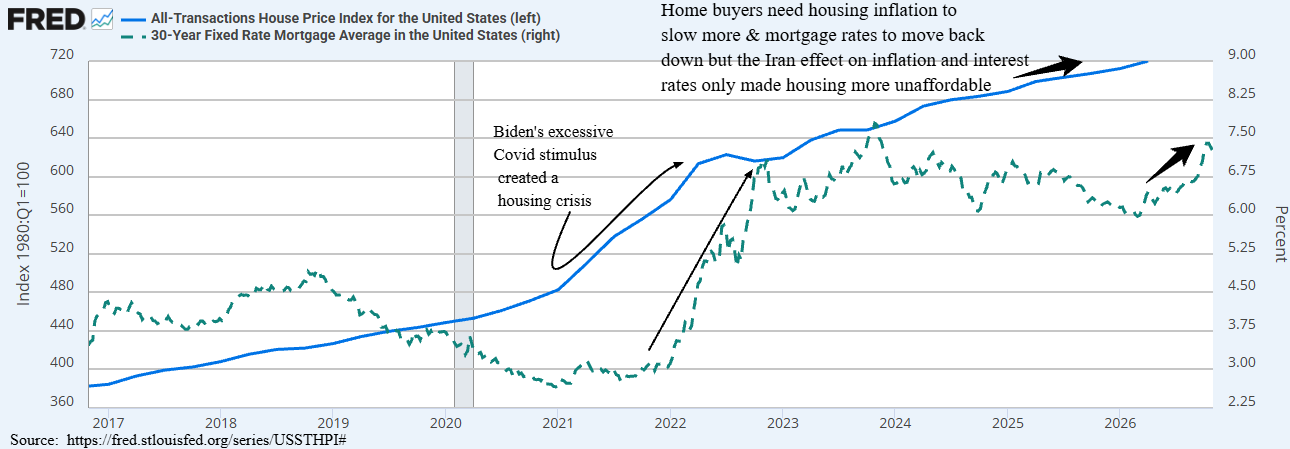
Housing prices, whose most dramatic ascent occurred under President Biden, have continued to advance at a rate exceeding 3%. The pace of home-price inflation has moderated only because the unaffordability index has remained lodged at extreme level. Investors, and the broader public, will not regard the housing market as restored until prices themselves cease rising and mortgage rates fall sharply. These costs have moved from burdensome to more burdensome on the president’s watch.
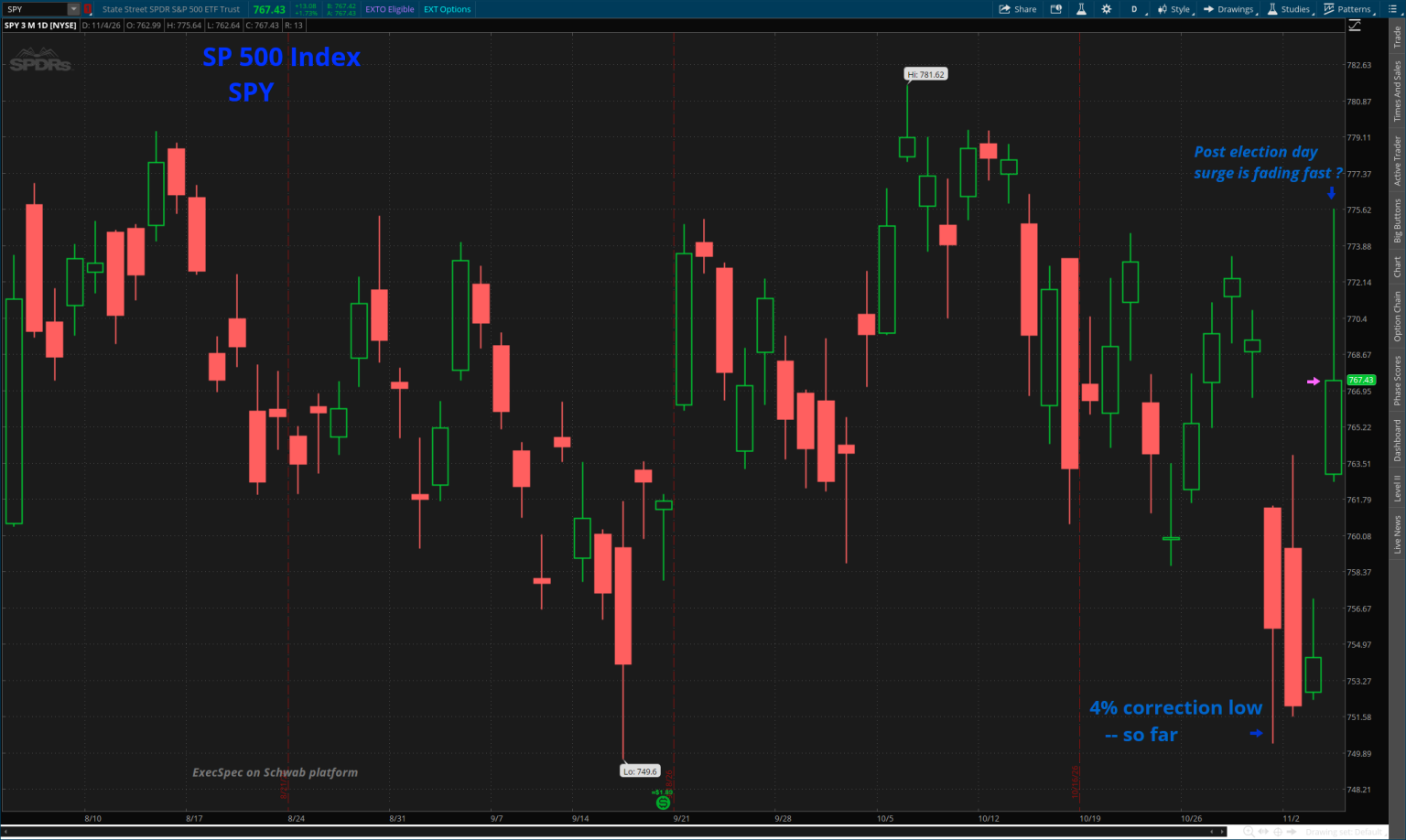
While it’s too late for such relief to alter the blue wave, the only plausible path remaining for Republicans is the obvious one of ending the wars that have helped sustain elevated energy prices, thereby lowering both inflation and borrowing costs. For equity investors, the nearer-term anxieties are more specific. The failure of “neo-clouds” such as CoreWeave (CRWV), Hut8 (HUT) and IREN, would puncture one of the more speculative vessels of the artificial-intelligence boom; equally, any bipartisan agreement to restrain data-center construction would slow the capital expenditure that has underwritten much of the market’s advance. The expectations of a Blue Wave and weaker than expected guidance by AI companies this quarter, sent equity investors on a selling spree in October. From their October 6 record highs into election eve, the technology-heavy Nasdaq (QQQ) declined 11 percent, and the large-cap S&P 500 Index fell 4 percent. These were healthy corrections that produced moderately oversold conditions and fulfilled our June outlook for weakness into this period that would begin to bottom around the midterms. The resulting Orange Crush for the Republicans—or Blue Wave for the Democrats—has produced what has historically been the weakest political combination for stock-market returns: a Republican president confronting Democrat majorities in both the House and the Senate.
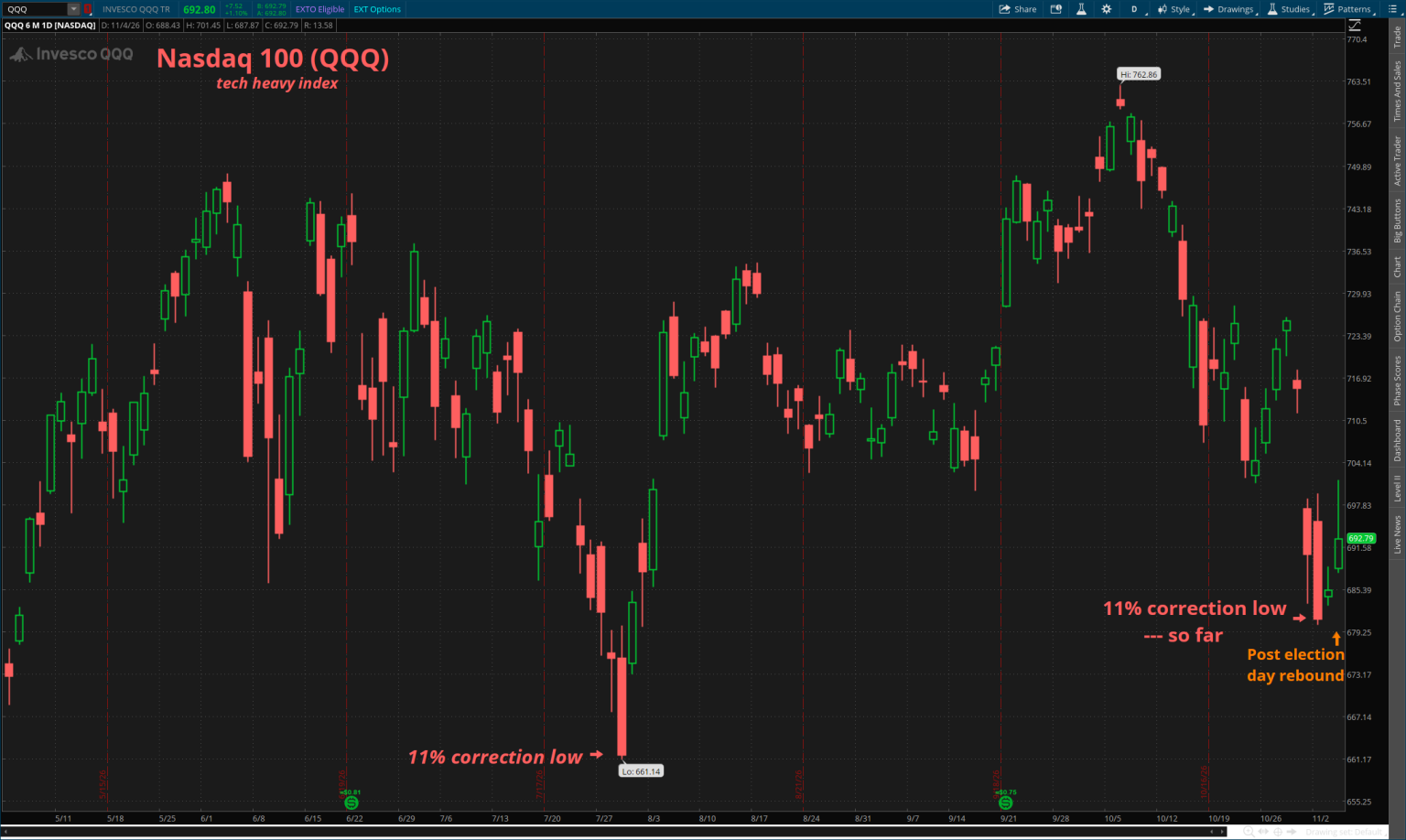
Investors have continued to avoid AI, datacenter, and memory-related stocks. Once the election results became clear, however, overall sentiment shifted toward a positive push into the broader market. Concerns remain down the road—the prospect of bipartisan regulations slowing the AI buildout, and the potential termination of the filibuster as a check and balance—yet the clarity of a policy-trend reversal has carried the day. Investors see the possibility of tariffs being rolled back, a defunding of the Iran war, and a slowing (not a stopping) of the AI buildout as disinflationary impulses that should lower inflation and interest rates, thereby addressing the affordability issue that topped the list of voter concerns. Some of this optimism may prove naïve, but the sense of certainty marks a reversal from recent months and is, for the moment, positive for investors. The SP 500 remains in a narrow trading range of 7550 to just over 7800 over the past 3 months. We would not be chasing this post-election pop yet until the top of the range begins to break out, as volatility is still a risk near term. The AI bull market continues, but the technical indicators and charts lack conviction near term, despite this seasonally strong time of the year.
The longer-term caveat emptor that would trigger a more significant defunding of equities is a world without the filibuster, in which a simple majority could dismantle the checks and balances of the legislative branch and enlarge the prospects for an anti-business climate marked by legislative uncertainty. Until that threshold is crossed, the present correction may be regarded as ordinary and consistent with the second-half 2026 expectation of a valuation markdown that forges a new base before year-end. The recycling bin of election-day wastepaper, at least, may soon enjoy a temporary reprieve.

Comments
Log in or sign up to join the conversation.