

Python is an interpreted, interactive, object-oriented programming language that is great for a wide range of tasks and has a very clean syntax. Originally developed in 1991 by a programmer named Guido van Rossum, Python is now one of the most used programming languages in the world.
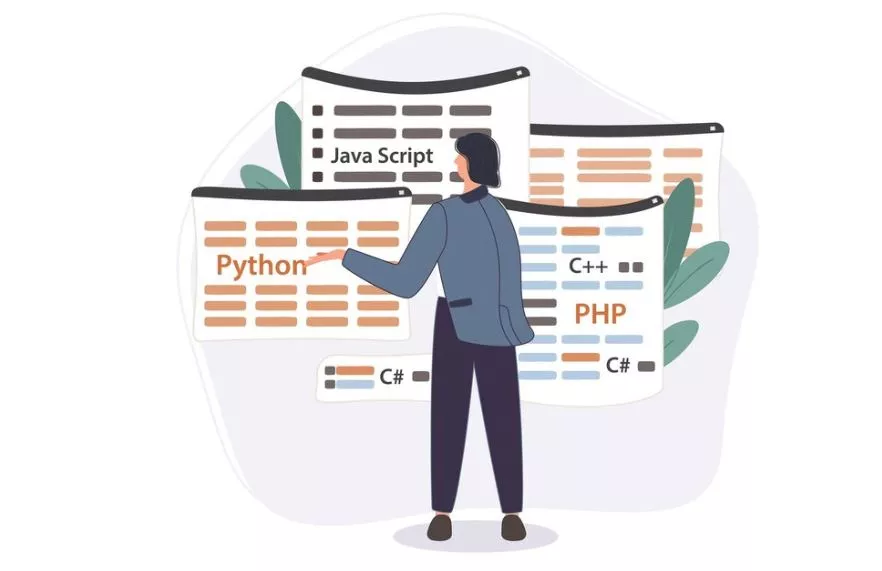
Some key features that make Python a popular choice for development projects include:
Easy to Learn and Use
Python is easier to learn than other languages such as Java or C++ because it has an English like structure. Due to readability, the code written in Python is easy to understand and simple, and therefore, the developers can start coding as soon as possible.
Extensive Libraries and Frameworks
Python also has a rich set of open-source libraries and frameworks for jobs such as Web Development, Scientific Computing, Data Analysis, Machine Learning, and many more. Some of the most used are Django, Flask, NumPy, Pandas, TensorFlow, PyTorch, and several more. This rich environment allows for the quick creation of applications.
Cross-Platform Compatibility
Python code can be executed on multiple operating systems including Windows, macOS, and Linux, without the need for modification. This cross-platform compatibility enables Python developers to code an application once and make it run on different platforms. This is a huge advantage if you want to outsource Python development services, as it allows you to save a lot of money.
Supports Multiple Programming Paradigms
Python supports a number of programming paradigms, including object-oriented, procedural, and functional programming paradigms. This flexibility enables developers to use the approach that best suits their project and to incorporate the paradigms where necessary.
Interpreted Language
Unlike most computer languages, Python code does not require compilation before it can be run. This is because new code can be executed as soon as it is written, which makes for faster testing and debugging.
Dynamically Typed
Python is an example of a dynamically typed language; this means that the type of a variable is determined at runtime and not declared. This leads to quicker development and greater flexibility.
Open Source and Free
Python is open-source software that can be downloaded and used with no restrictions from the software's owners. This has helped spread it throughout industry and academia. This makes it easier for developers to inspect source code and make contributions since the platform is open.
Key Uses of Python
Statista says that Python is the second most used programming language because it can be applied in nearly any way possible.

Thanks to its versatility and large developer community, Python is used across many application areas:
Web Development
Python supports many of the current web frameworks for example, Django and Flask. Thanks to its fast, incremental approach, Python is perfect for creating and deploying web applications.
Scientific Computing & Data Analysis
Some of the common applications of Python include scientific computation, mathematics, data analysis, data science, machine learning, and visualization with the help of libraries like NumPy, SciPy, Pandas, Matplotlib, and Jupyter notebooks. Python code is easily shareable and reusable among researchers because it is readable.
Automation & Scripting
Python is useful for automating repetitive tasks through scripting. System administrators often use it for functions like monitoring, backups, and configurations.
Artificial Intelligence/Machine Learning
The Python machine learning stack with TensorFlow, Keras, PyTorch, sci-kit-learn, and more provides a robust environment for building AI apps from computer vision to natural language processing.
Software/App Prototyping
Python supports rapid iteration and testing, which is useful in creating prototypes and mockups when initially specifying app requirements and functionality.
Game Development
Python is growing used more and more in game development thanks to options like PyGame and Panda3D. Its flexibility lends itself well to the complex demands of producing games.
Finance & Trading
Python is taking a growing role in financial data analysis/modeling, algorithmic trading, quantitative analysis, and FinTech automation.
Embedded Systems/IoT
MicroPython and CircuitPython allow Python code to run on microcontrollers and embedded systems, making Python suitable for electronic projects and internet-of-things devices.
Bioinformatics
In fields like genetics, Python tools like Biopython help process and analyze large datasets used in bioinformatics research.
Getting Started with Python Development
Interested in leveraging Python for your own projects? Here is a concise guide to help beginners start with Python:
Install Python
First, download and install the newest stable version of Python, currently 3.12.6. Python is usually pre-installed in Mac and Linux distributions. On Windows, download installers from Python’s official website. Verify installation by checking the Python version:
# python3 --version
Python 3.12.6
Set Up a Code Editor
To write the Python programs, you will need a code editor. Some of the most used free code editors good for Python are VS Code, Atom, Sublime Text, and PyCharm. These come with basic utilities such as debugging, linting, code completion, and version control system integration.
Learn Python Basics
First, it is necessary to refresh the basic concepts of Python programming language, such as data types, variables, control structures, functions, classes, exceptions, and modules, before starting development projects. DataCamp, Codecademy, and Sololearn are some of the best platforms that provide easy Python lessons for beginners.
Reinforce all the concepts with the help of coding exercises so that the basics are clear. The simple and clean syntax of the Python language makes it easier to ease new learners into the language.
Explore Development Tools
Depending on your application area, it is recommended to look into Python libraries and frameworks to use for development tasks rather than creating them from scratch. For example, Django and Flask are used to develop web applications. Pandas, NumPy, and Matplotlib, are the tools that support data analysis work.
Build Your Own Projects
Now that you have understood the basics and tools, start creating your own Python programs and products. Divide ideas into stages. For instance, one can first create a basic command-line script that accepts input to generate meaningful output. Gradually increase project difficulty to challenge the brain.
Join the Python Community
Python developers from around the world offer great knowledge-sharing platforms in the form of forums, meet-ups, conferences, and open-source projects. Membership provides an opportunity to get an idea of the work of other professionals, receive advice, and learn about new trends in the field.
Python 2 vs Python 3

When getting started with Python, new developers may come across resources labeled Python 2 and Python 3 causing confusion about key differences.
Python 3 represents the modern era of Python development today. Released in 2008, it introduced significant improvements and changes over the older Python 2 standard first released in 2000.
While Python 2 development has ceased since 2020, a lot of existing legacy systems still rely on Python 2. However, all new Python projects should utilize Python 3. Let's compare some notable distinctions:
Print Statement
The print statement from Python 2 was replaced by the print() function in Python 3.
# Python 2
print "Hello world!"
# Python 3
print("Hello world!")
Division Operator
In Python 3, the / division operator does the true division with the output of the floating point. The / operator in Python 2 uses classic division, so this operation is a floor integer division.
# Python 3 true division
10 / 3 = 3.3333
# Python 2 floor division
10 / 3 = 3
Text vs Binary Data
In Python 3, text and binary data representations are clearly separated using str and bytes data types, correspondingly. Python 2 has a less strict distinction between text and binary data.
# Python 3
string = 'Hello world'
data = b'Hello world'
# Python 2
string = 'Hello world'
data = 'Hello world'
Unicode Support
Python 3 adopts Unicode text handling using UTF-8 encoding by default. Python 2 uses ASCII text without built-in Unicode support.
Iterators and Range
In Python 3, the range() function returns an iterator instead of a list. Several builtins also now return iterable objects instead of lists.
Exceptions
Python 3 includes changes to the built-in exceptions and the structure of the exceptions hierarchy. User-defined exceptions should be derived from Exception, not StandardError.
Modern Features
Some of the new features of python 3 are keyword-only arguments, chained comparisons, annotated assignments, matrix multiplication operators, type hints, better namespace handling through asynchronous generators, async/await syntax, and many more.
Future of Python
What does the future hold for the further development of Python over the course of the next 5 years and beyond?
Rising Prominence in AI
Python is gradually establishing itself as the go-to language for artificial intelligence and machine learning. Its large and rich libraries for deep learning, such as TensorFlow and PyTorch, offer it a scalable environment to develop intelligent systems. However, as AI advances to other sectors, Python will become more pervasive because of its stronghold in data science and its ability to solve intricate issues.
Expanding Usage in Science
From stargazing to cell division, Python is used to perform more scientific computations than expensive specialized software such as MATLAB or IDL. Science’s adoption of Python has been due to its increased flexibility and relative ease of coding for those without a computer science background. As more research groups adopt Python for fields such as computational physics, cheminformatics, and economics, Python usage among the scientific community will skyrocket.
Increased Adoption in Finance
Quant finance today relies more on data science than conventional software development. The growing adoption of analytics and algorithmic trading across financial institutions makes Python a perfect fit for developing financial data applications due to its Pandas, NumPy and SciPy libraries. The finance industry will increase its adoption of Python across multiple areas, including risk analysis and algorithmic trading.
Growth in Developing Nations
As more developing countries pour more resources into STEM education and technology infrastructure enhancements, Python becomes the natural choice for strengthening local software engineers. Its slow and progressive learning process, relatively simple syntax that resembles English, huge repositories and easy readability make Python the best first or second language for new programmers.
Consolidated Corporate Interest
In surveys, 85% of developers report using Python as a main language.

Virtually every major tech firm relies extensively on Python, including Google, Facebook, Dropbox, Reddit, Netflix, Spotify, and Instagram. Python has proven itself to be an enterprise-grade language that can scale reliably, from web apps to ETL pipelines to machine learning capabilities. More businesses will adopt Python as the standardized language across data teams, DevOps, and application infrastructure.
Increased Beginner Friendliness
Python already touts one of the most helpful, inviting developer communities among programming languages. However, a renewed emphasis on making educational resources even more accessible to coding newcomers will reduce barriers to mastering Python. Improved tools, updated learning materials, and continued community support will solidify Python's position as the best introductory language.
Thanks to its versatility, simplicity, scalability, and devoted community, Python will inevitably increase its global foothold in the years ahead in science, finance, education, and corporate IT landscapes.


Comments
Log in or sign up to join the conversation.