PepsiCo: When The Consumer Pushes Back

PepsiCo is cutting prices as North American consumers push back against inflation.
For years the consumer staples playbook was simple. Raise prices, accept a small dip in unit volume, and watch revenue and margins expand. Companies like PepsiCo proved they could charge more for snacks and sodas without losing their core buyers. But that era of easy pricing power appears to be ending. When a dominant brand has to cut prices to keep shoppers in the snack aisle, the math changes. The focus shifts from how much a company can charge to how efficiently it can drive unit volume in a price sensitive environment. Today we look at what happens when the US consumer finally pushes back.

Main Note

The End Of Easy Pricing Power

PepsiCo (PEP) Quote

Verdict: PepsiCo affirmed its full year outlook and posted solid global growth, but flat snack volumes and a 4% drop in beverage volumes in North America signal that US consumers are tapped out. The company is now relying on strategic price cuts rather than price hikes to defend its market share.

What happened

PepsiCo reported second quarter net revenue of $24.18 billion and core earnings of $2.20 per share before the open today. While international demand was robust, domestic performance struggled. North America snack volumes were flat and beverage volumes fell 4%.

To stabilize demand, the company had already rolled out price cuts of up to nearly 15% in the United States on major chip brands like Lay's, Doritos, Cheetos, and Tostitos earlier this year. The second quarter showed the tradeoff more clearly. North America snack volumes were only flat, while the lower effective pricing still showed up in the revenue line.

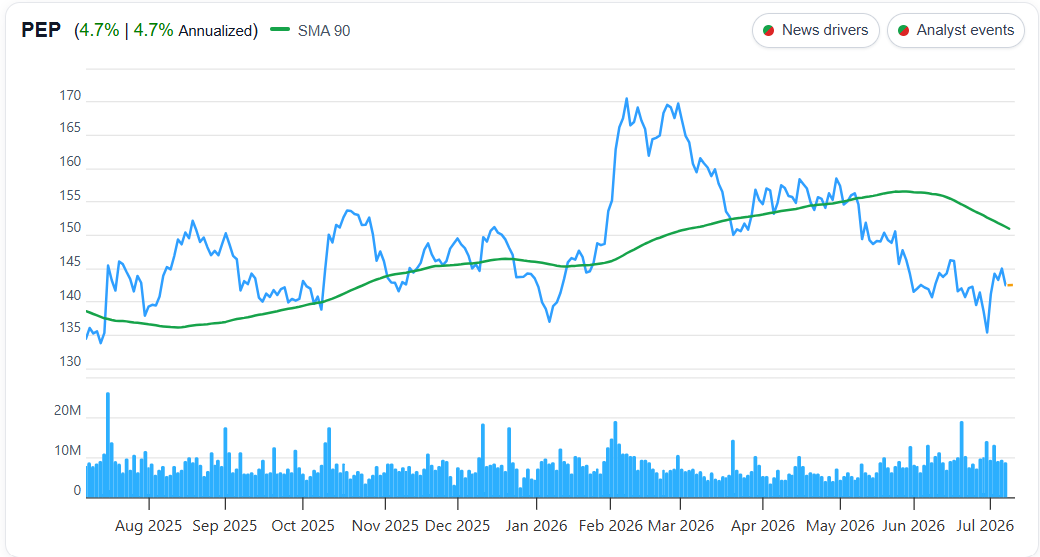
PepsiCo (PEP) 1 Year Chart

PepsiCo (PEP) 1 Year Chart

Why it matters

When a company relies more on volume and affordability than pricing, the margin cushion gets thinner. PepsiCo's core operating margin fell 40 basis points in the quarter, and management pointed to affordability investments in foods and volume and channel mix pressure in beverages. This marks a shift from a margin expansion story driven by pricing power to a market share defense story driven by promotions, productivity, and mix.

What changed in the thesis

Investors must now weigh whether PepsiCo can profitably drive unit volume growth without crushing its bottom line. If the company is actively lowering prices to win back budget constrained shoppers, future revenue growth will require moving more physical units. That approach is inherently more capital and labor intensive than simply raising prices.

What the market may be missing

The market might be overly focused on the weak North America numbers while underestimating the resilience of the global portfolio. Companywide convenient foods volumes grew 3% and beverage volumes rose 2%, while PepsiCo said the international businesses delivered strong net revenue growth with organic volume growth across key overseas segments. This suggests the pricing power issue is concentrated in North America, potentially tied to local budget pressure and higher gas prices rather than a global rejection of the brand.

Valuation and expectations

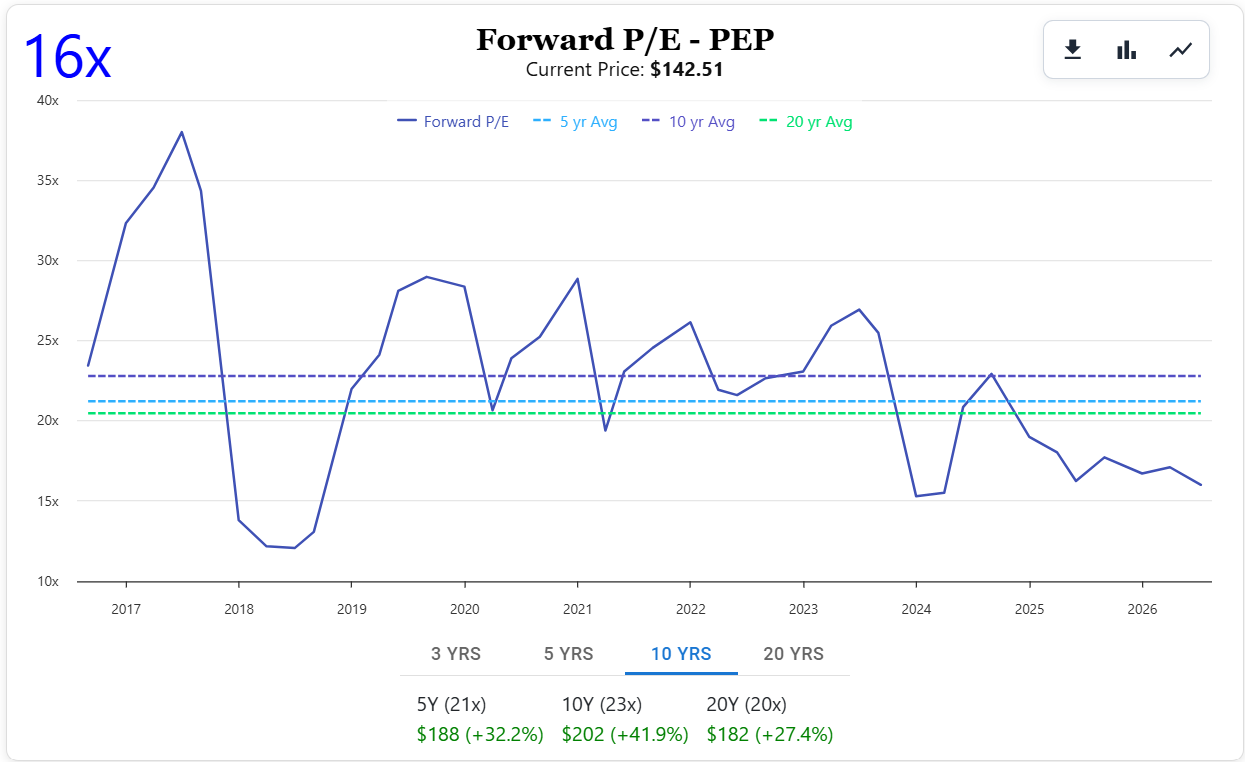
At roughly 16.5 times forward earnings, and closer to 22 times trailing earnings, the stock is no longer priced like a high flying staple but still needs steady execution. The company reaffirmed its 2% to 4% organic revenue growth target, but management also said North America was softer than expected and that second half input cost inflation should be higher than the first half. If North America volumes fail to recover in the third quarter, the valuation is cheaper than it used to be but still does not leave much room for another reset.

The margin question is also not just about price cuts. Management said it expects input cost inflation to be higher in the second half than it was in the first half, which raises the bar for productivity savings and makes the North America volume recovery even more important.

PepsiCo (PEP) Forward PE Ratio Chart

PepsiCo (PEP) Forward PE Ratio Chart

Bottom line

The consumer staples sector is entering a phase where brands have to earn their growth through volume rather than inflation. PepsiCo has the scale to absorb these promotional costs, but the competitive advantage has shifted toward companies that can defend margins while cutting prices.

Pre Market Pulse

  • Shares of PepsiCo moved lower in early trading, falling roughly 2% to hover around $142 before the opening bell.

  • Broader equity futures pointed slightly higher this morning, with S&P 500 contracts edging up a fraction of a percent despite ongoing geopolitical tensions.

  • WTI crude oil prices consolidated around $74 per barrel, adding pressure to consumer spending power and corporate packaging costs.

Why it matters this morning

Energy prices and consumer staples usually trade on different specific news, but elevated gas prices act as a direct tax on the lower tier consumer. When everyday budgets tighten, expensive convenience store snacks are often the first items left on the shelf.

Peer Read Through

Coca Cola (KO)

This pure beverage competitor faces a critical test when it reports on July 28. Its upcoming North American volume metrics will show whether beverage weakness is unique to PepsiCo or a sector wide reality.

Keurig Dr Pepper (KDP)

Operating with a smaller beverage base and a pressured US coffee segment, this beverage and coffee company has less room than PepsiCo to absorb a heavier promotional environment. It currently trades around a 13.7x forward multiple and reports on August 6, making its US beverage and coffee volume trends the next clean read across smaller beverage peers.

Mondelez (MDLZ)

A closer snack read through than some other competitors, Mondelez will show whether the same value pressure is hitting cookies, crackers, and chocolate. If consumers are trading down across the snack aisle, this is the more direct peer to watch.

Group takeaway

If dominant players like PepsiCo are forced to cut prices to protect market share, smaller peers with less pricing flexibility and narrower profit margins will likely face even steeper margin compression in the coming quarters.

What to Watch

  • Management commentary regarding July month to date volume trends in the US snack division.

  • Upcoming earnings results from Coca Cola on July 28 to gauge broader North American beverage demand.

  • Monthly US retail sales, gasoline prices, and convenience store traffic, which are better real time reads on the pressure facing lower income snack and beverage buyers.

  • A potential return to positive unit volume growth in North America during the third quarter, which would prove the price cuts worked.

Bottom line

The true test for PepsiCo is not whether it can cut prices to sell more chips, but whether it can do so without permanently impairing its operating margins. The next quarter will reveal if the consumer is merely taking a pause or demanding a permanent reset in grocery aisle pricing.

STOCKS IN THIS ARTICLE

Comments