

Corporate Turnaround Thesis
Thesis
Palladyne AI, Corp. (PDYN) is not a simple AI stock, and it is not only a failed SPAC recovery story either. The more accurate way to look at the company is as a corporate turnaround that is trying to move from the broken Sarcos hardware story into a more focused defense autonomy platform. The old Sarcos story was about expensive robotics hardware, difficult commercialization, long development cycles, high burn and missed timelines. The new Palladyne story is different. It is now built around SwarmOS, BRAIN, components, manufacturing, autonomous systems, engineering know-how and the IAI loitering-munitions opportunity.
The stock is still risky, but the market may still be looking at the company through the old Sarcos lens. That matters because the company now has a different shape. It is not trying to sell only one robotic suit or one industrial robotics product. It is trying to become a small defense autonomy company with software, hardware, systems and manufacturing inside the same platform. This is why I do not think a normal DCF is the best way to look at the stock today. A DCF can be useful as a floor or sanity check, but the facts are changing quickly, and small changes in backlog, revenue mix, gross margin and defense contract wins can change the answer very fast. For this reason, I think SOTP and scenario analysis are better valuation tools at this stage.
As per my current model, the base SOTP points to around $9.20 per share, compared with a reference price of around $5.28, or roughly 74% upside. The successful turnaround case points to around $35 per share, while the Anduril-light strategic ceiling case can point much higher if Palladyne actually becomes a scaled defense-autonomy platform. The bear case is still real, because the company is not profitable and still has dilution and execution risk, but the Q2 update makes the short case less comfortable because revenue was approximately $5.8 million, up about 480% year over year and 66% sequentially, while backlog increased to approximately $24.0 million and cash/securities stayed around $44.0 million.
Company Background
The history matters a lot here. Sarcos had real robotics technology, but the company tried to commercialize complicated hardware before it had proven the right economics. The old business required heavy engineering, long development cycles, physical manufacturing, customer education and high spending before there was enough revenue to support the cost base. That is why I do not think the original public-market story worked. It was not that the technology was fake. The problem was that the product, timing, cost and commercialization model did not match the financial reality of a small public company.
The company then moved through a painful reset. Sarcos started as a University of Utah spin-out, Raytheon (RTX) bought Sarcos in 2007, the business was bought back from Raytheon in 2015, Sarcos began trading publicly in 2021, and the business later became Palladyne AI. The investor deck shows this history directly, including the 2025 acquisition of GuideTech, MKR and Warnke. That history matters because Palladyne is not starting from nothing, but it is also not the same company investors saw during the Sarcos hardware failure.
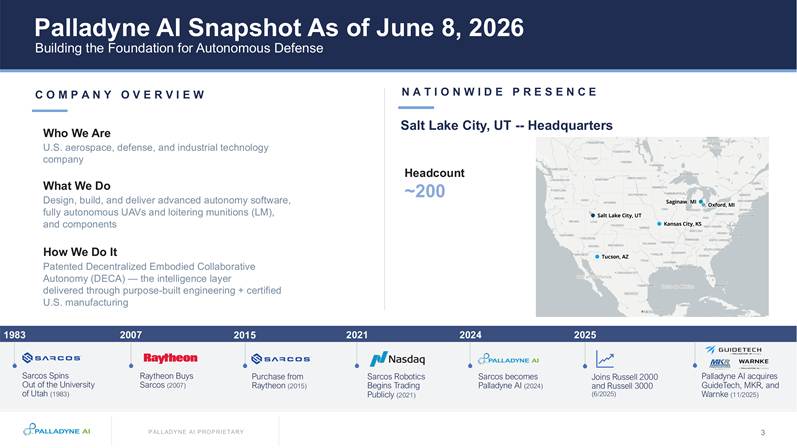
Figure 1. Palladyne timeline and company snapshot. Source: investor deck
Product Layer: What Palladyne Is Actually Becoming
The key to the thesis is not the word AI. The key is what Palladyne is actually trying to sell and build. The company should now be thought of in five main pieces: BRAIN, components and manufacturing; autonomous systems; IAI loitering munitions; engineering services and development contracts; and the software/autonomy layer. This structure is important because it avoids the mistake of treating BRAIN like pure software or treating engineering services as the main growth engine.
The first piece is BRAIN, components and manufacturing. This should not be treated like pure software. BRAIN is closer to an avionics, compute and component product, and the right logic is to put it together with precision manufacturing and related hardware. The upside here is not that BRAIN immediately gets software margins. The upside is that BRAIN and related components can get designed into third-party platforms or Palladyne’s own systems, which can create repeatable product revenue if the company wins the right programs.
The second piece is autonomous systems. This is where Gremlin-X, SwarmStrike, ALRRM and future internal systems should sit. This bucket is important because it moves Palladyne away from being only an engineering or component supplier. The better version of the story is that Palladyne uses its software, engineering talent, avionics, components and manufacturing base to create real defense products.
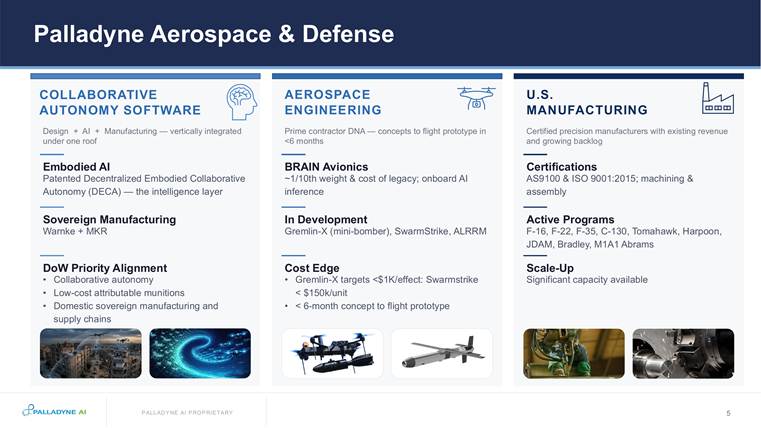
Figure 2. Palladyne aerospace and defense platform. Source: investor deck
The third piece is IAI loitering munitions. The IAI release says Palladyne will manufacture, integrate and market IAI’s HARPY, HAROP and Mini HARPY loitering-munition systems to the U.S. Department of War. This is not near-term 2026 revenue in my model, and I would not make it the base case too early. But it is a very important option because successful loitering-munitions programs can be much larger than Palladyne’s current revenue base.
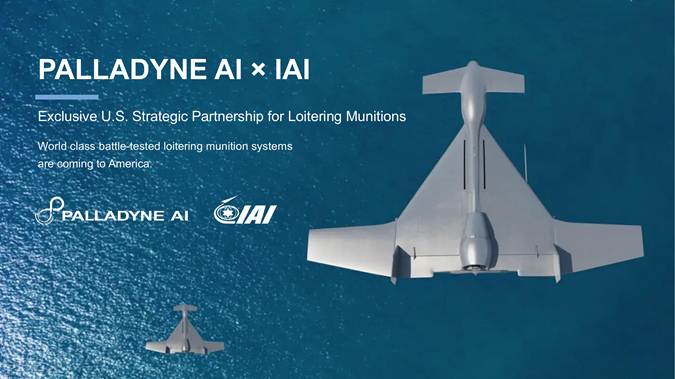
Figure 3. Palladyne and IAI strategic partnership. Source: investor deck
The fourth piece is engineering services and development contracts. This bucket should be lower in the because the better way to think about GuideTech is not as a large third-party services growth story. It is more of a product creation and design-in engine. The engineering work helps create internal systems, customize products for customers, support IAI, and help Palladyne design components and systems into other platforms.
The industrial and commercial side also remains a large source of optionality because Palladyne IQ can be placed on stationary robots, and over time the same pure-software opportunity could extend into incremental aerospace and defense applications.
Financials: The Turnaround Is About Scale And Mix
The historical financials show why the stock has been punished. FY2023 and FY2024 were still reset years, and FY2025 was not a clean proof year because revenue was small and the company was still rebuilding. The 2025 10-K shows that 2025 revenue was $5.2 million, with services revenue of $4.7 million, almost no product revenue and $0.6 million of manufacturing revenue after the November acquisitions.
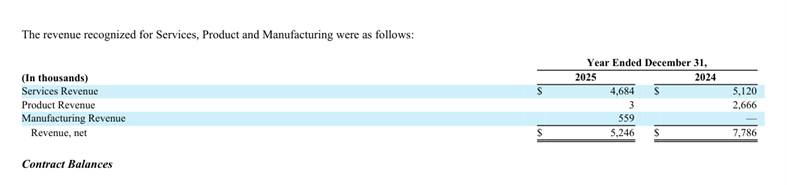
Figure 4. 2025 revenue mix from financial statements. Source: 2025 10-K
The important question is whether FY2026 is the first year where revenue scale, backlog conversion and better business mix start to change the financial profile. Management’s Q1 release reiterated full-year 2026 revenue guidance of $24 million to $27 million, which would represent 357% to 415% growth from 2025 revenue of $5.2 million. That is not enough to prove the full thesis, but it is enough to show that the company is no longer only a $5 million revenue story.
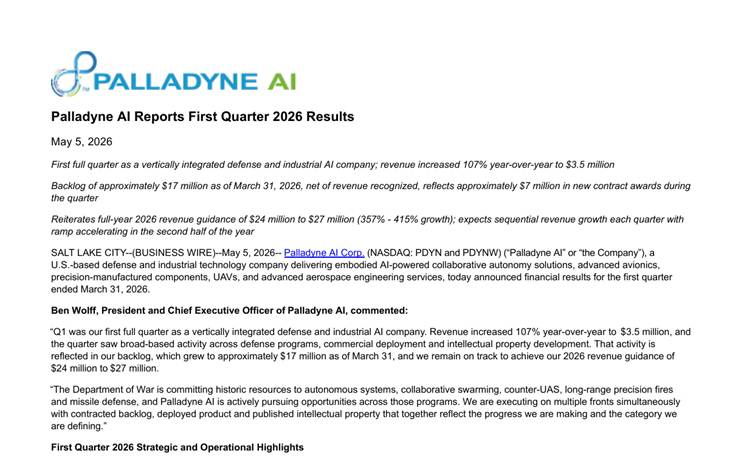
Figure 5. Q1 2026 results and guidance snapshot. Source: Q1 release
The financial model should not assume that margins become software-like too quickly. Palladyne has engineering services, components, manufacturing, systems and integration work, so gross margin should improve gradually, not jump to 80% or 90%. My revised model uses a base gross margin of about 38% in 2026, 44% in 2027, 50% in 2028 and 54% in 2029. This still assumes operating improvement, but it does not pretend that Palladyne is already a pure software business.
Why The Stock Is Mispriced
The stock may be mispriced because investors can still see the old Sarcos story more clearly than the new Palladyne story. That is understandable. The company has a history of missed expectations, high burn, product changes and dilution. A simple screen also does not make the stock look cheap, because current revenue is still small and the company is still loss-making. So I would not argue that Palladyne is obviously cheap on trailing numbers.
The mispricing sits in the change of identity. The company is no longer only a robotics hardware company, and it is not only a small industrial software company either. It is trying to build a defense-autonomy platform where engineering work creates products, components support systems, software creates swarm autonomy, and manufacturing gives the company a U.S. defense supply-chain position. The market may not yet be giving full credit for that shift because it is still early and messy.
This is why the Anduril comparison matters, but it must be used carefully. Anduril is much larger, better capitalized and much further ahead. The Anduril raise valued the company at around $61 billion after a $5 billion raise, so it is not a direct comp for Palladyne today. But the comparison helps investors understand the type of company Palladyne is trying to become. Anduril is not just software. It is a defense systems company with software, hardware, autonomy, manufacturing and government contracts. Palladyne is much smaller and much riskier, but the direction of travel is similar enough to use Anduril as a discounted strategic ceiling case.
Valuation: Show Me The Math
For a company like Palladyne, I do not think DCF should be the main valuation tool today. The reason is simple. In a turnaround, the future facts will change quickly. One new defense contract, one IAI milestone, one large design-in or one delay can change the forecast a lot. A DCF can still be useful as a floor or sanity check, but it should not drive the whole investment case. The better valuation framework is SOTP because it separates engineering services, BRAIN/components/manufacturing, autonomous systems, software/autonomy and IAI.
Scenario | 2029 revenue | SOTP value / share | Upside / downside | What it means |
Bear | $42m | ~$0.40 | ~92% downside | Turnaround does not scale |
Conservative | $80m | ~$2.37 | ~55% downside | Improvement, but not enough scale |
Base | $150m | ~$9.19 | ~74% upside | Main turnaround case |
Successful | $400m | ~$35.37 | ~570% upside | Defense platform scales |
Anduril-light ceiling | $800m | ~$92.45 | ~1,650% upside | Strategic ceiling case |
This table shows the real issue. The stock is not a simple safe value stock. The bear case is still painful. But the upside becomes very large if the company proves that the defense-autonomy platform can scale. The market does not need to believe Palladyne is Anduril today. It only needs to start believing that Palladyne can become a real smaller defense-autonomy company with product revenue, systems revenue, improving margins and controlled dilution.
For the DCF, my base case value is only around $3.25 per share, while the successful case is around $18.50 per share and the strategic ceiling case is around $52.50 per share. This is why I do not want to over-focus on DCF. The DCF is useful because it reminds investors that cash burn and timing matter, but it does not fully capture optionality from IAI, autonomous systems, BRAIN design-ins and defense contract acceleration.
The Anduril-discount framework is more useful as an upside map. Under the $150 million 2029 base turnaround revenue case, applying 75%, 65%, 55% and 45% discounts to an Anduril-style revenue multiple gives present values of roughly $11.10, $15.50, $20.00 and $24.40 per share. Under the $400 million successful turnaround case, the same method gives present values of roughly $29.60, $41.40, $53.20 and $65.10 per share. I would not call these base-case targets. They are strategic scenario values.
Things To Watch Over The Next Few Quarters
What I am watching | Why it matters | Inference |
Q2 final numbers | Confirms whether the preliminary update was clean | Reduces the bear case if revenue and cash match the update |
Q3 sequential growth | Shows whether Q2 was a one-off or a trend | Important proof for the 2026 turnaround |
Backlog | Needs to stay above $24m and keep growing | Improves revenue visibility |
Gross margin | Mix must improve, but not too fast in the model | Shows the platform can scale with discipline |
Cash usage | Quarterly burn needs to stay controlled | Reduces dilution fear |
IAI milestones | Large option, but likely later-dated | Could change the upside case materially |
The most important near-term test is not whether Palladyne announces another exciting product. The test is whether backlog turns into revenue while cash stays controlled. If Q2 preliminary numbers become final and clean, if Q3 revenue grows sequentially, and if backlog continues to build, the market will have a harder time dismissing the story as only hype.
Risks
The biggest risk is that the turnaround does not scale fast enough. A company can have good technology and still fail as an investment if revenue takes too long, gross margins stay too low and cash burn continues. Palladyne is still small, so the cost base matters. If 2026 revenue guidance is missed or if backlog does not convert, the thesis becomes much weaker.
The second risk is dilution. The company still needs to fund the turnaround, and ATM usage may be part of the cash-burn bridge. Dilution is not automatically bad if the company is using capital to fund high-return growth, but it becomes a problem if shares are issued while revenue and margins disappoint.
The third risk is complexity. Palladyne now has software, BRAIN, components, manufacturing, engineering services, autonomous systems, IAI, IQ, Pilot and SwarmOS. This is a better opportunity than the old Sarcos model, but it is also complicated. The company has to avoid repeating the old mistake of trying to do too much before one economic engine is clearly proven.
The fourth risk is timing. Defense revenue can be large, but contract timing can be slow and uneven. IAI may be a large opportunity, but it will likely require U.S. customer interest, manufacturing readiness, testing, customization and possible working-capital investment. This is why I keep IAI as a separate option rather than putting it too aggressively into the near-term base case.
Final Thoughts
I would describe Palladyne as a speculative corporate turnaround in defense autonomy. It is not yet a proven compounder, and it is not a clean software company. But it is also not the old Sarcos story anymore. The company has moved from failed robotics hardware to a more realistic platform built around defense systems, avionics, components, manufacturing, autonomy software and loitering-munitions optionality.
My base case is not that Palladyne becomes Anduril. That would be too aggressive. My base case is that Palladyne proves enough revenue conversion and segment progress for the market to stop valuing it like a failed robotics SPAC and start valuing it like a small defense-autonomy turnaround. On that basis, my base SOTP points to around $9.20 per share, which is meaningful upside from the reference price. The successful case is much larger, and the Anduril-light case shows how powerful the upside can become if the company wins scaled defense programs.
The right shareholder posture is constructive but strict. Support the turnaround, but do not give management a blank check. The company should focus on backlog conversion, product revenue, margin improvement, cash discipline, reduced dilution, better segment disclosure and winning defense programs that can turn Palladyne into a simpler and more credible story. If 2026 revenue guidance is achieved, cash burn stays controlled and Q2/Q3 momentum continues, the bear case becomes weaker. If the company misses guidance or complexity again outruns execution, then the old Sarcos discount will remain justified.
Overall, I see Palladyne as an early-stage turnaround where the market may still be focused on the ashes of Sarcos while the company is trying to build something very different. The phoenix is not fully flying yet, but the shape of the new business is now clear enough to underwrite the work.



Comments
Log in or sign up to join the conversation.