Nvidia The Second Wave Of The Compute Buildout

Nvidia signaled a prolonged AI boom with a strong 2028 outlook as demand shifts toward enterprises and governments.

Source: DepositPhotos

For months, the most common debate in the semiconductor space was about when the music stops. The assumption was that once major cloud providers finished building their first artificial intelligence clusters, capital spending would naturally cool off. Nvidia just pushed that timeline farther out. Revenue more than doubled, and management gave a rare long range forecast showing that demand is broadening beyond the original cloud providers. But the debate is not over. Investors now have to weigh that longer runway against memory shortages, lower expected gross margins and whether customers can earn acceptable returns on all of this spending.

Main Note

The Addressable Market Expands Beyond Training

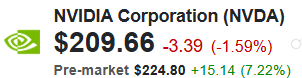
Nvidia (NVDA) Quote

Verdict: The story is broadening beyond the first wave of hyperscale training, not shifting away from the data center. Demand is spreading across artificial intelligence labs, newer cloud providers, enterprises, governments and physical AI, but memory shortages and higher component costs are beginning to pressure margins.

What happened

Nvidia reported fiscal second quarter 2027 revenue of $96.2 billion, up 106% year over year, with Data Center revenue reaching $89.0 billion. The company guided for fiscal third quarter revenue of $108.0 billion, plus or minus 2%, and management said it expects roughly 70% revenue growth in fiscal 2028 despite remaining supply constrained.

The message was not that the cloud buildout is ending. It was that demand is broadening beyond the original major cloud providers to artificial intelligence labs, newer cloud operators, enterprises, governments and industrial customers, while physical AI and edge computing add another growth lane. Nvidia’s fiscal third quarter guidance also assumes no Data Center compute revenue from China.

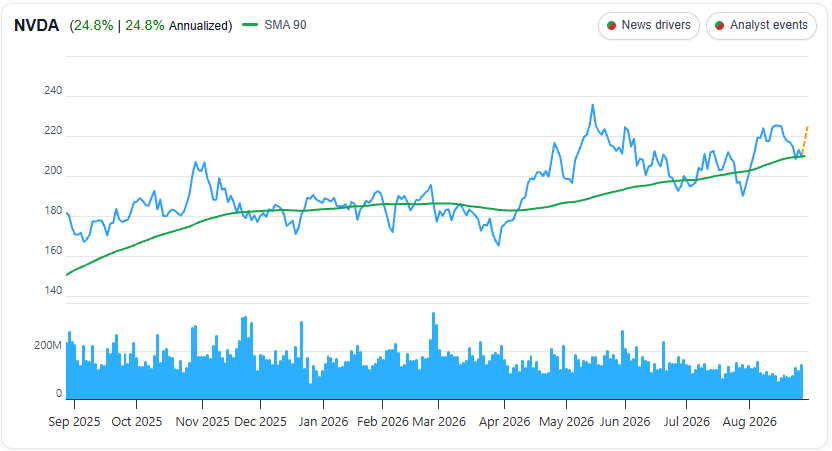
Nvidia (NVDA) 1 Year Chart

Nvidia (NVDA) 1 Year Chart

Why it matters

The basic setup here is a broader customer base, not a replacement of cloud demand. Nvidia is still overwhelmingly a Data Center business, but growth is now coming from more than the original major cloud providers. If artificial intelligence labs, newer cloud companies, enterprises and industrial customers keep scaling, the spending cycle can last longer than investors expected. The tradeoff is that Nvidia now has to secure much more memory, power and infrastructure to meet that demand.

What changed in the thesis

The core bet now requires end user software applications to generate enough real profit to justify these enormous hardware investments. If cloud providers fail to see an acceptable return on their spending, they will slash their capital expenditure budgets well before the current backlog is ever fulfilled.

What the market may be missing

The margin pressure is no longer just a hypothetical risk. Nvidia reported a 75.0% gross margin in the second quarter, guided to 74.0% in the third quarter, and said margins could bottom around 71% to 72% in the fourth quarter. Memory shortages and higher component costs are the main issue, so the key question is how much of that pressure Nvidia can offset through pricing and product mix.

Valuation and expectations

Expectations are now being reset higher after Nvidia gave a rare fiscal 2028 growth outlook. That raises the earnings ceiling, but it also makes the stock more dependent on a clean Vera Rubin ramp and on keeping margin pressure under control. Separately, The Information reported that Nvidia agreed to acquire Hugging Face for $12.9 billion. The reported price would be roughly 86 times Hugging Face’s reported annualized revenue of $150 million, and neither company had publicly confirmed the deal as of early Thursday morning. Because Hugging Face supports developers across competing hardware platforms, a confirmed deal could draw regulatory scrutiny. But it is too early to state how regulators will respond.

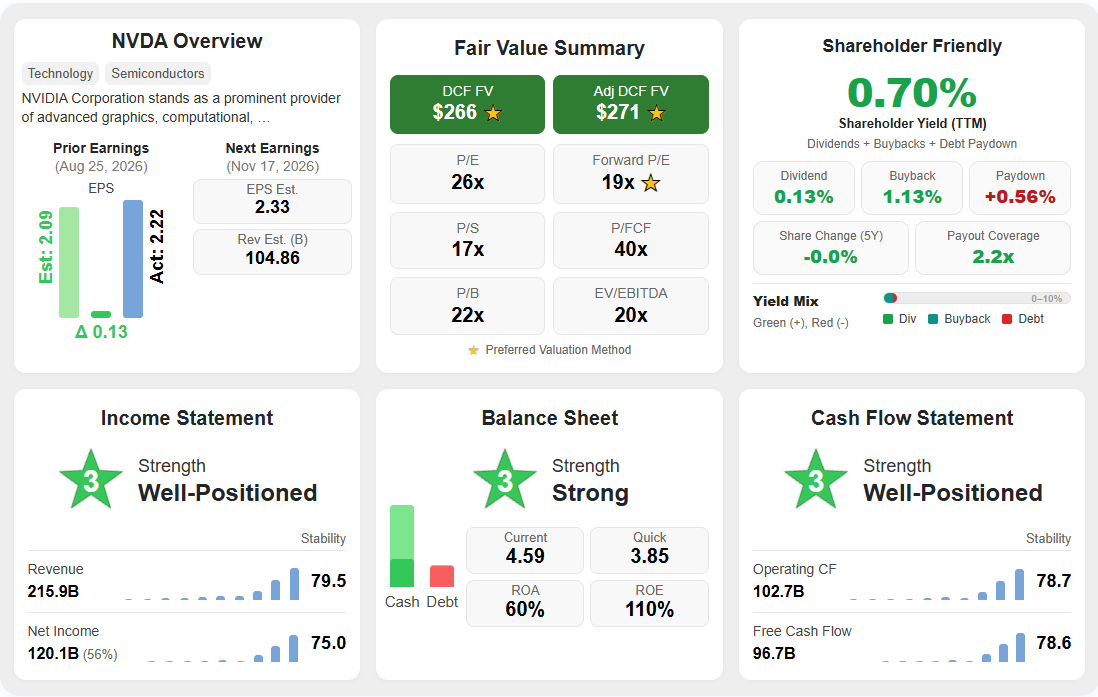
Nvidia (NVDA) Summary Scores

Nvidia (NVDA) Summary Scores

Bottom line

The scale and duration of demand look stronger than they did before this report. The harder questions are now whether Nvidia can secure enough memory and infrastructure without giving up too much margin, and whether customers ultimately earn enough from artificial intelligence to keep spending at this pace.

Pre Market Pulse

  • US equity futures traded higher, led by the Nasdaq 100 climbing roughly 1% and the S&P 500 rising roughly 0.5%.

  • Nvidia was the main technology catalyst after its results and long range outlook, while Salesforce (CRM) and CrowdStrike (CRWD) added support after both companies raised their full year outlooks.

  • Oil was volatile, with Brent crude reversing an earlier decline and trading back above $88 a barrel as investors weighed talks aimed at restoring more shipping through the Strait of Hormuz against the risk that negotiations could stall.

Why it matters this morning

The combination of robust enterprise software spending and cooling energy prices creates a highly supportive macroeconomic environment for growth stocks entering the Thursday session.

Peer Read Through

Advanced Micro Devices (AMD)

The reported Hugging Face deal matters because AMD needs open model distribution and an open software ecosystem to reduce the friction around adopting ROCm. A confirmed acquisition would not automatically close Hugging Face to AMD, but any loss of platform neutrality would be a competitive concern.

Intel Corporation (INTC)

The same neutrality question matters to Intel, which also benefits when models and tools work across multiple hardware platforms. But Hugging Face ownership will not determine Intel’s outcome by itself. Intel still has to prove that its accelerators, software and customer deployments can compete at scale.

Arista Networks (ANET)

The more direct read through is the continued buildout of large artificial intelligence data centers, not a shift toward small edge systems. More GPUs require more high speed networking, but Nvidia is also expanding its own Spectrum networking products, so Arista gets both a larger market and a stronger competitor.

Group takeaway

The clearest secondary read through is toward memory and high speed networking, where the buildout is creating real volume demand. But calling those suppliers the safest bets goes too far. Investors still have to compare customer concentration, competitive position, margins and valuation.

What to Watch

  • Capital expenditure outlooks from major cloud providers during the next earnings season.

  • The exact revenue contribution of the Vera Rubin platform in the third quarter.

  • The official announcement or regulatory collapse of the $12.9 billion Hugging Face acquisition.

Bottom line

These proof points will confirm whether the transition into physical deployment is actually progressing fast enough to sustain this massive spending cycle.

STOCKS IN THIS ARTICLE

Also Mentions:

Comments